

-
Products -PCBA Manufacturing RF Connectors RF Cable Assemblys Embedded Antennas External Antennas GNSS Positioning Solutions
RF Connectors

RF Cable Assemblys
Embedded Antennas
External Antennas
GNSS Positioning Solutions









 Language


Language



In the rapidly evolving landscape of wireless communication, seamless connectivity, precise positioning, and stable network performance have become non-negotiable requirements for modern IoT devices, smart vehicles, industrial equipment, and commercial wireless systems.

High precision GNSS anti-jamming devices have become indispensable core equipment for modern satellite navigation, positioning, and timing systems. As global navigation satellite systems (GNSS) including GPS, BeiDou (BDS), Galileo, and GLONASS are widely deployed in civil, commercial, industrial, and military fields, GNSS signal vulnerability has gradually become a key bottleneck restricting positioning accuracy and system stability. Low-power signal jamming, electromagnetic interference, signal spoofing, and multipath fading can easily cause conventional GNSS receivers to lose lock, generate positioning deviations, or even completely fail to navigate.

Global Navigation Satellite Systems have become the silent backbone of modern industrial operations. From autonomous mining trucks and precision agriculture to port logistics, railway signaling, and 5G network synchronization, GNSS provides the positioning, navigation, and timing (PNT) data that keeps critical infrastructure running.

Every modern vehicle—from a family sedan to an autonomous shuttle—depends on Global Navigation Satellite System (GNSS) signals for positioning, navigation, and timing. These signals travel approximately 20,000 kilometers from medium Earth orbit, arriving at the vehicle's antenna with a power level as low as -130 dBm. That is extraordinarily weak—roughly equivalent to observing a 25-watt light bulb from 10,000 miles away. This inherent fragility makes GNSS receivers deeply vulnerable to both intentional interference (jamming and spoofing) and unintentional disruption from nearby electronics.

GNSS anti-jamming systems have become indispensable core equipment for high-precision navigation, positioning, and time synchronization in modern civil and military industries.
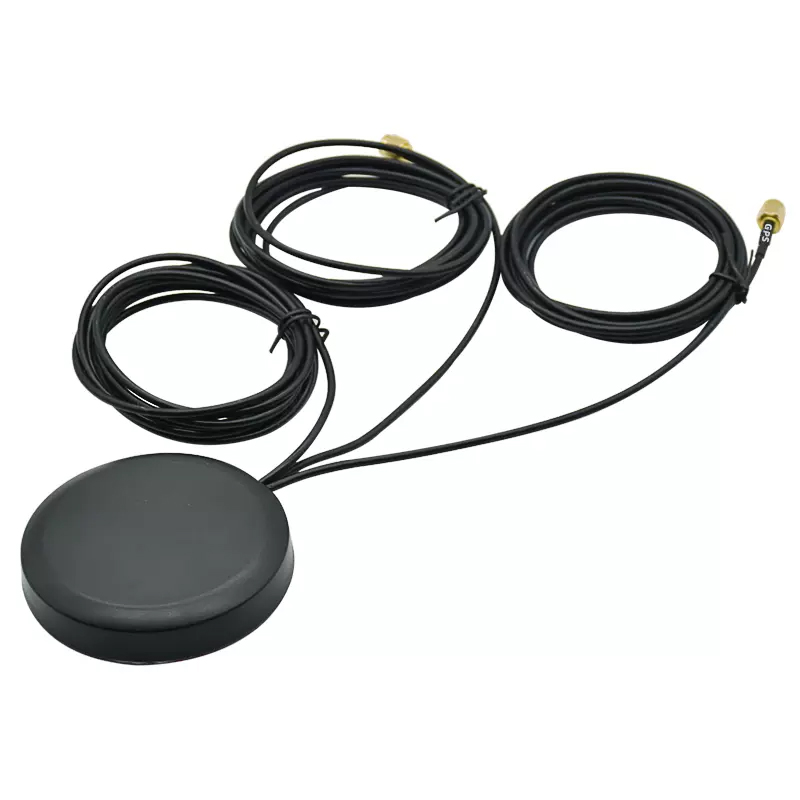
High gain 2-in-1 GPS LTE antenna has become an indispensable wireless component for modern automotive telematics, IoT devices, remote monitoring systems, and industrial communication equipment. As wireless technology evolves rapidly, single-function antennas can no longer meet the dual demands of precise satellite positioning and stable high-speed cellular data transmission.

Why Vehicle Antenna Consolidation MattersModern vehicles are no longer simple machines. They are rol

In the rapidly evolving landscape of the Internet of Things (IoT), the demand for reliable, compact, and rugged connectivity solutions has never been greater. With over 18.8 billion connected IoT devices worldwide, the hardware that enables seamless communication and precise positioning has become the critical foundation of modern digital infrastructure.
Lucy Yang | lucy.y@toxutech.com
Dotty Zhao | sales04@toxutech.com
Global Business Director / Sales Team / Global Operations


 En
 Cn
 Korean
 Home >
