

-
Products -PCBA Manufacturing RF Connectors RF Cable Assemblys Embedded Antennas External Antennas GNSS Positioning Solutions
RF Connectors

RF Cable Assemblys
Embedded Antennas
External Antennas
GNSS Positioning Solutions


 Language


Language


Time:2026-10-17 Views:0
High precision GNSS anti-jamming devices have become indispensable core equipment for modern satellite navigation, positioning, and timing systems. As global navigation satellite systems (GNSS) including GPS, BeiDou (BDS), Galileo, and GLONASS are widely deployed in civil, commercial, industrial, and military fields, GNSS signal vulnerability has gradually become a key bottleneck restricting positioning accuracy and system stability. Low-power signal jamming, electromagnetic interference, signal spoofing, and multipath fading can easily cause conventional GNSS receivers to lose lock, generate positioning deviations, or even completely fail to navigate. A professional high precision GNSS anti-jamming device solves these pain points through advanced radio frequency (RF) filtering, adaptive beamforming, digital nulling, and intelligent interference identification technology, ensuring centimeter-level and millimeter-level positioning accuracy in complex electromagnetic and adversarial environments. This comprehensive guide elaborates on the working principles, core technologies, key features, application scenarios, selection criteria, and industry advantages of high precision GNSS anti-jamming devices, helping global users understand and deploy high-reliability GNSS navigation solutions efficiently.
1. What Is a High Precision GNSS Anti-Jamming Device?
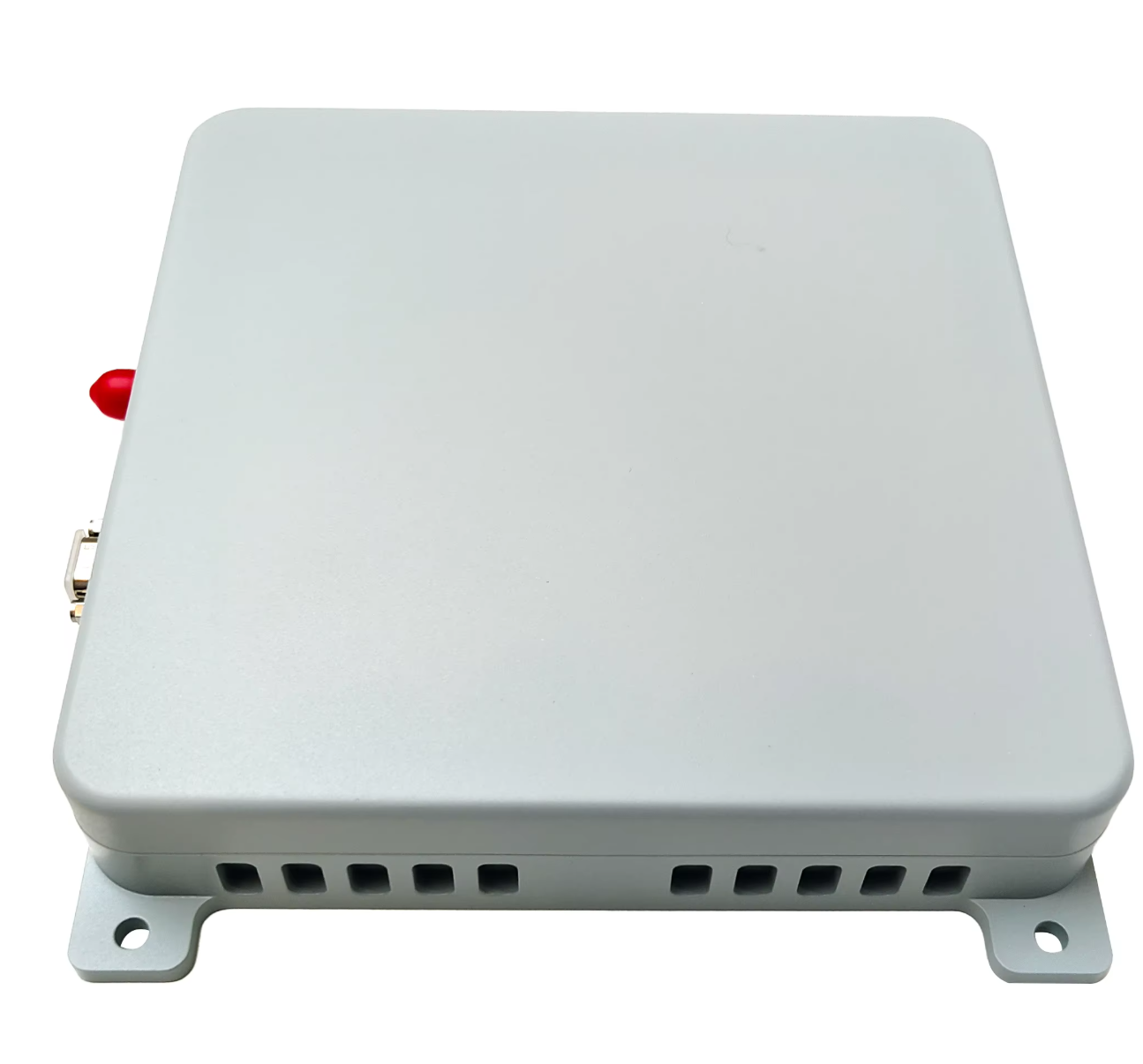
A high precision GNSS anti-jamming device is a professional navigation protection hardware system designed to suppress electromagnetic interference, resist signal jamming and spoofing, and maintain high-precision positioning continuity. Different from ordinary GNSS receivers with basic filtering functions, high-precision anti-jamming devices adopt multi-antenna array design, field-programmable gate array (FPGA) high-speed digital processing, and advanced interference mitigation algorithms, which can adapt to complex RF environments and dynamically eliminate various interference signals.
This device supports full-band reception of mainstream GNSS constellations, covering GPS L1/L2/L5, BeiDou B1/B2/B3, Galileo E1/E5, and GLONASS G1/G2 frequency bands. It integrates RF signal amplification, down-conversion, noise filtering, interference suppression, signal enhancement, and precise positioning calculation in one compact unit. While traditional GNSS equipment is only suitable for open and low-interference scenarios, high precision GNSS anti-jamming devices can maintain stable positioning output in dense urban areas, industrial parks, strong electromagnetic radiation environments, and even intentional jamming scenarios.
In addition to anti-jamming capability, high-end models of GNSS anti-jamming devices are equipped with anti-spoofing, multipath mitigation, and spectrum monitoring functions. They can accurately identify fake navigation signals, filter reflected multipath signals, and real-time monitor ambient RF interference intensity, providing comprehensive protection for high-precision navigation systems. Centimeter-level RTK positioning and millimeter-level static positioning accuracy are fully guaranteed even under strong interference conditions, making them the core guarantee for high-precision navigation security in key industries.
2. Why High Precision GNSS Anti-Jamming Devices Are Indispensable?
GNSS satellite signals are transmitted from high orbits, with extremely low ground signal power, equivalent to weak noise signals, which are extremely vulnerable to various interference attacks. In recent years, with the popularization of wireless communication equipment, industrial electromagnetic equipment, and portable jamming devices, GNSS signal interference incidents have increased sharply, bringing huge risks to navigation, positioning, and timing systems in various industries. The application value of high precision GNSS anti-jamming devices is fully reflected in solving industry pain points and avoiding safety hazards.
2.1 Limitations of Conventional GNSS Equipment
Ordinary civilian GNSS receivers and navigation modules only adopt simple fixed-frequency filtering technology, which can only filter out a small amount of fixed-band noise. When facing dynamic interference such as sweeping jamming, continuous wave jamming, pulse interference, and adjacent-frequency electromagnetic radiation, conventional equipment will suffer from serious signal attenuation, satellite loss of lock, positioning drift, and timing errors. In high-precision application scenarios such as UAV surveying and mapping, autonomous driving, and precision engineering construction, minor positioning errors will lead to project failure or safety accidents.
Moreover, conventional GNSS devices have no anti-spoofing capability. Malicious fake GNSS signals can easily mislead receivers to generate wrong positioning data, causing UAV flight deviation, vehicle navigation failure, and even deviation of military and defense equipment. Without anti-jamming and anti-spoofing protection, high-precision GNSS navigation systems cannot meet the stability and safety requirements of industrial and high-end commercial scenarios.
2.2 Growing Complexity of Modern Electromagnetic Environment
Modern urban and industrial environments are filled with massive electromagnetic interference sources: 5G base stations, wireless routers, industrial frequency converters, high-voltage power equipment, and automotive electronic systems will generate accidental electromagnetic interference; in special scenarios such as transportation hubs, military defense zones, and border inspection, portable jammers and adversarial jamming attacks will generate intentional strong interference. These interferences cover multiple frequency bands of GNSS, forming a complex and variable RF interference environment.
High precision GNSS anti-jamming devices are designed for such complex scenarios. They can intelligently distinguish valid satellite navigation signals from interference signals, dynamically suppress multi-directional interference, and maintain continuous and stable signal tracking. Compared with ordinary equipment, their positioning stability, anti-interference threshold, and environmental adaptability are improved by more than 10 times, which can fully adapt to the harsh electromagnetic environment of modern industrial and commercial applications.
2.3 Industry Demand for High-Precision and High-Reliability Navigation
With the rapid development of smart manufacturing, autonomous driving, aerial surveying and mapping, smart logistics, and precision agriculture, the industry’s requirements for GNSS positioning accuracy and reliability have been continuously upgraded. Scenarios such as automatic driving of engineering vehicles, UAV aerial survey mapping, port container automatic handling, and bridge health monitoring require long-term centimeter-level stable positioning. Once GNSS signals are interfered with, it will directly cause equipment shutdown, data distortion, and operational safety accidents.
High precision GNSS anti-jamming devices provide reliable technical support for high-standard industrial applications. They ensure that the positioning error is controlled within the centimeter range under all-weather and full-scenario conditions, effectively avoiding economic losses and safety risks caused by signal interference, and have become a standard configuration for high-end GNSS navigation systems.
3. Core Working Principles of High Precision GNSS Anti-Jamming Devices
The excellent performance of high precision GNSS anti-jamming devices is based on a multi-layered technical architecture including RF front-end processing, antenna array signal acquisition, digital interference suppression, and high-precision positioning solving. The whole working process realizes full-link protection of GNSS signals from reception, filtering, interference suppression to positioning output, ensuring signal purity and positioning accuracy.
3.1 Multi-Channel Antenna Array Signal Reception
Different from the single-antenna design of ordinary GNSS receivers, high precision GNSS anti-jamming devices adopt 4-channel, 8-channel, or multi-element CRPA (Controlled Reception Pattern Antenna) array design. The antenna array can receive GNSS signals from multiple spatial directions simultaneously and form a spatial signal coverage network. Through spatial domain filtering technology, the device can distinguish the arrival direction of satellite valid signals and interference signals, laying a foundation for directional interference suppression.
The high-gain low-noise antenna array effectively improves the reception sensitivity of weak satellite signals, enhances valid signal strength, and reduces the impact of background noise. It can stably capture faint GNSS signals in shielded and complex environments such as urban canyons and building dense areas, and solve the problem of difficult signal reception of traditional equipment in complex scenarios.
3.2 RF Front-End Precision Filtering and Amplification
After the antenna array receives the signal, the RF front-end module first performs low-noise amplification, band-pass filtering, and frequency down-conversion processing. The high-precision band-pass filter accurately locks the GNSS dedicated frequency band, filters out out-of-band interference noise, and retains pure satellite navigation signals. The low-noise amplifier (LNA) improves the signal-to-noise ratio (SNR) of valid signals, avoids signal distortion during transmission, and ensures the integrity of original satellite data.
The RF front-end of high-end anti-jamming devices adopts a multi-stage filtering architecture, which can suppress out-of-band interference by more than 90dB, effectively isolating high-power electromagnetic interference from adjacent frequency bands. At the same time, the automatic gain control (AGC) module dynamically adjusts signal gain according to the ambient signal strength, preventing signal saturation and distortion caused by strong interference.
3.3 Adaptive Digital Nulling and Beamforming Technology
As the core technology of high precision GNSS anti-jamming devices, adaptive beamforming and digital nulling technology realize spatial domain anti-jamming. The FPGA high-speed processing chip analyzes the spatial spectrum and direction of arrival of real-time signals, automatically identifies interference sources from different directions, and forms deep nulls in the interference signal direction to suppress interference signals; at the same time, it forms high-gain directional beams towards satellite signal directions to enhance valid signal reception.
This intelligent spatial filtering method can suppress multiple interference sources simultaneously. Mature 4-channel devices can suppress 3-directional interference, and 8-channel high-end devices can resist 7 or more simultaneous jamming signals, covering common interference types such as continuous wave jamming, swept jamming, pulse jamming, and broadband noise jamming. The adaptive algorithm can update the beam and null position in real time within microseconds, quickly adapt to dynamic interference environment changes, and ensure uninterrupted signal tracking.
3.4 Intelligent Anti-Spoofing and Multipath Mitigation
In addition to resisting signal jamming, high precision GNSS anti-jamming devices are equipped with professional anti-spoofing algorithms. By verifying satellite signal parameters, code phase, carrier frequency, and navigation message characteristics, the device can accurately identify fake and forged GNSS signals, automatically shield spoofing interference, and avoid false positioning results. For multipath interference caused by signal reflection from buildings, mountains, and vehicles, the built-in multipath mitigation algorithm filters reflected signals through signal feature comparison and time-domain analysis, eliminating positioning errors caused by multipath effects.
3.5 High-Precision Positioning Solving and Data Output
After multi-layer interference suppression and signal optimization, the pure GNSS satellite signal is transmitted to the high-precision positioning solving module. The device supports RTK real-time dynamic positioning and PPK post-processing positioning, combines multi-constellation satellite data fusion algorithm, and realizes centimeter-level real-time positioning and millimeter-level static precise positioning. Finally, stable and accurate positioning, speed, time, and attitude data are output through standard interfaces such as RS232, RS485, CAN FD, and Ethernet to support the operation of upper-level navigation and control systems.
4. Core Key Features of High Precision GNSS Anti-Jamming Devices
High-quality high precision GNSS anti-jamming devices have multiple industry-leading technical features, covering multi-constellation compatibility, strong anti-interference capability, high positioning accuracy, environmental adaptability, and intelligent monitoring functions, which fully meet the differentiated needs of civil, industrial, and military scenarios.
4.1 Full Multi-Constellation and Multi-Frequency Compatibility
Professional anti-jamming devices support all mainstream global GNSS constellations, including American GPS, Chinese BeiDou BDS, European Galileo, and Russian GLONASS, covering all mainstream frequency bands such as L1, L2, L5, B1, B2, B3, E1, E5. Multi-constellation signal fusion processing improves the number of trackable satellites, enhances system redundancy, and further improves positioning stability and accuracy. Even if individual satellite signals are interfered with, the system can still rely on other constellation signals to maintain normal positioning operation.
4.2 Super Strong Anti-Jamming and Anti-Spoofing Performance
High precision GNSS anti-jamming devices provide ultra-high interference suppression capability, with the anti-jamming suppression depth exceeding 95dB, which can effectively suppress various man-made and natural electromagnetic interference. The adaptive nulling technology can resist multi-directional simultaneous jamming, covering all common jamming modes in the industry. The built-in military-grade anti-spoofing module can identify and shield complex spoofing signals, preventing malicious navigation deception attacks. In professional interference test environments, high-end devices can maintain 99.5% positioning availability under continuous dynamic jamming conditions, with almost no signal loss of lock.
4.3 Centimeter-Level High-Precision Positioning
Different from ordinary meter-level navigation equipment, high precision GNSS anti-jamming devices support RTK high-precision positioning technology. In open environments, the horizontal positioning accuracy can reach ±1cm+1ppm, and the vertical accuracy can reach ±2cm+1ppm; in static long-term monitoring scenarios, millimeter-level positioning accuracy can be achieved through PPK post-processing. While ensuring anti-interference performance, the device does not sacrifice positioning accuracy, realizing the perfect combination of anti-jamming capability and high-precision navigation.
4.4 High-Speed Intelligent Adaptive Processing
Based on high-performance FPGA processing chip and embedded high-speed algorithm, the device realizes microsecond-level interference detection and response. It can real-time monitor the ambient RF spectrum, automatically identify interference types and interference directions, and dynamically adjust beamforming and nulling parameters. The whole process is fully intelligent without manual intervention, which can quickly adapt to sudden interference and changing electromagnetic environments, ensuring continuous and stable positioning output.
4.5 Excellent Environmental Adaptability and Reliability
Industrial-grade high precision GNSS anti-jamming devices adopt compact and rugged industrial design, with wide temperature adaptation range (-40℃~+85℃), waterproof, dustproof, and vibration-resistant performance, adapting to harsh working environments such as high temperature, low temperature, humidity, dust, and strong vibration. The whole machine has low power consumption, high stability, and long service life, supporting 24-hour uninterrupted continuous operation, which is suitable for long-term fixed-point monitoring and mobile dynamic navigation scenarios.
4.6 Intelligent Spectrum Monitoring and Data Diagnosis
The device is equipped with a built-in spectrum analyzer, which can real-time collect and analyze ambient RF signal spectrum data, record interference intensity, interference frequency band, and interference occurrence time. Users can view real-time signal quality, satellite tracking status, and interference logs through the upper computer software, realizing visual monitoring of the navigation environment. The fault self-diagnosis function can automatically detect equipment operating status, facilitate daily maintenance and fault troubleshooting, and improve system operation reliability.
5. Main Application Scenarios of High Precision GNSS Anti-Jamming Devices
With their excellent anti-interference performance and high-precision positioning capability, high precision GNSS anti-jamming devices are widely used in multiple high-precision and high-reliability required industries, covering industrial navigation, intelligent equipment, surveying and mapping monitoring, transportation logistics, and national defense security fields.
5.1 UAV Aerial Survey, Mapping and Inspection
Industrial UAVs for aerial surveying, mapping, power line inspection, and environmental monitoring require long-distance and high-precision positioning. UAV working environments such as urban buildings, mountainous areas, and industrial zones have serious electromagnetic interference and signal shielding problems, which easily cause UAV positioning drift and flight deviation. High precision GNSS anti-jamming devices ensure stable centimeter-level positioning of UAVs in complex environments, improve the accuracy of aerial survey data, and avoid flight safety accidents. At present, high-end industrial surveying and mapping UAVs have fully popularized anti-jamming GNSS devices as standard configuration.
5.2 Autonomous Driving and Intelligent Transportation
Automatic driving vehicles, intelligent connected vehicles, and engineering machinery automatic driving systems rely on high-precision GNSS positioning to realize path planning and automatic driving. Urban road traffic has dense wireless signals and complex electromagnetic interference, which poses a great threat to vehicle positioning stability. High precision GNSS anti-jamming devices provide continuous and accurate positioning data for autonomous driving systems, ensure driving safety and stability, and support the commercial application of high-level autonomous driving technology.
5.3 Precision Engineering and Geodetic Monitoring
In bridge health monitoring, dam deformation monitoring, road and railway engineering construction, and land surveying and mapping, millimeter-level and centimeter-level long-term stable positioning is required. The construction site environment is complex with many electromagnetic interference sources. Anti-jamming GNSS devices eliminate interference factors, ensure the accuracy and continuity of monitoring data, provide reliable data support for engineering construction and safety monitoring, and avoid engineering quality problems caused by positioning errors.
5.4 Smart Port and Automated Logistics
Automated container terminals, intelligent forklifts, and unmanned handling equipment in smart ports rely on GNSS high-precision positioning to realize automatic scheduling and handling. Port equipment is dense, electromagnetic signals are complex, and signal interference is serious. High precision GNSS anti-jamming devices ensure stable operation of unmanned logistics equipment, improve port operation efficiency, and realize intelligent and automated management of port logistics.
5.5 National Defense, Military and Special Security Scenarios
Military vehicles, unmanned combat equipment, border patrol equipment, and defense navigation systems face intentional jamming and spoofing attacks from adversarial forces. Military-grade high precision GNSS anti-jamming devices have strong anti-jamming and anti-spoofing capabilities, can resist high-intensity adversarial interference, ensure accurate navigation and positioning of military equipment in complex battlefield environments, and guarantee the safety and stability of defense navigation systems.
5.6 Precision Agriculture and Smart Industry
Unmanned agricultural machinery, precision seeding, and variable fertilization equipment require high-precision GNSS positioning to realize refined agricultural operations. Farmland peripheral communication equipment and industrial facilities will produce certain electromagnetic interference. Anti-jamming GNSS devices ensure the stable operation of unmanned agricultural machinery, improve agricultural operation accuracy and production efficiency, and promote the intelligent upgrading of modern agriculture.
6. How to Choose a Qualified High Precision GNSS Anti-Jamming Device?
There are many types of GNSS anti-jamming devices on the market with uneven performance. When purchasing, users need to select products according to actual application scenarios, positioning accuracy requirements, interference environment, and equipment compatibility, focusing on the following core indicators to avoid wrong selection and insufficient performance.
6.1 Confirm Anti-Jamming Technical Indicators
The core indicators of anti-jamming performance include interference suppression depth, number of suppressible interference sources, and supported interference types. It is recommended to select products with anti-jamming suppression depth above 90dB, which can meet most industrial and commercial scenarios. For high-interference and adversarial scenarios, select devices with suppression depth above 95dB and support for 3 or more simultaneous interference suppression. At the same time, confirm that the product can resist common interference types such as continuous wave, swept frequency, pulse, and broadband noise jamming to ensure full-scenario interference resistance.
6.2 Check Positioning Accuracy and Constellation Compatibility
According to the positioning accuracy requirements of the scenario, select RTK high-precision positioning devices. For conventional industrial scenarios, centimeter-level positioning accuracy is sufficient; for precision monitoring and surveying and mapping scenarios, select equipment supporting millimeter-level PPK post-processing. Prefer products compatible with full constellation and full frequency band to ensure sufficient satellite signal resources and improve system stability and fault tolerance.
6.3 Evaluate Environmental Adaptability and Hardware Reliability
For outdoor mobile scenarios such as UAVs and engineering vehicles, select lightweight, low-power, vibration-resistant, and waterproof industrial-grade devices; for fixed indoor and outdoor monitoring scenarios, select high-stability long-term operating equipment. Focus on the working temperature range, protection level, and service life of the equipment to ensure that it can adapt to the harsh working environment of the scenario and reduce subsequent maintenance costs.
6.4 Verify Intelligent Functions and Expandability
High-quality devices should have intelligent spectrum monitoring, fault self-diagnosis, and data logging functions, which facilitate user operation and maintenance management. At the same time, check whether the equipment interfaces are rich, support multiple data output protocols, and reserve function expansion space to adapt to subsequent system upgrading and functional iteration.
7. Industry Development Trends of High Precision GNSS Anti-Jamming Devices
With the continuous development of satellite navigation technology, electromagnetic interference technology, and intelligent algorithm technology, high precision GNSS anti-jamming devices are developing towards miniaturization, intellectualization, integration, and high resistance. In the future, with the continuous upgrading of GNSS constellations and the increasing complexity of electromagnetic environments, high-precision anti-jamming navigation equipment will become the mainstream standard for industrial navigation.
First, equipment miniaturization and low power consumption. Traditional anti-jamming devices are large in size and high in power consumption, which are not suitable for lightweight equipment such as small UAVs. The new generation of anti-jamming devices adopts highly integrated chip design, which greatly reduces volume and power consumption while maintaining high anti-jamming performance, and is widely applicable to various portable and mobile intelligent equipment.
Second, algorithm intelligence and real-time optimization. Combined with artificial intelligence and machine learning technology, the new generation of devices can intelligently identify complex unknown interference signals, predict interference trends, and realize proactive interference defense, further improving the anti-interference ability of the system in extreme environments.
Third, multi-sensor fusion navigation. Future GNSS anti-jamming devices will be deeply fused with inertial navigation, visual navigation, and lidar navigation technology. When GNSS signals are completely blocked and interfered with, the system can rely on multi-sensor data fusion to realize continuous high-precision navigation, forming a full-scenario and all-weather navigation guarantee system.
In the era of intelligent navigation and digital industry, high precision GNSS anti-jamming devices are the core guarantee for the stable operation of high-precision satellite navigation systems. They effectively solve the industry pain points such as easy interference, low accuracy, and poor stability of traditional GNSS equipment through multi-antenna array reception, adaptive beamforming, digital nulling interference suppression, and intelligent anti-spoofing technology. Widely used in UAV surveying and mapping, autonomous driving, engineering monitoring, smart logistics, and national defense security, these devices provide centimeter-level high-precision positioning services in complex electromagnetic environments.
With the continuous improvement of industrial intelligence and the continuous complexity of electromagnetic environments, the market demand for high precision GNSS anti-jamming devices will continue to grow. Continuous technological innovation and performance upgrading will make such equipment more miniaturized, intelligent, and efficient, providing more reliable and accurate navigation support for global high-end industrial and commercial scenarios. For enterprises and users pursuing high-reliability and high-precision GNSS navigation, deploying professional high precision GNSS anti-jamming devices is the key to improving system stability, avoiding operational risks, and enhancing core competitive advantages.
FAQs About High Precision GNSS Anti-Jamming Device
Q1: What is the difference between GNSS anti-jamming device and ordinary GNSS receiver?
Ordinary GNSS receivers only have simple fixed filtering function, which cannot resist dynamic and strong interference, and are prone to signal loss and positioning drift. High precision GNSS anti-jamming devices adopt spatial domain anti-jamming technology such as adaptive beamforming and digital nulling, support multi-directional interference suppression and anti-spoofing, and maintain centimeter-level high precision positioning under strong interference environments, with far higher stability and accuracy than ordinary receivers.
Q2: Can GNSS anti-jamming devices work in all weather conditions?
Industrial-grade high precision GNSS anti-jamming devices have excellent environmental adaptability, supporting normal operation in high temperature, low temperature, rainy, foggy, and windy weather. They are not affected by natural weather conditions and can realize 24-hour all-weather continuous positioning and navigation.
Q3: What positioning accuracy can a high precision GNSS anti-jamming device achieve?
Under normal working conditions, the RTK real-time positioning accuracy reaches centimeter level (±1cm+1ppm horizontal accuracy); through PPK post-processing technology, static positioning accuracy can reach millimeter level, fully meeting the high-precision requirements of surveying and mapping, monitoring, and precision engineering scenarios.
Q4: Which interference types can GNSS anti-jamming devices suppress?
Professional devices can suppress almost all common GNSS interference types, including continuous wave jamming, swept frequency jamming, pulse jamming, broadband noise jamming, adjacent-frequency electromagnetic interference, multipath interference, and malicious signal spoofing interference, realizing full-type interference protection.
Lucy Yang | lucy.y@toxutech.com
Dotty Zhao | sales04@toxutech.com
Global Business Director / Sales Team / Global Operations


 En
 Cn
 Korean
 Home >
