

-
Products -PCBA Manufacturing RF Connectors RF Cable Assemblys Embedded Antennas External Antennas GNSS Positioning Solutions
RF Connectors

RF Cable Assemblys
Embedded Antennas
External Antennas
GNSS Positioning Solutions




 Language


Language


Time:2026-10-17 Views:0
Introduction: Why Your Vehicle's GPS Is More Vulnerable Than You Think
Every modern vehicle—from a family sedan to an autonomous shuttle—depends on Global Navigation Satellite System (GNSS) signals for positioning, navigation, and timing. These signals travel approximately 20,000 kilometers from medium Earth orbit, arriving at the vehicle's antenna with a power level as low as -130 dBm. That is extraordinarily weak—roughly equivalent to observing a 25-watt light bulb from 10,000 miles away. This inherent fragility makes GNSS receivers deeply vulnerable to both intentional interference (jamming and spoofing) and unintentional disruption from nearby electronics.
The consequences are no longer theoretical. In 2013, a single individual in Newark, New Jersey, purchased a cheap GNSS jammer online to hide a company car's tracking—and inadvertently disrupted system testing at Newark Liberty International Airport. By 2022, a GPS jammer in Dallas-Fort Worth, Texas, forced the closure of an active runway. More recently, GNSS interference incidents have surged over 400% across Europe and the Middle East in just two years, according to industry reports. In Sweden, ambulance services in Kalmar County have faced daily GPS disruptions believed to originate from foreign jamming sources. In China, a single vehicle-mounted GPS jammer in Fuzhou disrupted GPS signals for commercial aircraft on approach to Changle International Airport.
For vehicle manufacturers, fleet operators, and technology integrators, the question is no longer whether GNSS jamming will affect operations—it is when and how severely. This is where the vehicle GNSS anti-jamming module becomes essential. These specialized hardware components sit between the vehicle's GNSS antenna and its receiver, detecting, filtering, and suppressing interference in real time to maintain reliable positioning even in contested electromagnetic environments.
This comprehensive guide examines the technology behind vehicle GNSS anti-jamming modules, the threat landscape they address, key selection criteria, market trends, and the future of automotive navigation resilience.
Understanding the Threat: Jamming, Spoofing, and Interference
Before examining anti-jamming solutions, it is critical to understand the distinct types of GNSS interference that vehicles face. The terminology is often conflated, but each threat demands different mitigation strategies.
Jamming: The Blunt Instrument
Jamming is the intentional transmission of radio frequency (RF) signals that overwhelm or drown out legitimate GNSS signals. The simplest jammers—often sold online as "privacy protection devices" for as little as a few dollars—broadcast noise or chirp signals on GNSS frequencies, typically GPS L1 at approximately 10 mW. Despite their low power, these devices can disrupt GNSS reception in a 400-meter radius, affecting not only the targeted vehicle but also surrounding infrastructure, including aircraft navigation systems.
GNSS jamming techniques are commonly classified into four categories: barrage jamming (broadband noise across the entire GNSS band), continuous wave (CW) or tone jamming (narrowband signal at a specific frequency), chirp jamming (a frequency-sweeping signal that scans across the band), and protocol-aware jamming (intelligent interference tailored to specific GNSS signal structures). The most common consumer-grade jammers are chirp jammers, which sweep across the frequency range rapidly to overpower GPS signals.
Spoofing: The Sophisticated Deception
Spoofing is more insidious. Rather than blocking GNSS signals, a spoofer transmits counterfeit signals that closely mimic legitimate satellite broadcasts, causing the receiver to calculate an incorrect position. The vehicle believes it is navigating normally while actually being led astray. Spoofing attacks range from simple replay attacks (retransmitting delayed GNSS signals) to sophisticated estimation-based spoofing that dynamically adjusts counterfeit signals to maintain consistency with the victim receiver's tracking loops.
For autonomous vehicles, spoofing is particularly dangerous. A spoofed GNSS signal could cause an autonomous vehicle to deviate from its route, misinterpret its lane position, or even navigate into hazardous terrain—all while the navigation system reports a completely valid position. Research has demonstrated that spoofing attacks can mislead navigation tracks by projecting false measurements onto the GNSS receiver, with no obvious indication of malfunction.
Unintentional Interference
Not all GNSS disruption is malicious. Vehicle GNSS receivers must also contend with unintentional interference from harmonics of television transmitters, malfunctioning RF equipment, and even light-square installations. In dense urban environments, multipath reflections from buildings and infrastructure can degrade positioning accuracy without any active jamming at all.
How Vehicle GNSS Anti-Jamming Modules Work
A vehicle GNSS anti-jamming module is a sophisticated RF signal processing system that identifies and suppresses interference before it reaches the GNSS receiver. Unlike simple filters that block specific frequencies, modern anti-jamming modules employ adaptive algorithms that dynamically respond to changing threat conditions.
Controlled Reception Pattern Antennas (CRPA)
The foundation of most high-performance anti-jamming systems is the Controlled Reception Pattern Antenna (CRPA). Unlike conventional GNSS antennas that receive signals uniformly from all directions, a CRPA consists of an array of multiple antenna elements (typically 4 to 16) whose individual signals can be combined and weighted to create a directional reception pattern.
The critical capability of a CRPA is null steering: the ability to place deep attenuation "nulls" in the antenna's reception pattern toward the direction of jamming sources while maintaining or enhancing gain toward legitimate satellite signals. By dynamically adjusting the amplitude and phase of each antenna element's signal, the CRPA can suppress interference from multiple directions simultaneously. For example, the TUALAJ 16300-D from TUALCOM, featuring a 16-element CRPA array, can eliminate interference from up to 15 jamming sources across three different frequency bands, achieving 50 dB of wideband jamming suppression.
Space-Time Adaptive Processing (STAP)
While CRPA operates in the spatial domain (distinguishing signals by their direction of arrival), Space-Time Adaptive Processing (STAP) extends this capability into the temporal domain. STAP manipulates both the spatial and temporal characteristics of received signals, placing nulls toward interference sources in both dimensions. This is particularly effective against broadband jammers that might otherwise evade purely spatial filtering.
STAP algorithms compute optimal weight vectors for each antenna element and time tap, effectively creating a filter that passes legitimate GNSS signals while rejecting interference. The processing must be performed in real time, often at rates exceeding 100 Hz, to track rapidly changing jamming scenarios.
Adaptive Notch Filtering
For narrowband interference—such as continuous wave (CW) jammers that occupy a very narrow frequency range—adaptive notch filters provide an efficient mitigation approach. These filters identify the frequency of the interfering signal and create a narrow attenuation notch at that specific frequency, leaving the rest of the GNSS band largely unaffected. Many anti-jamming modules combine notch filtering with spatial processing for comprehensive protection.
Interference Detection and Alerting
Modern anti-jamming modules do more than suppress interference—they also detect and report it. Modules like the CUAV C-RTK 3 G5 are equipped with dedicated GNSS RF interference detection technology that accurately identifies the operating frequency band and signal strength of interfering signals, pushing this information in real time to the vehicle's control system via DroneCAN or UART interfaces. This situational awareness allows the vehicle to take appropriate action: switching to alternative navigation sources, alerting the operator, or activating fail-safe procedures.

Key Features and Specifications of Vehicle GNSS Anti-Jamming Modules
When evaluating GNSS anti-jamming modules for vehicle applications, several technical specifications directly impact real-world performance. Understanding these parameters is essential for selecting the right solution.
Jamming Suppression (dB)
The suppression figure, measured in decibels, indicates how much the module can attenuate interfering signals relative to the GNSS signal. Entry-level modules typically provide 20–30 dB of suppression, while high-performance CRPA-based systems achieve 40–50 dB or more. The TUALAJ 4100-MINI, for instance, delivers more than 40 dB of nominal wideband suppression, while the TUALAJ 16300-D achieves 50 dB. Each additional 6 dB of suppression doubles the effective jamming resistance, so this specification directly determines the maximum jamming power the system can tolerate.
Frequency Band Coverage
GNSS encompasses multiple frequency bands across different satellite constellations: GPS L1/L2/L5, Galileo E1/E5/E6, GLONASS G1/G2/G3, and BeiDou B1/B2/B3. Multi-frequency operation provides inherent anti-jamming benefits—if one frequency band is jammed, the receiver can fall back to others. Modules like the GPSdome-Aura operate across L1, E1, L2, L5, and G1 bands with customer-selectable configurations, while the Unicore UM981 supports GPS L1/L2/L5, BDS B1/B2/B3, GLONASS G1/G2/G3, Galileo E1/E5/E6, and QZSS.
Number of Simultaneous Nulls
The number of jamming sources a module can suppress simultaneously depends on the number of antenna elements in its CRPA array. A 4-element array can typically handle 3 simultaneous nulls; a 16-element array can manage up to 15. The TUALAJ 4100-MINI provides 3 simultaneous independent nulls with its 4-element array, while the TUALAJ 16300-D's 16-element array handles 15 jammers.
Size, Weight, and Power (SWaP)
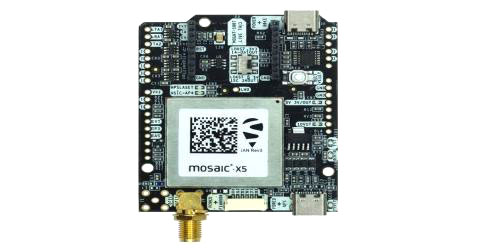
Vehicle integration demands compact, lightweight modules with modest power consumption. The Septentrio mosaic-G5 P8 measures just 23 mm by 16 mm and weighs 2.2 grams—small enough for embedded automotive applications. The TUALAJ 4100-MINI weighs 180 grams and consumes less than 6 watts. For electric vehicles, where every watt affects range, power efficiency is particularly critical. The GPSdome-Aura includes a Saving Power Mode that dynamically reduces energy consumption when no interference is present.
Latency and Update Rate
Real-time interference suppression requires minimal latency. The GPSdome-Aura achieves 100 ns latency, while high-update-rate modules like the CUAV C-RTK 3 G5 support 20 Hz refresh rates over CAN FD buses. For autonomous driving applications where positioning data feeds directly into control loops, low latency and high update rates are essential.
Environmental Ruggedness
Automotive and defense applications demand modules that withstand extreme temperatures, vibration, and electromagnetic interference. Military-grade modules are tested to MIL-STD-810G for environmental performance and MIL-STD-461F for EMI/EMC compliance. Operating temperature ranges of -40°C to +85°C are standard for professional-grade modules.
Market Trends and Growth Drivers
The vehicle GNSS anti-jamming module market is experiencing significant expansion, driven by converging trends in automotive technology, defense spending, and regulatory requirements.
According to market research, the global Vehicle GNSS Anti-Jamming Modules market stood at approximately USD 1.42 billion in 2024 and is projected to reach USD 2.77 billion by 2033, expanding at a compound annual growth rate (CAGR) of 7.8%. Broader market analyses of GNSS anti-jamming for vehicles estimate the market at USD 4.41 billion in 2025, growing to USD 9.25 billion by 2034 at a CAGR of 8.7%. The anti-jamming GNSS antenna segment for automotive applications is growing even faster, with a projected CAGR of 14.2%, reaching USD 565.3 million by 2034.
Several factors are driving this growth:
The proliferation of ADAS and autonomous vehicles is perhaps the most significant driver. As vehicles integrate increasingly sophisticated driver-assistance and autonomous driving features, their dependence on continuous, accurate GNSS positioning becomes absolute. The need to ensure uninterrupted positioning data for safety-critical applications has made anti-jamming modules an essential component in modern vehicle architectures.
Rising GNSS interference incidents are forcing fleet operators and manufacturers to act. Both accidental and intentional interference are increasing, particularly in urban environments where infrastructure and electronic devices create challenging RF conditions. Defense vehicles face heightened threats from electronic warfare tactics, while commercial fleets encounter jamming from cargo theft operations and toll-evasion devices.
Regulatory mandates in several regions are requiring enhanced navigation security for safety-critical applications, further accelerating adoption. As governments recognize the vulnerability of GNSS-dependent infrastructure, anti-jamming capabilities are transitioning from optional upgrades to baseline requirements.
Technological advancements in beam steering, digital signal processing, and adaptive filtering are making anti-jamming modules more effective, compact, and cost-efficient. These innovations are enabling integration into a broader range of vehicle types, from passenger cars to heavy-duty defense vehicles.
Applications Across Vehicle Sectors
Passenger and Commercial Vehicles
For everyday passenger vehicles, GNSS anti-jamming protects navigation systems, emergency call (eCall) functionality, and vehicle tracking services. Commercial fleets—logistics trucks, delivery vans, and ride-sharing vehicles—depend on GNSS for route optimization, fleet management, and electronic toll collection. A jamming incident can disrupt an entire fleet's operations, making anti-jamming modules a cost-effective insurance policy.
Autonomous Vehicles
Autonomous vehicles represent the most demanding application. These vehicles rely on GNSS not merely for navigation convenience but for core operational safety. A spoofing attack on an autonomous vehicle could cause it to misinterpret its position, lane, or direction—with potentially catastrophic results. Anti-jamming and anti-spoofing capabilities are therefore non-negotiable for any production autonomous vehicle platform.
Defense and Security Vehicles
Military vehicles operate in the most contested electromagnetic environments, facing deliberate electronic warfare attacks. Armored vehicles, command posts, and logistics convoys require military-grade anti-jamming protection that can function under sustained, high-power jamming from multiple directions. The TUALAJ 16300-D, for example, is specifically designed for armored land vehicles and naval platforms, providing resilient PNT (Positioning, Navigation, and Timing) in electronic warfare conditions.
Emergency Response Vehicles
Ambulances, fire trucks, and police vehicles depend on GNSS for dispatch, routing, and coordination. The disruption of ambulance GPS services in Sweden demonstrates the real-world impact of GNSS interference on critical services. Anti-jamming modules ensure that emergency response vehicles maintain navigation capability even when operating in contested or degraded signal environments.
Selecting the Right Vehicle GNSS Anti-Jamming Module
Choosing the appropriate anti-jamming module requires careful consideration of the operational environment, performance requirements, and integration constraints.
Assess the Threat Level
The first step is understanding the anticipated threat environment. Will the vehicle operate primarily in benign civilian areas with occasional unintentional interference, or is it deployed in contested environments with deliberate jamming? For civil applications, a module providing 20–30 dB suppression with basic null steering may suffice. For defense or high-security applications, 40–50 dB suppression with multi-null CRPA capability is necessary.
Consider Integration Requirements
Anti-jamming modules come in two primary configurations: standalone units that include both antenna and controller, and OEM modules designed for integration into existing GNSS systems. Standalone units like the GPSdome-Aura are easier to deploy but may require additional mounting space. OEM modules like the Septentrio mosaic-G5 P8 offer greater integration flexibility but require more engineering effort.
Evaluate Compatibility
The module must be compatible with the vehicle's existing GNSS receiver and antenna infrastructure. Most modern anti-jamming modules are designed to work with standard active antennas and output a standard GNSS signal to any receiver. The TUALAJ 4100-MINI, for instance, is compatible with all types of external GPS receivers and vehicle navigation systems, including M Code receivers.
Verify Environmental Specifications
Automotive applications demand modules that withstand vibration, temperature extremes, and electromagnetic interference. Ensure the selected module meets the appropriate automotive or military environmental standards for the intended application. For under-hood or exposed installations, IP67 or higher ingress protection is essential.
Future Directions in Vehicle GNSS Anti-Jamming
The field of GNSS anti-jamming is evolving rapidly, driven by both advancing threat capabilities and emerging technological opportunities.
Sensor fusion is emerging as a critical complement to anti-jamming modules. By fusing GNSS data with inertial measurement units (IMUs), wheel odometry, and visual sensors, vehicles can maintain accurate positioning even during temporary GNSS outages. The Unicore UM981 integrates on-board MEMS positioning technology to ensure continuous positioning when GNSS lock is lost, providing positioning error of less than 5% of distance traveled without GNSS signals.
Synthetic aperture arrays represent a novel approach to enhancing anti-jamming performance without the size constraints of physical antenna arrays. The APEX project, a collaboration between European research institutions and industry partners, is developing an ultra-large synthetic aperture array (ULSA) that coherently combines measurements from a compact multi-element antenna as the vehicle moves, creating an effective array size much larger than what can be physically integrated.
Machine learning and AI are being applied to interference detection and classification, enabling faster and more accurate identification of complex jamming and spoofing attacks. AI-assisted systems can distinguish between intentional interference and benign signal degradation, optimizing mitigation strategies in real time.
Cloud-based threat intelligence is another emerging trend. By sharing interference data across vehicle fleets, operators can build real-time maps of jamming activity, enabling predictive avoidance and coordinated response. This approach transforms individual anti-jamming modules from isolated defenders into part of a networked resilience ecosystem.
The vulnerability of GNSS signals to jamming and spoofing is an inherent characteristic of satellite navigation—not a flaw that will be engineered away. As vehicles become increasingly reliant on GNSS for safety-critical functions, from ADAS to full autonomy, the ability to detect, suppress, and overcome interference becomes a fundamental requirement rather than a premium feature.
Vehicle GNSS anti-jamming modules provide the front-line defense. By combining advanced antenna array technology, real-time adaptive signal processing, and intelligent interference detection, these modules ensure that vehicles can maintain reliable positioning even in the most challenging electromagnetic environments. The market's robust growth trajectory—projected to exceed USD 2.77 billion by 2033 for modules alone—reflects the urgency with which manufacturers, fleet operators, and defense organizations are addressing this vulnerability.
For anyone specifying, integrating, or operating GNSS-dependent vehicle systems, understanding anti-jamming technology is no longer a niche specialty. It is a core competency for ensuring operational continuity, safety, and mission success in a world where the electromagnetic spectrum is increasingly contested. The question is not whether your vehicle needs anti-jamming protection—it is which solution best fits your threat environment, integration constraints, and performance requirements.
Lucy Yang | lucy.y@toxutech.com
Dotty Zhao | sales04@toxutech.com
Global Business Director / Sales Team / Global Operations


 En
 Cn
 Korean
 Home >
