

-
Products -PCBA Manufacturing RF Connectors RF Cable Assemblys Embedded Antennas External Antennas GNSS Positioning Solutions
RF Connectors

RF Cable Assemblys
Embedded Antennas
External Antennas
GNSS Positioning Solutions








 Language


Language


Time:2026-10-17 Views:0
In the rapidly evolving landscape of wireless communication, seamless connectivity, precise positioning, and stable network performance have become non-negotiable requirements for modern IoT devices, smart vehicles, industrial equipment, and commercial wireless systems. AGPS 4G LTE WiFi combo antenna stands out as a game-changing integrated wireless solution that merges three core communication functions into a single compact unit. Unlike traditional single-function antennas that require separate installation, complex wiring, and additional space, this all-in-one combo antenna delivers reliable GPS positioning, high-speed 4G LTE cellular data transmission, and dual-band WiFi connectivity simultaneously. This comprehensive guide dives deep into the working principles, key features, technical specifications, application scenarios, selection criteria, and installation tips of GPS 4G LTE WiFi combo antennas, helping businesses, engineers, and tech buyers make informed purchasing and deployment decisions for their wireless projects.
1. What Is a GPS 4G LTE WiFi Combo Antenna?
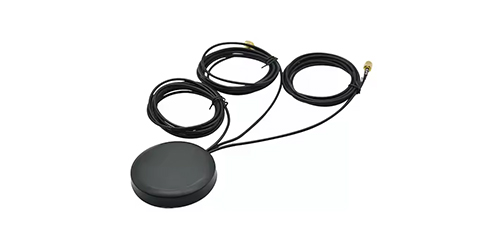
A GPS 4G LTE WiFi combo antenna is a multi-functional integrated wireless antenna designed to support three critical wireless frequency bands and communication protocols in one unified hardware structure. It combines a high-sensitivity GPS/GNSS positioning antenna, a wide-band 4G LTE cellular MIMO antenna, and a dual-band 2.4GHz + 5GHz WiFi antenna, eliminating the need for three independent antennas in wireless device systems.
Modern combo antenna models also extend compatibility to global GNSS systems including GLONASS, Galileo, and BeiDou, alongside full-band 4G LTE coverage for FDD and TDD networks, and WiFi 6/6E dual-band operation. Each functional module inside the combo antenna is independently shielded to avoid signal interference between GPS positioning, cellular data, and WiFi wireless signals, ensuring stable and independent operation of each communication channel. Equipped with separate coaxial cables and standard SMA/RP-SMA connectors for each function, the antenna enables plug-and-play installation and flexible integration with modems, routers, industrial gateways, and vehicle telematics devices.
Core functional integration breakdown of the GPS 4G LTE WiFi combo antenna:
GPS/GNSS Module: Covers 1559–1607MHz L1 band, supports multi-satellite system positioning, provides precise longitude, latitude, and altitude data for positioning and navigation systems
4G LTE Module: Covers global 4G LTE frequency bands (600MHz–6000MHz), supports MIMO 2x2 data transmission, delivers high-speed cellular network access with strong signal penetration
WiFi Module: Dual-band 2.4GHz and 5GHz coverage, compatible with WiFi 4, WiFi 5, and WiFi 6 protocols, ensures stable short-range wireless signal transmission and device networking
2. Core Advantages of GPS 4G LTE WiFi Combo Antennas
The rising popularity of GPS 4G LTE WiFi combo antennas in industrial, commercial, and automotive wireless systems stems from their unique structural design, superior signal performance, and significant cost and space-saving benefits compared to discrete single-function antennas. Below are the key competitive advantages that make this combo antenna the preferred choice for modern wireless connectivity projects.
2.1 Compact Integrated Design & Space Saving
Traditional wireless system configurations require installing three separate antennas for GPS, 4G LTE, and WiFi, which occupies large installation space, increases equipment volume, and limits the miniaturization of smart devices. The GPS 4G LTE WiFi combo antenna integrates all three antenna units into a single low-profile housing, greatly reducing installation space requirements. Its ultra-thin, waterproof, and streamlined shell design is suitable for narrow installation environments such as vehicle roofs, industrial device casings, and outdoor IoT equipment enclosures, perfectly meeting the miniaturization and lightweight design trends of modern wireless hardware.
2.2 Anti-Interference Independent Signal Transmission
Signal crosstalk and interference are common pain points when using multiple independent antennas. Different frequency band signals can interfere with each other, resulting in weak GPS positioning accuracy, unstable 4G LTE network drops, and slow WiFi transmission speeds. High-quality GPS 4G LTE WiFi combo antennas adopt professional internal electromagnetic shielding technology. Each functional antenna module is equipped with an independent shielding layer and signal circuit, completely isolating GPS positioning signals, 4G cellular signals, and WiFi wireless signals. This independent signal design ensures zero mutual interference, maintaining high-precision positioning, stable cellular network connection, and high-speed WiFi transmission at all times.
2.3 Lower Installation & Maintenance Costs
Deploying three separate antennas requires three sets of cables, connectors, fixing brackets, and manual installation labor, which significantly increases procurement and construction costs. The all-in-one combo antenna only needs one-time installation and one set of fixing accessories, simplifying the wiring process and reducing engineering time. In terms of later maintenance, the integrated structure reduces hardware failure points, lowering equipment failure rates and daily maintenance costs. For large-scale IoT deployment, vehicle telematics transformation, and industrial wireless renovation projects, this antenna can effectively reduce overall project investment and improve engineering efficiency.
2.4 Global Wide-Band Compatibility
Standard GPS 4G LTE WiFi combo antennas support full-band global 4G LTE network coverage, compatible with all mainstream operator frequency bands in North America, Europe, Asia, and Oceania. The built-in GNSS module supports full global satellite navigation systems including GPS, GLONASS, Galileo, and BeiDou, achieving global full-coverage positioning. The dual-band WiFi module is compatible with all mainstream WiFi protocols and frequency bands, adapting to various wireless routing and terminal devices. This ultra-high compatibility enables the antenna to be used globally without regional frequency band restrictions, suitable for cross-border equipment deployment and global wireless system layout.
2.5 Durable Industrial-Grade Environmental Adaptability
Most high-performance GPS 4G LTE WiFi combo antennas adopt IP67/IP68 waterproof, dustproof, and weather-resistant industrial-grade design. The high-strength ABS or metal shell can resist extreme environmental factors such as high temperature, low temperature, rain, snow, wind, and sand erosion. It supports long-term outdoor and vehicle-mounted operation, with a working temperature range of -40℃ to +85℃, fully adapting to harsh working environments such as industrial sites, outdoor monitoring, vehicle navigation, and marine equipment. The durable structure ensures long service life and stable continuous operation of the antenna.
3. Key Technical Specifications of GPS 4G LTE WiFi Combo Antenna
Technical parameters are the core basis for selecting a suitable combo antenna. Different application scenarios have strict requirements on antenna frequency bands, gain, impedance, connectors, and waterproof levels. The following are the standard mainstream technical specifications of industrial-grade GPS 4G LTE WiFi combo antennas, covering all core performance indicators for user reference and selection.
| Parameter Item | GPS/GNSS Module | 4G LTE Module | WiFi Dual-Band Module |
|---|---|---|---|
| Frequency Range | 1559–1607MHz (L1 Band) | 600MHz–6000MHz (Full 4G LTE Band) | 2.4GHz (2400–2483MHz) + 5GHz (5150–5850MHz) |
| Antenna Gain | 28dB ± 3dB (High Sensitivity) | 3–5dBi | 2.4GHz: 3dBi / 5GHz: 5dBi |
| Impedance | 50Ω | 50Ω | 50Ω |
| VSWR | ≤1.5 | ≤1.8 | ≤1.8 |
| Polarization Mode | Right-Hand Circular Polarization (RHCP) | Vertical Polarization | Omni-Directional Polarization |
| Connector Type | SMA Male / RP-SMA | SMA Male / RP-SMA | SMA Male / RP-SMA |
| Waterproof Level | IP67 Industrial Grade | IP67 Industrial Grade | IP67 Industrial Grade |
| Working Temperature | -40℃ ~ +85℃ | -40℃ ~ +85℃ | -40℃ ~ +85℃ |
| Storage Temperature | -45℃ ~ +90℃ | -45℃ ~ +90℃ | -45℃ ~ +90℃ |
| Cable Length | Standard 3M / Customizable | Standard 3M / Customizable | Standard 3M / Customizable |
In addition to the above standard parameters, high-end combo antenna models support MIMO 4G LTE dual-antenna design, WiFi 6E ultra-wide band expansion, and low-noise amplifier (LNA) built-in chips, which can further improve signal receiving sensitivity and transmission stability, suitable for high-precision and high-speed communication scenarios.

4. Wide Application Scenarios of GPS 4G LTE WiFi Combo Antennas
Thanks to its integrated multi-function design, stable performance, and strong environmental adaptability, the GPS 4G LTE WiFi combo antenna has been widely used in automotive intelligence, industrial IoT, smart city construction, outdoor monitoring, mobile communication equipment, and many other fields. It is one of the most versatile wireless antenna solutions in the current communication industry.
4.1 Automotive Telematics & Smart Vehicle Systems
Smart vehicles, fleet management vehicles, logistics trucks, and engineering vehicles require real-time positioning, 4G network data transmission, and in-vehicle WiFi hotspot functions simultaneously. The GPS 4G LTE WiFi combo antenna is the core antenna solution for vehicle T-BOX, car navigation, and in-vehicle intelligent systems. It provides high-precision vehicle positioning data for fleet monitoring and trajectory tracking, supports 4G LTE network real-time data upload and remote vehicle diagnosis, and builds stable in-vehicle WiFi wireless networks to meet the network needs of in-vehicle entertainment and passenger mobile devices. Its waterproof and shock-resistant design adapts to complex vehicle driving environments, ensuring long-term stable operation of vehicle communication systems.
4.2 Industrial IoT & Smart Gateway Equipment
Industrial IoT gateways, smart sensor devices, and industrial wireless routers need to realize equipment positioning, remote data transmission, and on-site wireless networking. The combo antenna integrates three communication functions to help industrial equipment complete automatic positioning, 4G remote data upload, and local WiFi device networking. It is widely used in smart factory equipment monitoring, environmental monitoring stations, power grid intelligent equipment, and agricultural IoT systems. The industrial-grade anti-interference and high-temperature resistance performance ensure stable communication of industrial equipment in harsh factory and outdoor environments, realizing unmanned monitoring and remote intelligent management of industrial sites.
4.3 Smart City & Outdoor Monitoring Systems
Smart street lights, outdoor surveillance cameras, intelligent traffic equipment, and public security monitoring terminals are important components of smart city construction. These devices need real-time positioning, 4G network video transmission, and local WiFi coverage. The GPS 4G LTE WiFi combo antenna provides stable signal support for outdoor monitoring equipment, solving the problems of difficult wiring and single communication function of traditional monitoring equipment. It enables wireless remote transmission of monitoring videos, accurate positioning of equipment locations, and local wireless signal coverage, greatly improving the intelligent management level of urban public facilities.
4.4 Mobile Communication & Portable Wireless Devices
Portable 4G WiFi routers, mobile communication terminals, and emergency communication equipment have strict requirements on equipment volume and communication stability. The compact integrated design of the combo antenna perfectly meets the miniaturization needs of portable devices. It can provide users with 4G high-speed network access, WiFi hotspot sharing, and equipment positioning functions, widely used in outdoor office, emergency rescue, field exploration, and other mobile scenario applications.
4.5 Marine & Special Outdoor Equipment
Marine ships, offshore monitoring equipment, and field exploration equipment face complex outdoor environments such as strong wind, high humidity, and strong electromagnetic interference. The IP67 waterproof and dustproof grade and excellent anti-interference performance of the GPS 4G LTE WiFi combo antenna enable it to work stably in marine and field environments for a long time. It provides accurate ship positioning, 4G network communication, and on-board WiFi network services for marine equipment, ensuring smooth communication and accurate positioning of offshore operations.
5. How to Choose the Right GPS 4G LTE WiFi Combo Antenna? (Buying Guide)
With various types of combo antennas on the market with different parameters and quality grades, many buyers and engineers face difficulties in selection. Choosing an inappropriate antenna will lead to weak signal, unstable network, low positioning accuracy, and even frequent equipment failures. The following professional selection guidelines help users quickly screen high-quality and suitable GPS 4G LTE WiFi combo antennas according to application scenarios.
5.1 Confirm Frequency Band Compatibility
First, confirm the local 4G LTE operator frequency bands and GNSS system requirements of the application area. For global cross-border equipment deployment, it is necessary to select full-band 4G LTE combo antennas to ensure compatibility with network frequency bands of various countries. For regional fixed-point use, you can select targeted band antennas to reduce costs. At the same time, confirm whether the GNSS module supports multi-system positioning to meet high-precision positioning needs.
5.2 Check Antenna Gain & Signal Sensitivity
Antenna gain directly determines signal receiving and transmission capability. For urban weak signal areas, outdoor long-distance transmission scenarios, and vehicle high-speed movement scenarios, it is recommended to select high-gain antennas (4G 5dBi, GPS 28dB high sensitivity) to enhance signal penetration and anti-fading capability. For indoor and short-distance static use, conventional gain antennas can meet daily use needs.
5.3 Verify Environmental Protection Grade & Durability
Outdoor, vehicle-mounted, and industrial scenarios must choose IP67 and above waterproof and dustproof industrial-grade antennas, with a working temperature range covering -40℃ to +85℃ to adapt to extreme weather changes. Indoor scenarios can choose ordinary low-profile antennas to save costs. In addition, check whether the antenna shell is made of high-strength anti-aging materials to ensure long-term service life.
5.4 Match Connector & Cable Specifications
Most wireless modules and devices on the market are compatible with SMA/RP-SMA connectors. Before purchasing, confirm the interface type of the supporting modem, router, or gateway to avoid interface mismatch. At the same time, select the appropriate cable length according to the installation distance, and support customized cable length and connector types for special equipment needs.
5.5 Prioritize Anti-Interference & MIMO Design
For high-stability industrial and commercial scenarios, it is necessary to select combo antennas with independent shielding design and MIMO dual-antenna technology. The MIMO design can double the 4G LTE data transmission speed and improve network stability, while the independent shielding structure completely eliminates signal crosstalk and ensures the simultaneous stable operation of GPS, 4G, and WiFi signals.
6. Installation & Debugging Tips for Combo Antennas
Correct installation and debugging are key to giving full play to the performance of GPS 4G LTE WiFi combo antennas. Even high-quality antennas will have poor signal performance due to irregular installation. The following standardized installation and debugging tips help users optimize antenna signal effect.
Installation Position Selection: Install the antenna in an open and unobstructed position, avoid shielding by metal objects, equipment shells, and buildings, and keep away from high-power electrical equipment to reduce electromagnetic interference. Vehicle-mounted installation is recommended on the roof, and outdoor installation is recommended on the top of equipment or poles.
Wiring Standardization: Avoid excessive bending and winding of antenna cables to prevent signal attenuation caused by cable damage. The cable layout should be neat and fixed to avoid friction and pulling during equipment operation.
Interface Connection: Ensure that the connector is tightly connected, avoid loose interface causing signal interruption and unstable network. It is recommended to wrap waterproof tape at the outdoor interface to prevent water ingress and oxidation.
Signal Debugging: After installation, test GPS positioning accuracy, 4G network download/upload speed, and WiFi signal coverage. If the signal is weak, adjust the installation angle and position of the antenna until the optimal signal state is achieved.
7. FAQ About GPS 4G LTE WiFi Combo Antennas
7.1 Will the three signals of the combo antenna interfere with each other?
High-quality industrial-grade GPS 4G LTE WiFi combo antennas adopt independent internal shielding and separate circuit design for each functional module. The GPS, 4G LTE, and WiFi signals work independently without mutual crosstalk and interference, ensuring stable operation of each communication function. Low-quality non-standard combo antennas may have interference problems, so it is necessary to select formal industrial-grade products.
7.2 Is the combo antenna suitable for WiFi 6 and 5G transition scenarios?
Most mainstream combo antennas support WiFi 6 dual-band protocols and can be compatible with the latest WiFi 6 devices. While mainly supporting 4G LTE networks, they are backward compatible with 3G/2G networks and can adapt to the network transition period. For 5G full-scenario use, you can choose upgraded 5G LTE GPS WiFi combo antenna models.
7.3 Can the antenna work normally in extreme weather?
Industrial-grade IP67 waterproof combo antennas have excellent weather resistance, which can resist rain, snow, high temperature, low temperature, and sand erosion, and can work stably in extreme weather such as heavy rain, blizzard, and high temperature exposure, suitable for long-term outdoor unattended operation.
7.4 Can the cable length and connector be customized?
Regular manufacturers support personalized customization of antenna cable length, connector type, and installation method, which can meet the special installation and matching needs of different equipment and scenarios, with strong flexibility and adaptability.
As an indispensable core component of modern wireless communication systems, the GPS 4G LTE WiFi combo antenna perfectly solves the pain points of scattered installation, large space occupation, high cost, and easy signal interference of traditional single-function antennas. With its integrated multi-function design, stable signal performance, strong environmental adaptability, and cost-saving advantages, it has become the mainstream antenna solution for smart vehicles, industrial IoT, smart cities, outdoor monitoring, and mobile communication equipment.
In the future, with the continuous development of IoT intelligence and wireless communication technology, the all-in-one combo antenna will further evolve towards higher gain, lower power consumption, wider frequency band, and more miniaturization, providing more efficient and stable integrated positioning and communication services for various intelligent wireless devices. For enterprises and engineers who need to deploy wireless communication systems, selecting high-quality industrial-grade GPS 4G LTE WiFi combo antennas is the key to improving equipment communication stability, reducing project costs, and optimizing system performance.
Lucy Yang | lucy.y@toxutech.com
Dotty Zhao | sales04@toxutech.com
Global Business Director / Sales Team / Global Operations


 En
 Cn
 Korean
 Home >
