

-
Products -PCBA Manufacturing RF Connectors RF Cable Assemblys Embedded Antennas External Antennas GNSS Positioning Solutions
RF Connectors

RF Cable Assemblys
Embedded Antennas
External Antennas
GNSS Positioning Solutions




 Language


Language



In the ever-evolving landscape of transportation and navigation technology, precision is no longer a
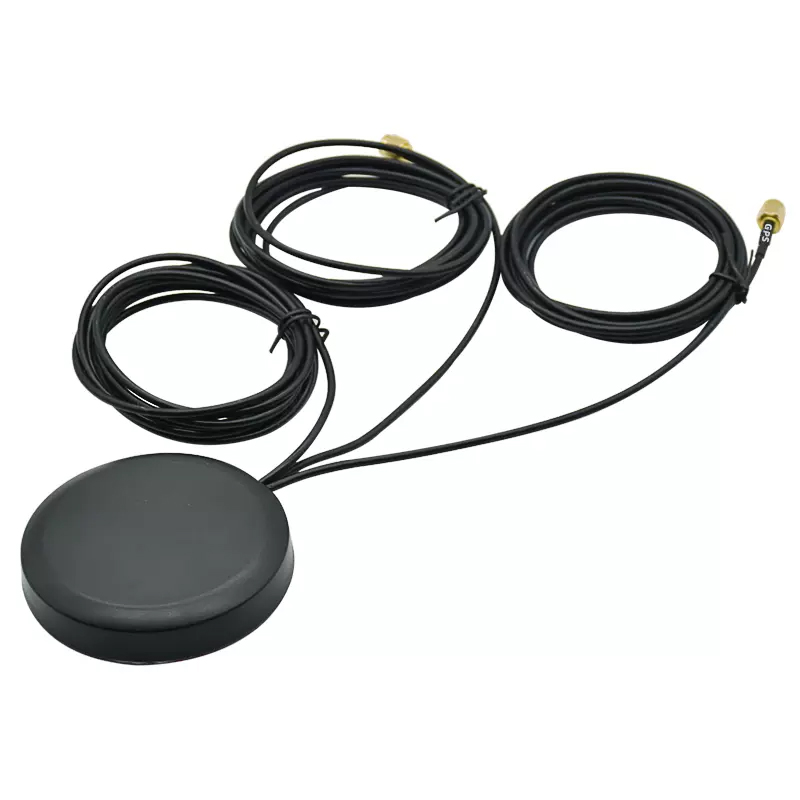
In the ever-evolving landscape of automotive technology, the role of navigation systems has transcended from a mere convenience to an indispensable component of modern driving.

In the intricate web of modern vehicle tracking systems, one component often operates behind the scenes, yet its role is indispensable: the vehicle tracking antenna.

In today’s fast-paced world, where efficiency, security, and real-time data reign supreme, vehicle t
Precision agriculture has fundamentally transformed how farmers manage their fields, moving from uniform treatment of entire fields to site-specific interventions based on accurate positioning data. At the heart of this transformation lies the Global Navigation Satellite System (GNSS) and its high-precision variant, Real-Time Kinematic (RTK) positioning.

Weatherproof agriculture GPS antennas have become an indispensable core component of modern precision agriculture, driving the intelligent upgrade of traditional farming methods. As precision farming, autonomous agricultural machinery, drone seeding, and smart irrigation systems gain widespread popularity globally, the demand for high-stability, all-weather GPS positioning equipment continues to surge.

Modern agriculture has undergone a profound technological transformation over the past two decades. At the heart of this revolution lies a deceptively simple component: the farm machinery GNSS antenna. While farmers and agronomists focus on yield maps, variable-rate application, and autonomous field operations, the humble GNSS antenna mounted atop a tractor cab silently receives signals from constellations of satellites orbiting thousands of kilometres above the Earth. Without this antenna, the entire edifice of precision agriculture—auto-steering, section control, guided planting, and data-driven crop management—would collapse.
Every GNSS receiver—whether in a smartphone, a survey-grade rover, or an autonomous drone—depends on one critical component that converts invisible satellite signals into usable positioning data: the antenna. While receivers and chipsets often dominate marketing specifications, the antenna is frequently the limiting factor in real-world accuracy, especially in challenging environments where multipath reflections, weak signals, and interference degrade positioning quality.
Lucy Yang | lucy.y@toxutech.com
Dotty Zhao | sales04@toxutech.com
Global Business Director / Sales Team / Global Operations


 En
 Cn
 Korean
 Home >
