

-
Products -PCBA Manufacturing RF Connectors RF Cable Assemblys Embedded Antennas External Antennas GNSS Positioning Solutions
RF Connectors

RF Cable Assemblys
Embedded Antennas
External Antennas
GNSS Positioning Solutions


 Language


Language



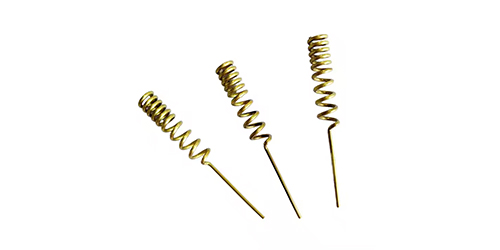
In modern drone technology,GNSS helical antenna for UAV has become the gold standard for highprecision positioning, navigation, and mapping applications. Unlike traditional patch antennas that struggle with tilt angles, signal occlusion, and multipath interference, helical GNSS antennas deliver stable circular polarization, superior lowelevation signal gain, and reliable performance in dynamic UAV flight conditions.
In modern positioning, navigation, and timing (PNT) systems, antijamming GNSS helix antenna has emerged as a core component for reliable satellite signal reception in complex electromagnetic environments.
In the rapidly evolving world of unmanned aerial vehicles (UAVs), every gram matters. As drone manufacturers push the boundaries of flight endurance, payload capacity, and autonomous operation, the demand for compact, highperformance GNSS antennas has never been greater.

Every gram counts in unmanned aerial vehicle (UAV) engineering. For multirotor platforms, each additional gram of payload directly reduces flight endurance, climb rate, and maneuverability.

In the rapidly evolving drone industry, precise, stable, and uninterrupted satellite positioning is the core foundation of professional UAV operations. From aerial surveying, 3D mapping, and agricultural spraying to industrial inspection and autonomous flight, modern drones rely entirely on reliable Global Navigation Satellite System (GNSS) signal reception to maintain centimeter-level positioning accuracy and flight stability.

In the world of global navigation satellite systems (GNSS), where precision and adaptability are par

In the realm of automotive technology, where space efficiency and multi-functionality are key, the M

In the challenging and dynamic marine environment, precise positioning is not just a convenience but
Lucy Yang | lucy.y@toxutech.com
Dotty Zhao | sales04@toxutech.com
Global Business Director / Sales Team / Global Operations


 En
 Cn
 Korean
 Home >
