

-
Products -PCBA Manufacturing RF Connectors RF Cable Assemblys Embedded Antennas External Antennas GNSS Positioning Solutions
RF Connectors

RF Cable Assemblys
Embedded Antennas
External Antennas
GNSS Positioning Solutions







 Language


Language


Time:2026-11-09 Views:0
In the intricate web of modern vehicle tracking systems, one component often operates behind the scenes, yet its role is indispensable: the vehicle tracking antenna. While GPS receivers, cellular modems, and software platforms grab much of the attention, it is the antenna that serves as the critical bridge between the vehicle and the vast network of satellites and cellular towers that enable precise location monitoring, real-time data transmission, and seamless connectivity. In an era where logistics efficiency, asset security, and regulatory compliance are paramount, the vehicle tracking antenna emerges as a silent workhorse, ensuring that every piece of location data is captured, transmitted, and received with pinpoint accuracy. This article delves into the world of vehicle tracking antennas, exploring their design, functionality, technical specifications, applications, and the pivotal role they play in transforming industries ranging from transportation and delivery to construction and emergency services.
At its core, a vehicle tracking antenna is a device designed to receive and transmit radio frequency (RF) signals, enabling communication between the tracking device installed in a vehicle and external networks—primarily global navigation satellite systems (GNSS) such as GPS, GLONASS, Galileo, or BeiDou, and cellular networks like 4G LTE, 5G, or NB-IoT. Unlike consumer-grade antennas, which may prioritize cost and compactness over performance, vehicle tracking antennas are engineered to withstand the harsh conditions of automotive environments, including extreme temperatures, vibrations, moisture, and electromagnetic interference (EMI). This ruggedness is not merely a convenience but a necessity, as vehicles traverse diverse terrains, from bustling urban centers to remote off-road locations, and are exposed to elements that could degrade or disrupt signal quality.
One of the key distinguishing features of a high-quality vehicle tracking antenna is its ability to maintain consistent signal reception across a wide range of frequencies. GNSS systems operate on specific frequency bands: for example, GPS uses L1 (1575.42 MHz) and L2 (1227.60 MHz) bands, while GLONASS utilizes L1 (1602 MHz) and L2 (1246 MHz). A multi-band antenna can simultaneously receive signals from multiple satellite constellations, enhancing positioning accuracy and reliability, especially in challenging environments such as urban canyons or dense foliage where signals from a single constellation might be blocked or reflected. This multi-constellation capability is particularly valuable for fleet managers who require real-time, sub-meter level accuracy to optimize routes, monitor driver behavior, and prevent theft.
In addition to GNSS reception, many vehicle tracking antennas incorporate cellular connectivity, allowing the tracking device to transmit location data, speed, engine status, and other telemetry to a central server via cellular networks. This dual functionality—GNSS reception and cellular transmission—makes the antenna a versatile component, eliminating the need for separate antennas and simplifying installation. The cellular component of the antenna is designed to operate on bands specific to regional networks; for instance, in North America, 4G LTE bands 2, 4, 5, and 12 are commonly used, while in Europe, bands 1, 3, 7, and 20 are prevalent. A good vehicle tracking antenna will support multiple cellular bands, ensuring compatibility across different regions and future-proofing against network upgrades to 5G.
The design of a vehicle tracking antenna is a careful balance of form and function. The external casing, typically made from durable materials like ABS (Acrylonitrile Butadiene Styrene) or polycarbonate, protects the internal components from physical damage and environmental factors. ABS, in particular, is favored for its impact resistance, chemical resistance, and ability to withstand temperatures ranging from -40°C to +85°C—a critical range given that vehicles can be exposed to freezing cold in winter and scorching heat in summer, especially when parked in direct sunlight. The antenna’s housing is also often sealed to an IP67 or IP68 rating, making it dust-tight and water-resistant, ensuring reliable operation even in heavy rain or snow.
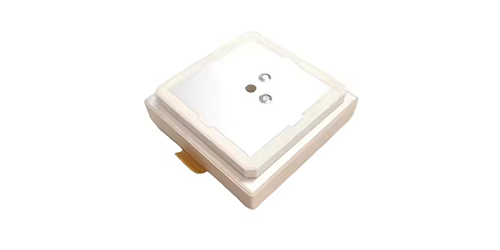
Beneath the casing lies a complex arrangement of elements that determine the antenna’s performance. The GNSS section typically consists of a patch antenna, a type of microstrip antenna known for its low profile, high gain, and directional characteristics. Patch antennas are ideal for vehicle tracking because they can be designed to receive signals from overhead satellites, minimizing interference from ground-based sources. To further enhance signal strength, many antennas incorporate a low-noise amplifier (LNA), which amplifies weak incoming signals while adding minimal noise, a crucial feature in areas with poor satellite visibility. The gain of the antenna, measured in decibels relative to an isotropic radiator (dBi), is a key specification here; a higher gain (e.g., 28 dBi as in the KC.GA.00026 model mentioned earlier) indicates a stronger ability to focus and amplify signals, though it may also mean a narrower beamwidth, requiring more precise positioning on the vehicle.
Polarization is another critical design consideration. GNSS signals are transmitted with right-hand circular polarization (RHCP), which helps mitigate the effects of signal reflection and multipath interference—phenomena where signals bounce off buildings, trees, or other surfaces before reaching the antenna, causing delays and inaccuracies. A vehicle tracking antenna with RHCP will efficiently capture these polarized signals, ensuring that even in challenging environments, the received signal remains strong and reliable. Linear polarization, while sometimes used in specific applications, is generally less effective for GNSS reception due to its sensitivity to signal orientation.
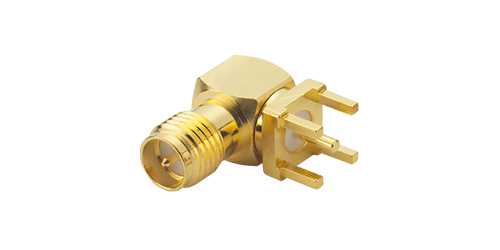
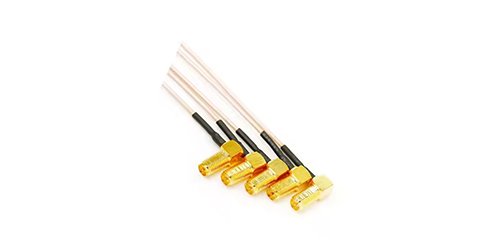
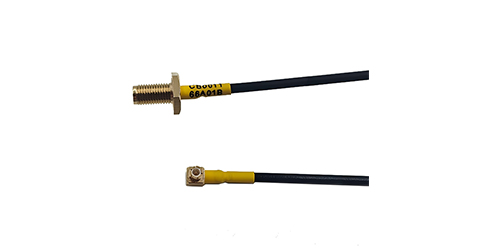
The connectivity of the antenna is equally important, as it determines how the antenna interfaces with the tracking device. The SMA (SubMiniature version A) connector is a common choice in vehicle tracking antennas, prized for its compact size, robust mechanical design, and excellent electrical performance. SMA connectors provide a secure, weatherproof connection, ensuring that the RF signal is transmitted with minimal loss between the antenna and the tracking device. The cable linking the antenna to the device is typically made from RG174, a flexible coaxial cable with low attenuation, making it suitable for short to medium length runs. For custom installations, longer cables or alternative types (such as RG58) may be used, though care must be taken to minimize signal loss, which increases with cable length and frequency.
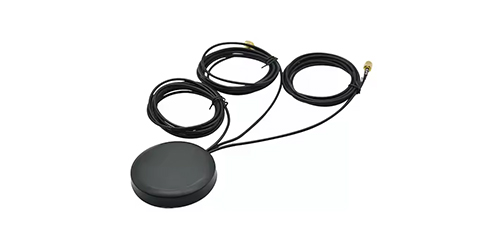
Mounting options for vehicle tracking antennas are designed to accommodate the diverse needs of different vehicles and installations. Magnetic mounts are a popular choice, offering quick and easy installation without the need for drilling or permanent fixtures. These antennas feature a strong magnet embedded in the base, allowing them to adhere securely to the roof, hood, or trunk of a vehicle. 3M adhesive mounts provide a more permanent solution, bonding the antenna to the vehicle’s surface with high-strength adhesive, ensuring stability even at high speeds or over rough terrain. For larger vehicles such as trucks, trailers, or construction equipment, bolt-on mounts may be used, providing a more secure attachment that can withstand the rigors of heavy-duty use.
The operating temperature range of the antenna is a testament to its durability, with most high-quality models rated to function from -40°C to +85°C. This wide range ensures that the antenna can perform reliably in extreme weather conditions, from the frigid winters of northern Canada to the scorching deserts of the Middle East. Such resilience is critical for industries that operate around the clock, regardless of the weather, as any downtime in tracking could lead to lost assets, delayed deliveries, or compromised safety.

Regulatory compliance is another key aspect of vehicle tracking antennas, with certifications such as RoHS (Restriction of Hazardous Substances) ensuring that the antenna is free from harmful materials like lead, mercury, and cadmium. RoHS compliance is not only a legal requirement in many regions but also reflects a commitment to environmental sustainability, a growing concern for businesses and consumers alike. Other certifications, such as FCC (Federal Communications Commission) in the United States or CE (Conformité Européenne) in Europe, ensure that the antenna meets strict electromagnetic compatibility (EMC) standards, preventing interference with other electronic devices and ensuring safe operation within regulated frequency bands.
The applications of vehicle tracking antennas are as diverse as the industries they serve. In the transportation and logistics sector, these antennas enable fleet managers to track the real-time location of delivery trucks, optimize routes to reduce fuel consumption and delivery times, and monitor driver behavior—such as speeding or harsh braking—to improve safety and reduce maintenance costs. For example, a delivery company operating a fleet of 100 vehicles can use tracking data to identify inefficient routes, leading to significant savings in fuel and labor costs over time. Similarly, in the construction industry, antennas installed on heavy machinery allow project managers to track equipment location, prevent theft, and ensure that assets are being used efficiently across multiple job sites.
Emergency services also rely heavily on vehicle tracking antennas to dispatch vehicles quickly and efficiently. Ambulances, fire trucks, and police cars equipped with tracking systems can be routed to emergencies using the shortest possible path, taking into account real-time traffic data, potentially saving lives in critical situations. The accuracy of the antenna’s location data is particularly crucial here, as even a few seconds of delay can have severe consequences.
In the realm of asset security, vehicle tracking antennas play a vital role in stolen vehicle recovery. By continuously transmitting the vehicle’s location, these antennas enable law enforcement agencies to track and recover stolen vehicles quickly, often before any significant damage occurs. Some advanced systems even allow for remote immobilization of the vehicle once it has been identified as stolen, further enhancing security.
The agricultural industry is another sector benefiting from vehicle tracking antennas. Farmers use GPS-equipped tractors and harvesters to optimize planting, irrigation, and harvesting, ensuring that resources are used efficiently and crop yields are maximized. The antenna’s ability to maintain signal integrity in rural areas, where satellite visibility may be obstructed by crops or rolling hills, is essential for the success of these precision agriculture techniques.
As technology continues to evolve, the role of vehicle tracking antennas is set to expand even further. The advent of 5G networks promises faster data transmission speeds and lower latency, enabling more sophisticated tracking features such as real-time video streaming from vehicle cameras, advanced driver assistance systems (ADAS), and integration with smart city infrastructure. Multi-constellation GNSS receivers, combined with advanced antenna designs, will push positioning accuracy to centimeter levels, opening up new applications in autonomous vehicles, where precise location data is critical for safe operation.
Moreover, the rise of the Internet of Things (IoT) is transforming vehicle tracking into a holistic ecosystem, where antennas not only transmit location data but also connect to a wide range of sensors monitoring vehicle health, fuel levels, tire pressure, and more. This integration allows for predictive maintenance, where potential issues are identified before they lead to breakdowns, reducing downtime and repair costs. The antenna, as the gateway to this interconnected network, will play a central role in enabling this level of connectivity and data exchange.
In conclusion, the vehicle tracking antenna is far more than a simple piece of hardware; it is the linchpin of modern fleet management, asset security, and operational efficiency. Its ability to withstand harsh environments, receive and transmit signals across multiple frequencies, and integrate seamlessly with tracking systems makes it an indispensable component in a wide range of industries. As technology advances, the demand for higher accuracy, greater reliability, and enhanced connectivity will drive innovation in antenna design, ensuring that these unsung heroes continue to evolve and adapt to meet the needs of a rapidly changing world. Whether it is optimizing delivery routes, recovering stolen vehicles, or enabling precision agriculture, the vehicle tracking antenna remains a critical tool in the quest for greater efficiency, safety, and control in the automotive and transportation sectors.
Lucy Yang | lucy.y@toxutech.com
Dotty Zhao | sales04@toxutech.com
Global Business Director / Sales Team / Global Operations


 En
 Cn
 Korean
 Home >
