

-
Products -PCBA Manufacturing RF Connectors RF Cable Assemblys Embedded Antennas External Antennas GNSS Positioning Solutions
RF Connectors

RF Cable Assemblys
Embedded Antennas
External Antennas
GNSS Positioning Solutions









 Language


Language


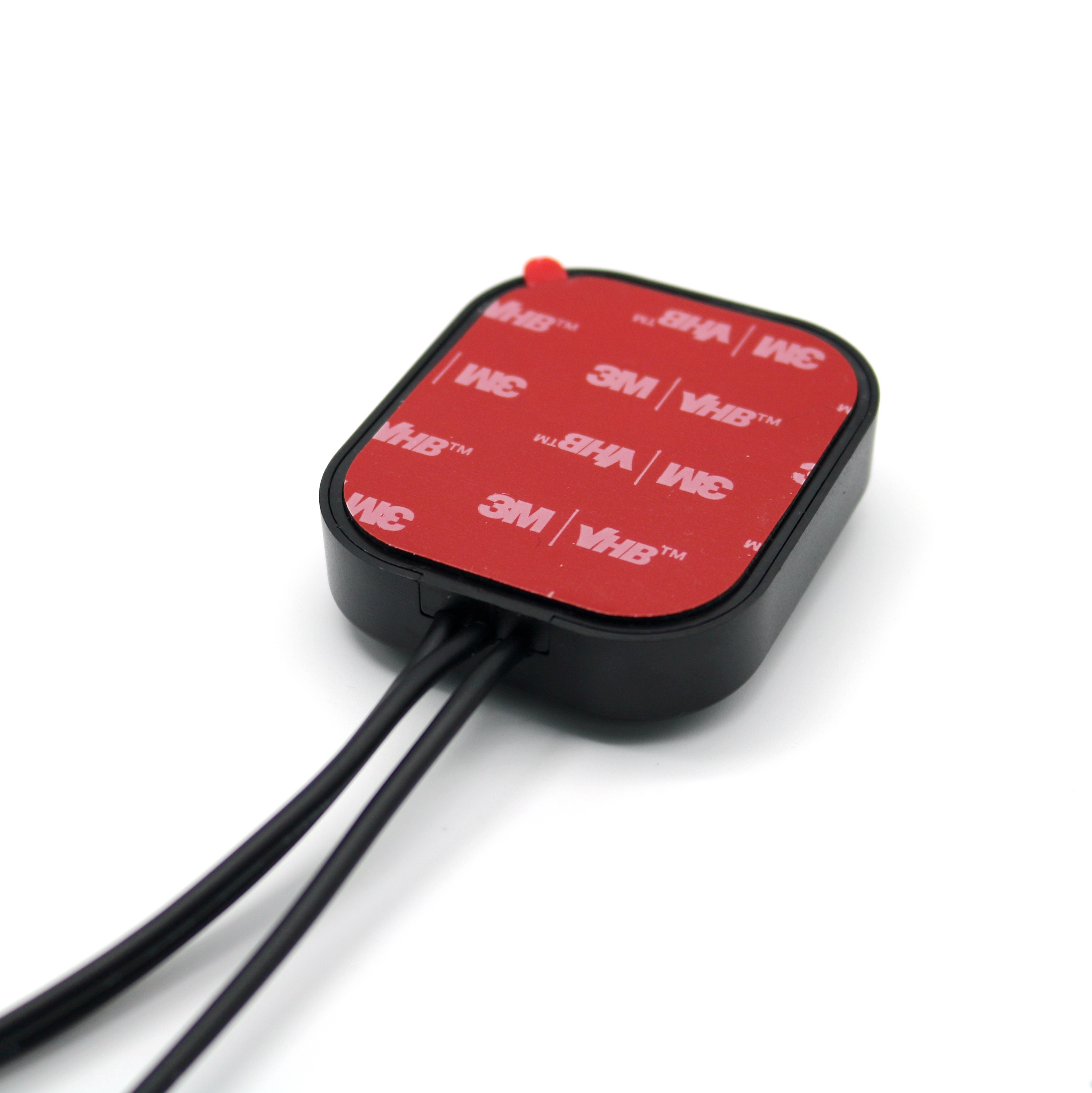
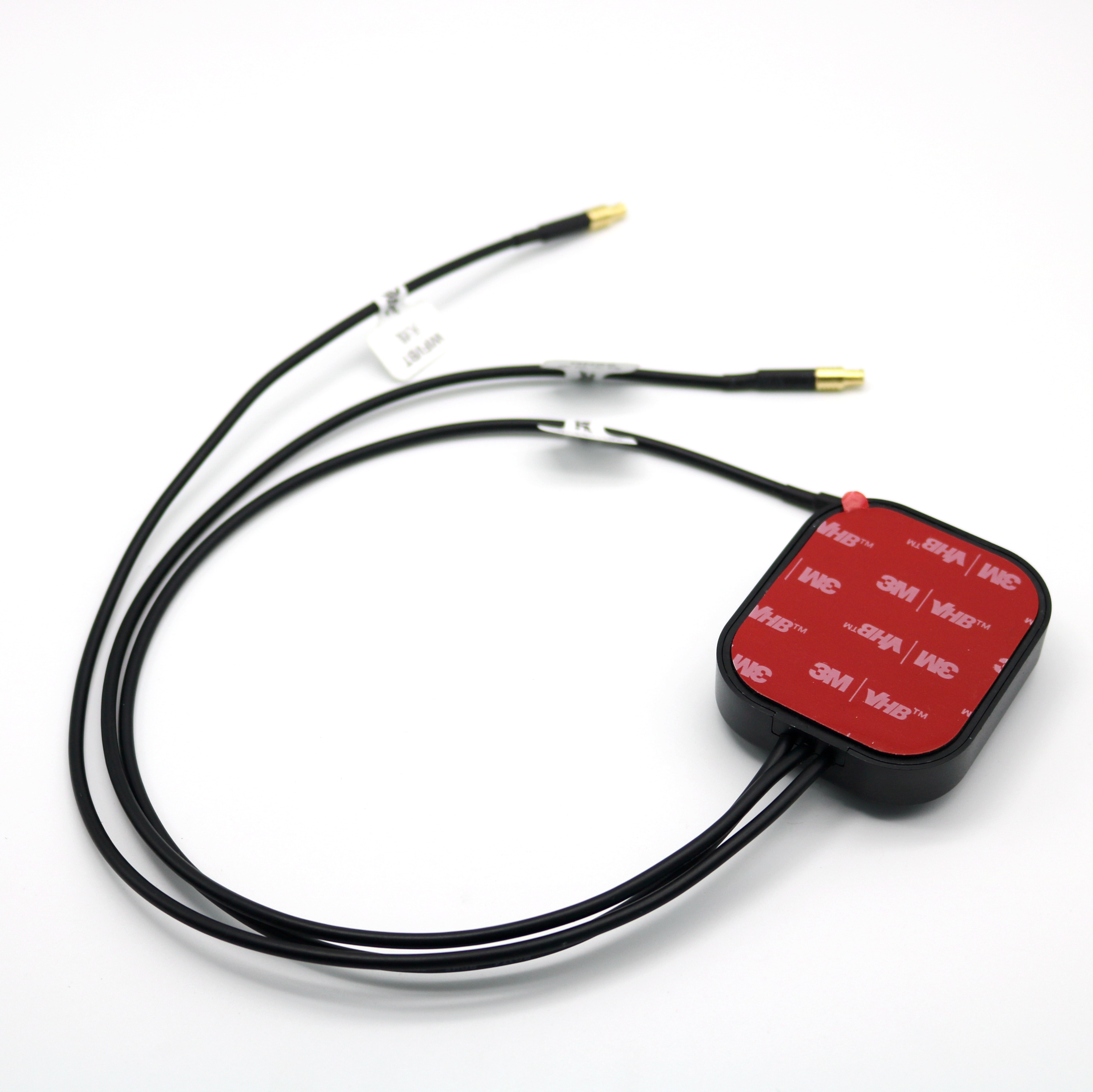

Model: TX-G59
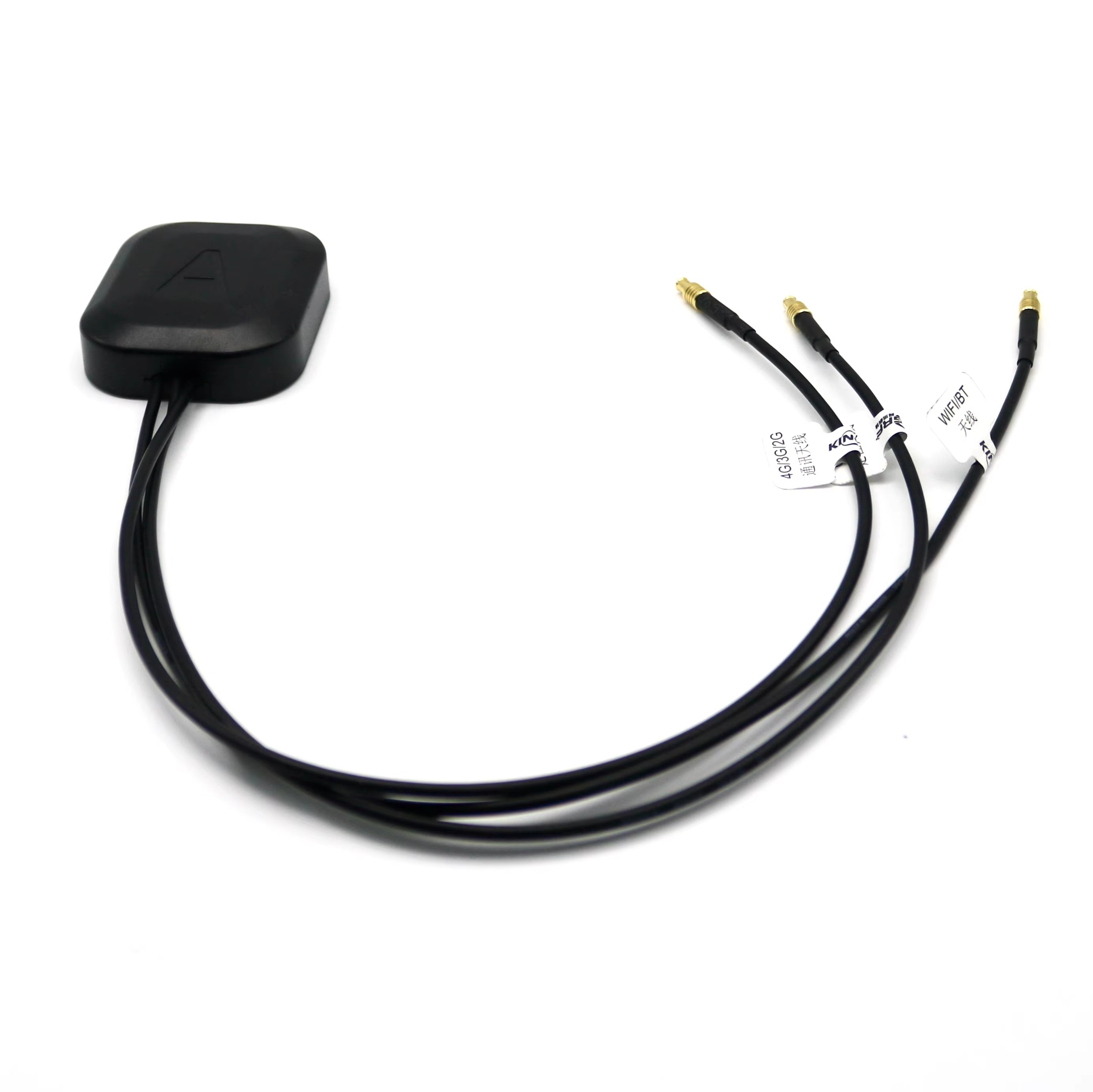
The TOXU TX-G59 is a low-profile 3-in-1 combination antenna integrating active GPS/BDS GNSS, 4G LTE, and 2.4GHz WiFi/Bluetooth functions in one compact housing. It is designed for vehicle telematics, fleet-management terminals, IoT gateways, tracking devices, and other connected equipment requiring positioning and wireless communication.
● Three Integrated Antenna Functions:Combines one active GNSS antenna, one 4G LTE antenna, and one 2.4GHz WiFi/Bluetooth antenna in a single compact enclosure.
● GPS and BDS Signal Reception:The active GNSS element covers GPS L1 at 1575.42MHz and BDS B1 at 1561.098MHz for compatible navigation receivers.
● Wide-Band 4G LTE Coverage:Covers 824–960MHz and 1710–2690MHz for compatible cellular communication modules and vehicle terminals.
● 2.4GHz WiFi and Bluetooth Support:The communication element covers 2400–2500MHz for compatible WiFi and Bluetooth equipment.
● Low-Profile Integrated Housing:Reduces the number of separately installed antennas and supports compact vehicle, tracking, gateway, and industrial equipment layouts.
● Custom Cable and Connector Support:The standard specification uses three 1000mm RG174 cables with SMA male connectors, while alternative configurations can be evaluated for OEM projects.
The TOXU TX-G59 is a compact 3-in-1 external combination antenna integrating active GPS/BDS GNSS positioning, 4G LTE cellular communication, and 2.4GHz WiFi/Bluetooth connectivity in one low-profile housing.
By combining three antenna functions into one enclosure, the TX-G59 helps reduce the number of separately mounted antennas, simplify equipment cabling, and support cleaner integration in vehicle telematics terminals, fleet-management devices, IoT gateways, tracking equipment, routers, and industrial communication systems.
The active GNSS element supports GPS L1 at 1575.42±1.023MHz and BDS B1 at 1561.098±2.046MHz. It adopts right-hand circular polarization and provides a specified active gain of 28±3dB with a noise figure of no more than 1.5dB.
The cellular element covers 824–960MHz and 1710–2690MHz for compatible 4G LTE communication modules. The separate 2.4GHz wireless element covers 2400–2500MHz for compatible WiFi and Bluetooth equipment.
The TX-G59 has a nominal impedance of 50 ohms. The supplied specification lists three 1000mm RG174 coaxial cables and SMA male connectors, allowing the GNSS, LTE, and WiFi/Bluetooth elements to connect to their corresponding RF ports.
The GNSS active circuit operates from 3–5V DC and consumes approximately 7–15mA. Compatible GNSS receivers must provide the required DC bias power through the corresponding RF interface.
The TX-G59 is an antenna assembly only. It does not independently calculate coordinates, provide cellular network service, generate WiFi or Bluetooth communication, or determine positioning accuracy. These functions are provided by the connected GNSS receiver and communication modules.
3-in-1 Combination Architecture
Integrates GNSS, 4G LTE, and 2.4GHz WiFi/Bluetooth antenna functions in one compact external enclosure.
Active GPS and BDS Reception
Supports compatible GPS L1 and BDS B1 satellite-navigation receivers through a dedicated active GNSS element.
Specified GNSS Active Gain of 28±3dB
The integrated low-noise amplifier provides the specified GNSS signal amplification under the corresponding test conditions.
GNSS Noise Figure ≤1.5dB
Supports low-noise amplification of compatible satellite-navigation signals before transmission to the connected receiver.
Wide-Band 4G LTE Coverage
Covers 824–960MHz and 1710–2690MHz for compatible cellular modules, gateways, trackers, and vehicle communication terminals.
2.4GHz WiFi and Bluetooth Coverage
Covers 2400–2500MHz for compatible WiFi and Bluetooth communication equipment.
Independent RF Connections
Three separate coaxial cables connect the GNSS, LTE, and WiFi/Bluetooth antenna elements to their corresponding equipment ports.
Low-Profile External Housing
The compact enclosure supports discreet installation on compatible vehicle, tracking, gateway, and industrial equipment surfaces.
RG174 Coaxial Cables
The standard specification uses three 1000mm RG174 cables for routing between the antenna and connected RF equipment.
OEM Configuration Support
Cable length, connector type, product marking, packaging, and related integration requirements can be evaluated according to the equipment and order quantity.
| Model | TX-G59 |
| Internal Reference | WX.0005.EX.G6S |
| Product Type | 3-in-1 GNSS / 4G LTE / WiFi-Bluetooth Combination Antenna |
| Integrated Antenna Elements | 1 × GNSS + 1 × 4G LTE + 1 × WiFi/Bluetooth |
| Nominal Impedance | 50 Ohm |
| Supported GNSS Signals | GPS L1 / BDS B1 |
| GPS Frequency | 1575.42±1.023MHz |
| BDS Frequency | 1561.098±2.046MHz |
| Antenna Configuration | Active |
| Polarization | RHCP |
| Axial Ratio | ≤4dB |
| Active Gain | 28±3dB |
| Noise Figure | ≤1.5dB |
| VSWR | ≤2.0 |
| Operating Voltage | 3–5V DC |
| Operating Current | 7–15mA |
| Frequency Range | 824–960MHz / 1710–2690MHz |
| Polarization | Linear Polarization |
| Average Gain | Approximately -2dBi, According to Supplied Data |
| VSWR | ≤3.5 |
| DC Power | Not Required for the Passive LTE Element |
| Frequency Range | 2400–2500MHz |
| Compatible Functions | 2.4GHz WiFi / Bluetooth |
| Polarization | Linear Polarization |
| Average Gain | Approximately -2dBi, According to Supplied Data |
| VSWR | ≤2.5 |
| DC Power | Not Required for the Passive WiFi/Bluetooth Element |
| Cable Configuration | 3 Separate Coaxial Cables |
| Cable Type | RG174 |
| Standard Cable Length | 1000mm Each |
| Standard Connector | SMA Male |
| Operating Temperature | -40°C to +85°C |
| Storage Temperature | -40°C to +85°C |
• Vehicle Telematics Control Units
• Fleet-Management Terminals
• Vehicle Tracking Devices
• Cellular IoT Gateways
• 4G Routers and Communication Terminals
• Asset-Tracking Equipment
• Industrial IoT Devices
• Remote Monitoring Systems
• Navigation and Data-Communication Equipment
• OEM Connected-Vehicle Electronics
The TX-G59 provides three independent RF connections for the GNSS, LTE, and WiFi/Bluetooth antenna elements. Each labeled cable must be connected to the corresponding RF port of the compatible receiver or communication module.
The GNSS cable must connect to a GPS L1 and/or BDS B1 receiver port capable of supplying compatible DC bias power. The specified GNSS operating voltage is 3–5V DC, with current consumption of approximately 7–15mA.
The LTE cable should connect to a compatible 50-ohm cellular-module antenna port operating within 824–960MHz and 1710–2690MHz.
The WiFi/Bluetooth cable should connect to a compatible 50-ohm 2.4GHz RF port operating within 2400–2500MHz.
This standard configuration includes one LTE element and one WiFi/Bluetooth element. It does not provide a 2 × 2 MIMO antenna configuration. Equipment requiring LTE MIMO or WiFi MIMO normally requires additional independent antenna elements and RF connections.
Before integration, confirm the module frequencies, number of required antenna ports, GNSS antenna-bias voltage, RF impedance, connector type, cable length, installation surface, and available mechanical space.
For suitable surface-mounted installation, clean and dry the mounting area before securing the antenna. Final adhesive construction and mounting requirements should be confirmed before ordering.
Install the antenna away from large metal obstructions, high-current cables, motors, switching power supplies, transmitting antennas, and other possible sources of signal blockage or electromagnetic interference.
Final performance can be affected by the connected modules, installation position, mounting surface, cable routing, equipment enclosure, surrounding electronics, cellular network conditions, and satellite visibility. Sample testing in the actual equipment is recommended before volume production.
TOXU provides GNSS antennas, cellular antennas, WiFi and Bluetooth antennas, multi-function combination antennas, RF cable assemblies, connectors, GNSS modules, receiver boards, and integrated RF hardware for equipment manufacturers and system integrators.
Our engineering team supports frequency selection, module compatibility evaluation, antenna-port confirmation, cable and connector matching, installation analysis, RF testing, sample verification, and customized antenna development.
With IATF16949 and ISO9001-certified manufacturing capabilities, TOXU supports OEM labels, customized cables and connectors, packaging, quality inspection, prototype verification, and stable volume-production delivery for overseas B2B projects.
Q: Which antenna functions are integrated into the TX-G59?
A: It integrates one active GPS/BDS GNSS antenna, one 4G LTE antenna, and one 2.4GHz WiFi/Bluetooth antenna.
Q: Is the TX-G59 a MIMO antenna?
A: No. The supplied configuration has one LTE element and one WiFi/Bluetooth element. MIMO normally requires at least two independent antenna elements for the corresponding communication system.
Q: Which GNSS signals does it support?
A: The supplied specification lists GPS L1 at 1575.42MHz and BDS B1 at 1561.098MHz.
Q: Is the GNSS element active?
A: Yes. It provides a specified active gain of 28±3dB and requires 3–5V DC bias power from a compatible receiver.
Q: Which LTE frequencies are covered?
A: The LTE element covers 824–960MHz and 1710–2690MHz.
Q: Does it support 5GHz WiFi?
A: No. The supplied specification lists 2400–2500MHz, which covers compatible 2.4GHz WiFi and Bluetooth applications.
Q: How many cables does the antenna have?
A: The standard configuration has three separate RG174 coaxial cables, one for each antenna function.
Q: What are the standard cable length and connector?
A: The supplied specification lists three 1000mm RG174 cables with SMA male connectors.
Q: Can the TX-G59 determine a vehicle’s position independently?
A: No. The antenna receives and amplifies compatible satellite signals. Position calculation and data output are handled by the connected GNSS receiver.
Q: Can TOXU customize the cables and connectors?
A: Cable length, connector type, labels, packaging, and related integration requirements can be evaluated according to the equipment and project quantity.
Lucy Yang | lucy.y@toxutech.com
Nicole Li | nicole@toxutech.com
Dotty Zhao | sales04@toxutech.com
Global Business Director / Sales Team / Global Operations


 En
En Cn
Cn Korean
 Home >

