

-
Products -PCBA Manufacturing RF Connectors RF Cable Assemblys Embedded Antennas External Antennas GNSS Positioning Solutions
RF Connectors

RF Cable Assemblys
Embedded Antennas
External Antennas
GNSS Positioning Solutions






 Language


Language


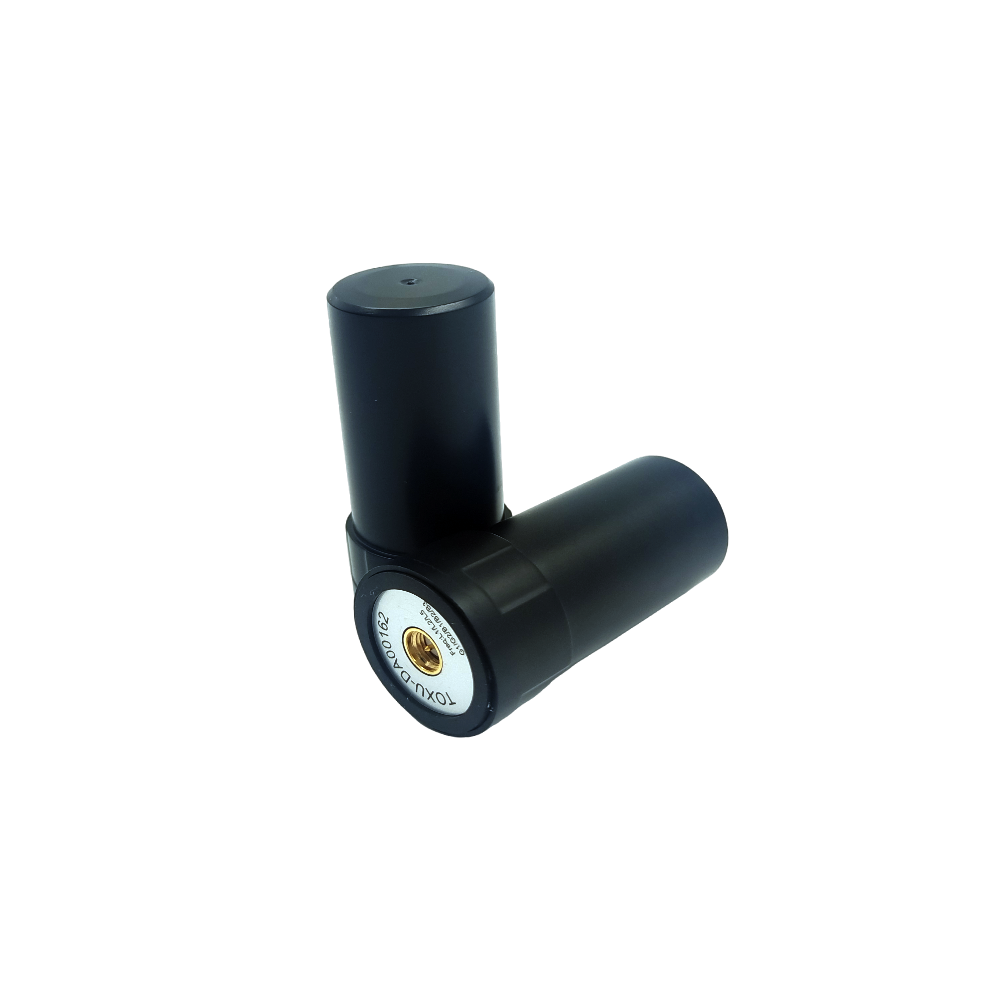
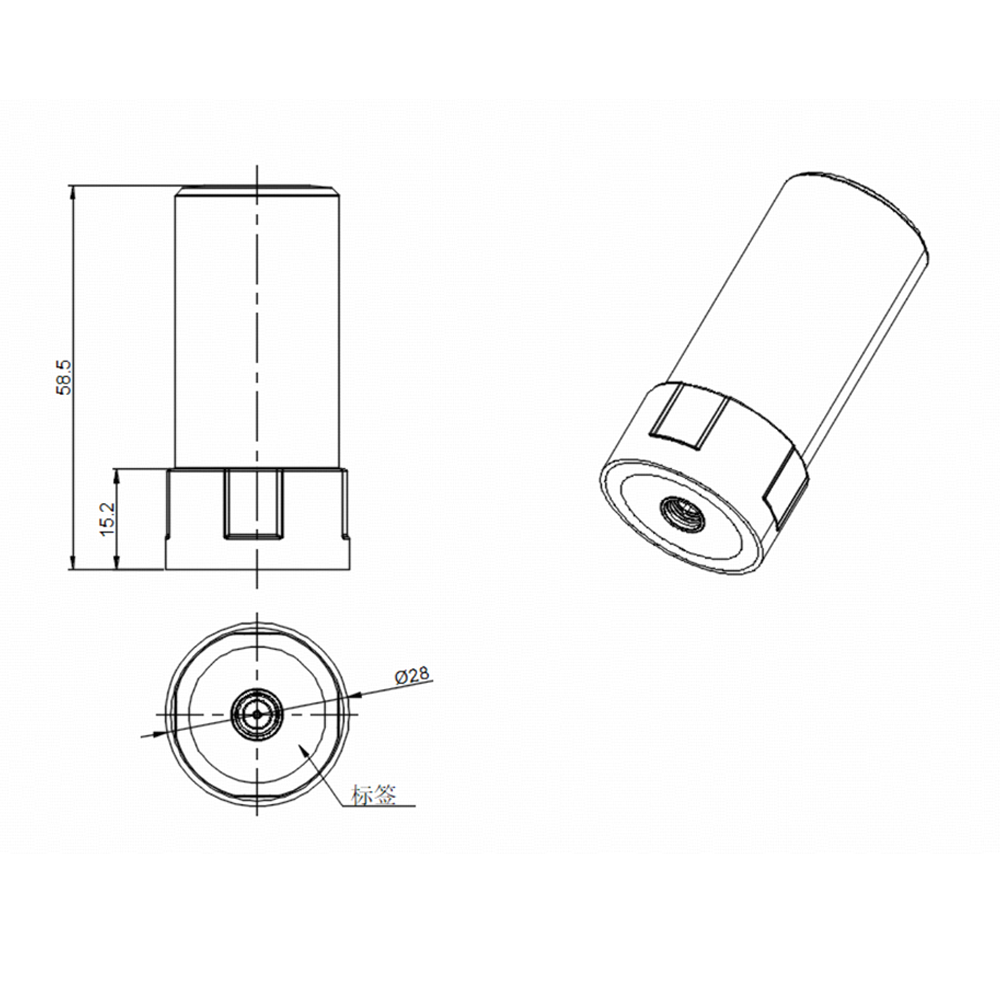

Model: TX-G006
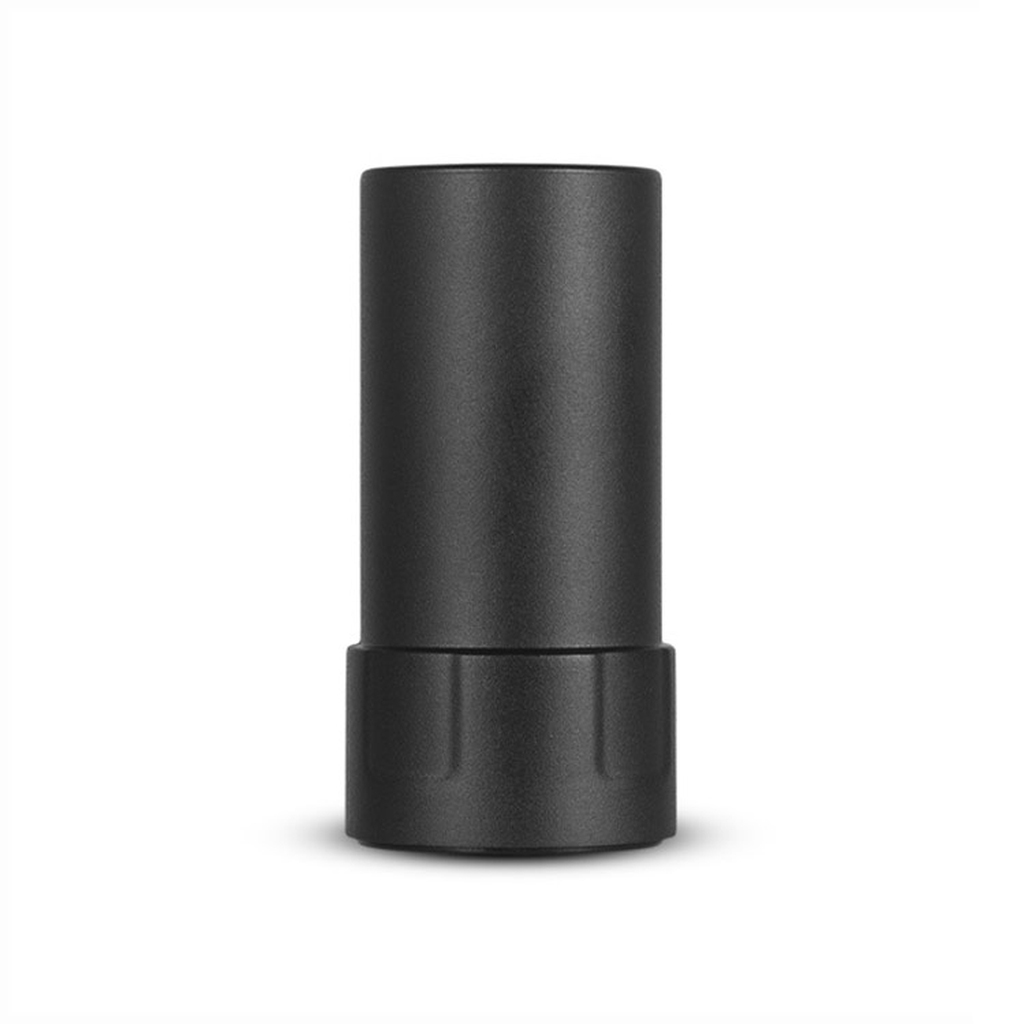
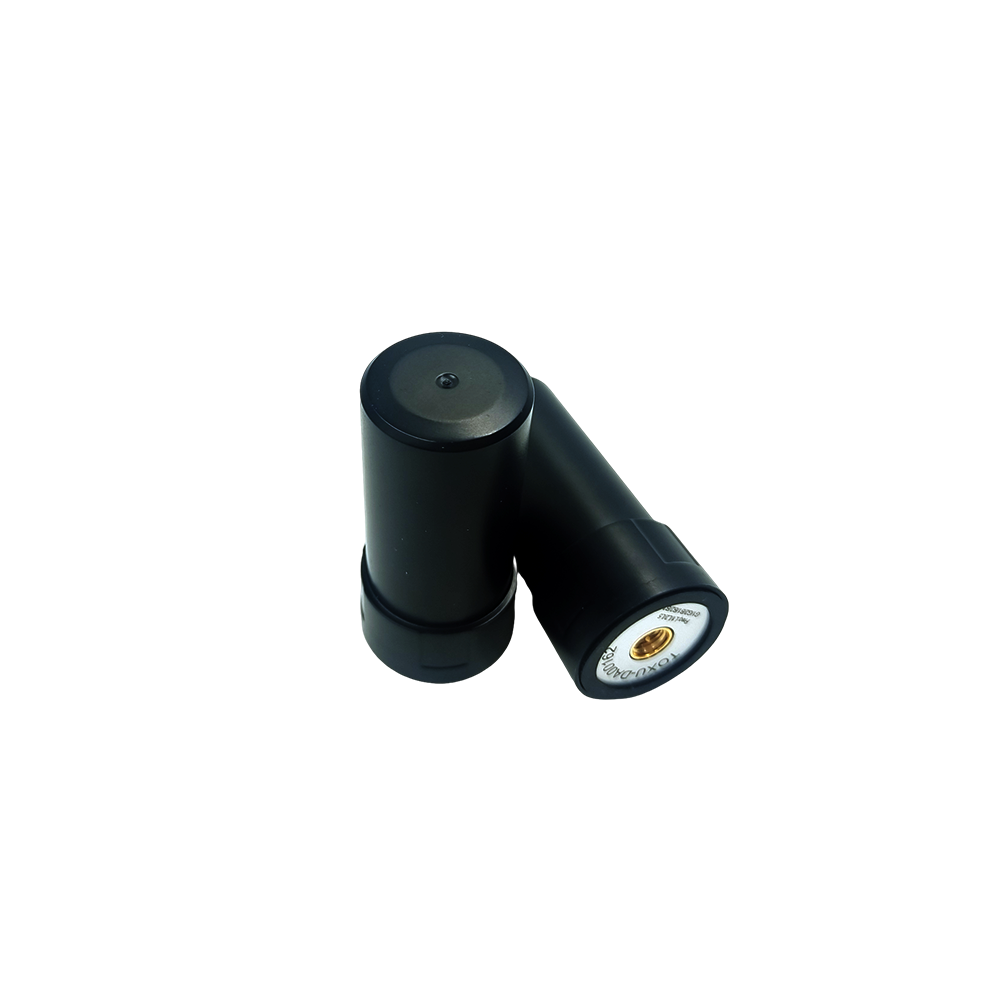
The TOXU TX-G006 is a compact multi-frequency active GNSS antenna featuring a four-arm helical structure. It covers compatible GPS, BDS, GLONASS, and Galileo signals across the L1, L2, and L5 frequency regions, supporting integration into UAVs, handheld terminals, tracking equipment, and mobile positioning systems.
● Four-Arm Helical Structure:Provides circularly polarized GNSS reception with reduced sensitivity to changes in antenna orientation.
● L1, L2 and L5 Coverage:Operates across 1175–1260MHz and 1550–1610MHz for compatible multi-frequency GNSS signals.
● Multi-Constellation Reception:Supports compatible GPS, BDS, GLONASS, and Galileo satellite navigation signals.
● Integrated Active Circuit:The built-in low-noise amplifier provides 39dB typical gain with a specified noise figure below 2.5dB.
● Wide 3–10V DC Input:Supports receiver-supplied antenna bias power with current consumption below 35mA.
● Compact and Lightweight Design:Suitable for space- and weight-sensitive equipment such as UAVs and handheld positioning terminals.
The TOXU TX-G006 is a multi-frequency active GNSS antenna designed for equipment requiring satellite signal reception across the L1, L2, and L5 frequency regions.
The antenna adopts a four-arm helical structure that supports circularly polarized GNSS signal reception and reduces sensitivity to changes in antenna orientation. This structure is particularly useful for mobile equipment that cannot always maintain a fixed horizontal attitude.
Its operating ranges of 1175–1260MHz and 1550–1610MHz cover compatible GPS, BDS, GLONASS, and Galileo signals, including frequency regions associated with GPS L1, L2 and L5; BDS B1, B2 and B3; GLONASS L1 and L2; and Galileo E1 and E5.
The integrated active circuit provides 39dB typical gain with a specified noise figure below 2.5dB. Out-of-band rejection of 50dB typical at CF ±50MHz helps reduce the influence of signals outside the intended operating bands.
The active antenna operates from a 3–10V DC bias supply with current consumption below 35mA. Power is normally supplied through the RF connection by a compatible GNSS receiver.
Its compact and lightweight configuration supports integration into UAVs, handheld terminals, tracking equipment, remote telemetry systems, mobile positioning devices, and other applications where installation space and antenna orientation may vary.
The TX-G006 is a GNSS antenna only. It does not include a GNSS receiver, RTK positioning engine, navigation processor, inertial measurement unit, correction-data modem, or positioning-data output interface.
Four-Arm Helical Antenna Structure
The four-arm helical design supports circularly polarized GNSS signal reception in equipment where antenna orientation may change during operation.
Multi-Frequency GNSS Coverage
Covers 1175–1260MHz and 1550–1610MHz for compatible L1, L2, and L5 satellite navigation signals.
Multi-Constellation Compatibility
Supports compatible GPS, BDS, GLONASS, and Galileo signals within the specified operating ranges.
39dB Typical Active Gain
The integrated active circuit amplifies received satellite signals before transferring them to the connected GNSS receiver.
Noise Figure Below 2.5dB
The specified low-noise amplifier helps limit additional noise introduced during signal amplification.
50dB Typical Out-of-Band Rejection
The active filtering circuit provides specified rejection of signals outside the intended operating bands at CF ±50MHz.
Wide 3–10V DC Bias Input
The active antenna supports a wide receiver-supplied bias-voltage range for integration with compatible GNSS equipment.
Current Consumption Below 35mA
The specified current consumption supports integration into compatible battery-powered and mobile equipment.
50-Ohm RF Interface
The nominal 50-ohm impedance supports connection to compatible GNSS receivers and RF cable assemblies.
Compact and Lightweight Configuration
Designed for equipment with restrictions on antenna size and weight, including UAVs and handheld terminals.
RoHS-Compliant Construction
The available product information specifies compliance with RoHS requirements.
| Model | TX-G006 |
| Product Type | Multi-Frequency Active GNSS Helical Antenna |
| Antenna Structure | Four-Arm Helical |
| Supported Constellations | GPS / BDS / GLONASS / Galileo |
| Supported Frequency Regions | L1 / L2 / L5 |
| Lower Frequency Range | 1175–1260MHz |
| Upper Frequency Range | 1550–1610MHz |
| Compatible GPS Signals | L1 / L2 / L5 |
| Compatible BDS Signals | B1 / B2 / B3 |
| Compatible GLONASS Signals | L1 / L2 |
| Compatible Galileo Signals | E1 / E5 |
| Antenna Configuration | Active |
| Typical Active Gain | 39dB |
| Noise Figure | <2.5dB |
| Output VSWR | <1.6 |
| Nominal Impedance | 50 Ohm |
| Operating Voltage | 3–10V DC |
| Current Consumption | <35mA |
| Out-of-Band Rejection | 50dB Typical at CF ±50MHz |
| Environmental Compliance | RoHS Compliant |
• Unmanned Aerial Vehicles
• Handheld GNSS Terminals
• Mobile Positioning Equipment
• Tracking and Monitoring Devices
• Aerial Photography Platforms
• Remote Telemetry Equipment
• Navigation and Dispatch Systems
• Measurement and Control Equipment
• Multi-Frequency GNSS Receiver Systems
• RTK-Capable Positioning Systems
The TX-G006 must be connected to a compatible GNSS receiver supporting the required constellations and frequency bands.
The antenna cannot add unsupported frequencies to the receiver. For example, L2 or L5 reception requires both an L2- or L5-capable antenna and a receiver supporting the corresponding signal.
The active antenna requires a 3–10V DC bias supply through the RF connection. Confirm the receiver’s antenna-bias voltage, current capacity, short-circuit protection, and active-antenna detection functions before connection.
Although the antenna can be integrated into an RTK positioning system, it does not independently calculate RTK positions. Positioning performance depends on the GNSS receiver, correction data, firmware, satellite visibility, RF environment, antenna installation, and complete system design.
For UAV and mobile-terminal integration, the antenna should be installed away from high-power transmitters, switching power supplies, digital clock sources, metal obstructions, motors, and other potential electromagnetic interference sources.
Final RF performance should be verified on the customer’s finished device because the enclosure, ground structure, installation position, nearby electronics, RF cable, and connector can affect reception performance.
TOXU provides GNSS antenna design, RF matching, active-circuit integration, connector and cable configuration, prototype verification, testing, and volume-production support for equipment manufacturers and system integrators.
Our product range includes GPS and GNSS antennas, multi-frequency RTK antennas, UAV antennas, automotive combination antennas, cellular antennas, WiFi and Bluetooth antennas, RF cable assemblies, RF connectors, GNSS modules, receiver boards, and PCBA manufacturing services.
With IATF16949 and ISO9001-certified manufacturing capabilities, TOXU supports product customization, engineering verification, quality control, and stable delivery for overseas B2B projects.
Q: What type of antenna is the TX-G006?
A: It is a four-arm helical multi-frequency active GNSS antenna covering compatible L1, L2, and L5 frequency regions.
Q: Which satellite navigation systems does it support?
A: Its listed frequency ranges cover compatible GPS, BDS, GLONASS, and Galileo signals.
Q: Can it receive L1, L2 and L5 signals?
A: Yes. The antenna covers 1175–1260MHz and 1550–1610MHz. The connected receiver must also support the required signals.
Q: Why use a four-arm helical structure?
A: This structure supports circularly polarized GNSS reception and is less dependent on maintaining a fixed horizontal antenna orientation, making it suitable for mobile equipment.
Q: Is it an active antenna?
A: Yes. The listed configuration integrates an active amplifier circuit with 39dB typical gain.
Q: What antenna bias voltage is required?
A: The active circuit operates from 3–10V DC with current consumption below 35mA.
Q: Can TX-G006 be used for RTK positioning?
A: It can be connected to a compatible multi-frequency RTK receiver, but the antenna itself does not calculate positions or process correction data.
Q: Is it suitable for UAV installation?
A: The compact four-arm helical structure is suitable for evaluation in UAV applications, particularly where antenna attitude can change during operation. Final performance must be tested on the complete UAV platform.
Q: Is the antenna waterproof?
A: No IP rating is provided in the available information, so waterproof performance cannot currently be claimed.
Q: Which connector does the antenna use?
A: The connector is not identified in the available source information and must be confirmed according to the actual TX-G006 configuration.
Lucy Yang | lucy.y@toxutech.com
Nicole Li | nicole@toxutech.com
Dotty Zhao | sales04@toxutech.com
Global Business Director / Sales Team / Global Operations


 En
En Cn
Cn Korean
 Home >

