

-
Products -PCBA Manufacturing RF Connectors RF Cable Assemblys Embedded Antennas External Antennas GNSS Positioning Solutions
RF Connectors

RF Cable Assemblys
Embedded Antennas
External Antennas
GNSS Positioning Solutions






 Language


Language

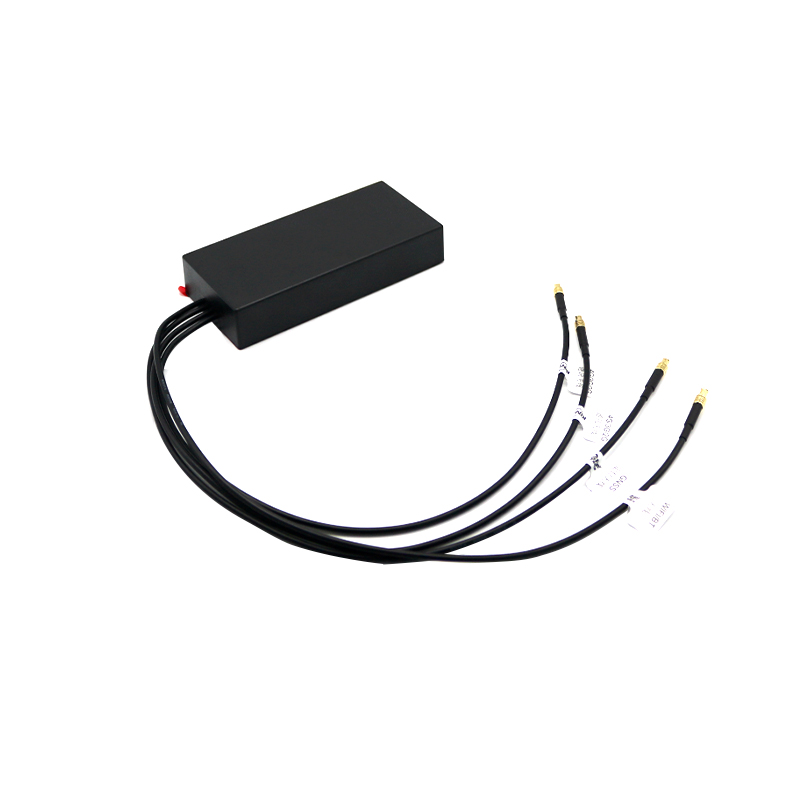


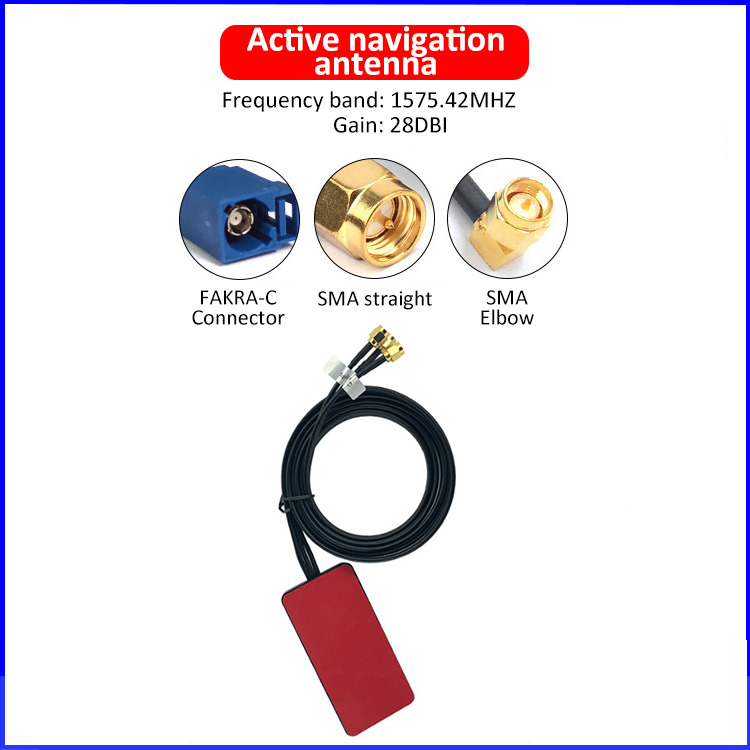
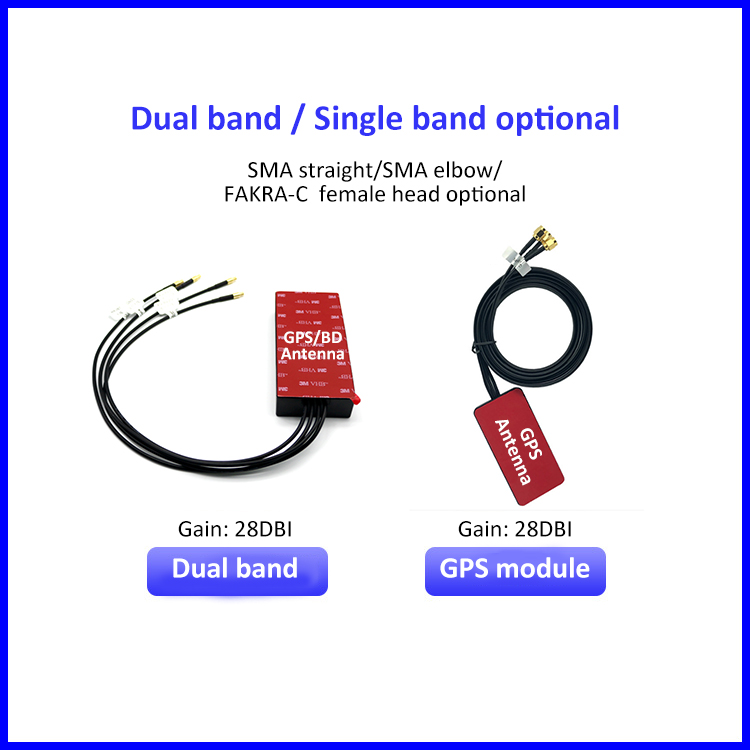
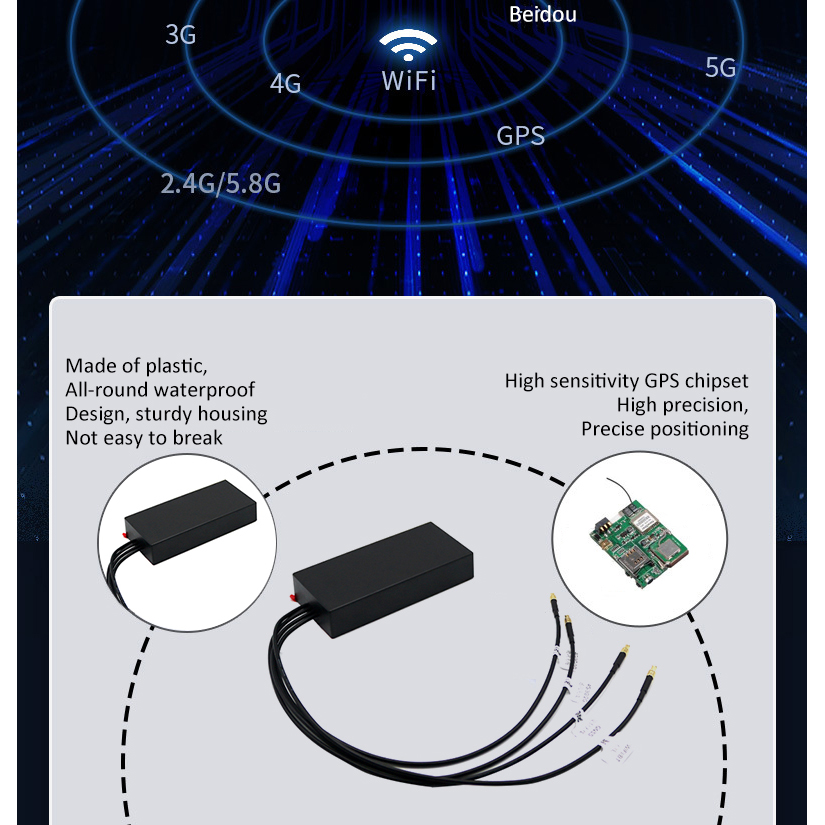
Model: TX-G97
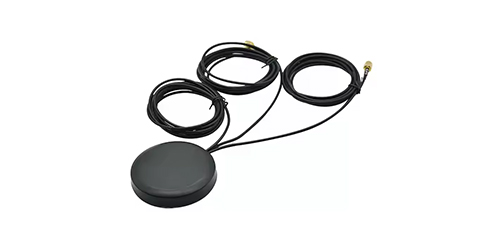
The TOXU TX-G97 is a 3-in-1 automotive combination antenna integrating one active GPS/BDS/GLONASS GNSS antenna and two independent 4G LTE antenna elements for cellular MIMO communication.
● GNSS and Dual LTE Integration:Combines one active GNSS antenna and two 4G LTE antenna elements in one compact external housing.
● Dual 4G LTE MIMO:Two independent LTE elements cover 824-960MHz and 1710-2690MHz for compatible main and auxiliary cellular antenna ports.
● Multi-Constellation GNSS:Supports GPS L1, BDS B1, and GLONASS L1 satellite signals for compatible positioning and navigation receivers.
● Active GNSS Reception:Provides 28±3dB active GNSS gain, a noise figure of ≤1.5dB, and 3-5V DC operation.
● Automotive FAKRA Connections:The standard configuration uses dedicated FAKRA-C, FAKRA-D, and FAKRA-K connectors for the three RF signal paths.
● Customizable RF Configuration:Cable length, connector coding, cable identification, labeling, and packaging can be customized according to project requirements.
The TOXU TX-G97 is a 3-in-1 automotive combination antenna integrating one active GNSS antenna and two independent 4G LTE antenna elements into one compact external housing.
The active GNSS section supports GPS L1 at 1575.42MHz, BDS B1 at 1561.098MHz, and GLONASS L1 at 1602.5625MHz. It is designed for compatible single-frequency satellite positioning and navigation receivers.
The two passive LTE antenna elements cover 824-960MHz and 1710-2690MHz. They provide separate RF signal paths for the main and auxiliary antenna ports of compatible 4G LTE MIMO communication equipment.
By combining satellite positioning and dual cellular communication antenna functions in one housing, the TX-G97 helps reduce the number of separately installed antennas required by vehicle telematics terminals, tracking devices, fleet-management systems, and industrial IoT equipment.
The standard configuration uses three 1800mm RG174 coaxial cables with dedicated FAKRA-C, FAKRA-D, and FAKRA-K connectors. Cable length, connector coding, identification labels, and other mechanical details can be evaluated according to the customer’s equipment interface.
3-in-1 Combination Antenna
One active GNSS antenna and two passive 4G LTE antenna elements are integrated into a single external housing.
Dual 4G LTE MIMO Connections
The two independent LTE elements provide separate connections for the main and auxiliary antenna ports of compatible cellular MIMO modules and terminals.
Wide-Band LTE Coverage
Both LTE antenna elements cover 824-960MHz and 1710-2690MHz for compatible 4G LTE communication equipment.
GPS, BDS, and GLONASS Reception
The GNSS section supports GPS L1, BDS B1, and GLONASS L1 satellite signals for compatible positioning and navigation receivers.
Active GNSS Signal Amplification
The integrated GNSS low-noise amplifier provides 28±3dB active gain with a noise figure of ≤1.5dB and requires a compatible 3-5V DC bias supply.
Three Independent RF Cables
Separate RG174 coaxial cables are provided for the GNSS, LTE Main, and LTE Auxiliary antenna connections.
Automotive FAKRA Connector Configuration
The standard configuration uses FAKRA-C for GNSS, FAKRA-D for LTE 1, and FAKRA-K for LTE 2.
Customizable Project Configuration
Cable length, connector coding, cable identification, labeling, and packaging can be evaluated according to customer requirements.
| Model | TX-G97 |
| Reference Antenna Model | ANT-GNSS/LTE-F2-SA-01 |
| Product Type | 3-in-1 GNSS and Dual LTE Automotive Combination Antenna |
| Antenna Combination | Active GNSS + LTE 1 + LTE 2 |
| GNSS Constellations | GPS / BDS / GLONASS |
| GPS Frequency | 1575.42±1.023MHz |
| BDS Frequency | 1561.098±2.046MHz |
| GLONASS Frequency | 1602.5625±4MHz |
| LTE 1 Frequency Range | 824-960MHz / 1710-2690MHz |
| LTE 2 Frequency Range | 824-960MHz / 1710-2690MHz |
| GNSS Polarization | Right-Hand Circular Polarization |
| LTE Polarization | Linear Polarization |
| GNSS Axial Ratio | ≤4dB |
| GNSS Active Gain | 28±3dB |
| LTE Average Gain | -2dBi |
| GNSS Noise Figure | ≤1.5dB |
| GNSS VSWR | ≤2.0 |
| LTE VSWR | ≤3.5 |
| Input Impedance | 50 Ohm |
| GNSS Operating Voltage | 3-5V DC |
| LTE Operating Voltage | 0V DC / Passive Antenna |
| Cable Type | RG174 |
| Standard Cable Length | 1800mm |
| Number of RF Cables | 3 Independent Cables |
| GNSS Connector | FAKRA-C |
| LTE 1 Connector | FAKRA-D |
| LTE 2 Connector | FAKRA-K |
| Operating Temperature | -40°C to +85°C |
| Storage Temperature | -40°C to +85°C |
| Housing Color | Black |
The 28±3dB value refers only to the active GNSS section and must not be presented as the gain of the complete combination antenna. Final connector coding, cable identification, mechanical dimensions, environmental protection, and installation requirements should follow the approved product specification and sample confirmation.
• Vehicle Telematics Control Units
• Fleet Management Terminals
• Vehicle Tracking Devices
• Automotive Navigation Equipment
• 4G LTE MIMO Communication Terminals
• Industrial IoT Gateways
• Asset Tracking Systems
• Remote-Monitoring Equipment
• Mobile Data Terminals
• Positioning and Communication Systems
The TX-G97 provides three independent RF connections: one active GNSS connection, one LTE Main connection, and one LTE Auxiliary connection.
The two LTE cables should be connected to the corresponding main and auxiliary antenna ports of a compatible 4G LTE MIMO communication module. Both LTE antenna elements are passive and do not require a DC power supply.
The GNSS cable must be connected to an active-antenna-compatible GNSS receiver input. The connected receiver should provide a 3-5V DC bias voltage through the coaxial cable to power the integrated GNSS low-noise amplifier.
The standard connector configuration is FAKRA-C for GNSS, FAKRA-D for LTE 1, and FAKRA-K for LTE 2. The connector coding and cable identification must be checked against the final wiring definition before connection.
The TX-G97 supports GPS L1, BDS B1, and GLONASS L1 signals. It does not perform positioning or provide RTK capability by itself. Actual positioning performance depends on the connected GNSS receiver, software, satellite environment, antenna installation, and overall system design.
The antenna should be installed in a suitable position with a clear satellite view for the GNSS section. Nearby metal structures, electronic modules, interference sources, and improper cable routing may affect RF performance.
RF performance should be verified in the final equipment and installation environment before volume production.
TOXU provides automotive combination antenna design, RF tuning, cable processing, FAKRA connector integration, prototype verification, testing, and volume-production support for equipment manufacturers and system integrators.
Our product range includes GNSS antennas, 4G LTE and 5G NR antennas, WiFi and Bluetooth antennas, automotive combination antennas, embedded antennas, RF cable assemblies, RF connectors, PCBA manufacturing, GNSS modules, and receiver boards.
With IATF16949 and ISO9001-certified manufacturing capabilities, TOXU supports customized frequency configurations, cable lengths, connector coding, labels, packaging, RF performance verification, quality control, and stable delivery for overseas B2B projects.
Q: Which antenna functions are integrated into the TX-G97?
A: The TX-G97 integrates one active GNSS antenna and two independent passive 4G LTE antenna elements in one external housing.
Q: Does the TX-G97 include a WiFi antenna?
A: No. According to the available specification, the three RF sections are GNSS, LTE 1, and LTE 2.
Q: Does the TX-G97 support 4G LTE MIMO?
A: Yes. It provides two independent LTE antenna elements for connection to the main and auxiliary antenna ports of compatible MIMO equipment.
Q: Which GNSS signals does the TX-G97 support?
A: It supports GPS L1 at 1575.42MHz, BDS B1 at 1561.098MHz, and GLONASS L1 at 1602.5625MHz.
Q: Is the TX-G97 an RTK antenna?
A: No. The standard TX-G97 supports single-frequency GNSS signals and should not be promoted as an RTK antenna.
Q: Does the GNSS section require power?
A: Yes. The active GNSS section requires a compatible 3-5V DC bias voltage supplied through the GNSS RF cable.
Q: Do the LTE antenna elements require power?
A: No. Both LTE antenna elements are passive.
Q: What connectors are used in the standard configuration?
A: The standard configuration uses FAKRA-C for GNSS, FAKRA-D for LTE 1, and FAKRA-K for LTE 2.
Q: What is the standard cable length?
A: The standard configuration uses three 1800mm RG174 coaxial cables.
Q: Can the cable and connector configuration be customized?
A: Yes. Cable length, connector coding, cable identification, labeling, and packaging can be evaluated according to the equipment interface and project requirements.
Q: Is the TX-G97 IP67 waterproof?
A: A specific waterproof or IP rating should only be stated after it has been confirmed in the approved product specification or corresponding test report.
Lucy Yang | lucy.y@toxutech.com
Nicole Li | nicole@toxutech.com
Dotty Zhao | sales04@toxutech.com
Global Business Director / Sales Team / Global Operations


 En
En Cn
Cn Korean
 Home >

