

-
Products -PCBA Manufacturing RF Connectors RF Cable Assemblys Embedded Antennas External Antennas GNSS Positioning Solutions
RF Connectors

RF Cable Assemblys
Embedded Antennas
External Antennas
GNSS Positioning Solutions







 Language


Language


Time:2026-10-28 Views:0
Vehicle telematics GNSS antennas are the foundational hardware components that power precise positioning, real-time tracking, and intelligent connectivity for modern automotive telematics systems. As the global automotive industry accelerates toward smart mobility, fleet digitalization, ADAS (Advanced Driver Assistance Systems), and V2X (Vehicle-to-Everything) communication, high-performance GNSS antennas have become non-negotiable for reliable vehicle data transmission and location accuracy. This comprehensive guide explores everything about vehicle telematics GNSS antennas, including core functions, types, key technical parameters, selection criteria, installation best practices, common challenges, and industry applications, helping businesses, fleet managers, and automotive engineers optimize telematics system performance.
1. What Is a Vehicle Telematics GNSS Antenna?
A vehicle telematics GNSS antenna is a specialized radio frequency (RF) receiver antenna designed exclusively for automotive telematics devices, including GPS trackers, fleet management terminals, in-vehicle infotainment systems, and ADAS modules. Unlike consumer-grade GPS antennas, automotive GNSS antennas are engineered to withstand harsh in-vehicle operating environments while capturing weak satellite signals from global navigation satellite systems with high stability and precision.
GNSS (Global Navigation Satellite System) encompasses multiple satellite constellations, including GPS (USA), GLONASS (Russia), Galileo (EU), BeiDou (China), and QZSS (Japan). A professional vehicle telematics GNSS antenna supports multi-constellation and multi-band signal reception, enabling vehicles to obtain continuous, high-precision location data in complex driving scenarios such as urban canyons, tunnel entrances, dense forests, and high-rise building clusters .
In telematics ecosystems, the antenna acts as the “eyes” of the vehicle’s positioning system: it captures ultra-weak RF signals transmitted by satellites orbiting 20,000 kilometers above the earth, filters interference signals, amplifies valid navigation data, and transmits it to the telematics control unit (TCU) for calculation, analysis, and data output. Without a high-quality GNSS antenna, even advanced telematics hardware and software cannot deliver accurate real-time tracking, route planning, or driving behavior monitoring.
2. Core Functions of GNSS Antennas in Vehicle Telematics
Vehicle telematics GNSS antennas undertake multiple critical functions that determine the overall performance of automotive positioning and telematics systems. Their core value is reflected in the following five dimensions:
2.1 High-Precision Satellite Signal Reception
The primary function of a GNSS antenna is to receive L-band frequency signals (1164MHz–1605MHz) from multiple satellite constellations. Professional automotive antennas support full-band reception of GPS L1/L2, GLONASS G1/G2, Galileo E1/E5, and BeiDou B1/B2 signals, significantly improving positioning accuracy. Standard consumer antennas only support single-band GPS signals, with positioning errors of 5–10 meters, while high-end vehicle telematics GNSS antennas can achieve meter-level or even centimeter-level positioning accuracy when paired with RTK (Real-Time Kinematic) technology .
2.2 Anti-Interference and Multipath Suppression
Vehicles operate in complex electromagnetic environments, with severe interference from 4G/5G cellular signals, Wi-Fi, Bluetooth, vehicle power systems, and on-board electronic equipment. Vehicle telematics GNSS antennas are equipped with professional filter circuits and directional radiation structures, which can effectively suppress electromagnetic interference (EMI) and multipath signals reflected by buildings, roads, and metal vehicle bodies. This anti-interference capability ensures stable signal reception even in crowded urban areas and industrial zones .
2.3 Environmental Adaptability for In-Vehicle Harsh Conditions
Automotive working environments feature extreme temperature fluctuations, continuous vibration, humidity, dust, and rain erosion. Professional vehicle-grade GNSS antennas comply with automotive AEC-Q100 standards, supporting a wide temperature range of -40°C to +85°C, waterproof and dustproof grades up to IP67/IP68, and strong vibration resistance. This rugged design ensures long-term stable operation in extreme weather and bumpy driving conditions, avoiding signal interruption or device failure .
2.4 Stable Signal Amplification and Low Noise Figure
Most vehicle telematics GNSS antennas are active antennas built with low-noise amplifiers (LNA). The LNA module amplifies weak satellite signals while maintaining an ultra-low noise figure (typically ≤1.5dB), avoiding signal distortion and attenuation during transmission. This solves the problem of signal loss caused by long-distance cable transmission between the antenna and the TCU, ensuring complete and accurate data transmission .
2.5 Compatibility with Telematics System Integration
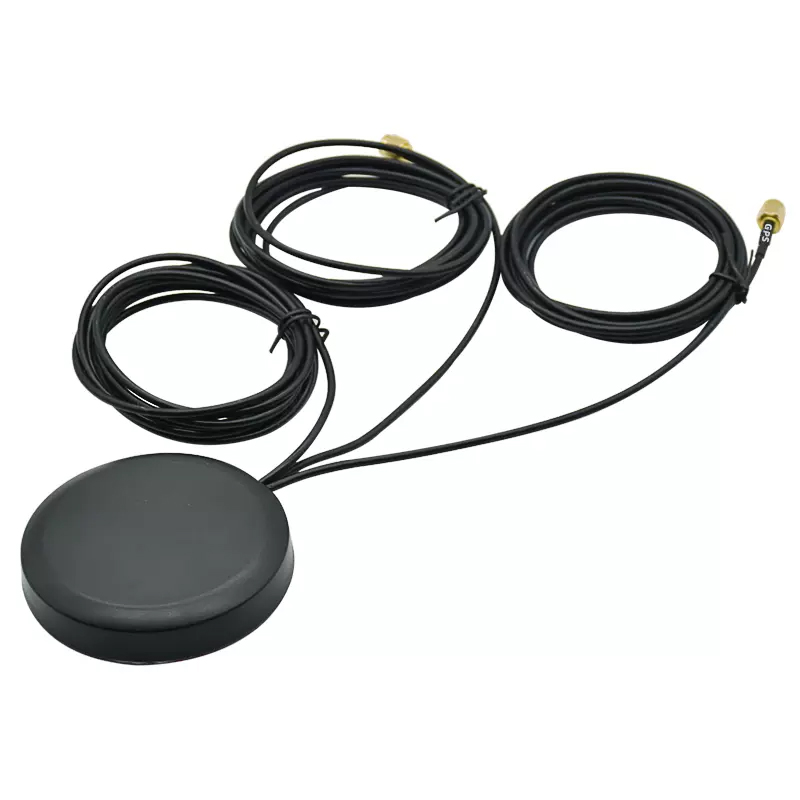
Vehicle GNSS antennas feature standardized connectors (SMA, SMB, MCX) and flexible cable length options, which are fully compatible with mainstream vehicle telematics terminals, fleet tracking devices, ADAS systems, and automotive TCUs. Their low-profile, compact structure adapts to various vehicle installation scenarios, including roof mounting, dashboard embedding, and hidden body installation, without affecting vehicle aesthetics and aerodynamic performance .
3. Main Types of Vehicle Telematics GNSS Antennas
According to structural design, working mode, installation method, and functional characteristics, vehicle telematics GNSS antennas can be divided into multiple categories. Understanding the differences between each type is essential for targeted selection and system optimization.
3.1 Active vs. Passive GNSS Antennas
Active GNSS Antennas: Equipped with built-in LNA amplification circuits, active antennas require external power supply (3V–5V) and feature high gain, low noise, and strong signal penetration. They are the mainstream choice for vehicle telematics, fleet management, and commercial vehicle positioning systems. Active antennas can compensate for cable signal loss and maintain stable positioning in weak signal areas such as tunnels and urban basins .
Passive GNSS Antennas: Without built-in amplification modules, passive antennas rely entirely on the receiver’s own amplification function. They have simple structures, low costs, and small sizes but low signal gain and poor weak-signal adaptability. They are only suitable for consumer-grade vehicle navigation devices with short cable distances and open signal environments, not for professional telematics tracking systems .
3.2 Ceramic Patch vs. Rod GNSS Antennas
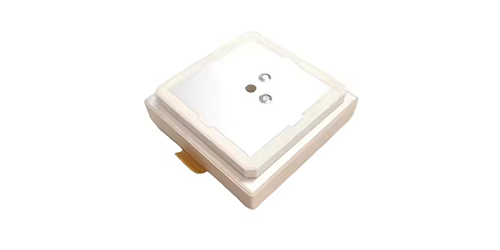
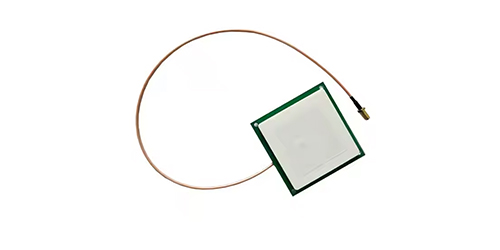
Ceramic Patch Antennas: The most widely used type in vehicle telematics. Made of high-precision ceramic dielectric materials, they feature small size, low profile, circular polarization, and excellent multipath rejection performance. They support multi-band multi-constellation reception and are suitable for hidden installation in vehicle dashboards, roofs, and interior trim. High-quality ceramic patch antennas require a matched ground plane (70×70mm PCB recommended) to maximize gain and stability .
Rod Antennas: Featuring high gain and strong directional signal reception, rod antennas are mostly used for special vehicle scenarios such as engineering vehicles and marine transportation. However, their large size and high wind resistance make them unsuitable for civilian passenger vehicles and standard fleet vehicles .
3.3 Roof-Mount vs. In-Dash GNSS Antennas
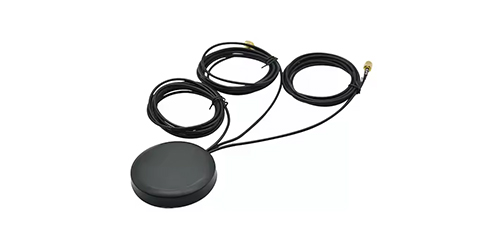
Roof-Mount GNSS Antennas: Installed on the top of vehicle roofs, this type features no signal obstruction, widest satellite reception range, and highest positioning stability. It is the preferred installation method for professional fleet telematics, logistics vehicles, and official vehicles. The low-profile roof-mount design reduces aerodynamic resistance and avoids vehicle wind resistance increase .
In-Dash GNSS Antennas: Hidden inside the dashboard or front windshield, with beautiful appearance and anti-theft advantages. However, metal dashboards and front windshield coatings may cause signal attenuation. It is suitable for passenger vehicle navigation systems with low positioning accuracy requirements, but needs strict installation position optimization to avoid shielding .
3.4 Single-Band vs. Dual-Band/Multi-Band Antennas
Single-Band Antennas: Only support GPS L1 single-band signal reception, with low cost but single positioning source, poor anti-interference ability, and large positioning errors in complex environments. Suitable for basic civilian navigation.
Dual-Band/Multi-Band Antennas: Support simultaneous reception of L1+L2 or multi-band signals of multiple constellations. They can eliminate ionospheric interference, improve positioning accuracy and continuity, and support RTK high-precision positioning. They are essential for intelligent driving, ADAS, and high-precision fleet telematics systems .
4. Key Technical Parameters for GNSS Antenna Selection
Selecting a suitable vehicle telematics GNSS antenna must be based on professional technical parameters to match telematics system requirements. The core parameters that determine antenna performance are as follows:
4.1 Frequency Band Coverage
Frequency band is the core basis for antenna signal reception. Professional vehicle telematics antennas must cover mainstream GNSS frequency bands: GPS L1 (1575.42MHz), L2 (1227.60MHz); GLONASS G1 (1602MHz), G2 (1246MHz); Galileo E1 (1575.42MHz), E5 (1191.79MHz); BeiDou B1 (1561.098MHz), B2 (1207.14MHz). Full-band coverage ensures that the vehicle can switch freely between multiple satellite systems to avoid positioning failure caused by single-constellation signal loss .
4.2 Gain and Noise Figure
Antenna gain directly affects signal reception capability. Vehicle telematics antennas usually have a gain of 25dB±2dB, which can effectively compensate for cable loss and weak satellite signals. The noise figure represents the antenna’s signal filtering capability; the lower the noise figure (≤1.5dB for high-quality products), the stronger the anti-interference ability and the purer the received signal .
4.3 Polarization Mode
GNSS satellites transmit right-hand circularly polarized (RHCP) signals. Vehicle telematics antennas must support RHCP polarization matching. Linear polarized antennas will cause signal loss and reduced positioning accuracy, so RHCP is a mandatory standard for professional automotive GNSS antennas .
4.4 Environmental Resistance Parameters
Automotive-grade antennas must meet strict environmental resistance standards: operating temperature range of -40°C to +85°C, storage temperature of -50°C to +90°C, IP67/IP68 waterproof and dustproof level, and 10–2000Hz vibration resistance. These parameters ensure stable operation in extreme environments such as high-temperature summer exposure, low-temperature winter freezing, rainy and snowy weather, and bumpy mountain roads .
4.5 Standing Wave Ratio (VSWR)
VSWR reflects the matching degree between the antenna and the transmission line. The smaller the VSWR value (≤1.5 is optimal), the lower the signal reflection loss and the higher the transmission efficiency. Excessively high VSWR will cause signal attenuation and even damage telematics receiver equipment .
5. Professional Installation Best Practices for Vehicle Telematics GNSS Antennas
Even high-performance GNSS antennas cannot exert optimal performance without standardized installation. Improper installation is the main cause of weak vehicle positioning signals, drifting coordinates, and delayed tracking. The following are industry-standard installation guidelines:
5.1 Optimal Installation Position
The antenna should be installed at the highest and most central position of the vehicle roof to ensure a 360° unobstructed satellite reception field of view, avoiding shielding by vehicle metal structures, luggage racks, and roof ornaments. For in-dash installation, select the front middle position of the dashboard, away from metal brackets and electronic modules. The antenna beamwidth is usually 60°–70°, and no obstructions should exist within this range .
5.2 Electromagnetic Interference Avoidance
Keep the GNSS antenna at least 30–50cm away from other high-power transmitting antennas such as 4G/5G cellular antennas, Wi-Fi antennas, and walkie-talkie antennas to avoid RF signal desensitization and interference. Antenna cables should be routed away from vehicle power lines, engine compartments, and high-current electronic components to reduce EMI interference .
5.3 Cable and Connector Standardization
Use low-loss coaxial cables (RG174/RG58) matching automotive standards. Excessively long cables will cause signal loss; it is recommended to control the cable length within 5 meters for ordinary telematics systems. Ensure tight connector docking and firm fixing to avoid poor contact caused by vehicle vibration. Do not bend the cable sharply to prevent internal wire breakage .
5.4 Ground Plane Matching
Ceramic patch GNSS antennas rely on a ground plane to form a complete radiation field. Installers must ensure a sufficient metal ground plane (70×70mm or larger) under the antenna. Insufficient ground plane area will lead to reduced gain, poor multipath suppression, and unstable positioning signals .
6. Common Problems and Troubleshooting of Vehicle GNSS Antennas
In actual vehicle telematics operation, GNSS antenna failures often cause system abnormalities. Summarized below are common faults, causes, and professional solutions:
6.1 Slow Positioning and Long Cold Start Time
Causes: Low antenna gain, blocked installation position, insufficient ground plane, aging cables, or nearby electromagnetic interference.Solutions: Replace high-gain multi-band active antennas, adjust installation to an unobstructed position, optimize ground plane matching, replace aging cables, and keep away from interference sources .
6.2 Frequent Position Drift and Inaccurate Coordinates
Causes: Poor antenna multipath suppression ability, reception of reflected signals from buildings, single-band signal limitation, or unstable LNA amplification. Solutions: Upgrade to dual-band multi-constellation antennas with excellent multipath rejection, adjust installation angle, and eliminate surrounding signal reflection interference .
6.3 Signal Interruption in Complex Scenarios
Causes: Ordinary single-band antennas have weak weak-signal reception capability, unable to adapt to tunnels, urban canyons, and dense building areas. Solutions: Adopt high-sensitivity active GNSS antennas supporting multi-constellation switching to improve signal continuity in complex scenarios .
6.4 Antenna Water Ingress and Damage
Causes: Low waterproof grade, unqualified sealing process, or improper outdoor installation. Solutions: Select IP67/IP68 automotive waterproof antennas, regularly check antenna sealing performance, and avoid long-term immersion in rainwater .
7. Core Applications of GNSS Antennas in Vehicle Telematics
Vehicle telematics GNSS antennas are widely used in commercial vehicles, passenger cars, intelligent transportation, and special vehicle fields, covering almost all scenarios requiring vehicle positioning and remote monitoring:
7.1 Fleet Management and Logistics Telematics
For logistics fleets, taxi fleets, and engineering vehicle fleets, GNSS antennas provide 24/7 real-time positioning data, supporting remote vehicle tracking, route monitoring, driving behavior analysis, and cargo safety supervision. High-precision antennas reduce fleet management costs, improve transportation efficiency, and realize intelligent digital fleet management .
7.2 Intelligent Driving and ADAS Systems
L2+ and above intelligent driving vehicles rely on dual-band high-precision GNSS antennas combined with RTK technology to realize centimeter-level positioning, matching with lidar and camera data to complete lane keeping, automatic parking, and intelligent cruise control. Stable antenna signal output is the core guarantee for safe intelligent driving .
7.3 Vehicle Safety Monitoring and Anti-Theft Systems
Vehicle anti-theft terminals and emergency rescue systems (such as automobile E-Call) rely on GNSS antennas to obtain real-time vehicle location information. In case of vehicle theft, collision, or failure, the system can quickly upload positioning data to the platform to realize rapid rescue and anti-theft tracking .
7.4 Smart Transportation and V2X Communication
In smart city transportation systems, vehicle GNSS antennas cooperate with V2X technology to realize vehicle-to-vehicle, vehicle-to-road, and vehicle-to-network information interaction. Accurate positioning data helps optimize traffic signal scheduling, reduce traffic congestion, and improve road traffic safety .
8. How to Choose the Best Vehicle Telematics GNSS Antenna (2026 Buying Guide)
To help users quickly select high-matching GNSS antennas, we summarize a four-step professional selection method suitable for different telematics scenarios:
Step 1: Confirm Application Scenario Accuracy Requirements. Basic fleet tracking and civilian navigation can choose single-band active antennas; intelligent driving, high-precision logistics monitoring, and RTK positioning scenarios must choose dual-band/multi-band multi-constellation professional antennas .
Step 2: Verify Automotive-Grade Certification. Prioritize antennas compliant with AEC-Q100 automotive standards, with IP67/IP68 waterproof and dustproof, wide temperature resistance, and vibration resistance to adapt to long-term vehicle operation .
Step 3: Match Installation and Wiring Requirements. Select roof-mount or in-dash antennas according to vehicle structure; choose matched SMA/SMB/MCX connectors and reasonable cable length to avoid signal loss and installation inconvenience .
Step 4: Focus on Anti-Interference Performance. Prioritize products with low noise figure, high multipath suppression, and strong EMI resistance to ensure stable signal output in complex electromagnetic environments .
9. Frequently Asked Questions (FAQ) About Vehicle Telematics GNSS Antennas
9.1 What is the difference between a vehicle GNSS antenna and an ordinary GPS antenna?
Vehicle telematics GNSS antennas are automotive-grade products with wide temperature resistance, waterproof, vibration resistance, and strong anti-interference capabilities, supporting multi-constellation multi-band high-precision reception. Ordinary GPS antennas are consumer-grade, with poor environmental adaptability, single signal band, and low positioning accuracy, unable to meet long-term stable operation requirements of vehicle telematics systems .
9.2 Can a GNSS antenna work normally without a ground plane?
Ceramic patch GNSS antennas must be matched with a certain area of metal ground plane to form a complete signal radiation and reception system. Insufficient or missing ground plane will lead to reduced gain, serious signal drift, and unstable positioning. Only a few special omnidirectional antennas can work without a ground plane, but their performance is far lower than ground plane matched antennas .
9.3 Why does vehicle GNSS signal drift seriously in urban areas?
Urban high-rise buildings cause serious signal shielding and multipath reflection, and dense electronic equipment causes electromagnetic interference. Ordinary single-band antennas cannot filter interference signals, resulting in coordinate drift. Replacing a dual-band multi-constellation antenna with strong multipath suppression can effectively solve this problem .
9.4 How long is the service life of a vehicle telematics GNSS antenna?
Automotive-grade GNSS antennas have a service life of 5–8 years. Their sealed waterproof structure and high-temperature and vibration-resistant materials can adapt to long-term vehicle operation. Consumer-grade antennas usually fail within 1–3 years due to poor environmental resistance .
10. Future Development Trends of Vehicle Telematics GNSS Antennas
With the rapid development of autonomous driving, 5G-A, V2X, and smart fleet management, vehicle telematics GNSS antennas are evolving towardmulti-band integration, high precision, miniaturization, intelligent anti-interference, and multi-functional integration. Future antennas will integrate GNSS positioning, 5G communication, and V2X signal reception functions to reduce vehicle antenna quantity and optimize body structure. Meanwhile, with the popularization of RTK high-precision positioning technology, centimeter-level positioning GNSS antennas will become the standard configuration of new energy vehicles and intelligent commercial vehicles, further promoting the upgrading of vehicle telematics industry .
As the core positioning hardware of vehicle telematics systems, GNSS antennas directly determine the accuracy, stability, and reliability of vehicle remote monitoring, intelligent navigation, and safe driving. For fleet enterprises, automotive electronics manufacturers, and intelligent transportation practitioners, selecting high-quality automotive-grade GNSS antennas and standardizing installation and maintenance are key to optimizing telematics system performance and reducing operation failure rates. With the continuous innovation of smart mobility technology, high-performance vehicle telematics GNSS antennas will play an increasingly important role in future intelligent transportation and connected vehicle ecosystems.
Lucy Yang | lucy.y@toxutech.com
Dotty Zhao | sales04@toxutech.com
Global Business Director / Sales Team / Global Operations


 En
 Cn
 Korean
 Home >
