

-
Products -PCBA Manufacturing RF Connectors RF Cable Assemblys Embedded Antennas External Antennas GNSS Positioning Solutions
RF Connectors

RF Cable Assemblys
Embedded Antennas
External Antennas
GNSS Positioning Solutions







 Language


Language


Time:2026-10-24 Views:0
In the fast-paced landscape of modern commercial logistics, transportation, and fleet management, real-time, accurate, and uninterrupted vehicle positioning is the backbone of operational efficiency, cost control, and safety compliance. A vehicle fleet GNSS tracking antenna serves as the critical hardware component that connects fleet tracking devices to global navigation satellite systems (GNSS), including GPS, GLONASS, BeiDou, and Galileo. Unlike consumer-grade GPS antennas designed for personal vehicles, professional fleet GNSS tracking antennas are engineered to withstand harsh industrial and road conditions, deliver stable high-gain signal reception, and ensure centimeter to meter-level positioning accuracy for long-term fleet monitoring. For fleet managers operating truck fleets, delivery vehicles, construction machinery, and public transport fleets, investing in high-quality GNSS tracking antennas eliminates common positioning failures such as signal drift, no-fix errors, and delayed location updates, drastically improving overall fleet management efficiency.
1. What Is a Vehicle Fleet GNSS Tracking Antenna?
A vehicle fleet GNSS tracking antenna is a specialized radio frequency (RF) device designed exclusively for commercial fleet vehicle positioning and tracking systems. It receives satellite navigation signals across multiple frequency bands, amplifies weak satellite signals via a built-in low-noise amplifier (LNA), and transmits purified, interference-free signals to fleet GPS trackers, telematics terminals, and vehicle IoT devices. As the “signal gateway” of the entire fleet positioning system, the antenna’s performance directly determines the accuracy, stability, and continuity of vehicle location data.
Different from ordinary car GPS antennas for civilian navigation, fleet-grade GNSS tracking antennas adopt industrial-grade design standards. They support multi-system GNSS signal reception, feature ultra-high signal gain, strong anti-interference capability, and excellent environmental adaptability. These professional attributes make them fully compliant with 24/7 continuous operation requirements for commercial fleets. Whether vehicles are traveling in dense urban areas with high-rise buildings, remote mountain roads, rainy and snowy weather, or complex industrial construction sites, a qualified fleet GNSS antenna can maintain stable satellite signal locking and avoid positioning blind spots.
Modern fleet GNSS tracking antennas typically support dual-band or multi-band reception, covering GPS L1/L5, BeiDou B1/B2, GLONASS G1, and Galileo E1/E5 frequency bands. Multi-band design enables the antenna to receive signals from more satellite constellations, effectively improving positioning speed, reducing positioning errors, and enhancing system redundancy. This is particularly critical for large and medium-sized fleets that require high-precision positioning and real-time monitoring.
2. Core Functions of GNSS Tracking Antennas for Vehicle Fleets
Professional vehicle fleet GNSS tracking antennas integrate multiple core functional designs to solve pain points in traditional fleet positioning, such as inaccurate positioning, signal loss, and poor environmental adaptability. Their core functions cover signal reception, anti-interference, environmental resistance, and efficient data transmission, fully matching the complex working scenarios of commercial fleets.
2.1 High-Gain Signal Reception and Fast Positioning Fix
Signal gain is the core parameter that distinguishes fleet-grade antennas from consumer-grade products. Most high-quality fleet GNSS tracking antennas adopt a 28dB high-gain LNA design, which can effectively amplify weak satellite signals captured by the antenna panel. In complex shielding environments such as urban canyon areas, tunnel entrances, and forest-shaded roads, weak satellite signals are easily attenuated, leading to slow positioning or failed fixes. The high-gain design of fleet antennas significantly improves signal reception sensitivity, shortens Time-to-First-Fix (TTFF), and realizes fast and accurate positioning within seconds after vehicle startup.
In addition, professional antennas use Right-Hand Circular Polarization (RHCP) technology, which matches the polarization mode of satellite navigation signals. This design greatly reduces signal loss caused by vehicle posture changes, vibration, and installation angle deviations, ensuring stable signal reception during high-speed vehicle driving and bumpy road travel.
2.2 Strong Anti-Interference and Multipath Suppression
Commercial vehicles are equipped with a large number of electronic devices, including vehicle-mounted radios, 4G/5G communication modules, engine control systems, and on-board chargers. These devices will generate electromagnetic interference (EMI) during operation, which can easily disrupt GNSS satellite signals and cause positioning drift and data distortion. Fleet-grade GNSS tracking antennas are built with professional filter circuits and electromagnetic shielding structures, which can effectively filter out RF interference from vehicle electronic systems and external environmental signals.
Moreover, high-end fleet GNSS antennas have excellent multipath suppression capability. Multipath signals are reflected satellite signals generated by buildings, ground surfaces, and vehicle metal structures, which are the main cause of positioning errors. By optimizing the antenna phase center design and adopting high-precision PCO/PCV (Phase Center Offset/Phase Center Variation) calibration technology, the antenna can suppress multipath signal interference, maintain stable phase center characteristics, and ensure meter-level or even centimeter-level high-precision positioning for fleet vehicles.
2.3 Industrial-Grade Environmental Adaptability
Fleet vehicles operate in extremely complex and variable environments, including high-temperature exposure in summer, low-temperature freezing in winter, rainwater erosion, dust invasion, and long-term vibration during driving. Ordinary civilian antennas are prone to failure and damage under such harsh conditions, while professional vehicle fleet GNSS tracking antennas adopt fully enclosed industrial-grade waterproof and dustproof designs, generally reaching IP67 or IP68 protection levels.
These antennas support a wide working temperature range of -40°C to +85°C, which can adapt to extreme temperature changes in various regions and seasons. They also feature strong vibration resistance and impact resistance, which can withstand long-term road vibration and accidental impact during vehicle driving, avoiding signal interruption or equipment damage caused by structural loosening. In addition, the antenna shell is made of high-strength ABS or metal materials, with excellent UV resistance and aging resistance, ensuring long-term stable outdoor service life of more than 5 years.
2.4 Multi-System Compatibility and Wide Application Coverage
Modern fleet management systems require global and full-scenario positioning capabilities. Professional fleet GNSS tracking antennas are compatible with all mainstream global navigation satellite systems, including American GPS, Chinese BeiDou, Russian GLONASS, and European Galileo. Multi-system signal reception enables the antenna to obtain more satellite resources, effectively improving positioning stability in low-signal areas and realizing global uninterrupted positioning services.
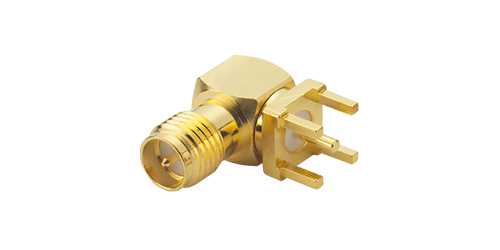
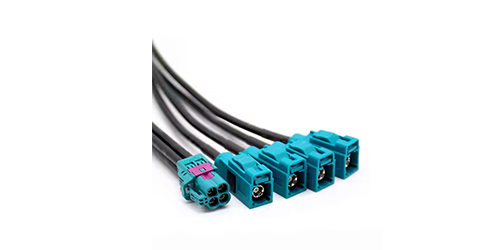
At the same time, the antenna supports multiple mainstream connector specifications such as SMA and Fakra C, which are compatible with most fleet tracking terminals, telematics devices, and vehicle IoT equipment on the market. It can be quickly matched with various commercial vehicles including freight trucks, logistics vans, engineering vehicles, taxi fleets, and bus fleets, with strong universality and compatibility.
3. Why Fleet Managers Must Upgrade Professional GNSS Tracking Antennas
Many small and medium-sized fleet enterprises blindly use low-cost civilian GPS antennas for fleet tracking, resulting in frequent positioning failures, low data accuracy, and poor system stability. In the long run, unqualified antenna equipment will cause a series of operational problems such as inaccurate vehicle scheduling, inability to track driving trajectories, and failure of safety supervision, bringing huge economic losses and management risks to fleet operations. Upgrading to professional GNSS tracking antennas for vehicle fleets can solve these industry pain points fundamentally and bring multiple practical value to fleet management.
3.1 Improve Fleet Positioning Accuracy and Data Reliability
Civilian low-gain antennas are susceptible to environmental interference, with positioning errors often reaching tens of meters or even hundreds of meters, and frequent signal loss. This makes it impossible for fleet managers to accurately grasp the real-time location and driving status of vehicles, resulting in unreasonable route scheduling and delayed cargo delivery. Professional fleet GNSS antennas achieve stable meter-level precise positioning through high-gain amplification, multi-system signal fusion, and anti-interference design. The positioning data is real-time and continuous, which can accurately record vehicle driving trajectories, stop time, and driving speed, providing reliable data support for fleet scheduling and driver performance assessment.
3.2 Reduce Fleet Operation and Maintenance Costs
Low-quality civilian antennas have short service life and high failure rate, requiring frequent replacement and maintenance, which increases the hardware cost and labor maintenance cost of fleet enterprises. In addition, inaccurate positioning data will lead to repeated route planning, empty vehicle driving, and prolonged delivery cycles, greatly increasing fleet fuel consumption and time costs. Industrial-grade fleet GNSS tracking antennas have ultra-high stability and long service life, reducing equipment failure rates and maintenance frequency. Accurate positioning and real-time monitoring help managers optimize driving routes, avoid congestion, reduce empty load rates, and effectively save fuel costs and time costs for fleet operations.
3.3 Enhance Fleet Safety Supervision and Compliance
For commercial transportation fleets, vehicle driving safety and operation compliance are core management indicators. High-precision GNSS positioning data can realize real-time monitoring of vehicle speeding, fatigue driving, illegal parking, and route deviation. The stable positioning signal ensures that the fleet management platform can always track the vehicle status, timely alarm for illegal driving behaviors, and reduce traffic safety accidents. At the same time, complete and accurate driving trajectory data can be used as valid evidence for transportation compliance supervision, accident responsibility identification, and cargo tracking, helping fleets meet industry regulatory requirements.
3.4 Support Intelligent Fleet Management Upgrade
With the rapid development of intelligent transportation and vehicle IoT technology, modern fleet management is evolving from simple position tracking to intelligent scheduling, big data analysis, and automatic early warning. High-quality GNSS tracking antennas are the basic hardware guarantee for intelligent fleet systems. They can provide continuous and high-precision location data for intelligent algorithms, support functions such as intelligent route planning, vehicle load monitoring, and abnormal driving early warning, and help fleets realize digital and intelligent management upgrades.
4. Key Technical Specifications of High-Quality Fleet GNSS Tracking Antennas
When selecting avehicle fleet GNSS tracking antenna, fleet managers need to focus on core technical parameters to avoid purchasing low-performance products. The following key specifications determine the overall performance and service life of the antenna, which are important criteria for screening professional fleet-grade antennas.
4.1 Working Frequency Band
Excellent fleet GNSS antennas support full-band multi-system reception, covering GPS L1(1575.42MHz)/L5(1176.45MHz), BeiDou B1(1561.098MHz)/B2, GLONASS G1, and Galileo E1/E5. Dual-band and multi-band design can capture more satellite signals, effectively improving positioning accuracy and signal stability, and solving the problem of easy signal loss in single-band antennas in complex environments.
4.2 Signal Gain and Noise Figure
Industrial fleet antennas usually have a gain of 25dB to 28dB. Higher gain means stronger signal reception capability and better performance in weak signal environments. Meanwhile, the noise figure is controlled below 1.5dB, which can minimize signal noise interference and ensure pure and accurate satellite signal transmission. Low noise figure and high gain are the core indicators to ensure high-sensitivity positioning of the antenna.
4.3 Protection Level and Environmental Resistance
Professional fleet tracking antennas adopt IP67/IP68 waterproof and dustproof protection levels, which can completely prevent dust intrusion and resist rainwater immersion and high-pressure water flushing. The working temperature range of -40°C to +85°C and storage temperature range of -50°C to +90°C ensure normal operation in extreme weather. In addition, the antenna has professional vibration resistance and electromagnetic compatibility (EMC) certification, adapting to long-term vehicle driving vibration and complex electromagnetic environment interference.
4.4 Power Supply and Working Current
Most fleet GNSS antennas support 3V-5V wide voltage power supply, which is compatible with most vehicle-mounted tracking terminals. The working current is controlled at 10mA-20mA, with low power consumption, which will not increase the load of vehicle power supply, and is suitable for long-term 24-hour uninterrupted work of fleet vehicles.
4.5 Connector and Installation Method
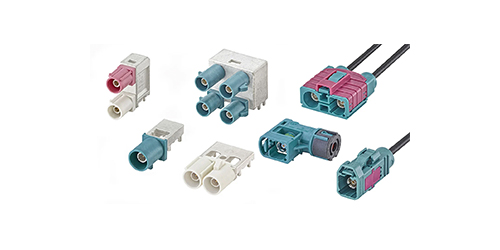
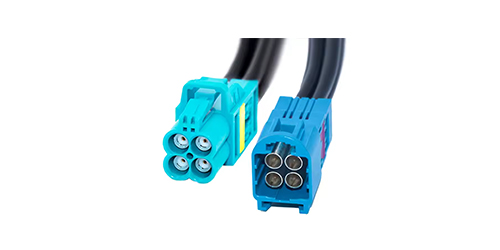
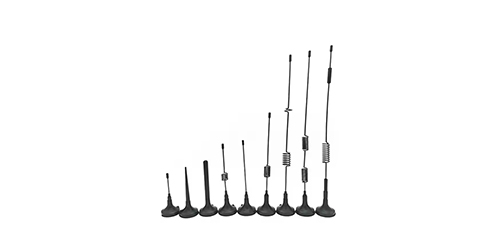
Common antenna connectors include SMA male/female and Fakra C blue connectors. Fakra connectors are more suitable for modern commercial vehicles and European and American brand fleets, with stable plugging and strong anti-loosening ability. In terms of installation, mainstream products adopt magnetic suction and screw fixing dual design. The magnetic base is convenient for quick installation on vehicle roofs and metal surfaces, while screw fixing ensures firm installation for long-term driving, avoiding antenna displacement caused by high-speed vibration.

5. Common Application Scenarios of Fleet GNSS Tracking Antennas
Vehicle fleet GNSS tracking antennas have a wide range of applications in various commercial vehicle fleet scenarios, covering logistics transportation, engineering construction, public transportation, special vehicle supervision and other fields. Different scenarios have differentiated performance requirements for antennas, and professional fleet antennas can fully meet the personalized needs of various scenarios.
5.1 Logistics and Freight Fleet Management
Logistics truck fleets, express delivery vehicle fleets, and cold chain transport vehicles have the widest demand for GNSS tracking antennas. These vehicles travel across cities and regions, involving complex road environments such as urban roads, highways, and rural mountain roads. High-gain anti-interference GNSS antennas ensure real-time tracking of vehicle positions and cargo transportation trajectories, help logistics enterprises monitor transportation progress, optimize distribution routes, improve delivery efficiency, and realize whole-process traceability of cargo transportation.
5.2 Engineering and Construction Vehicle Monitoring
Engineering vehicles such as excavators, loaders, cranes, and dump trucks mostly work in open construction sites, mountainous areas, and remote suburban areas with weak satellite signals and complex environmental interference. Industrial-grade GNSS tracking antennas have strong signal reception capability and environmental adaptability, which can stably position engineering vehicles in harsh working environments. They help construction enterprises monitor vehicle working status, prevent private vehicle leaving and idle work, and improve the utilization rate of engineering equipment.
5.3 Public Transport and Passenger Vehicle Fleets
Bus fleets, taxi fleets, and online car-hailing fleets need real-time and accurate positioning data to support passenger query, scheduling management, and operation supervision. Fleet GNSS tracking antennas ensure stable positioning of passenger vehicles in dense urban building areas, avoid positioning drift and error, provide accurate vehicle location information for passengers and management platforms, and improve the operational efficiency and service quality of public transport fleets.
5.4 Special Vehicle Supervision
Special vehicles such as sanitation vehicles, fire trucks, ambulance vehicles, and dangerous goods transport vehicles have high requirements for positioning stability and accuracy. Stable GNSS positioning signals can realize real-time scheduling and emergency response of special vehicles, ensure the standardized operation of dangerous goods transport vehicles, and provide accurate position data for emergency rescue work, improving the safety and efficiency of special vehicle operation.
6. Professional Installation and Maintenance Guide for Fleet GNSS Antennas
Even high-performance vehicle fleet GNSS tracking antennas cannot exert their maximum effect without standardized installation and daily maintenance. Unreasonable installation positions and irregular maintenance are the main causes of poor antenna signal and shortened service life. The following professional guidelines help fleet enterprises standardize antenna installation and maintenance, ensuring long-term stable operation of equipment.
6.1 Optimal Installation Position Selection
The antenna must be installed in an open position with unobstructed sky view, preferably on the top of the vehicle roof. It is necessary to avoid shielding by metal structures, vehicle roofs, cargo boxes, and coated insulating glass, because metal materials and coated glass will block satellite signals and seriously affect positioning effect. The installation position should be kept horizontal with the antenna front facing upward to ensure the best satellite signal reception angle.
In addition, the antenna should be kept away from vehicle-mounted transmitting equipment such as vehicle radios, 4G/5G antennas, and walkie-talkies to avoid electromagnetic signal interference. The distance between the GNSS antenna and other RF equipment should be more than 30cm to ensure signal purity and stability.
6.2 Standard Installation Steps
First, clean the vehicle installation position to ensure a smooth and dry surface, which is conducive to firm magnetic suction or screw fixing. Second, fix the antenna on the installation position, adopt magnetic suction for temporary installation, and screw locking for long-term fixed installation to prevent displacement and falling off during vehicle driving. Third, arrange the antenna cable neatly, avoid excessive bending and extrusion, prevent cable core damage and signal attenuation, and fix the cable with a wire buckle to avoid shaking and friction. Finally, connect the antenna connector to the fleet tracking terminal tightly to ensure good contact and avoid poor signal caused by loose interface.
6.3 Daily Maintenance and Fault Troubleshooting
In daily fleet management, regular inspection and maintenance of GNSS antennas are required. Check whether the antenna shell is damaged, aged or waterlogged, whether the cable is worn or broken, and whether the connector is loose or oxidized. Clean the dust and dirt on the antenna surface regularly to avoid affecting signal reception. For vehicles operating in harsh environments, conduct a comprehensive equipment inspection every quarter to eliminate potential faults in advance.
Common antenna faults include signal loss, slow positioning, and positioning drift. When a fault occurs, first check whether the installation position is shielded and whether the connector is loose. Then check whether the cable is damaged or interfered. Finally, test the antenna performance with professional equipment. Replace aging and damaged antennas in time to ensure the normal operation of the fleet positioning system.
7. How to Choose the Best GNSS Tracking Antenna for Your Vehicle Fleet
Fleet enterprises need to select suitable GNSS tracking antennas according to their fleet scale, vehicle type, and application scenarios to avoid over-investment or insufficient performance. The following selection principles help fleet managers quickly screen high-cost-performance and high-matching antenna products.
7.1 Match Performance with Application Scenarios
For urban operation fleets such as taxis and online car-hailing, conventional 28dB high-gain single/dual-band GNSS antennas can meet daily positioning needs. For long-distance freight fleets and engineering vehicle fleets operating in remote and complex environments, it is recommended to choose full-band multi-system high-precision antennas with stronger anti-interference and weak signal reception capabilities. For fleets requiring centimeter-level high-precision positioning such as intelligent driving and precise scheduling, select RTK-level high-precision GNSS tracking antennas with phase center calibration.
7.2 Prioritize Industrial-Grade Reliability
Fleet vehicles work continuously for a long time, so industrial-grade products must be selected instead of civilian consumer-grade antennas. Focus on products with IP67/IP68 waterproof and dustproof certification, wide temperature resistance, vibration resistance, and EMC electromagnetic compatibility certification to ensure stable operation in harsh environments and reduce subsequent maintenance costs.
7.3 Check Compatibility and Installation Convenience
Confirm whether the antenna connector specification (SMA/Fakra) matches the existing fleet tracking terminals and vehicle equipment to avoid adapter replacement and compatibility problems. Prioritize antennas with magnetic suction + screw dual installation methods and sufficient cable length, which are convenient for rapid installation and layout of different vehicle models, reducing installation time and labor costs.
7.4 Focus on Cost Performance and After-Sales Service
While ensuring product performance, comprehensively evaluate the cost performance of the antenna. Avoid blindly pursuing low prices and purchasing inferior products with short service life and unstable performance. Choose regular manufacturers with formal qualification certificates, complete product testing reports, and perfect after-sales service systems to ensure product quality stability and timely after-sales maintenance support.
8. Future Development Trends of Fleet GNSS Tracking Antennas
With the continuous iteration of satellite navigation technology, vehicle IoT, and intelligent transportation systems, vehicle fleet GNSS tracking antennas are developing towards multi-band integration, high precision, miniaturization, and intelligentization. In the future, fleet antenna products will further adapt to the needs of intelligent fleet management and autonomous driving scenarios.
First, multi-band fusion and high-precision RTK technology will become the mainstream. With the full popularization of BeiDou, Galileo and other global satellite systems, multi-system dual-frequency and triple-frequency antennas will completely replace single-band products, realizing centimeter-level high-precision positioning for fleets, supporting intelligent route planning and automatic driving assistance functions.
Second, integrated antenna design will be widely applied. Traditional single GNSS antennas will evolve into integrated antennas integrating GNSS, 4G/5G, and WiFi functions, which simplifies vehicle wiring, reduces installation space, improves system integration and stability, and is more suitable for intelligent connected vehicle fleets.
Third, intelligent monitoring antennas will emerge. New-generation fleet GNSS antennas will be equipped with self-detection functions, which can monitor signal status, equipment faults, and working temperature in real time, upload fault data to the fleet management platform automatically, and realize intelligent early warning and remote maintenance, further improving the intelligent level of fleet operation and maintenance.
The vehicle fleet GNSS tracking antenna is an indispensable core hardware of modern fleet management systems. Its performance directly affects the positioning accuracy, operational efficiency, and safety management level of the entire fleet. Different from ordinary civilian GPS antennas, professional fleet-grade GNSS tracking antennas have outstanding advantages in high-gain signal reception, anti-interference capability, environmental adaptability, and multi-system compatibility, which can solve various positioning pain points in fleet operation.
For fleet enterprises, selecting high-quality industrial-grade GNSS tracking antennas, standardizing installation and daily maintenance, is not only a basic guarantee for stable fleet positioning, but also an important measure to reduce operating costs, improve management efficiency, and realize intelligent upgrading of fleets. With the continuous development of intelligent transportation technology, high-precision, integrated, and intelligent GNSS tracking antennas will become the standard configuration of modern commercial vehicle fleets, empowering the digital and intelligent development of the global fleet logistics industry.
Lucy Yang | lucy.y@toxutech.com
Dotty Zhao | sales04@toxutech.com
Global Business Director / Sales Team / Global Operations


 En
 Cn
 Korean
 Home >
