

-
Products -PCBA Manufacturing RF Connectors RF Cable Assemblys Embedded Antennas External Antennas GNSS Positioning Solutions
RF Connectors

RF Cable Assemblys
Embedded Antennas
External Antennas
GNSS Positioning Solutions






 Language


Language


Time:2026-10-17 Views:0
In the era of smart vehicles and intelligent transportation, reliable wireless connectivity and precise navigation have become core requirements for modern cars, trucks, RVs, and commercial fleet vehicles. A vehicle Bluetooth WiFi GPS antenna serves as the critical hardware foundation that integrates three essential wireless signal receiving and transmitting functions, ensuring stable Bluetooth pairing, seamless in-car WiFi network coverage, and accurate GPS positioning for all types of vehicles. As automotive intelligence continues to upgrade, factory-installed default antennas often suffer from weak signal reception, poor anti-interference ability, and limited compatibility, leading to common issues such as Bluetooth disconnection, WiFi network lag, and GPS positioning drift. Upgrading a high-performance multi-functional vehicle Bluetooth WiFi GPS antenna has become the most cost-effective solution to optimize in-car wireless experience, which is widely favored by car owners, auto modification enthusiasts, and fleet management enterprises worldwide.
This comprehensive guide focuses on vehicle Bluetooth WiFi GPS antennas, covering their core functions, working principles, key types, selection criteria, installation guidelines, performance advantages, and frequently asked questions. Optimized for Google SEO, this article integrates high-search-volume keywords such as car Bluetooth WiFi GPS combo antenna, automotive multi-band antenna, vehicle navigation antenna, and in-car wireless signal booster, providing professional and practical content for users searching for vehicle antenna solutions, and helping you fully understand the value and application of modern vehicle wireless antennas.
1. What Is a Vehicle Bluetooth WiFi GPS Antenna?
A vehicle Bluetooth WiFi GPS antenna is a multi-band integrated automotive antenna specially designed for in-vehicle wireless communication and navigation systems. Different from single-function vehicle antennas (pure GPS antenna or single WiFi antenna), this combo antenna integrates three independent signal processing modules in one compact structure, supporting 2.4GHz Bluetooth frequency band, 2.4GHz/5.8GHz dual-band WiFi frequency bands, and L1/L5 GPS satellite positioning frequency bands simultaneously. It is a dedicated accessory for smart vehicle infotainment systems, navigation hosts, car WiFi routers, Bluetooth car kits, and fleet positioning terminals.
The core design concept of the vehicle Bluetooth WiFi GPS combo antenna is integration and high efficiency. Traditional vehicle wireless systems require three separate antennas to complete Bluetooth connection, WiFi network access, and GPS positioning, which occupies large installation space, involves complicated wiring, and is prone to mutual signal interference. The integrated multi-functional antenna perfectly solves these pain points. Through internal frequency division filtering and electromagnetic isolation technology, it realizes independent and stable reception and transmission of three types of signals without mutual crosstalk, greatly improving the stability of in-vehicle wireless systems while simplifying installation and reducing vehicle modification costs.
Most mainstream vehicle Bluetooth WiFi GPS antennas adopt waterproof, dustproof, and anti-vibration industrial-grade design, adapting to complex vehicle operating environments such as high temperature, low temperature, rain erosion, and road vibration. They are widely compatible with gasoline vehicles, new energy electric vehicles, hybrid vehicles, engineering vehicles, RVs, and logistics fleet vehicles, and can perfectly match original car navigation hosts, modified large-screen car systems, 4G/5G car WiFi routers, and vehicle monitoring terminals.
2. Core Functions & Working Principles of Vehicle Bluetooth WiFi GPS Antenna
To understand why a high-quality vehicle Bluetooth WiFi GPS antenna can significantly improve in-car wireless performance, it is necessary to clarify the independent working principle and core functions of Bluetooth, WiFi, and GPS modules in the integrated antenna. Each functional module adopts professional RF design to ensure optimal signal reception and transmission efficiency in vehicle scenarios.
2.1 Bluetooth Signal Reception & Transmission Function
The Bluetooth module of the vehicle antenna works in the 2.4GHz ISM universal frequency band, which is dedicated to short-distance wireless communication between vehicle devices and mobile terminals. Factory vehicle Bluetooth modules usually use built-in micro-antennas with low gain, which are easily blocked by car metal shells, interior decorations, and vehicle electromagnetic signals, resulting in unstable connection, short transmission distance, and easy disconnection when the mobile phone is slightly far away from the car.
The upgraded vehicle Bluetooth antenna adopts high-gain omnidirectional radiation design, with a signal gain of 2dBi~5dBi, which effectively enhances the penetration and coverage of Bluetooth signals in the closed car environment. It stably supports Bluetooth hands-free calling, Bluetooth music playback, mobile phone car screen projection, Bluetooth key connection, and vehicle device pairing. Through professional anti-interference design, it can effectively shield the interference of vehicle engine, power supply, and electronic equipment on Bluetooth signals, ensuring uninterrupted connection during vehicle driving.
2.2 Dual-Band WiFi Network Signal Boosting Function
The WiFi part of the vehicle Bluetooth WiFi GPS antenna covers 2.4GHz and 5.8GHz dual frequency bands, adapting to all mainstream in-car WiFi networking scenarios. The 2.4GHz WiFi band features strong signal penetration and wide coverage, suitable for long-distance signal reception and multi-device connection in complex environments; the 5.8GHz WiFi band has fast transmission speed, low delay, and strong anti-interference ability, which can meet the high-speed network requirements of in-car video playback, real-time navigation, online upgrade of vehicle systems, and multi-terminal internet access.
Vehicle WiFi signals face severe attenuation problems in the metal closed space of the car. The integrated WiFi antenna optimizes the antenna radiation angle and impedance matching for vehicle installation scenarios, effectively reducing signal attenuation caused by car body shielding. It can not only enhance the signal receiving ability of the car's own WiFi system to connect to external hotspots but also strengthen the signal transmission ability of the car's built-in WiFi hotspot, realizing full coverage of high-speed WiFi signals in the car and solving common problems such as slow in-car network speed, network disconnection, and signal dead zones.
2.3 High-Precision GPS Positioning Function
The GPS antenna is the core functional module of the integrated vehicle antenna, working in the GPS L1 (1575.42MHz) and L5 (1176.45MHz) frequency bands, supporting global satellite positioning system reception. Different from consumer-grade civilian GPS antennas, vehicle-grade GPS antennas have higher sensitivity and stronger anti-multipath interference ability, which can effectively receive weak satellite signals in complex driving scenarios such as urban high-rise shielding, tunnel entrances, and dense forest roads.
The core working principle of the vehicle GPS antenna is to receive satellite navigation signals, filter and amplify valid signals through the built-in low-noise amplifier (LNA), and transmit them to the vehicle navigation host and positioning terminal. It can effectively solve positioning failures, positioning drift, slow positioning, and inaccurate vehicle speed display caused by weak satellite signals. High-quality vehicle GPS antennas can receive signals from more than 30 satellites at the same time, realizing real-time high-precision positioning with an error of less than 5 meters, meeting the needs of daily driving navigation, fleet real-time monitoring, and intelligent driving auxiliary positioning.
3. Key Types of Vehicle Bluetooth WiFi GPS Antennas
According to installation methods, structural design, and application scenarios, vehicle Bluetooth WiFi GPS combo antennas on the market can be divided into three mainstream types: adhesive mount antennas, screw mount antennas, and shark fin integrated antennas. Each type has unique advantages and applicable scenarios, and users can choose according to vehicle model, installation space, and usage needs.
3.1 Adhesive Mount Vehicle Combo Antenna
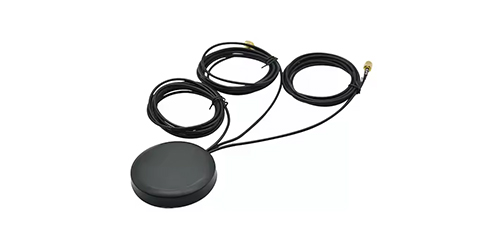
The adhesive mount vehicle Bluetooth WiFi GPS antenna is the most popular and universal type, featuring ultra-thin, compact, and hidden design. It adopts 3M high-strength waterproof adhesive on the back, which can be directly pasted on the inner windshield, instrument panel, or car roof interior without drilling or damaging the vehicle body, realizing zero-damage installation. This type of antenna is small in size, easy to hide, and will not affect the overall appearance of the vehicle, making it the first choice for private car owners who pursue no modification damage.
In terms of performance, the adhesive mount combo antenna maintains high-gain signal reception, supports three-in-one integration of Bluetooth, WiFi, and GPS, and is compatible with 99% of civilian vehicles. The waterproof and dustproof shell can adapt to the temperature change environment inside the car, and it will not fall off due to high temperature exposure or low temperature freezing. The ultra-long extension cable (3m~5m) is convenient for wiring and hiding, which can perfectly match modified car navigation hosts and aftermarket car multimedia systems.
3.2 Screw Mount Vehicle Combo Antenna
The screw mount vehicle Bluetooth WiFi GPS antenna is a heavy-duty industrial-grade antenna, designed for commercial vehicles, engineering vehicles, fleet trucks, and RVs with high signal stability requirements. It adopts a fixed screw base design, which can be stably installed on the car roof, trunk, or metal bracket through drilling and locking, with strong wind resistance and anti-vibration ability, suitable for long-term high-speed driving and harsh road environment use.
This type of antenna has higher signal gain and stronger signal penetration ability than adhesive mount antennas, with more stable performance in high-speed driving and complex signal environments. The fully sealed waterproof and dustproof structure reaches IP67 industrial protection level, which can resist rain, snow, dust, and high-temperature baking, and has a longer service life. It is the preferred antenna solution for commercial fleet positioning, vehicle monitoring systems, and long-distance travel RVs.
3.3 Shark Fin Integrated Vehicle Antenna
The shark fin integrated antenna is a high-end integrated vehicle antenna that perfectly combines beauty and performance. It adopts a streamlined shark fin shell design, which is consistent with the original car's aerodynamic design, effectively reducing wind resistance and wind noise during driving. The interior integrates Bluetooth, dual-band WiFi, and GPS multi-band antenna modules, realizing all wireless signal functions in one shark fin structure.
The biggest advantage of the shark fin antenna is its high integration and original car matching degree. It can directly replace the original car's single-function shark fin antenna, realizing plug-and-play installation, which is beautiful and practical. It is mainly applicable to mid-to-high-end passenger cars, which can upgrade the vehicle's wireless system while improving the vehicle's appearance grade. Its signal stability and anti-interference performance are superior to ordinary adhesive antennas, meeting the high-standard wireless connection needs of smart cars.

4. Why Upgrade a High-Performance Vehicle Bluetooth WiFi GPS Antenna?
Many car owners ignore the importance of vehicle antennas and think that the original car antenna can meet daily use. However, with the increasing functions of smart vehicles, the original factory single-function and low-gain antennas have been unable to adapt to multi-functional wireless needs. Upgrading a professional three-in-one vehicle Bluetooth WiFi GPS antenna can solve many pain points of original car wireless systems and bring comprehensive performance improvement.
4.1 Solve Bluetooth Connection Instability Problems
Original car Bluetooth antennas have low gain and poor anti-interference ability. During driving, they are easily interfered by vehicle electronic systems, resulting in frequent Bluetooth disconnection, delayed music playback, and unclear hands-free call sound. The upgraded three-in-one antenna adopts independent Bluetooth frequency division design and anti-electromagnetic interference technology, which effectively isolates vehicle electronic signal interference, realizes stable long-distance Bluetooth connection, ensures smooth hands-free calls and uninterrupted music playback, and improves driving safety and entertainment experience.
4.2 Optimize In-Car WiFi Network Experience
The original car WiFi antenna has weak signal reception, narrow coverage, and slow transmission speed. When multiple devices are connected at the same time, network congestion and delay are easy to occur, which cannot meet the needs of online navigation, video watching, and system upgrade. The dual-band WiFi module of the upgraded antenna improves signal gain and coverage, supports multi-device stable access, reduces network delay and packet loss rate, realizes high-speed and stable in-car WiFi network, and completely solves the problem of poor in-car network experience.
4.3 Improve GPS Positioning Accuracy and Speed
Original car GPS antennas often have problems such as slow satellite search, positioning drift, and even positioning failure in complex environments such as urban canyon, tunnel entrances, and cloudy days. The high-sensitivity GPS module of the three-in-one antenna is equipped with a low-noise amplifier, which can quickly capture weak satellite signals, shorten the positioning startup time, and realize real-time high-precision positioning. It effectively avoids route deviation and navigation errors caused by inaccurate positioning, ensuring accurate navigation guidance during driving.
4.4 Simplify Vehicle Wiring and Reduce Modification Costs
If users want to separately upgrade vehicle Bluetooth, WiFi, and GPS antennas, they need to purchase three independent antennas, which requires repeated wiring and installation, with high cost and messy internal wiring. The integrated three-in-one antenna only needs one-time installation and one wiring to realize three wireless functions, which greatly simplifies the vehicle modification process, reduces wiring space occupation, avoids circuit chaos and potential safety hazards, and reduces the overall use and maintenance cost.
4.5 Strong Environmental Adaptability and Long Service Life
Professional vehicle Bluetooth WiFi GPS antennas adopt automotive-grade high-temperature resistant, waterproof, and anti-aging materials, which can work stably in the temperature range of -40℃ to +85℃. They can adapt to harsh vehicle operating environments such as summer high-temperature exposure, winter low temperature freezing, rain and snow erosion, and road vibration. Compared with ordinary civilian antennas, they have stronger durability and longer service life, and can maintain stable performance for a long time.
5. Professional Selection Criteria for Vehicle Bluetooth WiFi GPS Antenna
There are many types of vehicle Bluetooth WiFi GPS combo antennas on the market with uneven quality. To select a high-performance and durable antenna suitable for your vehicle, you need to refer to professional selection parameters and standards. The following core indicators are the key basis for judging antenna quality, which can help users avoid inferior products and select cost-effective products.
5.1 Frequency Band Coverage
A qualified three-in-one vehicle antenna must cover complete mainstream frequency bands: Bluetooth 2.4GHz (2400MHz~2483.5MHz), WiFi 2.4GHz+5.8GHz dual band, and GPS L1+L5 dual frequency. Avoid single-band WiFi antennas, which cannot support 5G high-speed WiFi networks and have poor anti-interference ability. Dual-frequency WiFi and dual-frequency GPS design can adapt to more complex network and positioning environments, with stronger comprehensive performance.
5.2 Signal Gain Value
Signal gain directly determines the antenna's signal reception and transmission ability. It is recommended to select products with Bluetooth gain ≥3dBi, WiFi gain ≥4dBi, and GPS gain ≥28dB. Antennas with too low gain have weak signal reception ability and cannot solve the problem of poor vehicle wireless signals; excessively high gain antennas are prone to signal distortion and increased power consumption. Moderate high gain is the best choice for vehicle scenarios.
5.3 Protection Level
Vehicle antennas need to adapt to complex outdoor and in-car environments, so the protection level is crucial. It is recommended to select products with IP65 and above waterproof and dustproof levels, which can effectively prevent rainwater, dust, and moisture from entering the antenna interior and avoid signal failure and circuit damage caused by environmental factors. For commercial vehicles and outdoor long-term use, IP67 high-protection antennas are more suitable.
5.4 Interface and Compatibility
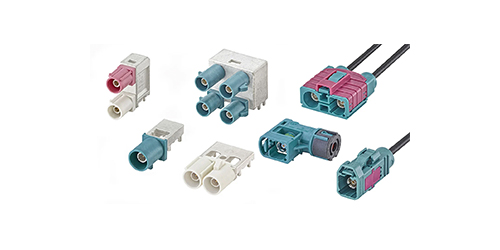
Common antenna interfaces include SMA, SMB, MCX, and Fakra, which need to be matched with the vehicle navigation host, car router, and positioning terminal interface. Before purchasing, users need to confirm the interface type of their vehicle equipment to ensure plug-and-play compatibility. At the same time, it is necessary to confirm that the antenna is compatible with all vehicle models and all mainstream car system versions to avoid compatibility failure.
5.5 Cable Length and Material
The antenna cable is usually RG174 high-frequency low-loss coaxial cable. High-quality cables have low signal attenuation and stable transmission, while inferior cables will cause serious signal loss and reduce antenna performance. The cable length can be selected according to the vehicle size: 3m cables are suitable for small private cars, and 5m cables are suitable for large vehicles such as SUVs, RVs, and trucks.
6. Standard Installation Guidelines for Vehicle Bluetooth WiFi GPS Antenna
Correct installation is the key to ensuring the maximum performance of the vehicle Bluetooth WiFi GPS antenna. Even high-quality antennas will have poor signal performance due to incorrect installation positions and wiring methods. The following professional installation steps and position selection skills are summarized for vehicle wireless antenna installation, suitable for all types of integrated combo antennas.
6.1 Best Installation Positions
For adhesive mount antennas, the best installation position is the upper middle position of the front windshield inner side, which has no metal shielding, wide signal receiving angle, and can maximize the reception of Bluetooth, WiFi, and GPS signals. It can also be installed on the inner side of the rear windshield or the top of the instrument panel, avoiding metal brackets, metal decorative parts, and car film shielding areas. For screw mount and shark fin antennas, the top of the car roof is the optimal installation position, with no shielding and strongest signal receiving ability.
It is strictly forbidden to install the antenna in the metal closed positions such as the car door, under the seat, and inside the center console, which will cause serious signal shielding and lead to poor antenna performance. In addition, keep the antenna more than 30cm away from vehicle power lines, electronic control modules, and other transmitting antennas to avoid electromagnetic interference affecting signal stability, which is in line with professional automotive antenna spacing guidelines.
6.2 Standard Installation Steps
First, clean the installation position with alcohol cotton cloth to remove dust, oil stains, and water stains, ensuring the surface is dry and flat to avoid poor adhesion. Then tear off the protective film of the antenna back adhesive, paste the antenna firmly on the predetermined position, and press it for 30 seconds to ensure tight fitting. Next, hide the antenna cable along the car interior gap, avoid extrusion and bending of the cable, and fix the cable with cable ties to prevent shaking and noise during driving. Finally, insert the antenna interface into the corresponding socket of the car navigation host or wireless equipment, power on the equipment, and test Bluetooth connection, WiFi network, and GPS positioning functions to confirm normal operation.
6.3 Installation Precautions
During installation, avoid excessive bending and stretching of the antenna cable to prevent internal wire breakage and signal attenuation; do not expose the cable outside the car for a long time to avoid aging and damage caused by wind and sun; ensure the interface is tightly connected to avoid poor contact and signal intermittent disconnection. After installation, do not frequently disassemble and move the antenna to prevent the back adhesive from failing and the antenna from falling off.
7. Common Problems & Troubleshooting of Vehicle Bluetooth WiFi GPS Antenna
In the daily use of vehicle Bluetooth WiFi GPS antennas, users may encounter some common faults such as weak signal, unstable connection, and slow positioning. Most problems are caused by incorrect installation, poor contact, or environmental interference, which can be solved through simple troubleshooting. The following summarizes common faults and professional solutions to help users quickly repair equipment failures.
7.1 Weak Bluetooth Signal & Frequent Disconnection
Fault causes: The antenna installation position is blocked by metal objects; the interface is loose and poorly contacted; the vehicle electronic equipment has serious electromagnetic interference; the antenna gain is insufficient. Solutions: Readjust the antenna installation position to avoid shielding; re-plug the antenna interface to ensure tight connection; turn off unnecessary vehicle electronic equipment to reduce interference; replace the high-gain anti-interference integrated antenna.
7.2 Slow WiFi Network Speed & Frequent Packet Loss
Fault causes: The WiFi frequency band is improperly selected; the antenna cable is aging and attenuated; multiple devices are connected to occupy network resources; the external network signal is weak. Solutions: Switch between 2.4GHz and 5.8GHz dual frequency bands according to the environment; replace the low-loss high-quality cable; properly reduce the number of connected devices; adjust the antenna position to enhance external signal reception.
7.3 GPS Positioning Drift & Slow Satellite Search
Fault causes: The antenna is shielded by car film or metal; the weather is cloudy and rainy with weak satellite signals; the antenna low-noise amplifier fails; the navigation host data is abnormal. Solutions: Move the antenna to a non-shielded open position; wait for the weather to clear or restart the navigation equipment; replace the high-sensitivity GPS antenna; update the navigation map and system data.
7.4 Antenna No Signal After Installation
Fault causes: The interface model does not match; the cable is broken internally; the antenna is damaged; the equipment power supply is abnormal. Solutions: Confirm the interface compatibility and replace the matching antenna; check the cable integrity and replace the faulty cable; replace the new antenna; detect the vehicle equipment power supply circuit to eliminate power supply faults.
8. FAQ About Vehicle Bluetooth WiFi GPS Antenna
To further answer users' doubts about vehicle Bluetooth WiFi GPS antennas, we have sorted out the most frequently asked questions in Google search scenarios, providing accurate and detailed answers to help users solve purchase and use confusion.
Q1: Is it necessary to upgrade the original car antenna to a three-in-one combo antenna?
A: It is highly recommended for users who often use car Bluetooth, WiFi network, and navigation functions. The original car single-function antenna has limited performance and cannot meet the multi-functional wireless needs of smart cars. The integrated three-in-one antenna can comprehensively improve signal stability and usage experience with low modification cost and zero damage to the vehicle.
Q2: Can the three-in-one vehicle antenna be compatible with all vehicle models?
A: Most adhesive and screw mount three-in-one antennas are universally compatible with all civilian vehicles, new energy vehicles, commercial vehicles, and modified car systems. Only individual high-end original car dedicated shark fin antennas are model-specific, and users can confirm compatibility according to product parameters.
Q3: Will the vehicle antenna affect the original car circuit and cause safety hazards?
A: Regular vehicle Bluetooth WiFi GPS antennas adopt passive signal reception design, no need to connect to vehicle power supply, no damage to original car circuit, no power consumption and no safety hazards. The zero-damage installation design will not affect the vehicle's original warranty and circuit system.
Q4: How long is the service life of the vehicle integrated antenna?
A: Automotive-grade high-quality antennas have a service life of more than 5 years. They adopt anti-aging, waterproof and dustproof materials, which can adapt to long-term vehicle driving environments. Inferior antennas are prone to aging and failure within 1-2 years, so it is recommended to choose regular brand products.
Q5: Can one three-in-one antenna replace three separate single-function antennas?
A: Yes. The integrated antenna independently integrates Bluetooth, WiFi, and GPS signal modules, which can completely replace the functions of three single-function antennas, with better signal anti-interference and stability, and simpler installation and wiring.
With the rapid development of vehicle intelligence and internet of vehicles technology, in-car Bluetooth connection, WiFi networking, and GPS high-precision positioning have become indispensable basic functions of modern vehicles. The vehicle Bluetooth WiFi GPS antenna, as the core wireless signal receiving and transmitting hardware, directly determines the stability and experience of in-vehicle wireless systems. Upgrading a high-quality integrated three-in-one antenna is the most efficient and cost-effective way to solve common problems such as Bluetooth disconnection, WiFi lag, and GPS positioning drift.
This article comprehensively introduces the definition, working principle, product type, selection standard, installation method, and fault troubleshooting of vehicle Bluetooth WiFi GPS antennas, covering all core information that users care about. Whether you are a private car owner pursuing daily driving experience, an auto modification enthusiast, or a fleet management enterprise focusing on vehicle positioning and networking stability, a high-performance vehicle three-in-one antenna can bring you obvious usage improvement. When purchasing and installing, users should strictly select automotive-grade high-protection, high-gain, and fully compatible products, and standardize the installation process to maximize the performance of the antenna, creating a stable, efficient, and intelligent in-vehicle wireless environment.
Lucy Yang | lucy.y@toxutech.com
Dotty Zhao | sales04@toxutech.com
Global Business Director / Sales Team / Global Operations


 En
 Cn
 Korean
 Home >
