

-
Products -PCBA Manufacturing RF Connectors RF Cable Assemblys Embedded Antennas External Antennas GNSS Positioning Solutions
RF Connectors

RF Cable Assemblys
Embedded Antennas
External Antennas
GNSS Positioning Solutions
 Language


Language


Time:2026-10-21 Views:0
SMA to FAKRA cable assembly is a high-performance 50-ohm coaxial connection solution designed to bridge standard SMA RF connectors and automotive-grade FAKRA connectors. Widely recognized as a critical interconnect component in modern wireless and automotive electronic systems, this cable assembly solves the compatibility gap between universal industrial RF interfaces and vehicle-specific FAKRA connectivity standards. Engineered for low signal loss, extreme vibration resistance, and long-term operational stability, SMA to FAKRA cable assemblies have become the preferred choice for GPS navigation, LTE/5G telematics, automotive infotainment, ADAS sensors, and industrial wireless testing systems. In this comprehensive SEO guide, we will cover everything you need to know about SMA to FAKRA cable assemblies, including core specifications, key benefits, industry applications, connector differences, selection tips, installation best practices, and frequently asked questions to help you source and utilize the perfect RF cable solution for your projects.
1. What Is an SMA to FAKRA Cable Assembly?
An SMA to FAKRA cable assembly is a pre-assembled coaxial cable unit featuring an SMA connector on one end and a FAKRA automotive connector on the other end. As a passive RF transmission component, it maintains a consistent 50Ω impedance matching standard, which is the universal specification for most wireless communication devices and automotive antenna systems. The term FAKRA is derived from the German “Fachkreis Automobil”, representing the standardized coaxial connector system exclusively developed for automotive electronic environments.
Unlike generic RF cables, SMA to FAKRA cable assemblies are purpose-built for cross-standard connectivity. They connect aftermarket wireless modules, test equipment, external antennas, and industrial RF devices with standard SMA ports to factory-installed automotive FAKRA antenna interfaces. Each assembly undergoes strict factory testing for VSWR (Voltage Standing Wave Ratio), insertion loss, and mechanical durability to ensure reliable high-frequency signal transmission from DC up to 3GHz and beyond.
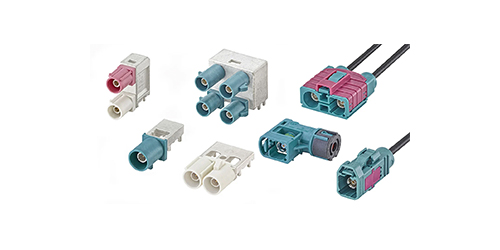
Most commercial SMA to FAKRA cable assemblies adopt flexible coaxial cable types such as RG174, RG316, and LMR-100A, balancing compact size, bending flexibility, and electrical performance. The finished assembly integrates precision-machined SMA threaded connectors and color-coded, keyed FAKRA snap-in connectors, eliminating the need for on-site soldering or complex assembly and enabling plug-and-play installation.
2. Core Components & Technical Specifications of SMA to FAKRA Cable Assembly
The superior performance of SMA to FAKRA cable assemblies stems from standardized component design and strict technical parameter control. Every detail from connector structure to cable material determines signal transmission efficiency and environmental adaptability. Below are the core technical specifications and component breakdowns that define high-quality SMA to FAKRA cable assemblies.
2.1 Connector Structure & Type Classification
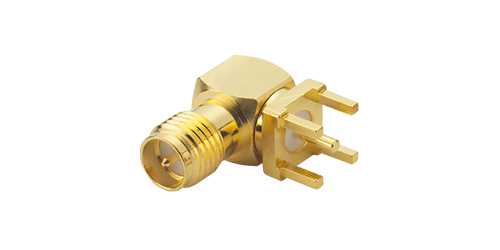
SMA Connector End: SMA (SubMiniature version A) is a threaded, miniature coaxial connector widely used in industrial, commercial, and consumer wireless devices. It features a durable metal threaded locking structure that provides tight connection force, preventing loosening caused by minor vibration. Common SMA types include SMA male (plug) and SMA female (jack), supporting stable connection with routers, wireless modules, signal testers, and external high-gain antennas.
Characteristic Impedance: 50Ω (industry standard for RF wireless and automotive communication systems, ensuring impedance matching and minimum signal reflection)
Frequency Range: DC ~ 3GHz, fully covering GPS, GLONASS, Beidou satellite navigation, 4G LTE, 5G low-band, Wi-Fi 2.4G/5G, and automotive Bluetooth signal frequencies
VSWR: ≤1.5:1 (low standing wave ratio ensures minimal signal reflection and stable transmission power)
Insertion Loss: ≤0.5dB@1GHz, ≤1.2dB@3GHz (ultra-low signal loss guarantees high-fidelity signal transmission without attenuation)
Shielding Effectiveness: ≥90dB (double-layer braided shielding structure resists external electromagnetic interference from vehicle circuits and industrial equipment)
2.3 Mechanical & Environmental Specifications
Cable Types: RG174 (ultra-flexible, compact size), RG316 (high-temperature resistant), LMR-100A (low-loss, high stability)
Operating Temperature: -40°C to +100°C, adapting to extreme high and low temperature environments in vehicle operation and outdoor industrial scenarios
Bending Radius: ≥5mm (flexible cable design suitable for narrow installation spaces inside vehicle interiors and equipment cabinets)
Durability: ≥500 mating cycles, long service life for frequent plug-and-play testing and daily vehicle operation
Vibration Resistance: Automotive-grade anti-loosening design, resistant to long-term road vibration and mechanical shock
3. Critical Differences Between SMA and FAKRA Connectors
To understand the value of SMA to FAKRA cable assemblies, it is essential to clarify the core differences between SMA and FAKRA connectors, as their design positioning and application scenarios are completely different. This also explains why direct connection between the two interfaces is impossible and adapter cables are indispensable.
| Comparison Item | SMA Connector | FAKRA Connector |
|---|---|---|
| Application Scenario | Universal industrial, commercial, consumer wireless devices (routers, modules, test equipment) | Exclusive for automotive electronic systems (vehicle antennas, infotainment, ADAS) |
| Locking Method | Threaded screw locking, high connection stability | Snap-in quick locking, fast installation, anti-vibration |
| Housing Material | All-metal structure, strong and durable | Plastic insulating housing + metal terminal, anti-interference |
| Keying Design | No keying design, universal mating | Color-coded & multi-keying, anti-misconnection |
| Vibration Resistance | General industrial grade | Automotive high-vibration resistant grade |
| Installation Speed | Slow, requires screwing operation | Fast, one-click plug and play |
In short, SMA connectors focus on universality and industrial versatility, while FAKRA connectors focus on automotive specialization and environmental adaptability. SMA to FAKRA cable assemblies perfectly bridge this gap, enabling free signal transmission between general RF equipment and vehicle-specific systems.

4. Core Advantages of SMA to FAKRA Cable Assemblies
SMA to FAKRA cable assemblies have become the mainstream cross-standard RF connection solution in the automotive and wireless industries due to their unique structural design, excellent electrical performance, and strong scene adaptability. The core advantages are summarized as follows:
4.1 Perfect Cross-Standard Compatibility
Most aftermarket automotive antennas, wireless upgrade modules, and professional RF testing devices only support SMA interfaces, while original vehicle navigation, telematics, and antenna systems uniformly adopt FAKRA interfaces. Without adapter cables, users cannot complete system upgrading, signal testing, or equipment replacement. SMA to FAKRA cable assemblies achieve seamless docking between the two mainstream interfaces, solving the industry’s common compatibility pain point and greatly improving equipment utilization.
4.2 Ultra-Low Signal Loss & High Transmission Stability
Adopting 50Ω precise impedance matching design and double-layer copper braided shielding structure, high-quality SMA to FAKRA cable assemblies effectively suppress signal attenuation and electromagnetic interference. In complex vehicle operating environments with dense electronic circuits, it can maintain stable transmission of satellite navigation, cellular network, and wireless signal data, avoiding signal drift, positioning deviation, and network disconnection caused by poor connection. The low VSWR and insertion loss parameters ensure consistent signal quality in long-term operation.
4.3 Automotive-Grade Environmental Adaptability
Different from ordinary civilian RF cables, SMA to FAKRA cable assemblies are fully optimized for vehicle working conditions. They can withstand extreme temperature changes from -40°C to +100°C, adapt to high-temperature baking in vehicle cabins in summer and low-temperature freezing in winter. Meanwhile, the FAKRA snap-in anti-loosening structure and reinforced cable sheath can resist long-term road vibration, friction, and extrusion, preventing cable breakage and interface loosening, and ensuring 24-hour stable operation of vehicle electronic systems.
4.4 Easy Installation & Cost-Effective Maintenance
The assembly is fully prefabricated in the factory with no need for on-site welding, crimping, or debugging. The FAKRA end supports one-click quick insertion and locking, while the SMA threaded end ensures firm connection with test equipment and modules. The plug-and-play design greatly reduces installation difficulty and construction time. In addition, compared with replacing the entire vehicle wiring harness or modifying equipment interfaces, using SMA to FAKRA cable assemblies can save a lot of renovation costs and later maintenance costs, with higher cost performance.
4.5 Flexible Customization & Wide Applicability
SMA to FAKRA cable assemblies support diversified customization in cable length (10cm to 5m), cable type, connector gender (SMA male/female to FAKRA male/female), and bending angle (straight/right angle). It can meet the installation space requirements of different vehicle models, industrial equipment cabinets, and testing scenarios, covering almost all application scenarios of automotive RF signal conversion and industrial wireless testing.
5. Main Applications of SMA to FAKRA Cable Assemblies
With the rapid development of automotive intelligence and wireless communication technology, the application scenarios of SMA to FAKRA cable assemblies are becoming increasingly extensive, covering automotive electronics, industrial testing, smart transportation, and wireless equipment upgrading. The mainstream application fields are as follows:
5.1 Automotive Intelligent Navigation & Infotainment System Upgrade
This is the most common application scenario of SMA to FAKRA cable assemblies. Most original factory vehicle central control systems, GPS navigation modules, and car radios are equipped with FAKRA antenna interfaces, while aftermarket high-precision GPS antennas, 4G/5G signal enhancement antennas, and modified Android central control hosts adopt SMA interfaces. Users can use SMA to FAKRA cable assemblies to complete antenna replacement and system upgrading, effectively improving vehicle navigation positioning accuracy, vehicle network signal stability, and radio signal reception sensitivity. It is widely used in the modification and maintenance of passenger cars, commercial vehicles, and new energy vehicles.
5.2 Automotive Telematics & ADAS System Debugging
Modern intelligent vehicles are equipped with a large number of telematics modules, ADAS assisted driving sensors, and vehicle-mounted wireless transmission devices, all of which rely on high-stability RF signal transmission. In the process of vehicle R&D, production, and after-sales maintenance, engineers need to connect professional SMA-port signal testers, spectrum analyzers, and signal simulators to vehicle FAKRA interfaces through SMA to FAKRA cable assemblies to complete signal testing, fault diagnosis, and system debugging, ensuring the normal operation of vehicle intelligent driving and remote communication functions.
5.3 Industrial Wireless Equipment Testing & Calibration
In wireless communication laboratories and industrial production lines, FAKRA standard signal sources and vehicle simulation equipment often need to be connected with SMA-standard testing instruments. SMA to FAKRA cable assemblies are used as professional testing connecting lines to realize signal transmission and data calibration between different standard equipment, supporting the R&D and performance testing of automotive wireless modules, antenna products, and communication equipment, improving testing accuracy and work efficiency.
5.4 Smart Transportation & Vehicle Monitoring System
In intelligent transportation scenarios such as vehicle monitoring, fleet management, and vehicle-mounted Beidou positioning, a large number of vehicle-mounted positioning terminals and data transmission modules use SMA interfaces, while vehicle factory reserved antenna interfaces are FAKRA standard. SMA to FAKRA cable assemblies are used for signal connection of monitoring terminals, realizing real-time positioning, data transmission, and remote monitoring of vehicles, which is widely used in logistics fleets, official vehicles, and intelligent connected vehicle systems.
5.5 Custom Wireless System Integration
For modified vehicle wireless systems, industrial mobile communication base stations, and portable wireless signal transmission equipment, SMA to FAKRA cable assemblies can be used as customized connecting components to realize flexible integration of different standard RF equipment, meeting the personalized connection needs of non-standard equipment and special scenarios.
6. How to Choose the Right SMA to FAKRA Cable Assembly? (Professional Selection Guide)
There are many types of SMA to FAKRA cable assemblies on the market, with differences in cable material, parameters, and workmanship. Improper selection will lead to signal loss, poor stability, and even equipment damage. The following professional selection principles help you quickly match the most suitable product:
6.1 Confirm Connector Gender & Key Type
First, confirm the interface types of the two connected devices: select SMA male/female and FAKRA male/female matching models according to the equipment port. For most universal vehicle scenarios, FAKRA Z universal key is preferred, which is compatible with 99% of standard FAKRA interfaces and avoids key mismatch failure. For special vehicle models with customized keying, select the corresponding color-coded and keyed FAKRA connector.
6.2 Select Cable Type According to Application Scenario
RG174 Cable: Ultra-thin and flexible, low cost, suitable for short-distance (within 2m) vehicle interior wiring and ordinary signal transmission scenarios
RG316 Cable: High-temperature resistant, anti-aging, suitable for engine compartment and high-temperature working environments
LMR-100A Cable: Ultra-low loss, high stability, suitable for long-distance wiring and high-precision signal testing scenarios
6.3 Match Electrical Parameters with Signal Frequency
For ordinary GPS and 2.4G Wi-Fi signals, conventional low-loss parameters can meet the demand; for 5G, high-frequency LTE, and high-precision testing scenarios, it is necessary to select products with VSWR ≤1.3:1 and ultra-low insertion loss to ensure high-frequency signal transmission quality.
Select the appropriate cable length according to the actual installation distance, avoiding excessive cable redundancy causing signal interference or insufficient length leading to installation failure. For narrow installation spaces, choose right-angle connector models to save space and avoid cable bending damage.
6.4 Determine Cable Length & Appearance Structure
6.5 Prioritize Automotive-Grade Quality Certification
For vehicle-mounted long-term use scenarios, must select automotive-grade SMA to FAKRA cable assemblies with anti-vibration, high-temperature resistance, and anti-aging characteristics, avoiding ordinary civilian cables that are prone to aging and failure in harsh vehicle environments.
7. Installation & Maintenance Best Practices
Correct installation and daily maintenance can maximize the service life and transmission performance of SMA to FAKRA cable assemblies. The key operation specifications are as follows:
Standard Installation: Align the FAKRA connector key position and insert it vertically until a "click" sound is heard to confirm locking; screw the SMA connector manually tightly (do not use excessive force to avoid thread damage) to ensure full contact.
Reasonable Wiring: Avoid excessive bending, twisting, and extrusion of the cable; keep away from vehicle high-voltage lines and heat sources to prevent signal interference and cable sheath aging.
Regular Inspection: Regularly check whether the connector is loose, the sheath is worn, and the terminal is oxidized; clean the connector dust and dirt in time to ensure good electrical contact.
Anti-Vibration Protection: Fix the cable with cable ties in the vehicle vibration area to avoid long-term friction and loosening caused by vibration.
Proper Storage: Unused cables should be stored in a dry and cool environment, avoiding long-term exposure to high temperature, humidity, and corrosive environments.
8. Frequently Asked Questions (FAQs) About SMA to FAKRA Cable Assembly
Q1: Is SMA to FAKRA cable assembly universal for all vehicles?
A: Most FAKRA Z universal key models are compatible with mainstream passenger cars, new energy vehicles, and commercial vehicles on the market. A few luxury models and customized vehicle systems have special keyed FAKRA interfaces, which need to be matched with corresponding dedicated cable assemblies. It is recommended to confirm the original vehicle interface type before purchase.
Q2: Will the adapter cable cause signal attenuation and affect positioning accuracy?
A: High-quality automotive-grade SMA to FAKRA cable assemblies have ultra-low insertion loss and high shielding performance. The signal attenuation is negligible within the effective frequency range, which will not affect GPS positioning accuracy, vehicle network signal, and wireless transmission quality. Inferior low-quality cables will cause serious signal loss, so it is necessary to select qualified products.
Q3: What is the service life of SMA to FAKRA cable assembly?
A: Automotive-grade products have a service life of more than 5 years under normal vehicle operating conditions, with strong anti-aging and anti-vibration capabilities. Frequent plugging and unplugging or harsh working environments will appropriately shorten the service life.
Q4: Can SMA to FAKRA cable assemblies be customized in length?
A: Yes, most professional manufacturers support customized lengths from 10cm to 5m, and can also customize special structures such as right-angle connectors and multi-shielding layers to meet personalized installation needs.
Q5: What is the difference between FAKRA Z and other FAKRA key types?
A: FAKRA Z is a universal zero-key model with no direction limitation and universal compatibility. Other key types (A/B/C/D) are dedicated single-channel interfaces, used for specific signal circuits to prevent signal crosstalk, and are mostly used in high-precision vehicle intelligent systems.
As an indispensable cross-standard RF connection component, SMA to FAKRA cable assembly perfectly solves the compatibility problem between universal SMA industrial interfaces and automotive FAKRA dedicated interfaces. With excellent low-loss transmission performance, automotive-grade environmental adaptability, convenient installation, and wide scene coverage, it has become a core accessory for vehicle navigation upgrading, wireless signal enhancement, industrial RF testing, and intelligent vehicle system debugging. Whether you are a vehicle modification enthusiast, electronic maintenance engineer, or industrial equipment integrator, selecting high-quality SMA to FAKRA cable assemblies can effectively improve system stability, reduce equipment failure rates, and save application costs.
When purchasing and using, it is necessary to combine the actual application scenario, signal frequency, and installation space to select the appropriate cable type, length, and connector specification, and standardize installation and maintenance to maximize product performance and service life. With the continuous upgrading of automotive intelligence and 5G wireless technology, SMA to FAKRA cable assemblies will have broader application prospects in the field of automotive wireless connectivity and industrial RF transmission.
Lucy Yang | lucy.y@toxutech.com
Dotty Zhao | sales04@toxutech.com
Global Business Director / Sales Team / Global Operations


 En
 Cn
 Korean
 Home >
