

-
Products -PCBA Manufacturing RF Connectors RF Cable Assemblys Embedded Antennas External Antennas GNSS Positioning Solutions
RF Connectors

RF Cable Assemblys
Embedded Antennas
External Antennas
GNSS Positioning Solutions
 Language


Language


Time:2026-10-21 Views:0
SMA FAKRA automotive cables are premium RF coaxial cable assemblies specially engineered for modern vehicle wireless communication systems, serving as the critical bridge between standard SMA RF connectors and automotive-grade FAKRA interfaces. As the automotive industry rapidly evolves toward intelligent driving, connected cars, and in-vehicle multimedia intelligence, the demand for stable, low-loss, and high-vibration-resistant signal transmission solutions has skyrocketed. SMA FAKRA cables have become indispensable components for automotive GPS navigation, LTE/5G telematics, Wi-Fi connectivity, ADAS sensors, and AM/FM radio systems, widely recognized by automotive manufacturers, aftermarket modification technicians, and electronic engineers worldwide.
1. What Is an SMA FAKRA Automotive Cable?
An SMA FAKRA automotive cable is a customized coaxial cable assembly with one end terminated with a standard SMA connector and the other end fitted with an automotive-specific FAKRA connector. Designed strictly in line with USCAR and ISO 20860 automotive industry standards, this cable solves the compatibility problem between universal industrial SMA RF interfaces and dedicated vehicle FAKRA antenna ports, enabling seamless signal transmission between aftermarket wireless devices and factory-installed automotive electronic systems.
To fully understand this cable, it is essential to distinguish the core characteristics of the two connectors:
1.1 FAKRA Connector (Automotive Exclusive)
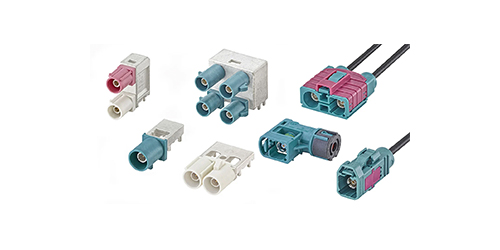
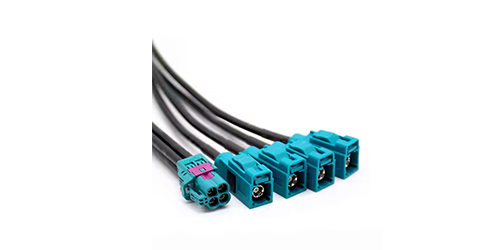
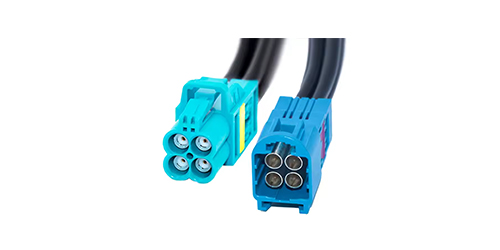
FAKRA, short for Fachkreis Automobil, is a German-originated automotive coaxial connector standard exclusively developed for vehicle operating environments. Unlike ordinary RF connectors, FAKRA connectors feature a robust plastic housing, color-coded mechanical keying, and dual locking structures, which effectively prevent mis-mating, loose connection, and signal interruption caused by vehicle vibration and jolting. There are 14 standardized color-coded keying types for FAKRA connectors, among which the Z-code universal type is the most widely used in mainstream automotive SMA FAKRA cable assemblies, supporting universal mating for most vehicle antenna interfaces.
All FAKRA connectors comply with strict automotive-grade durability requirements, withstanding extreme temperatures, humidity, and mechanical impact inside vehicles, making them the default interface for original vehicle antenna and signal transmission systems.
1.2 SMA Connector (Universal RF Standard)
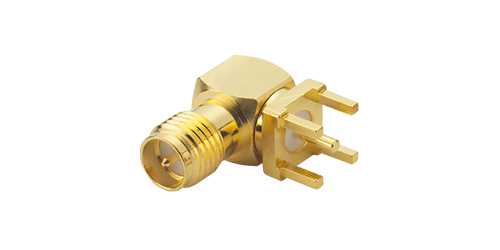
SMA (SubMiniature version A) is a globally universal threaded RF coaxial connector, widely applied in wireless communication equipment, test instruments, aftermarket car stereos, GPS modules, and 5G signal devices. It adopts a metal threaded locking design, featuring high connection stability, excellent high-frequency performance, and strong versatility. Most third-party automotive modified navigation hosts, signal amplifiers, and external antenna devices use SMA interfaces, forming a perfect matching demand with factory FAKRA vehicle ports.
1.3 Core Definition of SMA FAKRA Automotive Cables
Combining the professional advantages of FAKRA automotive anti-vibration design and SMA universal RF compatibility, SMA FAKRA automotive cables are 50-ohm impedance coaxial jumper cables dedicated to vehicle wireless signal conversion and transmission. They perfectly connect aftermarket SMA-port wireless devices to original FAKRA-port vehicle systems, achieving low-loss transmission of GPS, radio, cellular network, and Wi-Fi signals, and are the most cost-effective and reliable signal conversion solution for automotive modification and intelligent vehicle upgrading.
2. Core Technical Specifications of SMA FAKRA Automotive Cables
The superior performance of high-quality SMA FAKRA automotive cables stems from standardized and rigorous technical parameter design. All qualified automotive-grade products follow unified industry specifications to ensure consistent signal transmission performance and environmental adaptability. The core technical parameters are as follows:
| Technical Parameter | Standard Specification | Professional Description |
|---|---|---|
| Characteristic Impedance | 50Ω (Automotive RF Standard) | Matches mainstream automotive wireless equipment impedance, eliminates signal reflection and loss |
| Frequency Range | DC ~ 6GHz | Covers AM/FM radio, GPS, 4G LTE, 5G, Wi-Fi 2.4G/5G full frequency bands |
| Cable Type | RG174, RG316, LMR100A | RG174 for conventional signal transmission; RG316 for high-temperature resistance; LMR100A for ultra-low loss |
| Connector Plating | 3U Gold-plated Inner Conductor | Anti-oxidation, anti-corrosion, ensures long-term stable conductivity |
| Working Temperature | -40℃ ~ +85℃ | Adapts to extreme high and low temperature environments inside vehicles |
| VSWR | ≤1.2 (Low Standing Wave Ratio) | Minimizes signal reflection, ensures high-purity signal transmission |
| Voltage Rating | 335V RMS Continuous | Meets automotive electrical safety standards, avoids breakdown and leakage |
| Custom Length | 10cm ~ 500cm (Customizable) | Supports personalized customization for different vehicle wiring layouts |
Among all parameters, the 50Ω impedance design and wide frequency coverage are the core advantages of SMA FAKRA automotive cables. Unlike ordinary household RF cables, automotive-grade models strictly control VSWR and attenuation, ensuring no signal distortion or loss during high-speed vehicle operation, even in complex electromagnetic interference environments inside cars.
3. Key Advantages of SMA FAKRA Automotive Cables
Compared with ordinary RF adapter cables and non-automotive-grade jumper wires, professional SMA FAKRA automotive cables have multiple exclusive advantages tailored for vehicle scenarios, which are the core reasons for their wide adoption in the automotive industry:
3.1 Professional Automotive Environmental Adaptability
Vehicles operate in extremely complex working environments, with long-term vibration, temperature changes, humidity erosion, and electromagnetic interference. SMA FAKRA automotive cables adopt automotive-grade outer sheath materials and reinforced connection structures. The FAKRA terminal’s dual locking design can resist continuous vibration during vehicle driving, effectively preventing connector loosening and signal disconnection. The high-temperature and low-temperature resistant sheath will not crack, age, or deform in the range of -40℃ to 85℃, maintaining stable performance in extreme cold winters and hot summers.
3.2 Ultra-Low Signal Loss & High Transmission Stability
Equipped with high-purity copper inner conductors and double-layer shielding structures, SMA FAKRA automotive cables effectively isolate internal and external electromagnetic interference inside the vehicle. The gold-plated connector pins avoid oxidation and poor contact caused by long-term use, ensuring low attenuation transmission of GPS, 5G, and Wi-Fi high-frequency signals. The ultra-low VSWR design eliminates signal standing wave loss, making navigation positioning more accurate, network transmission faster, and radio signal clearer, completely solving common problems such as vehicle signal delay, drift, and noise.
3.3 Perfect Interface Compatibility & Easy Installation
The FAKRA Z-code universal interface is compatible with 99% of mainstream vehicle original antenna ports, covering European, American, and Japanese brand models such as BMW, Mercedes-Benz, Toyota, Honda, Volkswagen, and Kia. The standard SMA terminal is suitable for all aftermarket modified navigation hosts, GPS antennas, 4G/5G signal amplifiers, and wireless Wi-Fi modules. The plug-and-play design requires no welding or wiring modification, realizing quick installation and replacement, greatly reducing the difficulty and time cost of vehicle electronic modification and maintenance.
3.4 Durable & Long Service Life
All components of SMA FAKRA automotive cables comply with automotive industry durability standards. The connector shell is made of high-strength engineering plastic, which is wear-resistant and drop-resistant; the cable body has excellent tensile and bending resistance, adapting to complex vehicle wiring bending layouts. The gold-plated conductive structure has excellent anti-oxidation and anti-corrosion capabilities, avoiding signal degradation caused by terminal oxidation and rust. The service life can reach more than 10 years, fully matching the service cycle of vehicle electronic systems.
3.5 Customization Flexibility
SMA FAKRA automotive cables support personalized customization of length, connector gender (SMA male/female to FAKRA male/female), cable type, and color. Whether it is short-distance wiring inside the center console or long-distance wiring from the roof antenna to the host, customized solutions can be provided to meet the diverse layout needs of different models and electronic equipment, with strong engineering practicability.

4. Main Application Scenarios of SMA FAKRA Automotive Cables
With the continuous upgrading of automotive intelligence, the application scope of SMA FAKRA automotive cables covers almost all vehicle wireless signal transmission links, becoming a core supporting component of intelligent vehicle electronics. The main application scenarios are as follows:
4.1 Automotive GPS & Beidou Navigation Systems
Vehicle navigation systems require high-precision and stable satellite signal reception. Most original vehicle navigation antenna interfaces adopt FAKRA ports, while aftermarket upgraded navigation hosts and external high-gain GPS antennas use SMA interfaces. SMA FAKRA cables realize stable connection between navigation equipment and satellite antennas, ensuring real-time and accurate positioning signals, solving positioning drift, slow satellite searching, and signal loss during vehicle driving, and improving navigation accuracy and response speed.
4.2 In-Vehicle 4G/5G Telematics & Network Systems
Modern intelligent vehicles are equipped with vehicle networking systems, remote monitoring, online entertainment, and OTA upgrade functions, which rely on 4G/5G cellular network signals. SMA FAKRA automotive cables are used for signal connection between vehicle network modules and external antennas, supporting high-speed data transmission of 4G LTE and 5G frequency bands. The low-loss transmission performance ensures stable vehicle network signals, no disconnection during high-speed driving, and smooth online video, navigation, and remote control functions.
4.3 Automotive Wi-Fi & Bluetooth Wireless Systems
In-vehicle Wi-Fi hotspots and Bluetooth vehicle systems need stable wireless signal transmission. SMA FAKRA cables cover 2.4G and 5G Wi-Fi frequency bands, effectively reducing signal attenuation and interference, making in-vehicle wireless network coverage wider and connection more stable, solving problems such as Wi-Fi disconnection and Bluetooth stuttering during vehicle driving, and improving the user experience of in-vehicle intelligent entertainment.
4.4 AM/FM Radio & Multimedia Audio Systems
Vehicle radio systems are highly susceptible to electromagnetic interference from vehicle engines and electrical equipment. High-quality SMA FAKRA automotive cables adopt a multi-layer shielding structure, which can effectively isolate external interference, ensure clear and noise-free radio signals, and realize stable reception of medium and short-wave radio signals. They are widely used for signal connection of modified car audio and original radio systems.
4.5 ADAS Intelligent Driving Assistance Systems
Advanced Driver Assistance Systems (ADAS) such as lane keeping, adaptive cruise control, and automatic parking rely on high-precision sensor signal transmission. Some vehicle radar and wireless sensor modules use FAKRA interfaces, while external debugging equipment and signal receiving modules use SMA interfaces. SMA FAKRA cables provide low-delay and high-stability signal transmission guarantees for ADAS systems, ensuring the normal operation of intelligent driving functions and improving driving safety.
4.6 Automotive Aftermarket Modification & Maintenance
In the automotive aftermarket, SMA FAKRA cables are the essential accessories for modifying navigation hosts, upgrading vehicle network systems, replacing antennas, and installing signal amplifiers. Due to their plug-and-play and high-compatibility characteristics, they are widely used by auto repair shops, modification factories, and individual car owners, becoming the most popular signal conversion cable for vehicle electronic upgrading.
5. How to Choose the Right SMA FAKRA Automotive Cable? (Professional Selection Guide)
There are many types of SMA FAKRA automotive cables on the market, with differences in cable material, connector type, length, and performance parameter. Choosing the wrong cable will lead to signal loss, poor stability, and even equipment damage. The following professional selection principles help you quickly select the most suitable product:
5.1 Confirm Connector Gender & Coding
First, confirm the interface types of the two connected devices: distinguish SMA male/female connectors and FAKRA male/female connectors. Most conventional vehicle scenarios use SMA Male to FAKRA Z Female or SMA Female to FAKRA Z Male configurations. It is recommended to prioritize Z-code FAKRA connectors with universal compatibility, avoiding signal connection failure caused by mismatched color coding.
5.2 Select Appropriate Cable Model
Different cable models adapt to different usage scenarios: RG174 cable is lightweight and flexible, suitable for conventional interior wiring and short-distance signal transmission, with high cost performance; RG316 cable has better high-temperature resistance and anti-aging performance, suitable for engine compartment and high-temperature area wiring; LMR100A ultra-low loss cable is suitable for long-distance wiring and high-precision signal transmission scenarios such as 5G and high-precision positioning.
5.3 Match Cable Length Reasonably
Excessively long cables will increase signal loss, while excessively short cables cannot meet wiring layout needs. It is recommended to measure the actual wiring distance of the vehicle in advance and select the closest standard length or customized length. For conventional center console antenna wiring, 20cm–50cm is the most common specification; for roof antenna to host long-distance wiring, 100cm–300cm customized lengths are required.
5.4 Focus on Automotive-Grade Certification
Qualified SMA FAKRA automotive cables must comply with USCAR and ISO 20860 automotive industry standards, with strict environmental resistance and durability testing. Avoid ordinary civilian RF cables disguised as automotive-grade products, which cannot withstand vehicle vibration and temperature changes, and are prone to signal failure and aging damage.
5.5 Check Shielding & Plating Process
High-performance products adopt double-layer or triple-layer shielding structures to resist electromagnetic interference inside the vehicle. The inner conductor must be gold-plated (3U standard) to ensure long-term oxidation resistance and stable conductivity. Inferior products use tin-plated or unplated conductors, which are prone to oxidation and poor contact after long-term use, resulting in signal attenuation.
6. Installation & Usage Notes for SMA FAKRA Automotive Cables
Correct installation and usage can maximize the performance of SMA FAKRA automotive cables and extend their service life. The key installation specifications and precautions are as follows:
Standard Wiring Bending: During installation, avoid excessive bending and twisting of the cable. The bending radius should not be less than 5 times the cable diameter, to prevent damage to the internal shielding layer and conductor, which causes signal loss.
Strict Interface Locking: After plugging the SMA and FAKRA connectors, ensure the threaded lock and plastic buckle are completely fastened. Loose interfaces will cause intermittent signal disconnection and poor contact during vehicle vibration.
Avoid Electromagnetic Interference Sources: Keep the cable away from vehicle engine, generator, and high-voltage line equipment, to avoid strong electromagnetic interference affecting high-frequency signal transmission quality.
Reasonable Fixed Wiring: Use cable ties to fix the wiring harness to avoid friction and pulling with vehicle parts during driving, preventing cable shell wear and internal wire breakage.
Prohibit Random Cutting & Modification: Do not cut or splice the cable at will. Random modification will damage the shielding structure and impedance characteristics, resulting in serious signal attenuation and failure to meet transmission standards.
Regular Inspection & Maintenance: Regularly check whether the connector is loose, oxidized, or damp, and clean the interface dust in time to ensure long-term stable signal transmission.
7. FAQ About SMA FAKRA Automotive Cables
We have sorted out the most frequently asked questions by global users about SMA FAKRA automotive cables to solve your purchasing and usage confusion:
Q1: What is the difference between FAKRA cable and ordinary SMA RF cable?
FAKRA cables are automotive-exclusive connectors with anti-vibration, anti-misplug, and high and low temperature resistance functions, complying with automotive industry standards; ordinary SMA cables are civilian universal RF cables, without automotive environmental adaptability, and cannot withstand vehicle vibration and extreme temperature environments, so they are not suitable for long-term vehicle use.
Q2: Can SMA FAKRA cables be used for 5G vehicle network systems?
Yes. High-quality SMA FAKRA automotive cables have a frequency range up to 6GHz, fully covering 5G vehicle network frequency bands, supporting high-speed 5G signal transmission, and are the ideal matching cable for current 5G intelligent vehicle systems.
Q3: Why does the modified GPS signal become weak after replacing the cable?
It is usually caused by inferior cables with insufficient shielding performance, mismatched impedance, or excessive cable length leading to signal loss. It is recommended to select standard 50Ω automotive-grade SMA FAKRA cables and match the appropriate length according to the actual wiring distance.
Q4: Are SMA FAKRA cables universal for all car models?
The Z-code universal model is compatible with most mainstream car models worldwide, including European, American, Japanese, and Chinese vehicles. A small number of special models with customized FAKRA coding need to select matching coded cables, and you can consult the supplier for model matching confirmation.
Q5: How long is the service life of automotive-grade SMA FAKRA cables?
Under standard installation and normal vehicle use environment, formal automotive-grade products have a service life of more than 10 years, which is basically consistent with the vehicle service cycle, and no frequent replacement is required.
As the core connecting component of modern intelligent vehicle wireless systems, SMA FAKRA automotive cables undertake the important task of low-loss and high-stability transmission of vehicle GPS, network, audio, and sensor signals. With professional automotive environmental adaptability, excellent high-frequency transmission performance, perfect interface compatibility, and ultra-high cost performance, they have become the preferred solution for automotive original supporting and aftermarket modification signal conversion.
Whether you are an automotive electronic engineer, aftermarket modification technician, or individual car owner, choosing standardized and high-quality SMA FAKRA automotive cables can effectively solve various vehicle signal problems, improve the stability of intelligent vehicle systems, and bring a better driving and using experience. With the continuous upgrading of vehicle intelligence and 5G vehicle network technology, SMA FAKRA automotive cables will have broader application prospects in the global automotive industry.
Lucy Yang | lucy.y@toxutech.com
Dotty Zhao | sales04@toxutech.com
Global Business Director / Sales Team / Global Operations


 En
 Cn
 Korean
 Home >
