

-
Products -PCBA Manufacturing RF Connectors RF Cable Assemblys Embedded Antennas External Antennas GNSS Positioning Solutions
RF Connectors

RF Cable Assemblys
Embedded Antennas
External Antennas
GNSS Positioning Solutions






 Language


Language


Time:2026-10-17 Views:0
Why Multi-Band GNSS and 4G Integration Matters
In the rapidly evolving landscape of IoT, telematics, and autonomous systems, the ability to simultaneously achieve precise positioning and reliable connectivity from a single antenna solution has become a critical engineering requirement. A multi-band GNSS 4G antenna represents the convergence of two essential technologies: global navigation satellite systems (GNSS) for positioning, navigation, and timing (PNT), and fourth-generation cellular networks for data communication. This integration addresses a fundamental challenge in modern device design—how to deliver centimeter-level positioning accuracy while maintaining robust, high-speed cellular connectivity in a compact, cost-effective form factor.
The global GNSS and GPS antenna market was estimated at USD 5.32 billion in 2025 and is projected to grow at a compound annual growth rate of 4.60% through the forecast period. Within this market, multi-band, multi-constellation antennas are becoming baseline requirements, with premium segments growing 2–3% per year faster than single-band alternatives. This growth is driven by structural demand from autonomous vehicles, precision agriculture, fleet management, and smart city infrastructure—applications that demand both high-accuracy positioning and always-on connectivity.
Understanding Multi-Band GNSS: Beyond Single-Frequency Positioning
The GNSS Frequency Spectrum
GNSS satellites broadcast right-hand circularly polarized (RHCP) signals within specific frequency ranges, primarily between 1164–1300 MHz and 1559–1610 MHz. Different satellite constellations utilize different frequency bands within these ranges:
GPS operates on three primary bands: L1 (1575.42 MHz), L2 (1227.60 MHz), and the recently introduced L5 (1176.45 MHz). The L5 band, in particular, offers higher power and improved resistance to multipath interference, making it ideal for safety-critical and high-precision applications.
BeiDou utilizes B1/B2/B3 bands, with the B2 band overlapping with GPS L5 frequencies. Galileo broadcasts on E1, E5a, E5b, and E6 bands. GLONASS operates on L1, L2, and L3 bands. Additionally, L-Band correction services (typically 1525–1559 MHz) provide real-time kinematic (RTK) corrections that enable centimeter-level positioning accuracy.
Why Multi-Band Matters
The case for multi-band GNSS reception rests on several technical advantages. Operating a GNSS receiver across multiple frequency bands allows the system to correct for ionospheric propagation delays—one of the largest error sources in single-frequency positioning. This correction is achieved by comparing signal delays across different frequencies, a technique that can improve positioning accuracy from several meters to sub-meter or even centimeter levels.
Multi-band reception also significantly enhances signal reliability in challenging environments. Urban canyons, dense foliage, and areas with high multipath interference can degrade single-band GNSS performance. By receiving signals across multiple bands and from multiple constellations, the receiver can select the strongest and cleanest signals for position calculation, improving time-to-first-fix (TTFF) and overall tracking stability.
Furthermore, multi-band GNSS provides inherent resistance to interference, jamming, and spoofing. An adversary attempting to disrupt GNSS reception must now contend with multiple frequencies across multiple constellations, making coordinated interference significantly more difficult.
The Role of 4G Connectivity in Combined Antenna Systems
While GNSS provides positioning data, 4G LTE connectivity enables that data to be transmitted, processed, and acted upon in real time. The integration of both functions into a single antenna package offers compelling advantages for system designers.
Modern 4G LTE networks operate across a wide range of frequency bands, typically from 600 MHz to 2700 MHz for LTE, with some implementations extending to 6000 MHz for 5G compatibility. A wideband 4G antenna covering 698–960 MHz and 1710–2690 MHz provides the flexibility to operate across multiple carrier networks, ensuring reliable connectivity regardless of geographic location or roaming requirements.
The combination of GNSS and 4G in a single antenna solution reduces the physical footprint, simplifies installation, and lowers the overall bill of materials. For applications where space is at a premium—such as UAVs, portable tracking devices, or compact IoT sensors—a 2-in-1 or 3-in-1 combo antenna can be the difference between a viable product and an impractical design.
Key Specifications to Evaluate
Frequency Coverage
The foundation of any multi-band GNSS 4G antenna is its frequency coverage. A comprehensive solution should address both the GNSS spectrum and the cellular bands required for the target deployment region.
For GNSS, look for coverage of 1559–1606 MHz (the upper L-band covering GPS L1, Galileo E1, BeiDou B1, and GLONASS L1) and ideally 1164–1254 MHz (covering GPS L5, Galileo E5, and BeiDou B2). For advanced applications requiring L-Band correction services, coverage extends to 1525–1559 MHz.
For 4G LTE, the essential bands are 698–960 MHz (low-band, providing wide coverage and building penetration) and 1710–2690 MHz (mid-band, offering higher data throughput). Many modern antennas also support 5G NR bands up to 6000 MHz for future-proofing.
Gain, Efficiency, and VSWR
Antenna gain, measured in dBi (decibels relative to isotropic), indicates how effectively the antenna converts incoming signals into electrical energy. For GNSS, passive antenna gain typically ranges from 2 to 5 dBi, while active antennas incorporating a low-noise amplifier (LNA) achieve much higher effective gain—often 28–35 dB.
Efficiency, expressed as a percentage, represents the ratio of radiated power to input power. Higher efficiency translates directly to better signal reception and transmission. For compact combo antennas, efficiency typically ranges from 40% to 75%, depending on the frequency band and form factor.
Voltage Standing Wave Ratio (VSWR) measures impedance matching between the antenna and the transmission line. A VSWR of 2.0:1 or lower is generally acceptable for 4G applications, while GNSS antennas often achieve VSWR below 1.5:1 for optimal performance. Lower VSWR means less signal reflection and more power delivered to or received from the antenna.
Noise Figure and LNA Performance
For active GNSS antennas, the noise figure of the integrated LNA is a critical parameter. GNSS signals arriving at the Earth's surface are extremely weak—typically around -130 dBm—and can be easily overwhelmed by thermal noise. A low noise figure, ideally below 2 dB and preferably around 1.5 dB, ensures that the LNA amplifies the signal without introducing excessive noise. Combined with high LNA gain (28–35 dB), this enables reliable GNSS reception even in challenging signal environments such as urban canyons or dense foliage.
Isolation and Interference
In a combined GNSS and 4G antenna, isolation between the GNSS and cellular elements is essential to prevent self-interference. The 4G transmitter can generate harmonics and broadband noise that degrade GNSS reception if not properly isolated. High-quality combo antennas typically achieve isolation of 15–20 dB or better between GNSS and LTE ports. When multiple cellular antennas are present (as in MIMO configurations), isolation between cellular elements should also be considered to maintain MIMO performance.
Selection Guide: Matching Antenna to Application
Step 1: Define Positioning Accuracy Requirements
The required positioning accuracy determines the GNSS band coverage needed. For basic asset tracking where meter-level accuracy is sufficient, a single-band L1 antenna may suffice. For applications requiring sub-meter accuracy—such as fleet management or smart city infrastructure—dual-band L1/L5 reception is recommended. For centimeter-level precision required in surveying, precision agriculture, and autonomous vehicle guidance, full multi-band coverage (L1/L2/L5 plus L-Band correction) is essential.
Step 2: Determine Cellular Band Requirements
The 4G bands required depend on the deployment region and carrier. In North America, key bands include LTE Band 12/13/14/17 (700 MHz), Band 4/66 (AWS), and Band 2/25 (1900 MHz). European deployments prioritize Band 20 (800 MHz), Band 3 (1800 MHz), and Band 7 (2600 MHz). A wideband antenna covering 698–960 MHz and 1710–2690 MHz addresses most global deployment scenarios.
For applications requiring higher data throughput or future 5G compatibility, consider antennas extending coverage to 3300–6000 MHz.
Step 3: Evaluate Environmental and Mechanical Requirements
The operating environment dictates the required ingress protection rating, temperature range, and mounting options. Outdoor and vehicle-mounted applications typically require IP67 or IP69K ratings to withstand dust, water immersion, and high-pressure washing. Operating temperature ranges of -40°C to +85°C are standard for industrial-grade antennas.
Mounting options include screw mount, adhesive mount, magnetic mount, and through-hole mount. Screw mount offers the most secure and vibration-resistant installation, making it suitable for vehicle and heavy machinery applications. Adhesive mount provides a low-profile solution for hard cases and temporary installations. The choice depends on the specific mechanical constraints and expected environmental stresses.
Step 4: Consider Form Factor and Integration
Compact combo antennas are available in various form factors, from small puck-style antennas measuring 46 mm in diameter to larger shark-fin designs for automotive applications. Embedded helix antennas offer an alternative for space-constrained integrations, with some models measuring just 44 mm in diameter and 73.9 mm in height while weighing under 15 grams.
For MIMO applications, consider antennas with multiple cellular ports. A 2×2 MIMO configuration with dual cellular elements and a single GNSS element provides diversity gain and improved throughput without excessive complexity. A 4×4 MIMO configuration offers maximum performance for high-bandwidth applications but requires more space and cable routing.
Application Scenarios and Deployment Considerations
Fleet Management and Asset Tracking
Fleet management represents one of the largest markets for multi-band GNSS 4G antennas. These systems require continuous position reporting, route optimization, and real-time communication between vehicles and dispatch centers. The combination of multi-constellation GNSS (GPS, GLONASS, Galileo, BeiDou) with wideband LTE ensures reliable tracking even in areas with challenging satellite visibility or cellular coverage.
For fleet applications, key considerations include vibration resistance, wide operating temperature range, and compatibility with vehicle power systems. The antenna should be mounted on a conductive ground plane, typically the vehicle roof, with at least 30 cm clearance from other antennas or roof-mounted equipment to avoid detuning and interference.
Precision Agriculture and Autonomous Machinery
Precision agriculture relies on centimeter-level positioning for automated steering, section control, and yield mapping. Multi-band GNSS antennas supporting L1/L2/L5 frequencies, combined with L-Band correction services, enable RTK positioning with accuracy of 2–5 cm. The 4G connectivity provides the data link for receiving RTK corrections from a base station and transmitting machine telemetry to farm management systems.
Agricultural environments present unique challenges: dust, moisture, vibration, and wide temperature variations. Antennas should be rated for IP67 or higher and mounted on the vehicle roof with a clear view of the sky. Ground plane independence is advantageous for mounting on non-metallic surfaces such as fiberglass cab roofs.
Autonomous Vehicles and Robotics
Autonomous vehicles and robotics demand the highest levels of positioning accuracy and reliability. A multi-band GNSS 4G antenna provides the dual function of precise positioning and high-bandwidth connectivity for remote monitoring, over-the-air updates, and cloud-based decision making. Redundancy is critical—many autonomous platforms employ dual GNSS antennas for heading determination and backup positioning.
Key specifications for autonomous applications include high phase center stability, low axial ratio (typically below 2 dB), and excellent multipath rejection. Multi-point feeding technology in advanced antennas ensures stable phase center performance, which is essential for maintaining heading accuracy during vehicle motion.
Smart Cities and Infrastructure
Smart city applications—including intelligent transportation systems, utility monitoring, and public safety networks—increasingly rely on combined GNSS and 4G connectivity. Street furniture, traffic signals, and utility cabinets equipped with multi-band antennas can report their status, location, and operational data in real time.
For these fixed installations, long-term reliability and low maintenance are paramount. IP67-rated enclosures, UV-resistant materials, and wide operating temperature ranges ensure continuous operation over many years. The antenna should be mounted with a clear view of the sky and away from large metallic structures that could block satellite signals.
UAV and Drone Systems
Unmanned aerial vehicles require lightweight, compact antenna solutions that do not compromise flight performance. Embedded helix antennas integrating GNSS and 4G functions into a single element are particularly well-suited for UAV applications, offering full-band signal reception in a package weighing under 20 grams.
For UAVs, antenna placement is critical. The antenna should be mounted on the top surface of the airframe with an unobstructed view of the sky. Ground plane requirements vary by antenna design; some embedded antennas are ground-plane independent, while others require a specific minimum ground plane size for optimal performance.
Installation Best Practices
Ground Plane Requirements
Most GNSS and 4G antennas perform optimally when mounted on a conductive ground plane. The recommended ground plane size is typically a minimum of 400 mm × 400 mm for through-hole and screw-mount antennas, though smaller ground planes may be acceptable with some performance degradation. For GNSS antennas, a ground plane of at least ½ wavelength diameter at the lowest operating frequency is recommended.
When a suitable ground plane is not available—such as on fiberglass or plastic surfaces—select an antenna specifically designed for ground-plane-independent operation. These antennas incorporate internal counterpoise structures that simulate the effect of a ground plane.
Clearance and Co-location
Maintain a minimum of 30 cm (12 inches) clearance around the antenna to avoid detuning and interference from nearby objects. This is particularly important for GNSS antennas, which are sensitive to nearby conductive materials. When co-locating with other antennas, such as VHF/UHF communication antennas or Wi-Fi antennas, increase separation to at least 0.5–1 meter where possible.
Avoid mounting the antenna near high-power sources of electromagnetic interference, including inverters, motors, and switching power supplies. These devices can generate broadband noise that degrades GNSS reception.
Cable Routing and Connectors
Use low-loss coaxial cable for antenna connections, particularly for cable runs exceeding 1 meter. The cable should be routed away from noise sources and sharp bends. Maintain a minimum bend radius of 26 mm (1 inch) for repeated flexing applications, or 13 mm (0.5 inch) as an absolute minimum for static installations.
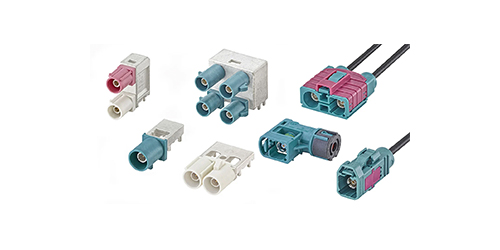
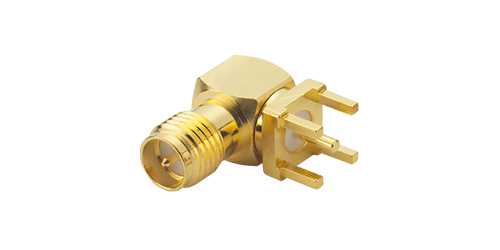
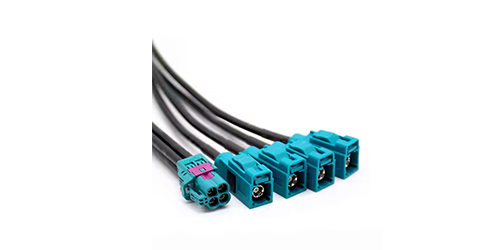
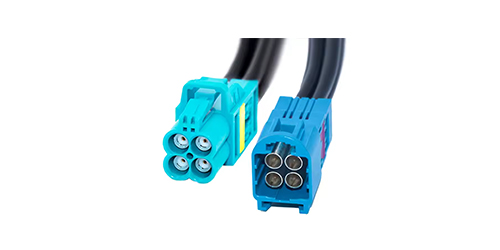
Standard connectors for GNSS and 4G antennas include SMA, FAKRA, and N-type. SMA connectors are common for compact and embedded applications, while FAKRA connectors are widely used in automotive applications for their robust locking mechanism and color-coding system. Ensure that the connector gender and impedance (typically 50 ohms) match the receiving equipment.
Weatherproofing and Environmental Protection
For outdoor installations, apply weatherproofing measures to all connections, including the use of self-amalgamating tape or heat-shrink tubing over connector joints. Verify that the antenna's IP rating is appropriate for the expected environmental conditions. IP67 provides protection against dust ingress and temporary water immersion, while IP69K adds resistance to high-pressure, high-temperature water jets.
Market Trends and Future Outlook
The multi-band GNSS 4G antenna market is evolving rapidly in response to several key trends. The transition from 4G to 5G is driving demand for antennas with extended frequency coverage up to 6000 MHz, while maintaining backward compatibility with existing 4G and 3G networks. Wideband antennas covering 600–6000 MHz are becoming the new standard for future-proof deployments.
Miniaturization continues to be a major trend, with antenna-in-package (AiP) designs and embedded helix antennas enabling integration into increasingly compact devices. The integration of active antennas with receiver modules is reducing discrete component procurement but raising average unit value for advanced modules.
Regulatory mandates for emergency location accuracy and autonomous safety certification are shifting procurement toward validated, traceable suppliers. Compliance with CE, FCC, and RoHS/REACH requirements is now a baseline expectation for antennas deployed in regulated markets.
From a regional perspective, Asia-Pacific leads in production capacity, with China accounting for an estimated 55–65% of global GNSS antenna production. However, assembly and testing capacity is rising in North America and Europe for defense, aerospace, and sensitive infrastructure applications that require supply chain security.
A multi-band GNSS 4G antenna is no longer a niche component—it is a foundational element of modern connected positioning systems. The ability to receive signals across multiple satellite constellations and frequency bands, while simultaneously maintaining reliable cellular connectivity, enables applications ranging from precision agriculture to autonomous vehicles and smart city infrastructure.
When selecting a multi-band GNSS 4G antenna, engineers must carefully evaluate frequency coverage, gain and efficiency specifications, isolation performance, environmental ratings, and mechanical integration requirements. The right antenna solution balances performance, cost, and form factor to meet the specific demands of the target application.
As GNSS constellations continue to expand their multi-frequency offerings and cellular networks evolve toward 5G and beyond, the multi-band GNSS 4G antenna will remain at the heart of systems that demand precise positioning and reliable connectivity—an indispensable component for the connected world.
Lucy Yang | lucy.y@toxutech.com
Dotty Zhao | sales04@toxutech.com
Global Business Director / Sales Team / Global Operations


 En
 Cn
 Korean
 Home >
