

-
Products -PCBA Manufacturing RF Connectors RF Cable Assemblys Embedded Antennas External Antennas GNSS Positioning Solutions
RF Connectors

RF Cable Assemblys
Embedded Antennas
External Antennas
GNSS Positioning Solutions







 Language


Language


Time:2026-10-26 Views:0
Why Long Range Fleet Tracking Antennas Matter More Than Ever
In the modern logistics and transportation landscape, fleet visibility is no longer a luxury—it is an operational imperative. Every minute a vehicle goes untracked represents lost revenue, compromised safety, and diminished customer trust. At the heart of every reliable fleet tracking system lies a component that is often overlooked yet absolutely critical: the long range fleet tracking antenna. This unassuming piece of hardware is the bridge between your vehicles and the satellites, cellular towers, and networks that keep your operations running smoothly.
The global mobile tracking and telemetry antenna market was valued at approximately USD 2.18 billion in 2024 and is projected to reach USD 5 billion by 2035, growing at a compound annual growth rate (CAGR) of 7.8% during the forecast period. This remarkable growth is driven by the increasing adoption of telematics solutions, the expansion of 5G connectivity, and the universal demand for real-time asset visibility across industries ranging from logistics and public transportation to mining and agriculture.
For fleet managers, procurement specialists, and systems integrators, understanding the nuances of long range fleet tracking antennas is no longer optional. Whether you operate a fleet of ten delivery vans or ten thousand long-haul trucks, the antenna you choose directly impacts your ability to track, communicate with, and optimize your vehicles. This comprehensive guide explores every aspect of long range fleet tracking antennas—from the underlying technologies and key specifications to installation best practices, market trends, and future developments.
Understanding the Core Technologies Behind Long Range Fleet Tracking Antennas
Cellular Connectivity: LTE, 5G, and the Evolution of Mobile Data
The backbone of most modern fleet tracking systems is cellular connectivity. Long range fleet tracking antennas are engineered to capture and amplify cellular signals across a wide spectrum of frequencies, ensuring that vehicles maintain data connectivity even in challenging environments. Wideband LTE antennas provide the most flexibility and future-proofing because they cover all 4G bands and operator networks between 600 MHz and 6 GHz. This broad coverage means that a single antenna can support multiple carriers and roaming scenarios, which is invaluable for fleets that operate across regional or national borders.
The adoption of 5G technology has introduced new possibilities for fleet management. 5G networks offer significantly higher data throughput and lower latency, enabling applications that were previously impossible over cellular connections—such as real-time video streaming from dashcams, over-the-air software updates, and advanced driver assistance system (ADAS) data transmission. A long range fleet tracking antenna designed for 5G must support the new frequency bands allocated for 5G NR (New Radio), including both sub-6 GHz and, in some cases, millimeter-wave frequencies.
GNSS and Multi-Constellation Positioning
Global Navigation Satellite System (GNSS) technology is the positioning engine of any fleet tracking system. While GPS (Global Positioning System) is the most widely recognized constellation, modern long range fleet tracking antennas support multiple GNSS constellations to improve accuracy and reliability. These include:
GPS (United States)
GLONASS (Russia)
Galileo (European Union)
BeiDou (China)
QZSS (Japan)
NavIC (India)
GPS signals are already relatively weak by the time they reach Earth, and they are frequently attenuated even more by dense foliage, urban canyons, and adverse weather conditions. Augmenting GPS with additional GNSS constellations provides redundancy and improves positioning accuracy, especially in challenging environments such as city centers, mountainous terrain, and remote rural areas. A high-quality long range fleet tracking antenna must support all the frequencies that each constellation uses to ensure consistent performance across different geographies.
LPWAN: Low-Power Wide-Area Networks for Extended Range
Low-Power Wide-Area Network (LPWAN) technologies represent a crucial category for fleet tracking applications where battery life and long-range communication are prioritized over high bandwidth. The three primary LPWAN technologies that operate on licensed spectrum are:
NB-IoT (LTE Cat-NB) : Optimized for ultra-low power consumption and deep indoor penetration
LTE-M (LTE Cat-M) : Balances power efficiency with higher data rates and mobility support
LTE Cat 1bis: Offers higher throughput for applications requiring more frequent data updates
Wideband LTE antennas automatically support all LPWAN technologies that use licensed spectrum because they cover the relevant frequency bands between 600 MHz and 6 GHz. This convergence of cellular and LPWAN capabilities in a single antenna simplifies installation and reduces the total cost of ownership for fleet operators.
Satellite Connectivity: The Ultimate Long-Range Solution
For fleets operating in truly remote areas—where cellular coverage is unreliable or completely absent—satellite connectivity is the only viable option. Long range fleet tracking antennas designed for satellite communication operate on L-band, S-band, or C-band frequencies and are capable of maintaining links with geostationary or low-Earth-orbit (LEO) satellites. A notable example is the embedded phased array auto-tracking antenna from Safran, which provides reliable telemetry reception across L, S, or C-bands, covering the entire sky up to 93 miles (150 kilometers) away.
The most advanced fleet tracking solutions now combine cellular, satellite, LoRa, and WiFi connectivity into a single unified system, ensuring that fleet visibility never goes dark regardless of terrain or coverage. This hybrid approach is becoming the gold standard for long range fleet tracking, as it provides seamless failover between networks and guarantees continuous data transmission.
LoRa and LoRaWAN: Long-Range, Low-Power Communication
LoRa (Long Range) is a proprietary spread-spectrum modulation technique that enables long-distance communication at very low power levels. LoRaWAN, the network protocol built on top of LoRa, is particularly well-suited for fleet tracking applications in peri-urban and industrial settings where cellular coverage may be inconsistent. LoRaWAN-based GPS tracking systems have been successfully deployed for municipal vehicle fleets, demonstrating that the addition of external long range antennas can significantly increase the number of data packets transmitted and improve overall tracking reliability.
The combination of LoRa with satellite and cellular connectivity creates a powerful multi-layered communication architecture. For example, the TA109 Wireless Solar-Powered Asset Tracker integrates 4G LTE cellular, LoRaWAN, and Iridium satellite connectivity, providing uninterrupted visibility across virtually any environment.
Types of Long Range Fleet Tracking Antennas
Multi-Band and Multi-Function Antennas
The most significant trend in fleet tracking antenna design is the integration of multiple functions into a single, compact housing. Modern multi-band antennas can combine two, three, or even seven or more independent antenna elements in one radome. A representative example is the 7-in-1 outdoor antenna that integrates high-precision GNSS tracking, 4×4 MIMO cellular data, and dual-band WiFi MIMO into a single ruggedized housing. This all-in-one design simplifies vehicle roof installation, reduces wind drag, lowers maintenance points, and presents a clean, professional appearance.
Multi-band fleet tracking antennas typically support the following frequency ranges:
Cellular/LTE: 617–960 MHz and 1710–6000 MHz
WiFi: 2.4–2.5 GHz and 4.9–7.2 GHz
GNSS: 1561, 1575, and 1602 MHz
LMR (Land Mobile Radio) : 769–805 MHz for public safety and P25 systems
MIMO Antennas for Enhanced Data Throughput
Multiple-Input Multiple-Output (MIMO) technology is a cornerstone of modern wireless communication, and fleet tracking antennas have embraced this technology to deliver superior data performance. MIMO antennas use multiple antenna elements to transmit and receive data simultaneously, dramatically increasing throughput and connection reliability.
The 4×4 MIMO cellular array found in advanced fleet tracking antennas is particularly important for leveraging the full capacity of 4G and 5G networks. It ensures the fastest possible upload/download speeds and robust connectivity in moving vehicles, which is critical for real-time GPS tracking, dashcam video uploads, and electronic logging device (ELD) compliance data. Theoretical maximum speeds for 4×4 MIMO configurations can reach approximately 300 Mbps for LTE and 400 Mbps for 5G.
For applications requiring both cellular and WiFi connectivity, 2×2 MIMO dual-band WiFi antennas enable reliable in-vehicle WiFi hotspot creation and connectivity to local networks at depots or workshops.
Omni-Directional vs. Directional Antennas
Fleet tracking antennas are available in two primary radiation pattern configurations: omni-directional and directional.
Omni-directional antennas radiate and receive signals equally in all directions, making them ideal for mobile applications where the vehicle's orientation relative to the signal source is constantly changing. Most fleet tracking antennas are omni-directional, as this design ensures consistent connectivity regardless of the vehicle's heading. The Mobile Mark LTMWG942, for example, features an omni-directional pattern with 26 dB amplifier gain, making it well-suited for fleet management applications.
Directional antennas focus their radiation pattern in a specific direction, providing higher gain and longer range in that direction. These antennas are typically used in fixed installations, such as at fleet depots or checkpoints, where the position of vehicles is predictable. However, for mobile fleet tracking, omni-directional antennas remain the preferred choice due to their versatility and consistent performance.
Ruggedized Antennas for Harsh Environments
Fleet vehicles operate in some of the most demanding environments imaginable—from extreme temperatures and vibration to dust, water, and chemical exposure. Long range fleet tracking antennas must be engineered to withstand these conditions while maintaining reliable performance. Key durability features include:
IP67/IP69K ingress protection: Ensures resistance to dust and water immersion
UV-inhibitive ASA radome: Prevents degradation from prolonged sun exposure
Marine-grade aluminum base: Provides corrosion resistance
Operating temperature range: Typically -40°C to +80°C
Vibration and shock resistance: Essential for vehicles operating on unpaved roads
The Mobile Mark LTMG312, for instance, features an IP69K-rated radome and marine-grade aluminum base, making it an ideal solution for public transportation and industrial vehicle fleets that require reliable, long-term durability.
Key Specifications to Evaluate in Long Range Fleet Tracking Antennas
When selecting a long range fleet tracking antenna, several technical specifications directly impact performance and suitability for your specific application.
Frequency Range and Gain
The frequency range determines which networks and services the antenna can support. A wideband antenna covering 617–960 MHz and 1710–6000 MHz can handle virtually all cellular, LPWAN, and WiFi applications, providing maximum flexibility and future-proofing. Gain, measured in decibels (dBi), indicates how much the antenna amplifies the signal. Higher gain translates to longer range and better signal penetration, but it also narrows the antenna's beamwidth.
Typical gain values for fleet tracking antennas range from 2 dBi to 5 dBi for cellular elements and 5 dBi for GNSS elements. The LTMG302, for example, offers 3 dBi gain in the 694–960 MHz band and 4 dBi in the 1710–3700 MHz band, with a GNSS LNA gain of 26 dB.
Voltage Standing Wave Ratio (VSWR)
VSWR measures how efficiently the antenna transfers power from the transmitter to the antenna. A VSWR of < 2:1 is considered excellent and is standard for high-quality fleet tracking antennas. Higher VSWR values indicate impedance mismatch, which results in signal loss and reduced performance.
Power Handling
Power handling capability is particularly important for antennas that support Land Mobile Radio (LMR) or P25 public safety systems. The LTMG312 supports up to 100 Watts for its LMR element, ensuring strong signal transmission for mission-critical communications.
Connector Types and Cable Options
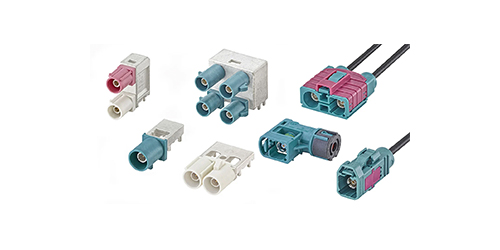
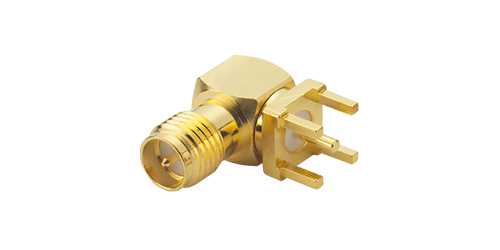
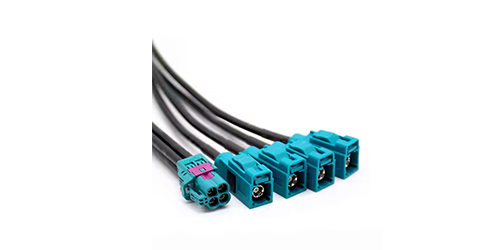
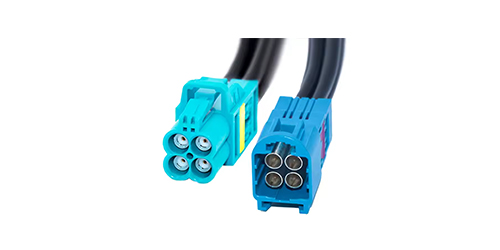
The choice of connector and cable affects signal loss and installation flexibility. Common connector types for fleet tracking antennas include SMA, FAKRA, and TNC. Cable length should be minimized to reduce signal attenuation, and high-quality coaxial cables such as LL-195 and RG-174 are commonly used.
Installation Best Practices for Long Range Fleet Tracking Antennas
Proper installation is arguably as important as antenna selection itself. Even the most advanced antenna will underperform if installed incorrectly. Follow these best practices to ensure optimal performance.

Antenna Placement and Orientation
The antenna must be mounted with a clear, unobstructed view of the sky. Vehicle roofs are the ideal location, as they provide a 360-degree horizon and minimize signal blockage from the vehicle body. An antenna mounted with a full, unobstructed view of the sky above the horizon will consistently outperform one tucked inside a cab or dashboard for installer convenience.
For GNSS reception specifically, the antenna should always be installed with the antenna side facing toward the sky. Never mount the antenna against metal, as this will eliminate GNSS reception entirely. Mounting below the vehicle body, under metalwork, or inside a metal cabinet will prevent satellite signal acquisition.
Cable Routing and Connector Integrity
Route the antenna cable as short and direct as physically possible. Minimize the number of connector joints, as each connection introduces signal loss. Use high-quality connectors and ensure they are firmly seated to prevent intermittent connections that can cause data dropouts.
Environmental Sealing
Ensure all cable entry points are properly sealed to prevent water ingress. The antenna mounting hole should be sealed with appropriate gaskets or sealant. If the antenna is rated IP69K or IP67, verify that the mounting method maintains this rating. The LTMG302 achieves IP69K rating only when properly mounted with its stud mount configuration.
Testing and Verification
After installation, verify antenna performance using a signal strength meter or the diagnostic tools built into the telematics device. Check GNSS signal acquisition time and accuracy, cellular signal strength (RSSI/RSRP), and data throughput. Perform these tests in both urban and rural environments to ensure consistent performance across all operating conditions.
Benefits of Long Range Fleet Tracking Antennas for Fleet Management
Real-Time Vehicle Location and Navigation
The most fundamental benefit of a high-performance long range fleet tracking antenna is accurate, real-time vehicle location tracking. GPS antennas enable precise location tracking, allowing fleet managers to monitor vehicle positions in real time, optimize routes, and respond quickly to changes in delivery schedules.
Remote Diagnostics and Predictive Maintenance
Cellular antennas in commercial vehicles provide the backbone for two-way communication between drivers and dispatch, enabling fleet managers to relay updates, track vehicle diagnostics, and receive driver performance data. This data transfer is crucial for remote diagnostics, where information about the vehicle's health is sent to central systems, enabling proactive maintenance and reducing downtime by addressing issues before they escalate into costly repairs.
Fleet Monitoring and Data Logging
Long range antennas enable continuous fleet monitoring and comprehensive data logging. Every trip, every stop, every engine idle event can be recorded and analyzed. This data supports operational optimization, driver behavior analysis, fuel consumption tracking, and compliance reporting.
Public Safety and Dispatch Communications
For public safety fleets, including police, fire, and emergency medical services, antennas like the LTMG312 provide integrated LMR/P25, WiFi, and GNSS capabilities in a single unit. The LMR element supports up to 100 Watts for reliable voice and data communication during mission-critical operations.
Enabling Electric Fleet Deployment
As fleets transition to electric vehicles, long range tracking antennas play a crucial role in supporting the efficient deployment of electric fleets. By enabling multi-network access, rugged environmental resistance, and seamless integration with modern telematics systems, these antennas help fleet operators manage charging schedules, monitor battery health, and optimize route planning for electric vehicles.
Market Trends Shaping the Future of Fleet Tracking Antennas
Multi-Band Convergence
The global commercial vehicle antenna market was estimated at USD 478.8 million in 2025 and is projected to reach USD 624.9 million by 2032, growing at a CAGR of 3.9%. One of the most significant trends driving this growth is the development of multi-band antennas that consolidate multiple communication standards—cellular, GPS, WiFi, and satellite—into a single unified unit. This consolidation reduces the number of physical antennas required on the vehicle, minimizing clutter and installation complexity while providing comprehensive connectivity.
5G Adoption and Beyond
The adoption of 5G technology is accelerating across the commercial vehicle sector. 5G-equipped telematics services are in surging demand as connected fleet management solutions expand, creating significant opportunities for advanced antenna solutions. Long range fleet tracking antennas designed for 5G must support the new frequency bands allocated for 5G NR, including both sub-6 GHz and millimeter-wave frequencies.
Hybrid Satellite-Cellular Solutions
The combination of terrestrial and satellite networks is becoming essential for continuous end-to-end traceability. By combining terrestrial networks (cellular, LPWAN, WiFi) with satellite connectivity, fleet operators achieve continuous end-to-end traceability—from inside a warehouse to the most remote areas. This hybrid approach improves transport fleet reliability and safety by ensuring that vehicles never go "dark," even in the most challenging coverage environments.
Miniaturization and Integration
Antenna manufacturers are continually pushing the boundaries of miniaturization, developing high-performance antennas that are smaller and more discreet than ever before. The Sinclair SM714, for example, is a 2.6-inch antenna suited for vehicles and connected mobility applications requiring a discreet profile. This trend toward smaller form factors does not compromise performance, thanks to advances in materials science and antenna design.
Regional Growth in Asia-Pacific
Regional focus is shifting towards Asia-Pacific as countries like China and India ramp up investments in smart city initiatives and infrastructure development. This is boosting the demand for advanced mobile tracking technologies and creating new opportunities for antenna manufacturers.
Choosing the Right Long Range Fleet Tracking Antenna: A Practical Framework
Selecting the optimal antenna for your fleet requires a systematic evaluation of your operational requirements, technical constraints, and budget considerations.
Step 1: Define Your Connectivity Requirements
Start by identifying which networks your fleet needs to access. Do your vehicles operate primarily in urban areas with strong cellular coverage, or do they venture into remote regions where satellite connectivity is essential? If your operations span both environments, a hybrid antenna that supports both cellular and satellite connectivity may be necessary.
Step 2: Determine Your Positioning Accuracy Needs
Standard GPS may be sufficient for basic location tracking, but applications requiring lane-level accuracy or precise asset positioning may benefit from multi-constellation GNSS support. Consider whether your fleet management software requires high-precision positioning for route optimization or geofencing applications.
Step 3: Assess Environmental Conditions
Evaluate the environmental conditions your fleet encounters. Fleets operating in coastal areas require corrosion-resistant materials. Vehicles operating in extreme temperatures need antennas rated for wide temperature ranges. Construction and mining fleets need antennas that can withstand high vibration and shock levels.
Step 4: Plan for Future Growth
Choose an antenna that supports emerging technologies and frequency bands. A wideband antenna that covers 600 MHz to 6 GHz provides maximum flexibility and future-proofing, allowing you to upgrade your telematics hardware without replacing the antenna infrastructure.
Step 5: Verify Compatibility
Ensure the antenna is compatible with your existing telematics gateway, modem, or router. Check connector types, impedance (typically 50 Ohm), and power requirements. Many antenna manufacturers provide compatibility guides and technical support to assist with selection.
Case Study: LoRaWAN-Based Fleet Tracking for Municipal Vehicles
An experimental evaluation of a LoRaWAN-based GPS tracking system for the municipal vehicle fleet of Kozani, Greece, provides valuable insights into the real-world performance of long range fleet tracking antennas. The study implemented a tracking system using external antennas and investigated whether their addition would increase the number of packets that each GPS tracker sends. The results demonstrated that external long range antennas significantly improved packet transmission rates and overall tracking reliability, validating the importance of antenna selection in fleet tracking deployments.
This case study underscores a critical point: the antenna is not a commodity component that can be overlooked. It is a performance-critical element that directly determines the success or failure of a fleet tracking system.
In the rapidly evolving world of fleet management, the long range fleet tracking antenna has emerged as a strategic asset rather than a mere accessory. It is the physical link that connects your vehicles to the digital infrastructure that drives operational efficiency, safety, and profitability.
As the commercial vehicle antenna market continues to grow—driven by the increasing demand for connected fleet solutions, advancements in vehicle telematics, and the rise of fleet management platforms—the importance of selecting the right antenna will only increase. Whether you are equipping a small delivery fleet or managing thousands of long-haul trucks, investing in high-quality, multi-band, ruggedized long range fleet tracking antennas is an investment in the reliability and resilience of your entire operation.
The future of fleet tracking lies in hybrid connectivity, multi-constellation positioning, and seamless integration across cellular, satellite, LoRa, and WiFi networks. By understanding the technologies, specifications, and best practices outlined in this guide, fleet managers and procurement specialists can make informed decisions that will keep their vehicles connected, their data flowing, and their operations running smoothly—no matter where the road leads.
Lucy Yang | lucy.y@toxutech.com
Dotty Zhao | sales04@toxutech.com
Global Business Director / Sales Team / Global Operations


 En
 Cn
 Korean
 Home >
