

-
Products -PCBA Manufacturing RF Connectors RF Cable Assemblys Embedded Antennas External Antennas GNSS Positioning Solutions
RF Connectors

RF Cable Assemblys
Embedded Antennas
External Antennas
GNSS Positioning Solutions





 Language


Language


Time:2026-11-06 Views:0
High precision RTK mushroom antenna has become the core hardware foundation of modern centimeter-level and millimeter-level positioning technology, widely adopted in surveying and mapping, UAV aerial survey, autonomous driving, precision agriculture, marine navigation, and geological monitoring industries. Unlike ordinary consumer-grade GNSS antennas, professional RTK mushroom antennas are engineered to eliminate signal interference, stabilize phase center, and support multi-constellation and multi-frequency signal reception, enabling RTK (Real-Time Kinematic) systems to maintain high-precision positioning output in complex and harsh environments. This comprehensive guide deeply analyzes the working principle, core advantages, key technical parameters, application scenarios, selection standards, and maintenance skills of high-precision RTK mushroom antennas, helping global users, engineers, and purchasers quickly grasp product value and make optimal procurement and deployment decisions.
With the rapid development of smart infrastructure, intelligent transportation, and automated industrial equipment, the demand for high-stability and high-precision satellite positioning is exploding. Traditional single-frequency GNSS antennas are easily affected by ionospheric delay, multipath reflection, terrain occlusion, and weather changes, resulting in positioning drift, data deviation, and signal loss, which cannot meet the high-standard positioning requirements of professional scenarios. The high-precision RTK mushroom antenna solves these industry pain points through optimized structural design, professional radio frequency circuit design, and strict industrial-grade manufacturing standards, becoming the preferred positioning antenna for high-precision GNSS RTK systems worldwide.
1. What Is a High Precision RTK Mushroom Antenna?
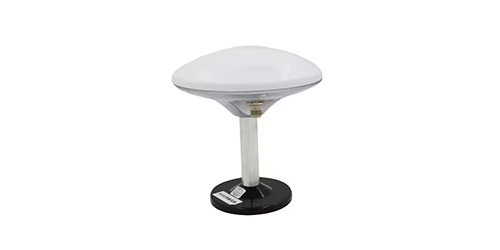
A high precision RTK mushroom antenna is a professional industrial-grade GNSS antenna named after its unique mushroom-shaped radome structure. It is specially designed for RTK differential positioning systems, supporting real-time dynamic differential calculation and high-precision coordinate output. Different from ordinary whip antennas and flat patch antennas, the mushroom antenna’s dome-shaped radome and symmetrical internal structure are core designs for high-precision positioning, which fundamentally optimize signal reception stability and phase center consistency.
In professional definitions, a qualified high-precision RTK mushroom antenna must meet two core technical standards: sub-millimeter phase center variation (PCV) and full-band multi-constellation signal coverage. It can capture L1, L2, L5 and other mainstream GNSS frequency bands, covering GPS, GLONASS, Galileo, BeiDou four global satellite navigation systems. Through low-noise amplification and anti-interference processing, it provides pure and stable satellite signal data for RTK receivers, ensuring that the positioning accuracy remains within centimeter or even millimeter level in long-term dynamic and static monitoring scenarios.
The mushroom-shaped appearance is not only an aesthetic design but also a functional industrial optimization. The smooth arc radome can effectively drain rainwater, block ultraviolet radiation, resist wind and sand erosion, and avoid signal distortion caused by environmental attachment. At the same time, the symmetrical structural design ensures uniform signal reception from all azimuths and elevations, eliminating directional signal attenuation, which is the key reason why it is far more stable than ordinary antennas in all-weather and all-scenario applications.
2. Core Working Principle of RTK Mushroom Antennas
The high-precision positioning capability of the RTK mushroom antenna is based on professional GNSS signal receiving technology and phase center stabilization design, and its working principle can be divided into three core links: multi-frequency signal capture, low-noise signal amplification, and phase center error suppression.
2.1 Multi-Constellation Multi-Frequency Signal Reception
Modern high-precision RTK positioning cannot rely on a single satellite system or single frequency signal. Ionospheric delay error is the biggest interference source of GNSS positioning, and single-frequency antennas cannot calculate and eliminate ionospheric deviation, resulting in inevitable positioning errors of several meters or even tens of meters. High-precision mushroom antennas adopt multi-band ceramic patch array design, covering L1 (1575.42MHz), L2 (1227.60MHz), L5 (1176.45MHz) and other core frequency bands, which can simultaneously receive signals from GPS, BeiDou, GLONASS, and Galileo constellations.
By comparing the propagation time and phase difference of dual-frequency and multi-frequency signals, the RTK system can accurately calculate and eliminate ionospheric delay errors in real time, realizing absolute high-precision positioning. Multi-constellation redundancy greatly improves satellite availability. Even in complex environments such as urban canyons, forest areas, and port terminals with serious signal occlusion, the antenna can capture enough valid satellite signals to maintain continuous positioning lock.
2.2 Sub-Millimeter Phase Center Stability Technology
Phase center variation (PCV) is the primary factor affecting RTK high-precision positioning accuracy. The phase center is the virtual electrical center of the antenna receiving satellite signals. For ordinary low-precision antennas, the phase center will shift randomly with the change of satellite elevation angle and azimuth angle, directly introducing baseline errors into the RTK differential calculation, resulting in coordinate drift and data deviation.
High precision RTK mushroom antennas adopt hyper-symmetrical multi-point feed design and integrated ceramic dielectric structure. The internal patch elements are arranged symmetrically in all directions, which mechanically and electrically locks the antenna phase center, controlling the phase center variation within the sub-millimeter level. Whether tracking low-horizon satellites or zenith satellites, the electrical center remains highly stable, ensuring that the RTK engine obtains consistent and accurate raw signal data, which is the core technical advantage of professional RTK antennas compared with consumer-grade products.
2.3 Low Noise Amplification and Anti-Multipath Interference
In field surveying, urban construction, and marine environments, satellite signals are prone to multipath reflection caused by buildings, water surfaces, and vegetation, resulting in signal distortion and precision attenuation. High-precision mushroom antennas are built-in high-gain low-noise amplifiers (LNA) and equipped with professional anti-multipath shielding structure. The LNA module can amplify weak satellite signals while filtering out ambient electromagnetic noise, improving signal-to-noise ratio (SNR). The bottom shielding layer and dome radome can effectively suppress reflected signals, avoid multipath interference, and ensure the purity of received satellite carrier phase data.
3. Key Advantages of High Precision RTK Mushroom Antennas
Compared with traditional GNSS antennas, whip antennas, and ordinary patch antennas, high precision RTK mushroom antennas have irreplaceable advantages in precision, stability, environmental adaptability, and service life, which fully meet the rigorous standards of professional high-precision positioning scenarios.
3.1 Millimeter-Level Positioning Accuracy and Ultra-Stable Phase Center
The biggest advantage of high-precision RTK mushroom antennas is ultra-low phase center variation. With sub-millimeter PCV control, it supports RTK systems to achieve stable centimeter-level dynamic positioning and millimeter-level static positioning. In long-term geological monitoring, bridge deformation observation, and high-precision mapping scenarios, the antenna will not produce cumulative errors due to phase center drift, ensuring the long-term consistency and authenticity of monitoring data. This precision performance is far beyond the reach of ordinary dual-frequency antennas with millimeter-level or centimeter-level phase center deviation.
3.2 All-Weather Environmental Adaptability (IP67 Industrial Protection)
Professional RTK mushroom antennas adopt integrated waterproof and dustproof structure, with mainstream IP67 industrial protection grade. The sealed radome and fully encapsulated internal circuit can resist rainwater immersion, dust accumulation, sandstorm erosion, and frost condensation. The high-strength UV-resistant engineering plastic shell will not age, fade or deform after long-term outdoor exposure, and can work stably in the temperature range of -40℃ to +85℃. Whether it is high-temperature desert survey, low-temperature alpine construction, rainy marine operation, or dusty road construction, the antenna can maintain stable working performance without signal attenuation or failure.
3.3 Aerodynamic and Structural Stability Design
The streamlined mushroom dome structure has excellent aerodynamic performance, which can effectively resist strong wind impact and reduce wind resistance. For UAV airborne RTK antennas, vehicle-mounted positioning antennas, and marine ship-borne antennas, low wind resistance can avoid equipment vibration and position offset caused by strong wind. At the same time, the lightweight and compact structure is convenient for flexible installation and fixation, compatible with standard threaded mounting holes and bracket installation methods, suitable for fixed base stations, mobile terminals, and automated equipment integration.
3.4 Multi-Constellation Full-Band Compatibility and Strong Signal Redundancy
High precision RTK mushroom antennas support full-band reception of GPS L1/L2/L5, BeiDou B1/B2/B3, GLONASS G1/G2, Galileo E1/E5a/E5b, covering all mainstream global navigation satellite systems. Multi-system signal redundancy greatly improves the reliability of positioning. In complex occlusion environments where a single satellite system has insufficient signals, the antenna can switch and fuse multi-system data in real time to ensure continuous positioning without interruption. This feature is crucial for high-precision scenarios that require 24-hour uninterrupted operation, such as automatic driving monitoring and marine navigation positioning.
3.5 Low Power Consumption and High Gain Signal Reception
Built-in high-efficiency low-noise amplifier module, the antenna has high signal gain and ultra-low power consumption. It can capture weak satellite signals in harsh environments and amplify effective signals without introducing noise interference, improving satellite search speed and positioning initialization speed. Compared with ordinary antennas, it shortens the RTK fixed solution time, improves the working efficiency of field operations, and is more suitable for battery-powered mobile equipment such as UAVs and portable surveying instruments.

4. Core Technical Parameters of Professional RTK Mushroom Antennas
To help users accurately screen high-quality high precision RTK mushroom antennas, we sort out the core standard parameters of industrial-grade products, which are important indicators to distinguish professional high-precision products from ordinary civilian antennas:
Frequency Band Coverage: Full-band L1/L2/L5 + B1/B2/B3 + G1/G2 + E1/E5a/E5b, supporting all global GNSS constellations
Phase Center Variation (PCV): ≤±0.5mm (sub-millimeter level), no obvious drift with satellite angle change
Antenna Gain: 25dB±2dB, high gain for weak signal capture
Noise Figure: ≤1.5dB, ultra-low noise, high signal-to-noise ratio
Protection Grade: IP67 dustproof and waterproof, fully sealed industrial grade
Working Temperature: -40℃ ~ +85℃, wide temperature adaptation
Mounting Method: Standard 5/8 inch thread, compatible with surveying brackets, fixed bases, and equipment integration
Connector Type: SMA/BNC customizable, compatible with mainstream RTK receivers
Anti-Multipath Performance: Built-in shielding base, effectively suppress reflection signal interference
UV Resistance: Long-term outdoor anti-aging, no shell deformation or performance attenuation
5. Main Application Scenarios of High Precision RTK Mushroom Antennas
Relying on millimeter-level precision and industrial-grade stability,high precision RTK mushroom antennas are widely used in professional scenarios that require high-precision real-time positioning and long-term stable monitoring, covering surveying and mapping, smart agriculture, intelligent transportation, marine engineering, geological monitoring, and UAV industry.
5.1 Land Surveying and Mapping & Engineering Construction
Traditional engineering surveying and topographic mapping have high requirements for positioning accuracy and data stability. High-precision RTK mushroom antennas are used in RTK base stations and mobile surveying terminals, providing centimeter-level positioning data for road construction, bridge engineering, mine surveying, urban boundary mapping, and pipeline laying. The ultra-stable phase center ensures that the surveying data is accurate and repeatable, avoiding rework and data correction caused by antenna errors, greatly improving the efficiency and accuracy of engineering surveying.
5.2 UAV Aerial Survey and Precision Mapping
UAV aerial survey, 3D modeling, and aerial mapping require real-time high-precision dynamic positioning to correct image offset and achieve accurate geographic registration. Lightweight high-precision RTK mushroom antennas are perfectly adapted to UAV airborne installation, with low wind resistance and low power consumption. They can maintain stable RTK fixed solutions during high-speed flight and complex attitude changes, providing accurate position data for aerial images, realizing centimeter-level 3D modeling accuracy, and widely used in land resource survey, environmental monitoring, and construction progress mapping.
5.3 Precision Smart Agriculture
Modern precision agriculture relies on high-precision positioning to realize automatic sowing, fertilization, pesticide spraying, and farmland leveling. Vehicle-mounted RTK mushroom antennas provide stable centimeter-level positioning for agricultural machinery automatic driving systems. Even in open farmland with strong light interference and vegetation occlusion, they can resist multipath interference and signal drift, ensuring the precise operation of agricultural machinery, reducing resource waste, and improving agricultural production efficiency.
5.4 Autonomous Driving and Intelligent Transportation
Vehicle-mounted high-precision positioning is the core of automatic driving and intelligent traffic management. High precision RTK mushroom antennas support vehicle dynamic RTK positioning, matching inertial navigation data to realize high-precision vehicle positioning and trajectory tracking. They can adapt to complex road environments such as urban roads, highways, and rural roads, resist signal interference from buildings and viaducts, and provide reliable positioning guarantees for unmanned vehicles, intelligent buses, and traffic flow monitoring systems.
5.5 Marine Navigation and Offshore Engineering
Marine environments have complex signal interference, strong wind and wave impact, and high humidity corrosion. IP67 waterproof RTK mushroom antennas are widely used in ship navigation, offshore platform positioning, waterway dredging, and marine surveying and mapping. The multi-constellation signal redundancy ensures stable positioning in sea areas with sparse satellite signals, and the waterproof and anti-corrosion structure adapts to long-term marine operation, providing accurate positioning data for marine engineering construction and ship safe navigation.
5.6 Geological Deformation and Structural Health Monitoring
Long-term static monitoring scenarios such as bridge deformation, landslide early warning, dam safety monitoring, and building structural displacement monitoring require millimeter-level ultra-high precision and long-term data stability. High-precision RTK mushroom antennas are used as fixed monitoring base station antennas, with sub-millimeter phase center stability, no cumulative error in long-term operation, can capture tiny displacement changes of buildings and geology, providing accurate data support for safety early warning and structural health assessment.
6. How to Choose a Qualified High Precision RTK Mushroom Antenna?
Faced with a variety of RTK mushroom antennas on the market, many users are confused about product selection. Low-quality ordinary antennas often have problems such as large phase center drift, poor anti-interference ability, and unstable signal reception, which seriously affect RTK positioning accuracy. The following key selection standards can help users quickly screen high-quality professional products:
6.1 Prioritize Sub-Millimeter Phase Center Stability
Phase center variation is the most core indicator of RTK antenna precision. Professional high-precision products must have clear PCV parameter certification, and the phase center deviation is controlled within ±0.5mm. Avoid choosing ordinary dual-frequency antennas with centimeter-level PCV errors, which cannot meet the requirements of high-precision surveying and monitoring scenarios.
6.2 Confirm Full-Band Multi-Constellation Compatibility
High-precision positioning must rely on multi-frequency and multi-system fusion calculation. It is necessary to select antennas that support full-band L1/L2/L5 and BeiDou full frequency bands to ensure that ionospheric errors can be eliminated through multi-frequency differential calculation and satellite signal redundancy can be increased. Single-frequency or partial-band antennas are only suitable for low-precision civilian scenarios and cannot support professional RTK fixed solutions.
6.3 Check Industrial-Grade Environmental Protection Performance
Most RTK operation scenarios are outdoor open environments, so environmental adaptability is essential. It is recommended to select IP67 waterproof and dustproof grade, wide temperature working range (-40℃~+85℃), UV-resistant and anti-aging shell materials. Inferior products with low protection grade are prone to water ingress, dust accumulation and aging failure after outdoor use for a period of time, resulting in reduced positioning accuracy or equipment damage.
6.4 Focus on Anti-Multipath and Anti-Interference Design
In complex environments such as cities, mountains, and water surfaces, multipath interference is the main cause of positioning errors. High-quality RTK mushroom antennas are equipped with professional metal shielding bases and anti-reflection structures, which can effectively suppress multipath signal interference and improve signal purity. At the same time, ultra-low noise figure design ensures weak signal reception capability and improves the success rate of RTK fixed solutions.
6.5 Match Installation and Application Scenarios
For fixed base station monitoring, select high-stability large-size mushroom antennas with stronger anti-interference ability; for UAV and vehicle mobile scenarios, select lightweight low-wind-resistance compact antennas; for marine scenarios, select enhanced waterproof and anti-corrosion models. Reasonable matching of product specifications and application scenarios can maximize equipment performance and service life.
7. Daily Installation, Use and Maintenance Tips
Even high-precision RTK mushroom antennas need standardized installation and maintenance to ensure long-term stable performance. Improper installation and daily maintenance errors will directly reduce positioning accuracy and shorten service life. The following professional operation guidelines are for user reference:
First, the installation position should avoid signal occlusion and electromagnetic interference. The antenna should be installed in an open area, away from high buildings, dense vegetation, metal shelters, and high-power electrical equipment, to prevent satellite signal occlusion and electromagnetic signal interference. For base station antennas, ensure horizontal and vertical installation to avoid artificial phase center offset caused by inclination.
Second, regularly clean the antenna radome. Dust, bird droppings, rainwater stains attached to the dome will affect signal penetration. Regular cleaning with clean water and soft cloth can maintain signal reception efficiency. Do not use corrosive chemicals to clean to avoid shell aging and damage.
Third, check the connector and line stability regularly. Long-term outdoor vibration and wind and sun exposure may cause connector looseness and line aging. Regularly check whether the SMA/BNC connector is tightly connected and whether the cable is damaged or aged, to avoid signal loss caused by poor contact.
Fourth, avoid long-term extreme environment overload operation. Although industrial-grade antennas have wide temperature adaptability, long-term operation in ultra-high temperature and ultra-low temperature extreme environments will accelerate component aging. It is recommended to take protective measures according to the actual working environment to extend the service life.
8. Frequently Asked Questions (FAQ)
Q1: What is the difference between RTK mushroom antenna and ordinary GNSS antenna?
The core difference lies in phase center stability and anti-interference performance. RTK mushroom antennas have sub-millimeter phase center variation, multi-frequency full-band reception, and professional anti-multipath design, supporting centimeter/millimeter-level high-precision positioning. Ordinary GNSS antennas have large phase center drift, single-frequency limited reception, and poor anti-interference ability, only suitable for meter-level ordinary positioning scenarios.
Q2: Do I need a multi-band RTK mushroom antenna for surveying work?
Yes. Professional surveying and mapping, engineering construction, and precision monitoring scenarios must use multi-band (L1/L2/L5) RTK mushroom antennas. Single-frequency antennas cannot eliminate ionospheric delay errors, resulting in inaccurate surveying data and inability to meet industry precision standards. Multi-band antennas support real-time error correction and stable high-precision output.
Q3: Can RTK mushroom antennas work normally in rainy and snowy weather?
Qualified industrial-grade RTK mushroom antennas have IP67 waterproof and dustproof protection grade. The sealed structure can resist rainwater immersion, snow coverage, and frost condensation, and can work stably in rainy, snowy, and foggy weather without signal attenuation or positioning failure, realizing all-weather uninterrupted operation.
Q4: Why does RTK positioning drift? Is it an antenna problem?
Positioning drift is mostly caused by antenna phase center drift, multipath interference, or insufficient satellite signals. Low-quality antennas with large PCV deviation are the main cause of long-term drift. Replacing high-precision sub-millimeter phase center mushroom antennas and installing them in open anti-interference positions can effectively solve drift problems.
Q5: Are RTK mushroom antennas compatible with all RTK receivers?
Most high-precision RTK mushroom antennas adopt standard SMA/BNC connectors and universal GNSS frequency band parameters, which are compatible with all mainstream brand RTK receivers on the market, supporting plug-and-play and seamless integration.
As the key core component of high-precision RTK positioning systems,high precision RTK mushroom antenna determines the upper limit of positioning accuracy and operational stability of the entire GNSS system. Its unique mushroom-shaped structural design, sub-millimeter phase center stability, multi-constellation full-band signal reception, and industrial-grade environmental adaptability make it irreplaceable in professional high-precision positioning scenarios such as engineering surveying, UAV mapping, smart agriculture, autonomous driving, and geological monitoring.
With the continuous upgrading of global smart infrastructure and high-precision positioning technology, the market demand for high-stability, high-precision, and long-life RTK mushroom antennas will continue to grow. Choosing professional and reliable high-precision RTK mushroom antennas can effectively improve the accuracy, efficiency, and stability of positioning operations, reduce equipment failure rates and data error costs, and provide solid technical support for various high-precision industrial and engineering applications.
Lucy Yang | lucy.y@toxutech.com
Dotty Zhao | sales04@toxutech.com
Global Business Director / Sales Team / Global Operations


 En
 Cn
 Korean
 Home >
