

-
Products -PCBA Manufacturing RF Connectors RF Cable Assemblys Embedded Antennas External Antennas GNSS Positioning Solutions
RF Connectors

RF Cable Assemblys
Embedded Antennas
External Antennas
GNSS Positioning Solutions











 Language


Language


Time:2026-10-17 Views:0
GNSS 4G LTE WiFi combination antenna is a multi-functional integrated wireless antenna designed to integrate global navigation satellite system (GNSS), 4G LTE cellular communication, and dual-band WiFi signal reception and transmission functions in a single compact unit. As a core component of modern IoT devices, intelligent transportation systems, industrial wireless equipment, and smart terminal hardware, this 3-in-1 combo antenna solves the pain points of traditional single-function antennas such as bulky installation, high wiring complexity, signal interference, and high comprehensive deployment costs. With the rapid development of 4G LTE full-network coverage, GNSS high-precision positioning technology, and WiFi wireless networking technology, the combined antenna has become an indispensable key hardware for stable communication and accurate positioning of mobile and fixed intelligent devices worldwide.
This article will comprehensively introduce the working principle, core technical parameters, key advantages, mainstream types, application scenarios, installation guidelines, selection standards, and industry value of the GNSS 4G LTE WiFi combination antenna, providing professional and detailed reference for engineers, purchasers, and technical researchers engaged in wireless communication equipment deployment, intelligent hardware development, and industrial IoT construction. Optimized for Google SEO, this content covers high-frequency search keywords such as 3-in-1 combination antenna, high gain GNSS LTE WiFi antenna, waterproof combo antenna for IoT, vehicle multi-band antenna, helping users quickly find professional product solutions and technical information.
1. What Is a GNSS 4G LTE WiFi Combination Antenna?
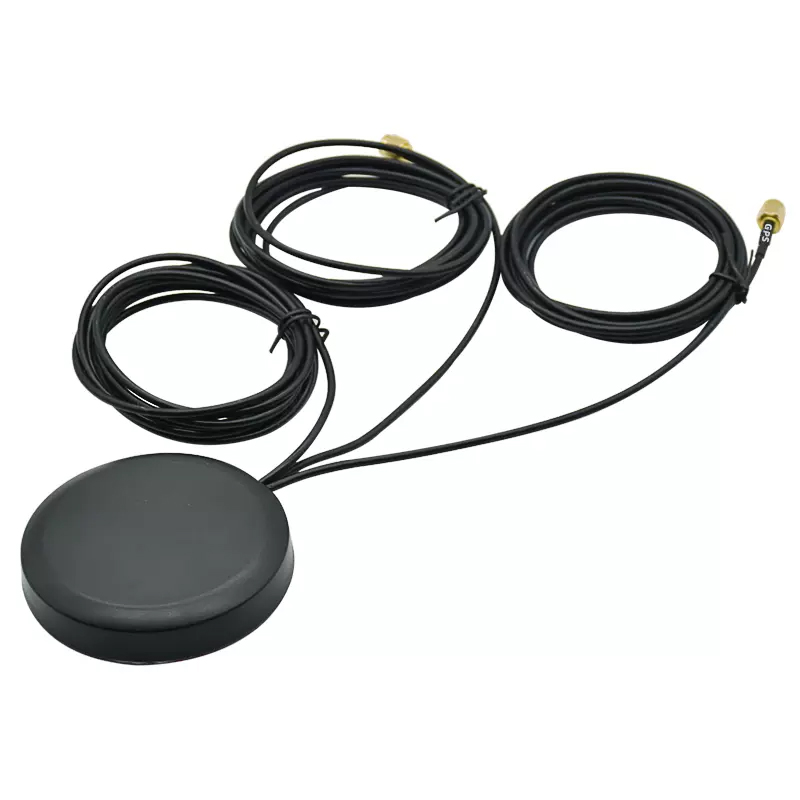
A GNSS 4G LTE WiFi combination antenna is a composite radio frequency antenna that integrates three independent antenna modules in one physical housing, supporting three core wireless signal systems simultaneously: satellite positioning, 4G cellular communication, and WiFi local area network. Different from combined antennas with simple signal stacking on the market, high-quality combo antennas adopt professional frequency isolation design and built-in diplexer filtering technology, which effectively avoids mutual signal interference between GNSS positioning band, 4G LTE cellular band, and WiFi dual-band signals, ensuring independent and stable operation of each functional module without mutual attenuation.
In terms of functional division, the GNSS module is specially used for receiving global satellite positioning signals, covering mainstream global navigation systems including GPS, GLONASS, Galileo, and BeiDou, realizing high-precision positioning, navigation, and timing functions. The 4G LTE antenna module supports full-band 4G cellular signal reception and transmission, covering global mainstream 4G frequency bands (700MHz–2700MHz), compatible with 2G/3G network backward compatibility, ensuring stable mobile data transmission, voice communication, and network linkage of terminal devices. The WiFi antenna module adopts 2.4GHz and 5.8GHz dual-band design, supporting WiFi 4, WiFi 5, and partial WiFi 6 protocol signals, meeting the high-speed wireless networking and short-distance data transmission needs of intelligent devices.
The biggest feature of this integrated antenna is miniaturization and multi-function integration. It replaces three independent single-function antennas with one single device, greatly saving equipment installation space, simplifying wiring harness layout, reducing equipment assembly failure rates, and lowering later maintenance costs. It is widely used in scenarios that require simultaneous positioning, mobile network communication, and wireless local area network connection, becoming the preferred antenna solution for new-generation intelligent wireless terminals.
2. Core Technical Specifications of GNSS 4G LTE WiFi Combination Antenna
The performance of a GNSS 4G LTE WiFi combo antenna directly determines the positioning accuracy, network stability, and signal coverage capability of terminal equipment. High-quality combination antennas have strict standard parameters in terms of frequency band coverage, gain, standing wave ratio, isolation, impedance, and working environment. The following are the mainstream standard technical parameters of industrial-grade and commercial-grade combo antennas in the market, covering core indicators concerned by global buyers and engineers.
2.1 Frequency Band Coverage
Complete frequency band coverage is the basis for the global adaptability of combination antennas, ensuring that devices can adapt to network and positioning signal standards in different countries and regions:
GNSS Frequency Band: 1559MHz–1606MHz (L1 universal positioning band), supporting GPS L1, GLONASS L1, Galileo E1, BeiDou B1, QZSS and other global satellite navigation systems, realizing multi-system joint positioning and improving positioning accuracy and anti-interference ability.
4G LTE Frequency Band: Full-band coverage of 700MHz–960MHz (low-frequency band, wide coverage, strong penetration) and 1710MHz–2700MHz (high-frequency band, high transmission rate), compatible with global 4G LTE FDD/TDD bands, backward compatible with GSM, WCDMA, TD-SCDMA 2G/3G networks.
WiFi Dual-Band: 2400MHz–2500MHz (2.4GHz band, long transmission distance, strong wall penetration, wide coverage) and 5150MHz–5850MHz (5.8GHz band, high bandwidth, low interference, fast transmission speed), meeting high-speed WiFi networking needs.
2.2 Key RF Performance Parameters
Antenna Gain: GNSS gain ≥25dBi (active high gain, ensuring weak satellite signal reception); 4G LTE gain 3–5dBi; WiFi gain 2–4dBi. High gain design effectively improves signal reception sensitivity, solves the problem of weak signals in closed environments such as vehicles, equipment cabinets, and indoors.
VSWR (Voltage Standing Wave Ratio): ≤1.5:1 (full frequency band), excellent standing wave performance ensures low signal reflection loss and high signal transmission efficiency, avoiding signal attenuation and network delay caused by impedance mismatch.
Isolation Between Channels: ≥20dB, professional frequency isolation design completely isolates GNSS, 4G LTE, and WiFi three-channel signals, eliminating crosstalk and interference between different frequency bands, ensuring stable operation of each function.
Characteristic Impedance: Standard 50Ω, matching the impedance of mainstream wireless modules and equipment in the industry, realizing seamless docking and improving equipment compatibility.
Polarization Method: GNSS adopts right-hand circular polarization (RHCP), which is the standard polarization method for satellite positioning signals and can effectively resist ground signal reflection interference; 4G LTE and WiFi adopt omnidirectional vertical polarization, realizing 360° omnidirectional signal reception and transmission without dead angles.
2.3 Environmental & Structural Parameters
Working Temperature: -40℃~+85℃, adapting to extreme high and low temperature environments, suitable for outdoor, vehicle-mounted, industrial field and other harsh working scenarios.
Waterproof & Dustproof Grade: Industrial-grade IP67/IP68 waterproof and dustproof, completely preventing rainwater, dust, and fog from entering the antenna interior, suitable for long-term outdoor exposure use.
Installation Method: Support magnetic suction installation, adhesive installation, screw fixed installation, shark fin embedded installation and other multiple methods, flexible and convenient for different equipment and scene layout.
Connector Type: Standard SMA, RP-SMA, IPEX/U.FL connectors, compatible with mainstream wireless modules of Quectel, Simcom, Fibocom and other brands, with strong universality.
Cable Length: Customizable 15cm, 30cm, 50cm, 100cm and other specifications, meeting different equipment wiring layout needs.
3. Core Advantages of GNSS 4G LTE WiFi Combination Antenna
Compared with the traditional scheme of using three separate GNSS, 4G LTE, and WiFi antennas, the integrated 3-in-1 GNSS 4G LTE WiFi combination antenna has obvious comprehensive advantages in structural design, performance stability, deployment cost, and application flexibility, which is why it is widely popular in the global IoT and intelligent equipment industry.
3.1 Integrated Miniaturization, Save Installation Space
Traditional separate antennas require independent installation positions and wiring spaces, which occupy a large amount of equipment internal space, easily causing equipment volume expansion and structural layout conflicts. The combination antenna integrates three functional modules into one compact shell, which is only 1/3 of the total volume of three single antennas. It is especially suitable for compact intelligent terminals such as vehicle-mounted equipment, industrial control terminals, portable IoT devices, and smart monitoring equipment, effectively optimizing equipment structural design and realizing equipment miniaturization and lightweight upgrade.
3.2 Anti-Interference Design, Stable Signal Performance
Different wireless frequency band signals are prone to mutual crosstalk, which will lead to reduced GNSS positioning accuracy, 4G network disconnection, and WiFi network lag. High-quality combination antennas adopt built-in high-performance diplexers, frequency filtering circuits, and electromagnetic shielding structures, which achieve high isolation between different frequency bands. While ensuring independent signal transmission of each module, it resists external electromagnetic interference from industrial equipment, vehicle electrical systems, and urban wireless signals. In complex scenarios such as urban high-rise shelters, underground garages, and industrial workshops, it can still maintain high-precision positioning and stable network connection, with far better stability than discrete antenna combinations.
3.3 Simplify Wiring & Reduce Comprehensive Costs
The integrated design reduces the number of antenna wires and connectors from three groups to one group, greatly simplifying the equipment assembly process, reducing manual wiring errors and assembly time, and improving production efficiency for equipment manufacturers. At the same time, the unified structural design reduces the procurement cost of single antennas, wire harnesses, and fixing accessories, and reduces the failure rate of wire harness aging and connector looseness in later use, greatly reducing equipment after-sales maintenance costs and time costs. For large-scale IoT equipment deployment projects, the cost advantage of combination antennas is more prominent.
3.4 Strong Compatibility & Wide Adaptability
The combination antenna adopts industry-standard frequency bands, impedance, and connectors, compatible with all mainstream 4G LTE modules, GNSS positioning modules, and WiFi modules on the market. It supports multiple network protocols and multi-system positioning modes, and can be freely adapted to vehicle-mounted terminals, industrial IoT gateways, smart monitoring devices, shared equipment, and intelligent transportation equipment. It has strong scene compatibility and device compatibility, avoiding the problem of equipment replacement and upgrading caused by antenna mismatch.
3.5 Harsh Environment Resistance & Long Service Life
Industrial-grade combination antennas adopt high-strength ABS or metal shell materials, with IP67/IP68 waterproof, dustproof, shockproof, and UV-resistant properties. They can work stably for a long time in high temperature, low temperature, rainy, snowy, dusty, and strong vibration environments, and the service life can reach more than 5 years, which is far higher than ordinary civilian single antennas, meeting the long-term stable operation needs of industrial and outdoor equipment.
4. Main Types of GNSS 4G LTE WiFi Combination Antennas
According to different installation methods, structural forms, and application scenarios, GNSS 4G LTE WiFi combination antennas on the market are mainly divided into four mainstream types, covering civilian commercial, vehicle-mounted, industrial outdoor, and embedded equipment scenarios, which can meet the differentiated needs of different users.
4.1 Adhesive Mount Combo Antenna
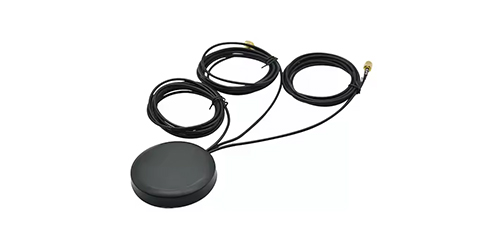
The adhesive-mounted 3-in-1 antenna is the most common civilian and commercial type, with a thin and flat shell design, small size, and light weight. It adopts high-viscosity back glue for installation, no drilling and no screw fixation, and can be pasted on the smooth surfaces of equipment shells, car interiors, and equipment cabinets. It is mainly suitable for indoor intelligent terminals, portable IoT devices, small monitoring equipment, and household intelligent wireless equipment. It has the advantages of convenient installation, no damage to equipment, and low cost, and is the first choice for small-batch and civilian equipment projects.
4.2 Magnetic Mount Combo Antenna
The magnetic suction combination antenna is equipped with a strong magnetic base at the bottom, which can be firmly adsorbed on metal surfaces such as car roofs, iron equipment shells, and industrial metal brackets. It features flexible disassembly and assembly, arbitrary position adjustment, and no damage to the installation surface. It is mostly used for temporary deployment of vehicle-mounted mobile terminals, field test equipment, and mobile monitoring equipment. The magnetic base has a certain shock absorption effect, which can resist signal jitter caused by equipment vibration, and is suitable for mobile working scenarios.
4.3 Shark Fin Vehicle-Mounted Combo Antenna
The shark fin combination antenna is a high-end vehicle-mounted dedicated antenna with a streamlined shark fin shell design, which is beautiful and wind-resistant, effectively reducing wind resistance and noise during vehicle driving. It adopts embedded or screw-fixed installation, which is firm and reliable, and has excellent waterproof and anti-vibration performance. It is specially designed for vehicle-mounted intelligent equipment such as vehicle navigation systems, car networking terminals, driving recorders, and intelligent vehicle machines. It can maintain stable signal reception during high-speed driving and bumpy driving, and is widely used in passenger cars, commercial vehicles, and engineering vehicles.
4.4 Industrial Screw-Fixed Combo Antenna
The industrial fixed combination antenna adopts a thickened metal shell and screw locking structure, with ultra-high waterproof, dustproof, shockproof, and anti-corrosion capabilities, reaching IP68 industrial protection grade. It is suitable for long-term outdoor fixed deployment scenarios such as industrial IoT gateways, outdoor smart monitoring, street lamp intelligent control, and outdoor communication base station auxiliary equipment. It can resist extreme weather such as strong wind, heavy rain, snow, and high temperature, and has extremely high operational stability and durability.
5. Wide Application Scenarios of GNSS 4G LTE WiFi Combination Antennas
With the continuous popularization of IoT technology, intelligent transportation, and industrial digitalization, the GNSS 4G LTE WiFi combination antenna has penetrated into multiple industry fields, becoming the core hardware support for realizing equipment positioning, mobile communication, and wireless networking. The main application scenarios are as follows:
5.1 Intelligent Vehicle & Car Networking Industry
Vehicle-mounted intelligent terminals are the largest application scenario of combination antennas. Intelligent vehicles, new energy vehicles, and commercial vehicle car networking equipment need to realize real-time satellite positioning, 4G mobile network data transmission, and in-vehicle WiFi hotspot networking functions simultaneously. The 3-in-1 combination antenna is installed on the vehicle body, providing stable high-precision positioning data for vehicle navigation, driving trajectory recording, and vehicle anti-theft monitoring, and relying on 4G LTE network to realize vehicle remote data transmission, fault diagnosis, and cloud platform linkage. At the same time, the WiFi module provides in-vehicle wireless network services for passengers, realizing multi-functional integrated application.
5.2 Industrial IoT & Smart Industrial Control
Industrial IoT gateways, on-site industrial control terminals, and intelligent sensing equipment deployed in industrial workshops, mines, and energy stations need to upload equipment operating data, environmental monitoring data, and positioning information to the cloud platform in real time. The GNSS 4G LTE WiFi combination antenna provides accurate equipment position information for industrial equipment positioning and asset management, relies on 4G LTE network to realize long-distance wireless data transmission, and uses WiFi to realize local short-distance equipment networking and data interaction. It solves the problem of difficult wiring of industrial field equipment and realizes wireless intelligent management of industrial production equipment.
5.3 Smart City & Public Facilities
In the construction of smart cities, intelligent street lamps, outdoor monitoring cameras, shared charging piles, and intelligent traffic terminals all need multi-functional wireless antenna support. The combination antenna realizes real-time positioning of public facilities, 4G remote data transmission, and on-site WiFi signal coverage, helping smart city equipment realize cloud remote monitoring, fault early warning, and intelligent scheduling. Its waterproof and dustproof performance adapts to long-term outdoor operation, meeting the stable operation needs of urban public facilities throughout the year.
5.4 Mobile Intelligent Terminals & Shared Equipment
Shared bicycles, shared scooters, mobile monitoring terminals, and portable intelligent detection equipment have strict requirements on equipment volume and power consumption. The miniaturized combination antenna integrates multiple functions, which meets the equipment's needs of positioning tracking, 4G network communication, and WiFi debugging networking, while reducing equipment volume and power consumption, improving equipment portability and service life, and facilitating unified management and remote maintenance of shared equipment by enterprises.
5.5 Logistics & Transportation Monitoring
Cold chain logistics vehicles, freight trucks, and engineering transportation vehicles need real-time positioning and driving state monitoring. The vehicle-mounted combination antenna provides high-precision real-time positioning data for logistics monitoring terminals, realizes real-time uploading of vehicle driving speed, trajectory, and cargo temperature and humidity data through 4G LTE network, and supports on-site WiFi local data viewing and debugging, realizing full-process intelligent monitoring of logistics and transportation and improving transportation safety and management efficiency.
6. Professional Selection Guide for GNSS 4G LTE WiFi Combination Antennas
To select a suitable GNSS 4G LTE WiFi combination antenna, users need to comprehensively consider application scenarios, equipment parameters, environmental conditions, and performance requirements to avoid problems such as insufficient antenna performance, poor compatibility, and short service life. The following are core selection standards for reference:
6.1 Confirm Frequency Band & Compatibility
First, confirm the 4G LTE network frequency band of the equipment's use area. For global export equipment, it is necessary to select full-band 4G antennas to adapt to network standards in different countries and regions. At the same time, check the matching degree of antenna connectors and impedance with the equipment wireless module, and prefer standard 50Ω impedance and universal SMA/IPEX connectors to ensure seamless docking and avoid signal attenuation caused by mismatch.
6.2 Match Scenario Protection Grade
Indoor civilian scenarios can choose ordinary IP54 waterproof grade adhesive-mounted antennas to reduce costs; vehicle-mounted and outdoor fixed scenarios must choose IP67/IP68 high waterproof and dustproof grade antennas to adapt to harsh outdoor environments; industrial heavy-duty scenarios need to select shockproof, anti-corrosion, and high-temperature resistant industrial-grade antennas to ensure long-term stable operation.
6.3 Focus on Antenna Gain & Isolation Performance
For scenarios with weak signals such as urban high-rise shelters, underground spaces, and remote suburban areas, priority should be given to high-gain antennas with GNSS gain ≥25dBi and 4G gain ≥4dBi to improve signal reception sensitivity. At the same time, ensure that the inter-channel isolation is higher than 20dB to prevent signal interference and ensure the stability of positioning and network signals.
6.4 Select Appropriate Installation Method
Temporary mobile equipment and indoor equipment are suitable for adhesive and magnetic suction installation; vehicle-mounted long-term use is suitable for shark fin embedded installation; outdoor industrial fixed equipment is suitable for screw locking fixed installation. Reasonable selection of installation methods can improve installation firmness and signal reception effect.
7. Installation & Maintenance Notes for Combination Antennas
Correct installation and daily maintenance can maximize the service performance and service life of the GNSS 4G LTE WiFi combination antenna. The key operation specifications are as follows:
Installation Position Selection: Install the antenna in an open position without metal shielding, avoid metal equipment, metal shells, and dense building shelters, prevent signal shielding and attenuation, and ensure 360° omnidirectional signal reception.
Wiring Standardization: Avoid excessive bending and stretching of the antenna cable, keep the cable layout neat, avoid winding with power lines, and reduce electromagnetic interference; ensure firm connector docking to avoid poor contact causing signal disconnection.
Waterproof Protection: For outdoor and vehicle-mounted antennas, seal the connector and wiring gaps with waterproof glue after installation to prevent rainwater penetration and circuit oxidation damage.
Daily Maintenance: Regularly clean the antenna surface dust and stains, check whether the cable is aging and the connector is loose; avoid scratching and hitting the antenna shell to prevent internal circuit damage.
Failure Troubleshooting: In case of inaccurate positioning and unstable network, first check whether the installation position is shielded and the connector is loose, then detect the antenna standing wave ratio and gain parameters to eliminate equipment failure problems.
8. Industry Development Trend of GNSS 4G LTE WiFi Combination Antennas
With the iterative upgrading of global wireless communication technology and the in-depth development of IoT, intelligent transportation, and industrial intelligence, the GNSS 4G LTE WiFi combination antenna industry is showing three major development trends: higher integration, higher precision and stability, and wider compatibility.
First, multi-functional integration is further upgraded. On the basis of 3-in-1 functions, new-generation combination antennas are gradually integrated with 5G NR, BLE Bluetooth, and LoRa communication functions, evolving into 4-in-1 and 5-in-1 multi-composite antennas, meeting the multi-dimensional wireless communication needs of more intelligent devices.
Second, positioning accuracy and anti-interference performance are continuously improved. With the popularization of high-precision positioning scenarios such as automatic driving and industrial precise positioning, antennas adopt more professional filtering and shielding technologies, realizing centimeter-level high-precision positioning and stronger anti-electromagnetic interference capability, adapting to high-end intelligent equipment applications.
Third, miniaturization and low power consumption become the mainstream. With the miniaturization and lightweight development of intelligent terminals, combination antennas are constantly optimized in structural design and chip technology, realizing smaller size, lighter weight, and lower power consumption, which is more suitable for portable and miniature intelligent IoT devices.
TheGNSS 4G LTE WiFi combination antenna is a multi-functional, high-efficiency, and low-cost integrated wireless antenna solution, which perfectly integrates satellite positioning, 4G mobile communication, and WiFi wireless networking functions. It solves many pain points of traditional single antennas such as complex installation, serious signal interference, and high comprehensive cost, and is widely used in intelligent vehicles, industrial IoT, smart cities, logistics monitoring, and other fields.
With its excellent structural design, stable RF performance, strong environmental adaptability, and ultra-high cost performance, the 3-in-1 combination antenna has become the mainstream antenna choice for global intelligent wireless terminal equipment. In the future, with the continuous development of IoT and intelligent communication technology, multi-functional integrated combination antennas will usher in a wider market application space and become an indispensable core component of digital intelligent construction in various industries.
Lucy Yang | lucy.y@toxutech.com
Dotty Zhao | sales04@toxutech.com
Global Business Director / Sales Team / Global Operations


 En
 Cn
 Korean
 Home >
