

-
Products -PCBA Manufacturing RF Connectors RF Cable Assemblys Embedded Antennas External Antennas GNSS Positioning Solutions
RF Connectors

RF Cable Assemblys
Embedded Antennas
External Antennas
GNSS Positioning Solutions







 Language


Language


Time:2026-10-26 Views:0
In modern commercial logistics, transportation, and fleet management industries, fleet tracking GPS antenna serves as the core hardware foundation for real-time vehicle positioning, route monitoring, and asset management. As fleet businesses scale up rapidly, relying on basic GPS tracking devices is no longer sufficient to deliver stable, high-precision location data. A high-performance GPS antenna directly determines the accuracy, stability, and continuity of fleet tracking systems, solving common pain points such as signal loss, positioning drift, and delayed data transmission in complex working environments. For fleet managers, logistics enterprises, and telematics service providers, selecting the right fleet tracking GPS antenna is critical to optimizing operational efficiency, reducing fleet management costs, and improving overall fleet safety. This comprehensive SEO guide explores everything about fleet tracking GPS antennas, including working principles, core types, key specifications, selection criteria, installation tips, troubleshooting, and industry applications, helping businesses maximize the value of their fleet tracking systems in 2026 and beyond.
1. What Is a Fleet Tracking GPS Antenna?
A fleet tracking GPS antenna is a professional signal receiving component specially designed for vehicle fleet telematics and GPS tracking systems. Unlike consumer-grade GPS antennas used for personal navigation devices, fleet-grade GPS antennas are engineered to adapt to long-term vehicle operation, harsh outdoor environments, and high-frequency real-time data transmission requirements. Their core function is to capture high-precision satellite signals from GPS, GLONASS, Galileo, and BeiDou global navigation satellite systems (GNSS), amplify valid signals, and transmit clean, stable data to fleet tracking terminals, telematics control units (TCUs), and cloud management platforms.
Fleet tracking GPS antennas differ significantly from ordinary built-in GPS antennas of mobile phones and car navigators. Consumer-grade antennas are limited by size, power consumption, and installation conditions, resulting in weak anti-interference ability and poor signal penetration. In contrast, professional fleet GPS antennas adopt high-gain amplification chips, waterproof and dustproof rugged casing, and anti-jamming design, ensuring stable signal reception in urban canyons, dense forests, underground parking lots, and extreme weather conditions. As an indispensable part of the fleet tracking ecosystem, the GPS antenna bridges satellite signals and fleet management software, enabling real-time vehicle positioning, trajectory playback, mileage statistics, driver behavior monitoring, and intelligent route optimization.
2. How Does a Fleet Tracking GPS Antenna Work?
To understand the importance of a high-quality fleet tracking GPS antenna, it is essential to master its complete working mechanism. The entire signal receiving and transmission process can be divided into three core stages, which jointly ensure the accuracy and stability of fleet tracking data.
2.1 Satellite Signal Capture
Global navigation satellite systems continuously emit electromagnetic signals covering the global range. The fleet tracking GPS antenna, installed on the exterior or interior of fleet vehicles, captures low-power satellite signals in the 1575.42MHz L1 frequency band (the core frequency for civilian GPS positioning). Professional fleet antennas support multi-system signal reception, compatible with GNSS multi-satellite systems, effectively expanding signal sources and improving positioning coverage.
2.2 Signal Amplification and Filtering
The satellite signals received by the antenna are extremely weak and easily interfered by vehicle electronic equipment, electromagnetic radiation, building occlusion, and environmental noise. Active fleet tracking GPS antennas are built with low-noise amplifiers (LNAs) and professional filter circuits. The LNA amplifies valid satellite signals without introducing excessive noise, while the filter filters out interfering signals from vehicle radios, 4G/5G communication modules, and on-board electrical systems, ensuring pure and effective positioning signals.
2.3 Signal Transmission and Data Synchronization
After amplification and filtering, the standard satellite signals are transmitted to the fleet GPS tracking terminal via high-shielding coaxial cables. The terminal calculates the precise longitude, latitude, speed, and altitude data of the vehicle through built-in positioning algorithms, and uploads the data to the cloud fleet management platform in real time. Fleet managers can view the real-time location and driving status of each vehicle on the platform, realizing full-process intelligent monitoring of the fleet.
3. Core Types of Fleet Tracking GPS Antennas
According to working modes, structural designs, and application scenarios, fleet tracking GPS antennas can be divided into multiple categories. Understanding the classification characteristics helps fleet businesses select targeted antennas according to their operational needs and vehicle types.
3.1 Active GPS Antenna vs. Passive GPS Antenna
Active fleet tracking GPS antennas are the mainstream choice for commercial fleet management. Equipped with built-in LNA amplification modules, they require low-voltage power supply (3V-5V) to work. Their biggest advantages are high signal gain, strong anti-interference ability, and stable signal reception in complex occlusion environments. Most logistics fleets, truck fleets, and engineering vehicle fleets use active GPS antennas to ensure 24/7 uninterrupted positioning.
Passive GPS antennas have no built-in amplification chips and do not require power supply. They feature simple structure, low cost, and low power consumption, but their signal reception ability is weak. They are only suitable for open and barrier-free working environments and short-term tracking scenarios. Due to poor stability, passive antennas are rarely used in professional commercial fleet tracking systems.
3.2 External GPS Antenna vs. Built-in GPS Antenna
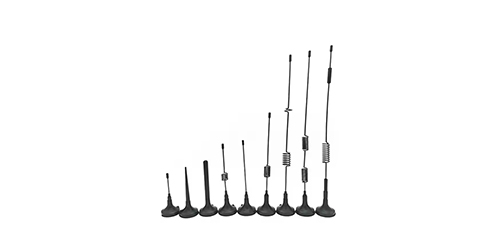
External fleet tracking GPS antennas are independently installed outdoor antennas with complete waterproof, dustproof, and anti-corrosion performance. They usually adopt magnetic adsorption or adhesive fixing methods, which are easy to install and disassemble. With high signal receiving sensitivity, external antennas can avoid the shielding of vehicle metal shells and interior decorations, and are the preferred choice for large vehicles such as trucks, vans, and engineering machinery.
Built-in GPS antennas are integrated inside GPS tracking terminals or vehicle TCU devices. They are compact and beautiful, but limited by installation space and shielding conditions. They are only suitable for small passenger car fleets with simple working environments and low positioning accuracy requirements.
3.3 Single-Band vs. Dual-Band GNSS Antennas
Single-band GPS antennas only support the traditional L1 frequency band, which can meet basic positioning needs, but are prone to positioning errors and signal loss in complex environments. Dual-band GNSS antennas support both L1 and L2 frequency bands, and are compatible with multiple satellite systems. They can realize high-precision differential positioning, effectively solving the problem of positioning drift caused by atmospheric refraction and building occlusion. At present, high-end intelligent fleets and cold chain logistics fleets that require centimeter-level positioning are gradually popularizing dual-band GNSS fleet tracking GPS antennas.

4. Key Technical Specifications of Fleet Tracking GPS Antennas
When purchasing and configuring fleet tracking GPS antennas, technical specifications are the core indicators to judge product quality. Fleet managers must focus on the following key parameters to avoid equipment mismatch and poor tracking effect.
4.1 Signal Gain
Gain is the most critical parameter of GPS antennas, measured in dB. Professional fleet tracking GPS antennas usually have a gain of 25dB to 30dB. High-gain antennas can capture weak satellite signals in low-signal environments, greatly improving the success rate of satellite locking and positioning stability. Antennas with gain lower than 20dB are not suitable for commercial fleet scenarios due to insufficient signal reception capability.
4.2 Working Frequency
The standard civilian GPS working frequency is 1575.42MHz (L1 band). Formal fleet tracking GPS antennas must strictly comply with this standard frequency to ensure accurate docking with satellite signals. Multi-system compatible antennas need to cover multiple frequency bands such as 1602MHz (GLONASS) and 1561MHz (BeiDou) to realize multi-satellite joint positioning.
4.3 Noise Figure
Noise figure reflects the antenna's signal anti-interference ability. The lower the noise figure, the purer the received signal. Excellent fleet-grade GPS antennas have a noise figure lower than 1.5dB, which can effectively suppress environmental noise and electromagnetic interference of vehicle equipment, ensuring no signal distortion during long-distance transmission.
4.4 Environmental Adaptability
Fleet vehicles operate outdoors all year round, so GPS antennas must have strong environmental adaptability. High-quality fleet tracking antennas reach IP67 or IP68 waterproof and dustproof grade, adapting to extreme weather such as heavy rain, snow, high temperature, and low temperature. They can work stably in the temperature range of -40℃ to +85℃, avoiding equipment failure caused by environmental changes.
4.5 Connector and Cable Length
Common antenna connectors include SMA, Fakra, and BNC, which need to be matched with fleet tracking terminals. The cable length is usually 3m, 5m, or 10m. Reasonable cable length facilitates flexible installation of antennas on different vehicle models, while high-shielding coaxial cables prevent signal attenuation during transmission.
5. Why High-Quality Fleet Tracking GPS Antennas Matter for Fleet Management
Many fleet operators ignore the importance of GPS antennas and attribute positioning inaccuracy and system lag to tracking terminal failures. In fact, more than 70% of fleet tracking system failures are caused by unqualified or aging GPS antennas. A high-performance fleet tracking GPS antenna brings multiple core values to fleet enterprises.
5.1 Improve Positioning Accuracy and Stability
Standard fleet GPS antennas can realize meter-level high-precision positioning, with fast satellite locking speed and no frequent signal dropout. Even in complex scenarios such as urban elevated roads, tunnel entrances and exits, and mountainous roads, they can maintain continuous and stable positioning data, avoiding vehicle trajectory disconnection and position drift. This ensures that fleet managers can grasp the real-time and accurate driving status of each vehicle.
5.2 Reduce Fleet Operational Costs
Accurate vehicle positioning data supports intelligent route optimization of the fleet management system. The system can plan the shortest and least congested driving route according to real-time vehicle positions and road conditions, effectively reducing vehicle fuel consumption and empty driving rate. Industry data shows that fleets equipped with high-precision GPS antenna tracking systems can reduce comprehensive fuel costs by 12%-15% annually. At the same time, stable positioning data avoids repeated dispatching and route errors, greatly improving fleet operation efficiency.
5.3 Enhance Fleet Safety Management
Fleet tracking GPS antennas support real-time monitoring of vehicle speed, driving track, and parking status. The system can automatically alarm for speeding, overtime parking, and abnormal deviation of the driving route, helping managers timely correct unsafe driving behaviors of drivers. In case of vehicle failure or accident, the accurate positioning data provided by the antenna can realize rapid rescue and emergency disposal, reducing fleet safety risks and accident losses.
5.4 Extend Service Life of Fleet Tracking Equipment
Rugged fleet-grade GPS antennas have excellent anti-corrosion, anti-aging, and anti-vibration performance, adapting to long-term bumpy driving of vehicles. They can avoid equipment damage caused by vibration, rain erosion, and sunlight exposure, reducing the frequency of equipment replacement and maintenance costs. Compared with low-cost inferior antennas, high-quality products have a service life of more than 3 years, greatly reducing the long-term operation cost of the fleet.
6. How to Choose the Right Fleet Tracking GPS Antenna (2026 Selection Guide)
Combined with the current fleet management market demand and product iteration trends in 2026, the following targeted selection principles are summarized for different fleet scenarios to help enterprises purchase cost-effective fleet tracking GPS antennas.
6.1 Match Antenna Type According to Fleet Vehicle Type
For heavy-duty trucks, logistics vans, and engineering machinery fleets with complex operating environments, it is recommended to choose high-gain active external GPS antennas with IP68 waterproof grade and anti-jamming function. These vehicles often run on suburban and mountain roads with weak signals, and high-performance antennas can ensure stable positioning.
For urban online car-hailing, passenger car fleets, and short-distance distribution fleets with open driving environments, standard active GPS antennas with 25dB gain and IP67 waterproof grade can meet daily tracking needs, balancing performance and cost.
6.2 Prioritize Multi-GNSS Compatible Antennas
With the continuous improvement of global satellite navigation systems, single-GPS antennas can no longer meet high-precision tracking needs. In 2026, it is recommended for formal fleets to choose multi-GNSS compatible antennas that support GPS, BeiDou, GLONASS, and Galileo. Multi-system joint positioning can improve positioning coverage and accuracy, and reduce the probability of signal loss in complex environments.
6.3 Focus on Anti-Jamming and Anti-Interference Performance
Modern commercial vehicles are equipped with a large number of electronic devices such as on-board computers, 4G/5G modules, and Bluetooth equipment, which are easy to cause electromagnetic interference to GPS signals. When selecting antennas, it is necessary to confirm that the products have professional anti-jamming circuits and shielded cables to ensure that the positioning signals are not affected by vehicle electronic equipment.
6.4 Avoid Low-Cost Inferior Products
Many low-priced GPS antennas on the market have false parameters, insufficient gain, and poor waterproof performance. Although the purchase cost is low, they are prone to signal failure, water ingress damage, and positioning deviation in actual use, resulting in inaccurate fleet tracking data and affecting normal fleet operation. It is crucial to choose regular brand fleet tracking GPS antennas with complete parameter certification and after-sales guarantee.
7. Professional Installation and Maintenance Tips for Fleet Tracking GPS Antennas
Even high-quality fleet tracking GPS antennas cannot exert optimal performance without standardized installation and daily maintenance. Standardized operation can maximize the service life and positioning effect of the equipment.
7.1 Standard Installation Guidelines
First, select a reasonable installation position. The antenna should be installed on the top of the vehicle, the outer side of the roof, or the front/rear windshield without metal shielding, avoiding installation in metal enclosed spaces such as car interiors and trunk bottoms, which will block satellite signals. Second, ensure firm installation. Magnetic antennas need to be adsorbed on smooth metal surfaces, and adhesive antennas need to be pasted firmly to prevent falling off during vehicle driving and vibration. Third, standardize cable wiring. The coaxial cable should be arranged neatly, avoid excessive bending and extrusion, and keep away from high-voltage lines and electronic equipment to prevent signal interference.
7.2 Daily Maintenance and Inspection
Fleet managers should arrange regular equipment inspections every month. Check whether the antenna shell is damaged, waterlogged, or aging, whether the cable interface is loose or oxidized, and whether the signal transmission is normal. In rainy seasons and high-temperature seasons, increase the inspection frequency to avoid equipment failure caused by environmental changes. For long-distance running fleets, clean the antenna surface dust and sundries regularly to ensure unobstructed signal reception.
7.3 Regular Equipment Replacement
The service life of fleet tracking GPS antennas is affected by vehicle vibration and environmental erosion. It is recommended to replace the antenna every 3 years for long-term operating fleets. Timely replacement of aging equipment can avoid hidden dangers such as signal instability and positioning errors, ensuring the long-term stable operation of the fleet tracking system.
8. Common Faults and Troubleshooting of Fleet Tracking GPS Antennas
In the daily operation of fleet tracking systems, various antenna-related faults often occur. Mastering quick troubleshooting methods can effectively reduce fleet operation losses.
8.1 Slow Satellite Locking and Long Positioning Delay
This fault is mostly caused by antenna signal attenuation, loose cable interface, or blocked installation position. The solution is to check whether the antenna is shielded by metal objects, re-plug and fix the cable interface, and replace the aging coaxial cable. If the problem persists, it means the antenna gain is insufficient, and it needs to be replaced with a high-gain professional fleet antenna.
8.2 Frequent Signal Dropout and Trajectory Disconnection
Signal dropout is usually due to poor antenna waterproof performance resulting in internal water ingress and circuit damage, or excessive environmental interference. It is necessary to check whether the antenna shell is sealed tightly, replace the damaged antenna with an IP68 waterproof product, and adjust the installation position to stay away from high-interference electronic equipment.
8.3 Positioning Drift and Inaccurate Vehicle Position
Position drift is mainly caused by low antenna anti-interference ability and weak signal filtering effect. The solution is to upgrade to a dual-band multi-GNSS antenna with strong anti-jamming performance, which can effectively correct positioning errors and improve tracking accuracy.
9. Industry Applications of Fleet Tracking GPS Antennas
With the rapid development of intelligent fleet management, fleet tracking GPS antennas have been widely used in multiple industry scenarios, becoming an essential hardware for intelligent transportation and asset management.
9.1 Logistics and Distribution Fleets
Logistics truck fleets, express delivery distribution fleets, and cold chain logistics fleets rely heavily on GPS antenna tracking systems. High-precision positioning helps enterprises monitor cargo transportation status in real time, optimize distribution routes, improve delivery efficiency, and realize whole-process traceability of goods, effectively solving the problems of cargo loss and delayed delivery.
9.2 Engineering Machinery Fleets
Engineering vehicles such as excavators, cranes, and loaders usually operate in remote and complex construction sites with weak satellite signals. Rugged high-gain fleet tracking GPS antennas can maintain stable positioning in harsh environments, helping construction enterprises manage vehicle working hours, operating tracks, and equipment utilization, reducing idle equipment loss.
9.3 Public Service Fleets
Government official vehicles, bus fleets, sanitation vehicle fleets, and emergency rescue vehicle fleets all need professional GPS tracking systems. Stable antenna signal ensures real-time scheduling and standardized management of public service vehicles, improving the efficiency of public service operations.
9.4 New Energy Vehicle Fleets
With the rapid popularization of electric vehicle fleets, new energy fleet management puts forward higher requirements for positioning stability. Multi-GNSS high-precision GPS antennas cooperate with vehicle TCU systems to realize real-time monitoring of vehicle position, battery status, and driving track, supporting intelligent operation and maintenance of new energy fleets.
As fleet management intelligence and GNSS technology continue to iterate, fleet tracking GPS antennas are developing towards high precision, multi-function integration, miniaturization, and strong anti-jamming. In 2026 and the future, dual-band centimeter-level positioning antennas will gradually replace traditional single-band products and become the mainstream of the market. At the same time, intelligent anti-jamming antennas that can automatically identify and filter interference signals will be widely used in high-end commercial fleets. In addition, integrated antennas integrating GPS positioning, 4G/5G communication, and Bluetooth functions will further simplify fleet hardware installation and reduce overall equipment costs, promoting the further popularization of intelligent fleet management systems.
The fleet tracking GPS antenna is a small but core component of the intelligent fleet management system, determining the overall operating effect of fleet positioning and monitoring. For fleet enterprises pursuing refined management and cost reduction, investing in high-quality fleet tracking GPS antennas is a low-cost and high-return strategic choice. It can not only solve common pain points such as inaccurate positioning and unstable signals, but also greatly improve fleet operation efficiency, reduce management and maintenance costs, and enhance the overall competitiveness of enterprises. In the era of intelligent transportation in 2026, standardizing the selection, installation, and maintenance of GPS antennas is an essential step for every fleet enterprise to realize digital and intelligent upgrading.
Lucy Yang | lucy.y@toxutech.com
Dotty Zhao | sales04@toxutech.com
Global Business Director / Sales Team / Global Operations


 En
 Cn
 Korean
 Home >
