

-
Products -PCBA Manufacturing RF Connectors RF Cable Assemblys Embedded Antennas External Antennas GNSS Positioning Solutions
RF Connectors

RF Cable Assemblys
Embedded Antennas
External Antennas
GNSS Positioning Solutions






 Language


Language


Time:2026-10-17 Views:0
Custom GNSS combo antennas have become indispensable core components for modern positioning, navigation, and wireless communication systems across global industries. Unlike standard off-the-shelf antennas, tailor-made GNSS combo antennas integrate multi-band GNSS positioning and multi-protocol wireless communication functions in a single compact unit, delivering high-precision positioning, stable signal transmission, and strong anti-interference performance for customized project requirements. From smart vehicles and industrial IoT to precision agriculture, drone navigation, and marine monitoring, custom GNSS combo antenna solutions solve the pain points of mismatched antenna parameters, poor environmental adaptability, and low system compatibility in standard products. This comprehensive SEO guide explores everything about custom GNSS combo antennas, including core definitions, key benefits, customizable specifications, application scenarios, selection tips, and industry FAQs, helping businesses and engineers find the optimal customized antenna solutions for their projects.
1. What Is a Custom GNSS Combo Antenna?
A custom GNSS combo antenna is a multi-functional integrated antenna that combines GNSS satellite positioning reception with cellular, Wi-Fi, Bluetooth, and other wireless communication modules, with all hardware parameters, structural designs, and performance indicators fully customizable according to client-specific application scenarios. Different from single-function GNSS antennas or fixed-spec combo antennas, customized models support personalized adjustments in frequency bands, gain, isolation, installation methods, housing materials, cable specifications, and connector types, perfectly matching diverse industrial and commercial device integration needs.
The term “GNSS” covers all global satellite navigation systems, including GPS (USA), GLONASS (Russia), Galileo (EU), BeiDou (China), and regional augmentation systems. A high-performance custom GNSS combo antenna usually supports multi-band GNSS reception (L1/L2/L5 bands) to achieve meter-level to centimeter-level high-precision positioning. Meanwhile, it integrates 4G LTE, 5G NR, 2.4G/5.8G Wi-Fi, and Bluetooth communication functions, realizing simultaneous satellite positioning and wireless data transmission in one compact device.
The core advantage of customization lies in targeted optimization for complex application environments. Standard combo antennas are designed for universal scenarios and often face problems such as insufficient gain in weak signal environments, mutual interference between multiple frequency bands, poor waterproof and dustproof performance in outdoor scenarios, and incompatible installation structures of end devices. Custom GNSS combo antennas completely avoid these issues through one-stop personalized design, ensuring consistent and reliable operation of positioning and communication systems in extreme working conditions.
2. Core Components & Working Principle of Custom GNSS Combo Antennas
To understand the value of customized GNSS combo antennas, it is essential to master their internal structure and working mechanism. A complete custom GNSS combo antenna system consists of four core parts, all of which support independent customized adjustment:
2.1 Multi-Band GNSS Antenna Unit
This unit is responsible for receiving satellite navigation signals. Customizable frequency bands include GNSS L1 (1575.42MHz), L2 (1227.60MHz), L5 (1176.45MHz), B1/B2/B3 for BeiDou, and corresponding GLONASS and Galileo frequency bands. Engineers can customize single-band or multi-band integrated reception according to positioning accuracy requirements. High-precision customized models adopt low-noise amplifier (LNA) chips with ultra-low noise figure, which can effectively filter environmental clutter signals and improve satellite signal reception sensitivity.
2.2 Wireless Communication Antenna Unit
As the “combo” core of the antenna, this unit supports customized integration of multiple communication frequency bands. Common customizable combinations include 4G LTE/5G NR cellular network, dual-band Wi-Fi 2.4G+5.8G, Bluetooth 5.0/5.3, and LoRa. Each communication antenna unit is independently optimized for impedance matching and radiation efficiency to ensure no crosstalk between positioning and communication signals.
2.3 High-Isolation Shielding Structure
Multi-in-one combo antennas are prone to internal signal interference, which is the key difficulty of universal products. Custom GNSS combo antennas adopt customized metal shielding partitions and frequency isolation design, with isolation between different frequency bands strictly controlled above 20dB. This customized structural design completely eliminates mutual interference between GNSS positioning signals and communication signals, ensuring positioning accuracy and data transmission stability.
2.4 Customized Hardware Accessories
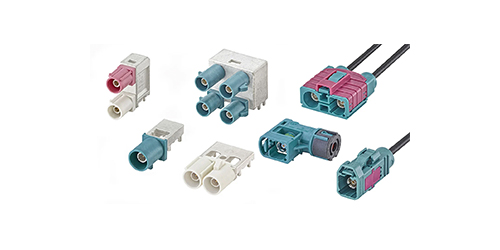
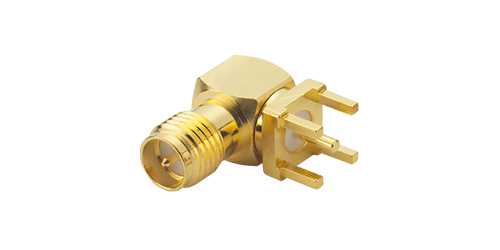
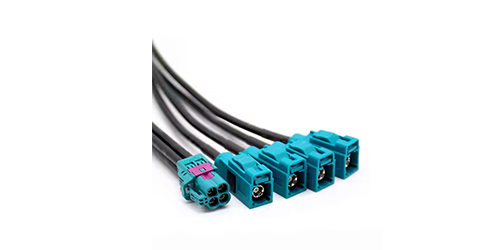
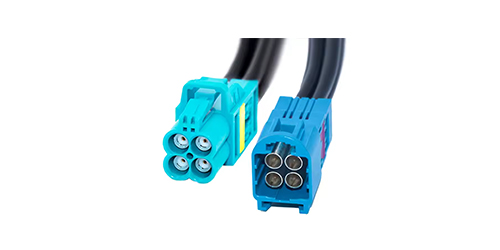
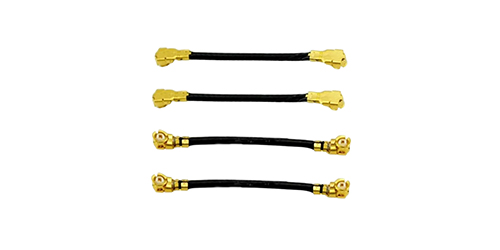
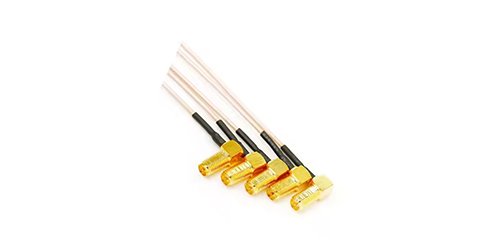
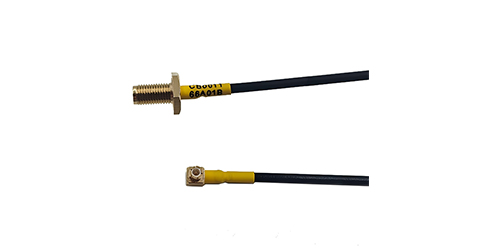
Including customized cables (length, wire gauge, shielding grade), connectors (SMA, FAKRA, TNC, IPEX), mounting structures (screw fixation, adhesive mounting, embedded installation), and protective housings. All accessories can be tailored according to end product size, installation space, and environmental protection level requirements.
3. Key Benefits of Custom GNSS Combo Antennas Over Standard Antennas
More and more industrial enterprises, device manufacturers, and solution providers choose customized GNSS combo antennas instead of off-the-shelf products, mainly because customized solutions have irreplaceable advantages in performance, adaptability, cost control, and system stability. The core benefits are summarized as follows:
3.1 Perfect Compatibility with Custom Device Structures
Standard combo antennas have fixed sizes and installation methods, which often cannot match the compact design of industrial terminals, vehicle-mounted devices, and drone equipment. Custom GNSS combo antennas support personalized size customization, ultra-thin design, miniaturization transformation, and special-shaped structural development, which can fully adapt to narrow installation spaces of end products. Whether it is embedded installation for handheld devices, external screw fixation for vehicle terminals, or adhesive installation for IoT sensors, customized structural design can achieve a perfect fit.
3.2 Improved Positioning Accuracy & Signal Stability
Different application scenarios have completely different signal environment requirements. For urban vehicle navigation, custom antennas can enhance anti-multipath interference capability to solve positioning drift caused by building occlusion; for agricultural and marine scenarios, ultra-high gain customization is adopted to ensure stable satellite signal reception in open weak signal areas; for high-speed moving equipment such as drones, customized wide-angle radiation design improves signal tracking capability. Compared with universal antennas with fixed gain and radiation angles, customized optimization can improve positioning accuracy by 30%–80% and reduce signal loss rate significantly.
3.3 Strong Environmental Adaptability via Custom Protection Grades
Industrial and outdoor equipment needs to cope with extreme environments such as high temperature, low temperature, rain, snow, dust, and salt fog. Custom GNSS combo antennas support customized IP65/IP67/IP68 waterproof and dustproof grades, as well as special material housings resistant to high and low temperatures (-40℃~+85℃). For marine engineering equipment, salt-spray resistant structural customization can be added; for mining and industrial explosion-proof scenarios, explosion-proof and impact-resistant designs are available, which far exceed the environmental adaptability of standard civil antennas.
3.4 Lower Long-Term Operating & Maintenance Costs
Although the unit cost of customized antennas is slightly higher than standard products, it can effectively reduce subsequent failure rates and maintenance costs. Standard mismatched antennas are prone to signal failure, positioning deviation, and equipment compatibility faults, leading to frequent after-sales maintenance and project losses. Customized antennas are designed for specific scenarios, with stable performance and ultra-low failure rate, greatly reducing equipment downtime and after-sales service costs. In mass production projects, standardized customized specifications can also realize batch production cost optimization, further improving cost performance.
3.5 Flexible Multi-Function Combination Customization
Users can freely match functional combinations according to project needs, such as 3-in-1 (GNSS+4G+Wi-Fi), 5-in-1 (GNSS+5G MIMO+Wi-Fi MIMO), 7-in-1 multi-band integrated antennas, avoiding redundant functional configuration and resource waste. For simple low-power IoT positioning devices, customers can customize low-power passive GNSS combo antennas to reduce equipment power consumption; for high-precision industrial terminals, active high-gain customized antennas can be selected to improve system performance.
4. Main Customizable Specifications of GNSS Combo Antennas
Professional custom GNSS combo antenna manufacturers support full-dimensional personalized customization covering performance, structure, accessories, and process standards. The mainstream customizable parameters in the industry in 2026 are as follows, covering all mainstream application needs:
4.1 Frequency Band Customization
GNSS Bands: Custom single-band L1, dual-band L1+L5, multi-band L1/L2/L5, full-band GPS/BeiDou/GLONASS/Galileo compatibility, supporting RTK high-precision positioning frequency bands.
Communication Bands: Custom 2G/3G/4G LTE full band, 5G NR sub-6G and millimeter wave band, 2.4G/5G/6G dual/triple-band Wi-Fi, Bluetooth, LoRa, V2X dedicated frequency bands.
4.2 Performance Parameter Customization
Custom antenna gain (2dBi~15dBi adjustable), noise figure (ultra-low 0.8dB LNA customization), standing wave ratio (VSWR ≤1.2 ultra-low reflection customization), inter-band isolation (20dB~35dB high isolation customization), radiation angle (omnidirectional/directional/custom wide-angle), and working power consumption (low-power passive/high-gain active customization).
4.3 Structural & Installation Customization
Custom size (miniaturized ultra-thin / large high-gain type), installation methods (screw mount, adhesive mount, embedded, suction cup, fixed bracket), housing shape (puck type, strip type, flat type, special-shaped), and weight customization to adapt to different equipment assembly requirements.
4.4 Accessory & Interface Customization
Custom cable length (10cm~10m arbitrary adjustment), cable shielding grade (single/double shielding), connector types (SMA male/female, FAKRA, IPEX, TNC, N-type), and wiring harness color and fixing methods to match terminal equipment interface standards.
4.5 Environmental & Process Customization
Custom waterproof and dustproof grade (IP65/IP67/IP68), temperature resistance grade (-40℃~85℃ wide temperature adaptation), salt spray resistance, corrosion resistance, explosion-proof, anti-aging, and UV-resistant processes, as well as industrial-grade vibration and drop resistance customization for vehicle and mobile equipment.

5. Typical Application Scenarios of Custom GNSS Combo Antennas
Custom GNSS combo antennas are widely used in high-precision positioning and wireless communication scenarios that require personalized adaptation. The mainstream industrial and commercial application fields are as follows, covering the core demand markets of customized antennas:
5.1 Smart Vehicle & Fleet Management
Vehicle-mounted terminals, T-boxes, fleet tracking devices, and autonomous driving auxiliary systems are the largest application scenarios for custom GNSS combo antennas. Vehicle working environments have complex interference factors such as vehicle body shielding and electromagnetic interference, and require antennas with high isolation, anti-interference, and stable vibration resistance. Customized 4G/5G+GNSS+Wi-Fi vehicle combo antennas can realize real-time vehicle positioning, trajectory tracking, remote data transmission, and vehicle networking communication. Custom waterproof and high-temperature resistant structural design ensures stable operation in extreme vehicle working conditions, and customized FAKRA vehicle-specific interfaces perfectly match vehicle terminal wiring standards.
5.2 Industrial IoT & Smart Monitoring
Industrial IoT sensors, smart gateway devices, outdoor monitoring terminals, and smart city sensing equipment require customized GNSS combo antennas to realize positioning and data transmission functions. According to the installation environment of urban outdoor, industrial park, and underground weak signal scenarios, engineers can customize high-gain anti-interference antennas and ultra-miniature embedded antennas to adapt to compact IoT equipment. IP68 waterproof customization ensures long-term stable operation of outdoor monitoring equipment without failure in rain, snow, and high temperature environments.
5.3 Drone & Robot Navigation
UAVs, AGV industrial robots, and service robots have strict requirements on antenna size, weight, and positioning accuracy. Custom lightweight ultra-thin GNSS combo antennas reduce equipment load, and customized wide-angle radiation design ensures continuous and stable satellite signal reception during high-speed flight and flexible movement. Multi-band GNSS customization supports RTK centimeter-level high-precision positioning, meeting the precise navigation needs of industrial inspection drones, agricultural plant protection drones, and automatic handling robots.
5.4 Marine & Hydrological Monitoring
Marine ships, buoys, and hydrological monitoring equipment are in high-salt and high-humidity environments for a long time. Custom GNSS combo antennas adopt salt-spray resistant and corrosion-resistant materials and IP68 fully waterproof design, which can resist marine climate erosion for a long time. Multi-band high-gain customization solves the problem of weak satellite signals in offshore open waters, realizing real-time positioning and wireless data transmission of marine monitoring equipment.
5.5 Precision Agriculture & Surveying Mapping
Smart agricultural machinery, field surveying and mapping equipment, and geological monitoring instruments require high-precision positioning support. Custom multi-band GNSS combo antennas support full-system satellite reception, effectively solving positioning drift problems caused by field vegetation occlusion and terrain fluctuation. High-sensitivity LNA customization improves signal reception efficiency in complex field environments, providing accurate positioning data for agricultural automatic driving and geological surveying and mapping.
6. How to Choose the Right Custom GNSS Combo Antenna Solution
Reasonable customization is the key to ensuring antenna performance and cost-effectiveness. Many customers face the problem of over-customization (increased cost) or insufficient customization (unstable performance). The following step-by-step selection guide helps you quickly determine the most suitable custom GNSS combo antenna solution:
6.1 Clarify Core Application Requirements
First, confirm the core functions required by the equipment: positioning accuracy (meter-level/decimeter-level/centimeter-level RTK), communication mode (4G/5G/Wi-Fi/Bluetooth), and working environment (indoor/outdoor/high temperature/salt spray). High-precision positioning scenarios must customize L1+L5 dual-band or multi-band GNSS antennas, while ordinary tracking scenarios can choose single-band customized solutions to control costs.
6.2 Confirm Installation & Structural Limits
Measure the equipment installation space, confirm the maximum allowable antenna size and weight, and select the installation method (external screw/embedded/adhesive). Miniature handheld devices need ultra-thin customized antennas, while outdoor fixed equipment can choose high-gain large-size combo antennas.
6.3 Match Environmental Protection Standards
Indoor civil equipment only needs basic dustproof customization; outdoor industrial equipment requires IP67 and above waterproof customization; marine and coastal equipment must add salt spray and corrosion resistance customization; high-altitude and northern low-temperature areas need wide temperature resistance customization.
6.4 Determine Interface & Cable Specifications
Match the terminal equipment interface type (FAKRA for vehicles, SMA for industrial equipment, IPEX for miniature devices), customize the cable length according to the equipment wiring distance, and select double-shielded cables for high-interference industrial environments to enhance anti-interference ability.
6.5 Choose a Professional Custom Manufacturer
Prioritize manufacturers with independent R&D, testing capabilities, and rich industrial customization experience. Professional suppliers can provide one-stop services including scheme design, sample testing, parameter optimization, mass production, and after-sales debugging, avoiding performance defects caused by irregular customization. Meanwhile, confirm whether the manufacturer can provide customized certification reports (CE, FCC, RoHS) to meet product export standards.
7. Common FAQs About Custom GNSS Combo Antennas
To solve the common doubts of engineers and purchasers in the process of selection and customization, we have sorted out the most frequently asked industry questions and professional answers:
7.1 What Is the Difference Between Active and Passive Custom GNSS Combo Antennas?
Active customized antennas are built with LNA low-noise amplifiers, with high gain and high sensitivity, suitable for weak signal outdoor and mobile scenarios, requiring power supply support; passive customized antennas have no amplifiers, low power consumption, low cost, suitable for strong signal indoor fixed equipment, and are more suitable for low-power IoT terminal customization.
7.2 How Long Does the Customization Cycle of GNSS Combo Antennas Take?
Conventional parameter customization (cable length, connector, housing color) takes 3–7 working days for samples; structural modification and functional combination customization take 7–15 working days; full new product development and mass production take 20–30 working days, which can be adjusted according to customer project progress.
7.3 Can Custom GNSS Combo Antennas Support Multi-System Compatibility?
Yes. Professional customized solutions can realize full compatibility with GPS, BeiDou, GLONASS, Galileo four major global satellite navigation systems, and support multi-system joint positioning to improve positioning stability and accuracy, effectively solving the problem of signal loss in single-system positioning.
7.4 Are Custom GNSS Combo Antennas Suitable for Mass Production?
Absolutely. After the customer confirms the customized sample parameters and performance, the manufacturer can solidify the customized scheme and realize stable batch mass production. Standardized customized specifications can effectively reduce unit production costs and ensure consistent product quality in mass delivery.
7.5 How to Solve Signal Interference of Multi-Frequency Combo Antennas?
Customized high-isolation structural design and independent frequency band matching optimization are the core solutions. Professional manufacturers will conduct electromagnetic simulation testing during customization to optimize the antenna layout and shielding structure, ensuring inter-band isolation ≥20dB and completely eliminating mutual signal interference.
With the rapid development of 5G IoT, smart vehicles, industrial intelligence, and high-precision navigation industries, standardized universal antennas can no longer meet the personalized and high-performance application needs of industrial equipment. Custom GNSS combo antennas have become the preferred solution for high-end positioning and communication equipment by virtue of their customizable performance, structural adaptability, environmental durability, and high system compatibility.
Lucy Yang | lucy.y@toxutech.com
Dotty Zhao | sales04@toxutech.com
Global Business Director / Sales Team / Global Operations


 En
 Cn
 Korean
 Home >
