

-
Products -PCBA Manufacturing RF Connectors RF Cable Assemblys Embedded Antennas External Antennas GNSS Positioning Solutions
RF Connectors

RF Cable Assemblys
Embedded Antennas
External Antennas
GNSS Positioning Solutions









 Language


Language


Time:2026-10-17 Views:0
Automotive GNSS LTE combo antennas have become an indispensable core component of modern connected vehicles, smart fleets, electric vehicles (EVs), and autonomous driving systems. As the automotive industry rapidly transitions toward intelligent networking, precise positioning and stable cellular connectivity are no longer optional features but fundamental requirements for vehicle safety, infotainment, telematics, and remote diagnostic systems. An automotive GNSS LTE combo antenna integrates dual functional modules—GNSS satellite positioning and LTE 4G cellular communication—into a single compact, ruggedized device, eliminating the need for separate standalone antennas and solving common pain points such as signal interference, cumbersome installation, and high integration costs in traditional vehicle antenna solutions. This comprehensive guide explores the working principles, core features, technical specifications, key benefits, application scenarios, selection criteria, installation tips, and future trends of automotive GNSS LTE combo antennas, helping automotive engineers, fleet managers, and automotive accessory buyers make informed purchasing and deployment decisions.
1. What Is an Automotive GNSS LTE Combo Antenna?
An automotive GNSS LTE combo antenna is a specialized dual-band integrated antenna designed exclusively for in-vehicle harsh operating environments. It combines a high-sensitivity GNSS positioning antenna and a full-band LTE cellular communication antenna in one unified housing, supporting simultaneous high-precision satellite positioning and real-time 4G LTE data transmission without mutual signal interference. Unlike consumer-grade combo antennas, automotive-grade models strictly comply with automotive electronic standards (AEC-Q100/AEC-Q200), featuring extreme temperature resistance, vibration resistance, dustproof and waterproof performance, and anti-electromagnetic interference capabilities to adapt to complex vehicle operating conditions.
The GNSS module of the antenna supports mainstream global satellite navigation systems, including GPS (L1 band), GLONASS, Galileo, QZSS, and BeiDou, enabling continuous, high-accuracy positioning for vehicle navigation, trajectory tracking, and autonomous driving assistance. The LTE module covers the full 4G LTE frequency bands (698–960MHz and 1710–2700MHz), compatible with global mainstream cellular operators’ networks, ensuring stable high-speed data transmission for vehicle telematics, cloud connectivity, real-time monitoring, and remote control functions. Most automotive GNSS LTE combo antennas adopt an omnidirectional radiation design, achieving 360-degree signal reception to avoid signal blind spots caused by vehicle posture changes or terrain obstacles.
2. Core Working Principles of Automotive GNSS LTE Combo Antennas
The stable operation of automotive GNSS LTE combo antennas relies on independent signal receiving and processing systems for GNSS and LTE bands, paired with professional isolation and filtering technology to ensure zero crosstalk between dual signals. Its working mechanism can be divided into three core modules: signal reception, signal filtering and amplification, and signal output transmission.
First, the omnidirectional antenna array receives weak satellite positioning signals and cellular base station signals from the surrounding environment simultaneously. The GNSS antenna unit is optimized for low-signal satellite band reception, with ultra-high sensitivity to capture faint satellite signals in complex scenarios such as urban canyons, tunnel entrances, and dense building areas. The LTE antenna unit adopts a wide-band design to cover all mainstream 4G LTE frequency bands, adapting to different network environments in various regions.
Second, the built-in high-performance filter and low-noise amplifier (LNA) process the received signals. The professional band isolation structure effectively isolates GNSS and LTE frequency bands, avoiding signal overlap and interference. The LNA module amplifies weak satellite signals while filtering out vehicle-mounted electromagnetic interference generated by automobile engines, power systems, and electronic equipment, ensuring signal purity and stability. This is a key technical advantage of automotive-grade combo antennas over ordinary dual antennas—ordinary integrated antennas often suffer from signal attenuation and crosstalk, leading to positioning drift and network disconnection.
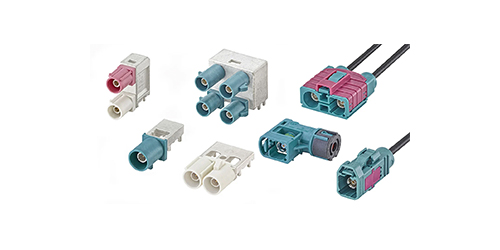
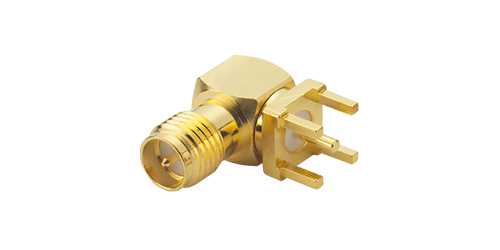
Finally, the processed high-quality GNSS positioning signals and LTE data signals are transmitted to the vehicle’s T-BOX, navigation host, or intelligent vehicle terminal via dedicated low-loss coaxial cables and automotive-grade connectors (Fakra, SMA). The terminal equipment analyzes positioning data to realize vehicle positioning and navigation, and uploads vehicle operating data, location information, and fault data to the cloud platform through LTE cellular networks.
3. Key Technical Features of Automotive-Grade GNSS LTE Combo Antennas
Automotive GNSS LTE combo antennas differ significantly from civilian combo antennas in terms of performance, durability, and environmental adaptability. Their core technical features are tailored to the extreme and complex operating conditions of automobiles, covering performance parameters, structural design, and safety standards.
3.1 High-Precision GNSS Positioning Performance
Automotive combo antennas support multi-system GNSS concurrent reception, covering GPS L1, BeiDou B1, Galileo E1, and GLONASS G1 bands. With a built-in high-gain LNA and low-noise filtering circuit, the positioning sensitivity reaches up to -165dBm, enabling fast satellite acquisition and stable positioning even in weak signal environments such as urban dense buildings, viaducts, and suburban woodlands. The static positioning accuracy can reach meter-level, and with RTK auxiliary modules, it can achieve centimeter-level high-precision positioning, fully meeting the positioning requirements of intelligent navigation, fleet trajectory monitoring, and low-speed autonomous driving. Compared with single GPS antennas, multi-GNSS compatible combo antennas have stronger anti-interference ability and higher positioning success rate, effectively solving common problems such as positioning delay and drift during vehicle driving.
3.2 Full-Band LTE Stable Communication
The LTE antenna unit covers the global 4G LTE full frequency range (698MHz–2700MHz), including low, medium, and high frequency bands, compatible with 2G/3G/4G multi-network backward compatibility, adapting to the network coverage of different countries and regions. It adopts an omnidirectional high-gain design with a typical gain of 2.5dBi, ensuring stable signal reception during high-speed vehicle driving, turning, and mountain road travel. The built-in anti-fading technology effectively resists signal attenuation caused by vehicle body shielding and terrain changes, ensuring continuous and stable data transmission for vehicle cloud interaction, remote OTA upgrades, real-time fault monitoring, and driving data uploads.
3.3 Automotive-Grade Environmental Adaptability
As vehicle-mounted electronic equipment, combo antennas must withstand extreme temperature changes, severe vibration, and harsh outdoor environments. Standard automotive GNSS LTE combo antennas support a wide operating temperature range of -40℃ to +85℃, adapting to high-temperature exposure in summer and low-temperature freezing in winter. The whole machine adopts IP65/IP66 dustproof and waterproof grade, which can effectively resist rain erosion, snow accumulation, dust deposition, and splashing water during vehicle driving. In addition, the product passes strict vehicle vibration and shock tests, with a reinforced internal structure that avoids component loosening or signal failure caused by long-term road vibration. The housing is made of high-strength ABS or PC material, with anti-aging, anti-ultraviolet, and anti-corrosion properties, ensuring long-term stable service life in outdoor vehicle working environments.
3.4 Low Interference and High Integration Design
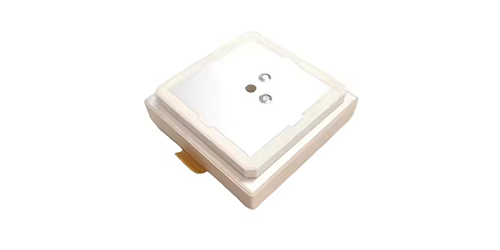
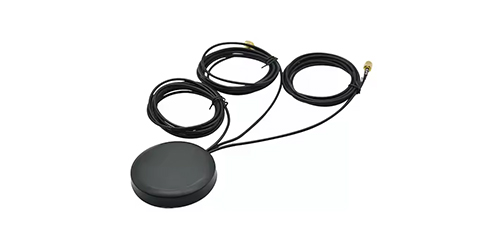
The integrated dual-channel independent design completely separates GNSS and LTE signal transmission channels, with professional frequency isolation technology to eliminate mutual interference between positioning and communication signals. Compared with the traditional scheme of installing two separate antennas, the combo antenna reduces equipment volume by more than 50%, simplifies vehicle body wiring and installation procedures, reduces the risk of wiring failure, and lowers the overall vehicle electronic integration cost. At the same time, the compact low-profile design (puck-style flat structure) is beautiful and does not affect the vehicle’s aerodynamic performance, suitable for hidden installation on vehicle roofs, front grilles, and trunk interiors.
3.5 Standard Automotive Interface Compatibility
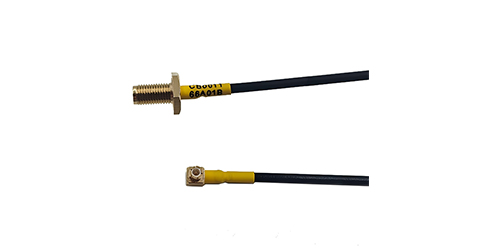
Most automotive GNSS LTE combo antennas are equipped with automotive-grade Fakra or SMA connectors and RG174 low-loss coaxial cables, supporting mainstream vehicle T-BOX, intelligent navigation terminals, fleet monitoring terminals, and EV vehicle networking systems. The cable length can be customized (3m/5m/10m) to adapt to different vehicle models such as passenger cars, trucks, new energy vehicles, and engineering vehicles, with strong universal compatibility and easy plug-and-play installation.

4. Core Advantages of Automotive GNSS LTE Combo Antennas Over Traditional Antennas
In traditional vehicle networking solutions, manufacturers usually install independent GNSS positioning antennas and LTE cellular antennas separately. With the upgrading of vehicle intelligence, this discrete solution has gradually exposed many shortcomings. Automotive GNSS LTE combo antennas perfectly solve these pain points and have obvious comprehensive advantages in integration, performance, cost, and maintenance.
4.1 Simplified Installation and System Integration
The integrated one-piece structure realizes dual functions of positioning and communication in a single device, reducing the number of on-board antennas from two to one. It simplifies vehicle body drilling, wiring, and fixing processes, greatly improving the production and assembly efficiency of vehicle manufacturers. For post-installed fleet monitoring and vehicle networking modification scenarios, the combo antenna avoids the trouble of multiple wiring and fixed installation, reducing construction difficulty and shortening installation cycle. Meanwhile, centralized installation reduces the occupation of vehicle body space, which is more conducive to the lightweight design of modern vehicles.
4.2 Improved Signal Stability and Anti-Interference Ability
Discrete antennas are prone to mutual electromagnetic interference due to close installation positions, resulting in reduced GNSS positioning accuracy and unstable LTE network signals. The professionally optimized isolation structure of combo antennas fundamentally solves the problem of signal crosstalk. In addition, the unified shielding and filtering design of automotive-grade combo antennas can resist electromagnetic interference from vehicle engines, generators, and on-board electronic equipment, ensuring more stable and reliable long-term signal performance than discrete antennas.
4.3 Reduced Comprehensive Cost
Although the unit price of a single combo antenna is slightly higher than that of a single ordinary antenna, it can replace two discrete antennas, effectively reducing the procurement cost of antenna hardware. More importantly, it saves wiring accessories, installation labor costs, and after-sales maintenance costs. The highly integrated structure reduces the failure rate of wiring and interfaces, lowers the frequency of after-sales maintenance and replacement, and significantly reduces the long-term operation and maintenance costs of vehicle networking systems and fleet monitoring systems.
4.4 Stronger Environmental Adaptability and Longer Service Life
Automotive GNSS LTE combo antennas are designed for full-life cycle vehicle use, with all components meeting automotive-grade reliability standards. The integrated sealed structure has better dustproof, waterproof, and anti-vibration performance than discrete assembled antennas, avoiding equipment damage caused by water ingress, dust blockage, and vibration loosening. The average service life can reach more than 8 years, which is highly matched with the service life of vehicle equipment, reducing frequent replacement and upgrade costs.
5. Main Application Scenarios of Automotive GNSS LTE Combo Antennas
With the rapid popularization of intelligent connected vehicles and vehicle networking technology, automotive GNSS LTE combo antennas have been widely used in multiple fields such as passenger vehicle intelligent networking, new energy vehicles, commercial fleet management, engineering vehicle monitoring, and intelligent transportation systems, becoming the core hardware support for vehicle intelligentization.
5.1 Intelligent Connected Passenger Vehicles
In modern smart passenger cars, combo antennas provide dual support for high-precision navigation and vehicle cloud networking. The GNSS positioning function realizes real-time vehicle positioning, path navigation, and driving trajectory recording, supporting intelligent functions such as automatic parking and lane keeping assistance. The LTE communication function realizes vehicle cloud data interaction, including OTA remote upgrade of vehicle system, real-time update of navigation map, on-board infotainment network connection, and remote vehicle condition query. For new energy electric vehicles, the antenna also supports remote battery monitoring, charging data upload, and vehicle fault early warning, improving the intelligence and safety of EVs.
5.2 Commercial Fleet Management Systems
Fleet management is one of the largest application scenarios of automotive GNSS LTE combo antennas, covering logistics trucks, passenger buses, taxi fleets, and online car-hailing vehicles. The antenna provides real-time high-precision positioning data for the fleet management platform, helping managers monitor vehicle location, driving speed, driving route, and working status in real time. Through LTE 4G network, vehicle driving data, fuel consumption data, and fault information are uploaded to the cloud platform synchronously, realizing intelligent scheduling, driving behavior analysis, and safety supervision of the fleet. The stable signal performance ensures that the fleet can still achieve normal positioning and data transmission in remote road sections and suburban areas, avoiding monitoring blind spots.
5.3 Engineering and Special Vehicle Monitoring
Engineering vehicles such as excavators, cranes, and loaders, as well as special vehicles such as sanitation vehicles and fire trucks, have high requirements for equipment stability and signal reliability in complex working environments. Automotive GNSS LTE combo antennas adapt to harsh working conditions such as construction site vibration, dust, and high temperature, providing continuous positioning and network transmission functions for vehicle operation monitoring, working trajectory statistics, and equipment remote management. It helps construction enterprises realize intelligent management of engineering equipment, improve operation efficiency, and reduce equipment idle loss.
5.4 Autonomous Driving Auxiliary Systems
In L2-L4 level autonomous driving systems, high-precision positioning and real-time network communication are the core foundations of autonomous driving decision-making. Dual-frequency GNSS positioning of combo antennas provides accurate vehicle coordinate information, and LTE 4G network supports real-time interaction of vehicle-road coordination data, high-precision map data, and remote monitoring data. The high stability and low-delay signal performance ensure the real-time and accuracy of autonomous driving environmental perception and decision-making, providing reliable hardware support for the safe operation of autonomous vehicles.
5.5 Vehicle Telematics and Emergency Rescue Systems
Automotive GNSS LTE combo antennas support vehicle telematics systems (TSP) and emergency rescue functions. When a vehicle collision or fault occurs, the system can automatically upload the precise positioning information and vehicle condition data to the rescue platform through LTE network, realizing rapid emergency rescue. It also supports remote vehicle locking, anti-theft tracking, and remote fault diagnosis functions, improving vehicle safety and anti-theft performance.
6. How to Choose a High-Quality Automotive GNSS LTE Combo Antenna? (Selection Guide)
There are many types of automotive GNSS LTE combo antennas on the market, with large differences in performance and quality. Improper selection will lead to problems such as inaccurate positioning, unstable network, and frequent equipment failure. The following core selection criteria help buyers and engineers select compliant and high-performance products.
6.1 Check Automotive-Grade Certification and Standards
Priority should be given to products that meet AEC-Q200 automotive electronic reliability standards and IP65/IP66 dustproof and waterproof certification. Civil-grade combo antennas cannot adapt to vehicle extreme environments and are prone to failure in high temperature, low temperature, and vibration environments. Automotive-grade certified products have passed strict temperature cycle, vibration, impact, and electromagnetic compatibility tests, ensuring long-term stable operation on vehicles.
6.2 Confirm Frequency Band and Compatibility
For GNSS positioning, select multi-system compatible products supporting GPS, BeiDou, Galileo, and GLONASS to ensure positioning coverage in global regions. For LTE communication, confirm whether the product covers local mainstream 4G LTE frequency bands to avoid network incompatibility. At the same time, check whether the connector type (Fakra/SMA) and cable length match the vehicle terminal equipment to ensure plug-and-play compatibility.
6.3 Focus on Core Performance Parameters
Key performance parameters include antenna gain, sensitivity, isolation, and signal attenuation. It is recommended to select products with LTE gain ≥2.5dBi, GNSS sensitivity ≥-165dBm, and dual-channel isolation ≥20dB. High isolation can completely avoid signal crosstalk, high gain ensures stable signal reception in weak signal environments, and high sensitivity improves positioning speed and accuracy.
6.4 Evaluate Structural Design and Installation Adaptability
According to the vehicle installation scenario, select the appropriate installation method: magnetic suction installation for temporary fleet monitoring, and screw fixed installation for permanent vehicle modification and factory pre-installation. The low-profile puck-style design is more suitable for vehicle roof installation, which is beautiful and wind-resistant. In addition, prioritize products with low-loss cables to reduce signal transmission attenuation and ensure signal quality.
6.5 Verify Manufacturer Qualification and After-Sales Service
Choose professional automotive antenna manufacturers with independent R&D and production capabilities to ensure product quality consistency and technical support. Avoid low-cost inferior products with cutting corners on materials and processes. At the same time, confirm the product warranty period and after-sales maintenance service to ensure timely technical support and replacement services in case of product failure.
7. Professional Installation and Maintenance Tips for Automotive GNSS LTE Combo Antennas
Even high-quality combo antennas need standardized installation and daily maintenance to exert optimal performance. Improper installation will lead to signal attenuation, positioning errors, and shortened service life. The following professional tips ensure stable and efficient operation of the antenna.
7.1 Standard Installation Requirements
First, select a reasonable installation position: the antenna should be installed in an open position on the vehicle roof or trunk top, avoiding shielding by metal components such as vehicle roof racks and iron plates, so as not to block satellite and base station signals. Second, ensure firm installation: screw-fixed antennas need to be tightened and fixed with waterproof gaskets to prevent water ingress and vibration loosening; magnetic suction antennas need to be adsorbed on flat metal surfaces to ensure stable adhesion during high-speed driving. Third, standardize wiring: avoid excessive bending and stretching of coaxial cables, stay away from vehicle power lines and engine electromagnetic interference sources, and reduce signal interference.
7.2 Daily Maintenance and Fault Inspection
Regularly check the antenna housing for damage, water ingress, and dust accumulation, and clean the surface dust and dirt in time to avoid affecting signal reception. Check whether the cable interface is loose or oxidized, and tighten and replace oxidized connectors regularly. For vehicles operating in harsh environments for a long time, inspect the antenna fixing structure every six months to prevent loosening caused by long-term vibration. In case of positioning drift and network disconnection, first check whether the antenna is shielded or faulty, and eliminate line and equipment faults in time.
8. Future Development Trends of Automotive GNSS LTE Combo Antennas
With the iterative upgrading of 5G communication technology, high-precision positioning technology, and autonomous driving technology, automotive GNSS LTE combo antennas are evolving toward multi-frequency integration, high-precision positioning, miniaturization, and intelligentization, and will become more core in the intelligent vehicle industry.
First, multi-band integrated iteration will become mainstream. Traditional 2-in-1 GNSS+LTE combo antennas will gradually upgrade to 3-in-1 and 4-in-1 integrated antennas, integrating GNSS, 4G LTE, 5G, WiFi, and Bluetooth functions to meet the multi-dimensional connection needs of future intelligent vehicles. Second, high-precision positioning technology will be popularized. With the large-scale application of autonomous driving and vehicle-road coordination, combo antennas will be equipped with RTK high-precision positioning modules to realize centimeter-level positioning, replacing traditional meter-level positioning products.
Third, miniaturization and hidden installation will be the design trend. Future antennas will be more compact and lightweight, supporting embedded hidden installation in vehicle bodies, bumpers, and rearview mirrors, balancing aerodynamic performance, appearance aesthetics, and signal performance. Fourth, intelligent anti-interference and self-adaptive technology will be applied. The new generation of combo antennas will have intelligent signal identification and anti-interference functions, automatically adapting to different complex environments to optimize signal reception quality and further improve system stability.
In addition, with the development of new energy vehicles and intelligent transportation, the market demand for automotive GNSS LTE combo antennas will continue to grow, and product reliability, integration, and environmental protection performance will be further improved, providing more solid hardware support for the intelligent and networked development of the global automotive industry.
The automotive GNSS LTE combo antenna is a key integrated hardware device connecting vehicle positioning and cellular network communication, solving the multiple pain points of discrete antenna solutions in traditional vehicle networking systems. With its outstanding advantages of high integration, stable performance, strong environmental adaptability, and low comprehensive cost, it has become the standard configuration of modern intelligent connected vehicles, new energy vehicles, and intelligent fleet management systems. By integrating multi-system GNSS high-precision positioning and full-band LTE stable communication functions, it supports core intelligent functions such as vehicle intelligent navigation, cloud networking, fleet monitoring, and autonomous driving assistance.
When purchasing and applying automotive GNSS LTE combo antennas, enterprises and users should focus on automotive-grade certification, core performance parameters, environmental adaptability, and installation compatibility, and select high-quality products that meet vehicle operating standards. With the continuous upgrading of automotive intelligence and communication technology, combo antennas will continue to iterate and innovate, playing an increasingly important role in promoting the high-quality development of the global intelligent vehicle and intelligent transportation industry.
Lucy Yang | lucy.y@toxutech.com
Dotty Zhao | sales04@toxutech.com
Global Business Director / Sales Team / Global Operations


 En
 Cn
 Korean
 Home >
