

-
Products -PCBA Manufacturing RF Connectors RF Cable Assemblys Embedded Antennas External Antennas GNSS Positioning Solutions
RF Connectors

RF Cable Assemblys
Embedded Antennas
External Antennas
GNSS Positioning Solutions










 Language


Language


Time:2026-10-17 Views:0
Automotive combo combination antennas have become an indispensable core component of modern intelligent vehicles, replacing traditional single-function car antennas and meeting the explosive growth of multi-scenario wireless communication demands in the automotive industry. As vehicles evolve from basic transportation tools to smart connected mobile terminals, the requirement for stable, high-speed, and multi-frequency wireless connectivity has surged dramatically. An automotive combo combination antenna integrates multiple independent antenna modules into a single compact housing, supporting simultaneous reception and transmission of 5G/4G LTE, GNSS (GPS, GLONASS, BDS), Wi-Fi, Bluetooth, AM/FM radio, DAB digital radio, and C-V2X signals. This all-in-one wireless solution solves the pain points of traditional vehicle antenna systems, such as scattered installation, signal interference, large occupied space, and inconsistent appearance, becoming the mainstream choice for passenger cars, commercial vehicles, new energy vehicles, and intelligent connected fleet vehicles worldwide.
In the global automotive aftermarket and OEM manufacturing field, the demand for high-performance automotive combo combination antennas continues to rise year by year. Google search data shows that keywords includingautomotive combo antenna, vehicle combination multi-band antenna, car shark fin combo antenna, and 5G GNSS automotive combo antenna have maintained a steady growth trend in search volume, reflecting the strong market demand from auto manufacturers, modification enthusiasts, fleet management enterprises, and automotive electronic suppliers. This comprehensive guide will elaborate on the definition, core types, working principles, key advantages, technical parameters, application scenarios, selection criteria, and installation maintenance of automotive combo combination antennas, providing professional and practical reference for global buyers, engineers, and automotive industry practitioners.
1. What Is an Automotive Combo Combination Antenna?
An automotive combo combination antenna is a multi-functional integrated wireless antenna specially designed for vehicle operating environments. Different from traditional single-band car antennas that only support AM/FM radio or single GPS positioning, a combo combination antenna integrates multiple antenna units for different frequency bands and communication protocols into one unified structural module. It adopts professional frequency isolation and anti-interference design to ensure that each independent antenna unit can work stably without mutual signal crosstalk, realizing simultaneous coverage of navigation, cellular communication, wireless networking, vehicle interconnection, and broadcast reception functions.
The core design concept of automotive combo combination antennas is integration, miniaturization, and high efficiency. Most mainstream products on the market adopt streamlined shark fin, flat roof-mounted, or hidden built-in structures, which perfectly fit the vehicle’s exterior design without destroying the overall aesthetic. Internally, the antenna is equipped with high-gain radiation units, low-noise amplifiers (LNA), filter circuits, and multi-core shielded signal lines. The shell adopts high-strength waterproof and UV-resistant materials, adapting to extreme vehicle operating environments such as high temperature, low temperature, rain, snow, and vibration.
In short, a single automotive combo combination antenna can replace 3-8 traditional single-function antennas, greatly simplifying the vehicle’s electronic wiring layout, reducing vehicle body modification costs, optimizing wireless signal quality, and laying a solid hardware foundation for vehicle intelligence, networking, and autonomous driving upgrades.
2. Core Functional Types of Automotive Combo Combination Antennas
With the continuous upgrading of automotive intelligent technology, the functional configuration of automotive combo combination antennas is becoming increasingly rich. According to the integrated functional modules and mainstream application combinations, the market’s mainstream automotive combo combination antennas can be divided into the following classic types, covering all mainstream wireless communication needs of modern vehicles.
2.1 2-in-1 Automotive Combo Antenna (GPS+4G/5G)
The 2-in-1 combo antenna is the most basic and cost-effective integrated vehicle antenna solution, widely used in entry-level intelligent vehicles, fleet management vehicles, and engineering vehicles. It integrates a high-precision GNSS positioning antenna and a full-band cellular communication antenna. The GNSS module supports GPS, GLONASS, and BDS multi-system positioning, with high positioning accuracy and fast signal locking speed; the cellular module covers global 4G LTE and mainstream 5G frequency bands, supporting vehicle T-BOX remote monitoring, remote vehicle control, and real-time data transmission.
This type of combo combination antenna features a simple structure, low cost, and easy installation. It is the preferred upgrade product for traditional single-function vehicle antennas and occupies the largest market share in the automotive aftermarket.
2.2 4-in-1/6-in-1 Multi-Band Combo Antenna
The 4-in-1 and 6-in-1 combo antennas are mainstream products for mid-range intelligent vehicles. They integrate GNSS positioning, 4G/5G cellular communication, 2.4G+5.8G Wi-Fi, and Bluetooth functions, and some upgraded models add AM/FM radio and DAB digital radio modules. This multi-functional integration fully meets the daily intelligent use needs of vehicles, including in-car Wi-Fi hotspot sharing, mobile phone Bluetooth interconnection, real-time navigation, online music, and vehicle system OTA remote upgrade.
Equipped with professional MIMO (Multiple Input Multiple Output) antenna technology, this antenna realizes dual-channel signal reception and transmission, effectively improving wireless signal stability and transmission speed, solving the problem of network lag and signal disconnection during vehicle high-speed driving.
2.3 7-in-1/8-in-1 High-End Shark Fin Combo Antenna
The 7-in-1 and 8-in-1 shark fin combo combination antennas are flagship products for high-end new energy vehicles and autonomous driving vehicles. On the basis of conventional communication and navigation functions, they add C-V2X vehicle-road interconnection, dedicated short-range communication, and diversity antenna modules. The built-in multi-group high-isolation antenna units support 5G full-band coverage, high-precision positioning, and low-latency vehicle interconnection data transmission, meeting the technical requirements of L2-L4 level autonomous driving.
The shark fin streamlined design is the most popular appearance form of high-end automotive combo antennas. It has low wind resistance, beautiful appearance, and strong environmental adaptability. The IP67 waterproof and dustproof grade ensures stable operation in extreme weather such as heavy rain, blizzard, and high-temperature exposure, which is widely adopted by mainstream OEMs such as Tesla, BYD, and BMW.
2.4 Industrial-Grade Super Combo Antenna
Industrial-grade automotive super combo antennas are multi-functional integrated antennas for commercial vehicles, logistics fleets, public security emergency vehicles, and engineering machinery. Individual products support up to 11-in-1 or 18-in-1 functional integration, covering GNSS dual-frequency positioning, multi-channel 5G MIMO, full-band Wi-Fi 6/6E, DAB/AM/FM, SDARS satellite radio, and LMR/TETRA public safety communication. With ultra-high gain, strong anti-interference ability, and ultra-wide temperature working range, it can adapt to harsh working environments such as long-distance high-speed driving, field operation, and high-vibration scenarios.
3. Working Principle of Automotive Combo Combination Antennas
Many users confuse combo combination antennas with ordinary single-band antennas, but their internal working principles are far more complex. The core working logic of automotive combo combination antennas is multi-module independent operation + frequency domain isolation + signal amplification + anti-interference filtering, realizing multi-signal simultaneous and stable operation.
First, the antenna adopts modular independent layout inside the shell. Different functional antenna units (navigation unit, cellular unit, Wi-Fi unit, broadcast unit) are arranged in isolated areas, and high-frequency shielding isolation materials are used between modules to avoid frequency crosstalk and signal mutual interference between different frequency bands. For example, the GNSS positioning frequency band (1550-1610MHz) and 5G cellular frequency band (600MHz-6GHz) are physically isolated through structural design and filter circuits to ensure independent signal reception and transmission.
Second, each antenna unit is equipped with an independent low-noise amplifier (LNA). When the vehicle is driving at high speed or in complex environments such as urban high-rise shielding and suburban signal blind areas, the LNA module can amplify weak external signals, improve signal sensitivity, and reduce signal loss. At the same time, the built-in high-precision band-pass filter can filter out clutter interference signals outside the working frequency band, effectively improving the purity and stability of effective signals.
Finally, the multi-core shielded cable transmits the processed high-quality signal to the vehicle’s T-BOX, navigation host, central control system, and wireless module. The shielded wire can resist electromagnetic interference from vehicle engines, circuits, and other on-board electronic equipment, ensuring zero delay and low loss of signal transmission. Through the above systematic design, the automotive combo combination antenna realizes efficient and stable operation of multiple wireless functions in a limited space.

4. Core Advantages of Automotive Combo Combination Antennas
The rapid popularization of automotive combo combination antennas in the global market is inseparable from their comprehensive advantages in structure, performance, cost, and aesthetics. Compared with traditional discrete single-function vehicle antenna systems, combo combination antennas have irreplaceable core strengths.
4.1 Simplify Vehicle Structure and Reduce Space Occupation
Traditional vehicles need to install multiple independent antennas on the roof, rear window, and body, occupying a large amount of vehicle body space, and the wiring is scattered and complicated. The automotive combo combination antenna integrates all functional modules into a single unit, realizing one-piece installation. It greatly saves vehicle body installation space, simplifies the internal wiring harness layout of the vehicle, reduces the assembly difficulty of OEM production lines, and also avoids the problem of vehicle body damage caused by multiple drilling and installation in the aftermarket.
4.2 Strong Anti-Interference Ability and Stable Signal Performance
Discrete single antennas are prone to mutual electromagnetic interference, resulting in unstable navigation signals, network disconnection, and fuzzy radio signals. The combo combination antenna adopts professional isolation design, independent filtering and amplification systems for each frequency band, which fundamentally suppresses internal signal crosstalk and external electromagnetic interference from vehicle equipment. Whether in high-speed driving, urban complex signal environment, or remote suburban areas, it can maintain high-stability signal reception and transmission, ensuring accurate navigation, smooth network, and clear broadcast sound quality.
4.3 Beautiful Appearance and Low Wind Resistance
Most automotive combo combination antennas adopt streamlined shark fin and flat hidden designs, which are highly integrated with the vehicle body and will not damage the original aesthetic of the vehicle. Compared with traditional rod-shaped antennas with high wind resistance and easy aging and damage, the streamlined structure of combo antennas effectively reduces driving wind resistance, reduces vehicle energy consumption, and avoids the problems of rod antenna bending, breakage, and paint peeling. It has both decorative and practical functions, and is also a common modification accessory for vehicle beauty upgrades.
4.4 Cost-Effective and Easy to Install and Maintain
From the perspective of comprehensive cost, although the unit price of a single combo antenna is higher than that of a single-function antenna, it can replace multiple discrete antennas, which greatly reduces the comprehensive procurement cost, wiring cost, and installation labor cost. The unified one-piece installation mode is simple and fast, suitable for OEM mass production and aftermarket DIY modification. In terms of later maintenance, the integrated design avoids the trouble of troubleshooting multiple antenna faults, and the maintenance efficiency is significantly improved, reducing the vehicle’s later use cost.
4.5 Wide Environmental Adaptability and Long Service Life
High-quality automotive combo combination antennas adopt ABS engineering plastic or aluminum alloy shell, with IP66/IP67 waterproof, dustproof, UV-resistant, and high and low temperature resistant properties. They can work stably in the temperature range of -40℃ to +85℃, adapting to extreme weather such as high temperature in summer, freezing in winter, heavy rain, sand and dust. The internal circuit board adopts industrial-grade components, which are resistant to vibration and aging, with a service life of more than 8 years, far exceeding that of traditional ordinary antennas.
5. Key Technical Parameters of High-Quality Automotive Combo Combination Antennas
When purchasing and selecting automotive combo combination antennas, professional technical parameters are the core basis for judging product quality. Global buyers and engineering technicians need to focus on the following key parameters to avoid selecting low-performance and incompatible products.
1. Working Frequency Band: The mainstream combo antenna covers GNSS L1/L5 dual-frequency (1575.42MHz, 1176.45MHz), 4G LTE full-band (700MHz-2600MHz), 5G NR multi-band (600MHz-6GHz), Wi-Fi 2.4G/5.8G dual-band, AM/FM (530KHz-108MHz), and DAB (174MHz-240MHz). Full-band coverage ensures global signal compatibility and is suitable for vehicles sold and used in various regions.
2. Antenna Gain: The gain of GNSS module is generally ≥28dB, cellular module gain is 2-5dBi, Wi-Fi module gain is 3-6dBi. High gain directly improves signal reception sensitivity, enhances weak signal capture ability, and ensures stable signal output in complex environments.
3. Isolation Degree: The inter-module isolation degree of high-quality combo antennas is ≥20dB, which can effectively avoid mutual interference between different frequency bands and ensure independent and stable operation of each function.
4. Protection Grade: Industrial and automotive-grade products reach IP67 waterproof and dustproof grade, which can prevent rainwater infiltration, dust accumulation, and effectively protect internal circuit components.
5. Working Temperature Range: Standard automotive-grade temperature resistance is -40℃~+85℃, adapting to extreme temperature changes in vehicle driving environments.
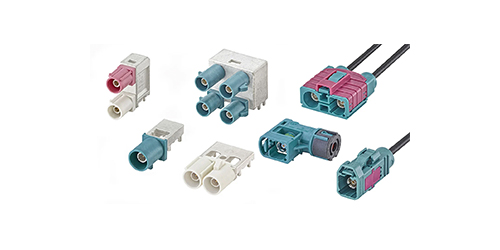
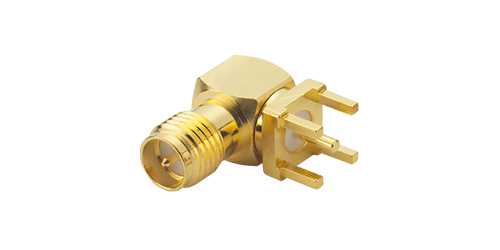
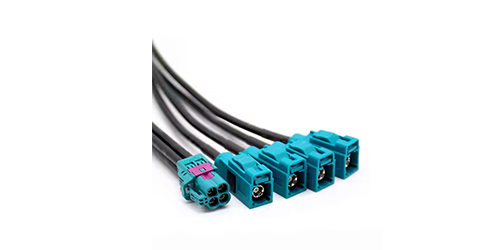
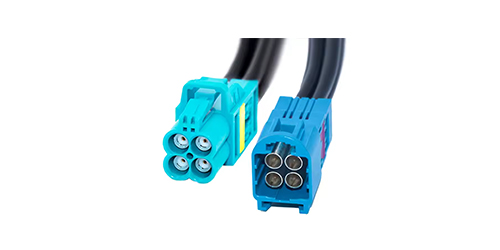
6. Interface Type: Mainstream interfaces include SMA, SMB, Fakra, etc., which are compatible with most vehicle T-BOX, navigation hosts, and on-board wireless modules on the market, realizing plug-and-play and strong compatibility.
7. Vibration Resistance Grade: Meet automotive-level vibration resistance standards, adapt to vehicle bumpy driving environments, and avoid signal interruption caused by vibration loosening.
6. Main Application Scenarios of Automotive Combo Combination Antennas
With the continuous penetration of vehicle intelligence and networking, automotive combo combination antennas have covered almost all types of vehicles and extended to multiple industrial vehicle fields, becoming a universal core accessory of intelligent mobile terminals.
6.1 Passenger Smart Vehicles & New Energy Vehicles
Civil passenger cars and new energy vehicles are the largest application markets for combo combination antennas. All new intelligent vehicles are equipped with integrated combo antennas as standard, supporting in-car navigation, 5G network interconnection, Wi-Fi hotspot, Bluetooth connection, OTA remote upgrade, and intelligent voice system operation. The beautiful shark fin appearance also improves the vehicle’s grade, which is widely used in family cars, SUVs, sedans, and new energy electric vehicles.
6.2 Commercial Fleet & Logistics Vehicles
Online car-hailing, taxis, logistics trucks, and engineering fleets have high requirements for real-time positioning and remote monitoring. The 2-in-1 and 4-in-1 combo combination antennas support real-time GNSS high-precision positioning and 4G/5G network data transmission, realizing fleet real-time tracking, driving trajectory recording, remote vehicle condition monitoring, and scheduling management, greatly improving fleet operation efficiency and management standardization.
6.3 Autonomous Driving & Intelligent Connected Vehicles
L2-L4 level autonomous driving vehicles rely on high-precision positioning and low-latency vehicle-road interconnection technology. High-end 7-in-1 and 8-in-1 combo antennas integrate C-V2X and dual-frequency GNSS modules, realizing centimeter-level high-precision positioning and millisecond-level low-latency data transmission, providing reliable wireless signal support for automatic driving assistance systems such as lane keeping, automatic following, and obstacle avoidance warning.
6.4 Special Emergency & Public Service Vehicles
Police cars, fire trucks, ambulances, and road rescue vehicles need stable multi-band communication capabilities. Industrial-grade super combo combination antennas support public safety communication frequency bands, satellite positioning, and multi-network backup, ensuring uninterrupted communication and accurate positioning in emergency rescue scenarios, improving the efficiency of public emergency services.
6.5 Aftermarket Vehicle Modification & Upgrade
Many old vehicles are equipped with outdated single-function antennas, with weak signals and single functions. Aftermarket combo combination antenna modification is a high-cost-performance upgrade solution. It can realize multi-functional wireless communication upgrades without large-scale vehicle modification, improving vehicle network experience and navigation accuracy, and also playing a decorative role to enhance the vehicle’s appearance.
7. How to Choose the Right Automotive Combo Combination Antenna? (Professional Selection Guide)
Faced with a wide range of combo combination antennas with different functions and grades on the market, many buyers and users are confused about selection. The following professional selection suggestions can help you quickly match the most suitable products according to your needs.
Step 1: Confirm Functional Matching Requirements. For ordinary family cars and daily commuting vehicles, choose 4-in-1 multi-band combo antennas that support navigation, network, and radio functions to meet daily use; for new energy intelligent vehicles and vehicles pursuing smooth network, choose 6-in-1/7-in-1 high-gain MIMO antennas; for fleet management and engineering vehicles, prioritize 2-in-1 high-precision positioning + cellular communication antennas with stable performance; for autonomous driving vehicles, select high-end products with C-V2X and dual-frequency GNSS functions.
Step 2: Check Frequency Band Compatibility. Different regions and countries have different cellular and navigation frequency band standards. When purchasing cross-border products, it is necessary to confirm that the antenna supports local full-band coverage to avoid signal incompatibility. For global universal use, choose full-band combo antennas covering 4G/5G global mainstream frequency bands and multi-system GNSS positioning.
Step 3: Focus on Automotive-Grade Quality Certification. High-quality automotive combo combination antennas must pass automotive-grade reliability tests, including high and low temperature resistance, vibration resistance, waterproof and dustproof certification. Avoid choosing ordinary civil modified antennas that do not meet automotive standards, so as to avoid signal failure and product damage in extreme driving environments.
Step 4: Match Installation Method and Interface. Mainstream installation methods include roof screw fixing, adsorption type, and hidden built-in type. Shark fin roof-mounted antennas are the most versatile and beautiful. At the same time, confirm that the antenna interface (Fakra/SMA) is consistent with the vehicle’s original equipment interface to ensure smooth installation and plug-and-play.
Step 5: Prioritize High-Isolation and High-Gain Products. High isolation ensures no signal interference between multiple functions, and high gain ensures stable signal reception in complex environments. It is the core indicator to distinguish high-quality products from inferior products.
8. Installation & Maintenance Tips for Automotive Combo Combination Antennas
Correct installation and daily maintenance can maximize the service life and signal performance of automotive combo combination antennas. Here are professional installation and maintenance guidelines for users and installers.
Professional Installation Notes: First, the antenna should be installed in the open position of the vehicle roof, avoiding shielding by car windows, roof racks, and metal accessories, to ensure unobstructed signal reception. Second, the installation position should be kept away from vehicle engine compartments and high-power electrical equipment to reduce electromagnetic interference. Third, the wiring harness should be arranged neatly, avoid excessive bending and extrusion, and do a good job of waterproof sealing at the wiring outlet to prevent rainwater from penetrating into the vehicle body. Fourth, after installation, fix the antenna firmly to avoid looseness and vibration during high-speed driving.
Daily Maintenance Methods: Regularly clean the antenna shell surface to remove dust, sediment, and bird droppings, avoid long-term corrosion affecting the antenna appearance and signal transmission. Regularly check the wiring harness interface for looseness, oxidation, and water seepage, and tighten and maintain it in time. Avoid manual disassembly of the antenna shell to prevent damage to the internal isolation structure and circuit components. For vehicles parked outdoors for a long time, regularly check the waterproof performance of the antenna to ensure no water accumulation inside the shell.
Fault Troubleshooting: If problems such as weak navigation signal, network lag, and fuzzy radio sound occur, first check whether the antenna is shielded or loose; then check whether the interface is oxidized and the wiring harness is damaged; finally, confirm whether the local signal environment is abnormal. Most signal faults can be solved by cleaning the antenna and fixing the interface.
9. Market Development Trend of Automotive Combo Combination Antennas
With the rapid development of global automobile intelligence, 5G communication, and autonomous driving technology, the automotive combo combination antenna industry is showing three major development trends. First, higher integration and multi-functionalization. Future antennas will integrate more intelligent communication functions such as 5G MIMO, Wi-Fi 6E, C-V2X, and high-precision positioning to meet the higher-dimensional communication needs of autonomous driving and intelligent vehicle interconnection.
Second, miniaturization and hidden integration. Traditional shark fin antennas will gradually evolve into hidden built-in antennas, integrated into vehicle roof glass, body panels, and rear windows, realizing zero-exposure installation, further optimizing vehicle aerodynamic performance and appearance aesthetics.
Third, intelligent adaptive optimization. New generation combo antennas will be equipped with intelligent signal adjustment modules, which can automatically sense the external signal environment, dynamically adjust gain and filtering parameters, and realize adaptive signal optimization in different driving scenarios, providing more stable and efficient wireless communication support for intelligent vehicles.
10. Frequently Asked Questions (FAQ) About Automotive Combo Combination Antennas
Q1: Can automotive combo combination antennas replace all original car single antennas?
A: Yes. A complete multi-band combo antenna can integrate all original car navigation, network, and broadcast antenna functions, completely replacing discrete single antennas. It has better signal performance and more concise installation than the original discrete antenna system.
Q2: Will multi-functional integrated antennas have signal interference?
A: High-quality automotive-grade combo antennas adopt professional physical isolation and circuit filtering design, with high isolation between modules, no mutual interference between different frequency band signals, and more stable signal than traditional single antennas. Inferior low-cost products may have interference problems, so it is necessary to select formal automotive-grade products.
Q3: Is the combo antenna suitable for old car modification?
A: Absolutely. Combo combination antennas are the most popular modification accessories for old car intelligent upgrades. The installation is simple, no large-scale vehicle body transformation is required, which can quickly upgrade the vehicle’s network and navigation performance, with high cost performance.
Q4: What is the service life of automotive combo antennas?
A: Formal automotive-grade combo combination antennas have industrial-grade waterproof, UV-resistant, and anti-aging properties, with a normal service life of 8-10 years, which is far longer than that of traditional ordinary antennas.
Q5: Do combo antennas support global signal coverage?
A: Full-band universal combo antennas support global 4G/5G frequency bands and multi-system GNSS positioning (GPS/GLONASS/BDS/Galileo), which can be used normally in all regions of the world.
As the core wireless communication hardware of modern intelligent vehicles, automotive combo combination antennas have completely changed the layout form of traditional vehicle antenna systems, realizing the innovative integration of multi-band, multi-function, and high-stability wireless communication. With the advantages of compact structure, beautiful appearance, stable performance, strong environmental adaptability, and low comprehensive cost, they have become the standard configuration of new energy intelligent vehicles, autonomous driving vehicles, and commercial fleets, and are also the preferred product for vehicle aftermarket intelligent upgrades.
In the era of rapid development of 5G vehicle networking and autonomous driving, the technical iteration and market demand of automotive combo combination antennas will continue to grow. Choosing high-quality, automotive-grade, full-band combo combination antennas can effectively improve the vehicle’s wireless communication experience, ensure the stable operation of intelligent vehicle systems, and provide solid technical support for vehicle intelligence and networking upgrades. Whether for OEM mass production, fleet equipment matching, or personal vehicle modification and upgrade, multi-functional automotive combo combination antennas are the most professional and cost-effective wireless solution in the current automotive electronic market.
Lucy Yang | lucy.y@toxutech.com
Dotty Zhao | sales04@toxutech.com
Global Business Director / Sales Team / Global Operations


 En
 Cn
 Korean
 Home >
