

-
Products -PCBA Manufacturing RF Connectors RF Cable Assemblys Embedded Antennas External Antennas GNSS Positioning Solutions
RF Connectors

RF Cable Assemblys
Embedded Antennas
External Antennas
GNSS Positioning Solutions







 Language


Language


Time:2026-10-17 Views:0
In the rapidly evolving landscape of wireless communication technology, seamless connectivity has become a non-negotiable requirement for automotive telematics, industrial IoT devices, smart transportation systems, and remote monitoring equipment. The 3-in-1 GPS 4G WiFi antenna has emerged as a game-changing integrated wireless solution, combining three critical signal reception and transmission functions into a single compact, durable unit. Unlike traditional single-function antennas that require separate installation, complex wiring, and additional equipment space, this all-in-one antenna integrates GPS positioning, 4G LTE cellular network, and dual-band WiFi connectivity, delivering stable, high-gain wireless performance while drastically simplifying system deployment and reducing overall project costs.
This comprehensive guide dives deep into every aspect of the 3-in-1 GPS 4G WiFi antenna, including its core working principles, key technical features, unique competitive advantages, versatile application scenarios, detailed specifications, installation tips, and professional selection criteria. Optimized for Google SEO, this article targets high-intent search keywords such as “3 in 1 GPS 4G WiFi antenna”, “4G LTE GPS WiFi combo antenna”, “automotive 3-in-1 wireless antenna”, and “industrial multi-band combo antenna”, providing valuable, in-depth content for engineers, procurement specialists, system integrators, and tech enthusiasts worldwide.
1. What Is a 3-in-1 GPS 4G WiFi Antenna?
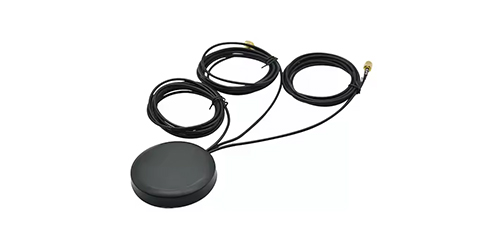
A 3-in-1 GPS 4G WiFi antenna is a multi-band integrated composite antenna designed to support three independent wireless communication modules within one unified housing. It consolidates a GPS/GLONASS/Galileo positioning antenna, a 4G LTE full-band cellular antenna, and a 2.4G/5G dual-band WiFi antenna into a single compact structure, with three independent coaxial cables and standard connectors for separate signal connection and transmission.
Each functional module of the combo antenna operates independently without signal interference, ensuring zero compromise on the performance of GPS positioning, 4G data transmission, and WiFi signal coverage. The core design concept focuses onintegration, miniaturization, and high compatibility, solving the pain points of bulky installation, messy wiring, signal crosstalk, and high maintenance costs caused by using three separate single-function antennas in traditional wireless system construction.
Most mainstream 3-in-1 GPS 4G WiFi antennas adopt a low-profile waterproof radome design, supporting multiple installation methods including screw mounting, adhesive mounting, and magnetic suction mounting. They are fully compatible with global mainstream frequency bands for 4G LTE, WiFi dual-band, and GNSS satellite positioning, making them a universal wireless accessory for commercial, industrial, and automotive wireless systems.
2. Core Working Principles of the 3-in-1 Combo Antenna
To understand the superior performance of the 3-in-1 GPS 4G WiFi antenna, it is essential to clarify the independent working mechanism of each functional module and the anti-interference design of the integrated structure. Different from ordinary single-band antennas, this composite antenna adopts professional frequency isolation and filtering technology to ensure the stable operation of three signal systems simultaneously.
2.1 GPS/GNSS Positioning Module
The GPS antenna module supports global satellite positioning systems including GPS, GLONASS, Galileo, and BeiDou, covering the mainstream GNSS frequency band of 1575.42MHz. It adopts a high-precision low-noise amplifier (LNA) built-in design, which can effectively capture weak satellite signals in complex environments such as urban canyons, dense buildings, and suburban woodlands. The module features ultra-low signal loss and high signal-to-noise ratio, realizing fast satellite search, stable positioning, and high-precision coordinate output, with positioning accuracy fully meeting the requirements of automotive navigation, fleet management, and industrial positioning monitoring.
2.2 4G LTE Cellular Network Module
The 4G antenna module supports full-band 4G LTE frequency coverage (700MHz–2690MHz), compatible with all global 4G operators’ frequency bands, including FDD-LTE and TDD-LTE dual modes. It also backward supports 3G and 2G network signals, ensuring seamless network switching and uninterrupted data transmission in areas with incomplete 4G signal coverage. With a peak gain of 4dBi to 6dBi, the 4G module enhances cellular signal reception sensitivity, effectively solving the problems of weak signal, slow network speed, and easy disconnection in remote areas, indoor environments, and moving vehicles.
2.3 Dual-Band WiFi Module
The WiFi antenna module integrates 2.4GHz and 5GHz dual-band reception and transmission functions. The 2.4GHz band features strong penetration and wide coverage, suitable for long-distance wireless signal transmission and barrier penetration; the 5GHz band has high bandwidth, low interference, and fast transmission speed, meeting the requirements of high-definition data transmission, real-time video streaming, and high-speed network access. The dual-band design enables automatic frequency switching according to the surrounding signal environment, ensuring stable and efficient WiFi connection for terminal devices.
2.4 Integrated Anti-Interference Technology
The biggest technical difficulty of multi-band composite antennas is signal crosstalk between different frequency bands. The high-quality 3-in-1 GPS 4G WiFi antenna adopts professional frequency isolation materials and independent cavity structural design for each module. It is equipped with built-in high-frequency filters and impedance matching circuits to completely isolate GPS, 4G, and WiFi signals, eliminating mutual interference between different frequency bands. This ensures that each functional module maintains independent and efficient working performance, achieving the same signal quality as professional single-function antennas.
3. Key Features and Competitive Advantages
The 3-in-1 GPS 4G WiFi combo antenna has gradually replaced traditional single antennas in the wireless communication market by virtue of its integrated design, excellent performance, strong adaptability, and cost advantages. Its core advantages are reflected in the following aspects, which are also the key reasons for its wide application in multiple industries.
3.1 Space-Saving Integrated Design
Traditional wireless systems need to install three independent antennas for positioning, cellular network, and WiFi coverage, which occupies a large installation space and requires reserved mounting positions for multiple devices. The 3-in-1 integrated design integrates all three functions into one ultra-compact low-profile housing, which greatly saves installation space, making it especially suitable for equipment with limited internal space such as vehicle-mounted terminals, industrial control cabinets, and portable monitoring devices. The streamlined appearance avoids the messy layout of multiple antennas, optimizing the overall equipment aesthetics and structural rationality.
3.2 Simplified Installation and Low Maintenance Cost
This all-in-one antenna only requires a single mounting hole or one-time bonding/magnetic installation to complete the deployment of three wireless signal systems, which reduces the installation time by more than 60% compared with traditional multi-antenna solutions. It is equipped with three independent RG174 high-flexibility coaxial cables and standard SMA/RP-SMA connectors, which support plug-and-play connection without complex wiring debugging. In terms of later maintenance, the integrated unified structure reduces equipment failure points. Users only need to maintain one antenna device instead of three independent units, greatly reducing after-sales maintenance time and labor costs.
3.3 High-Gain Signal Performance and Stable Connectivity
Equipped with high-precision antenna oscillators and low-noise amplification chips, the 3-in-1 antenna delivers excellent signal gain performance. The GPS module achieves stable tracking of multiple satellites with fast positioning response; the 4G full-band module enhances weak signal reception capability, effectively resisting signal attenuation caused by building barriers, vehicle metal shielding, and long-distance transmission; the dual-band WiFi module optimizes signal coverage uniformity, reducing network delay and packet loss rate. In complex working scenarios such as high-speed moving vehicles, closed industrial workshops, and remote field environments, it can maintain continuous and stable wireless connection and high-precision positioning output.
3.4 Industrial-Grade Durability and Environmental Adaptability
Most premium 3-in-1 GPS 4G WiFi antennas adopt IP66 waterproof, dustproof, and UV-resistant industrial-grade design. The high-strength ABS radome shell is resistant to high temperature, low temperature, aging, and corrosion, adapting to extreme working temperatures from -40℃ to +85℃. It can resist outdoor rain, snow, wind and sand erosion, as well as long-term ultraviolet radiation, avoiding performance degradation or shell aging caused by harsh outdoor environments. In addition, the antenna has anti-vibration and anti-shock performance, which can adapt to the vibration environment of vehicle driving and industrial equipment operation, ensuring long-term stable service life.
3.5 Wide Compatibility and Global Frequency Band Support
The antenna supports full coverage of global 4G LTE frequency bands, dual-band WiFi 2.4GHz/5GHz, and multi-system GNSS positioning signals, compatible with all mainstream wireless communication equipment on the market, including vehicle-mounted telematics terminals, industrial IoT gateways, smart monitoring devices, mobile routers, and fleet management systems. The customizable cable length and connector types can meet the personalized installation needs of different equipment and scenarios, with extremely high equipment compatibility and scenario versatility.
3.6 Cost-Effective Overall Solution
From the perspective of overall project cost, the 3-in-1 integrated antenna effectively reduces the procurement cost of multiple single antennas, while saving installation accessories, wiring materials, and manual construction costs. Its long service life and low failure rate also reduce the replacement and maintenance costs in the later stage. For large-scale fleet management, industrial IoT deployment, and smart device batch production, this combo antenna can bring significant cost optimization benefits and improve project profitability.

4. Detailed Technical Specifications
To help users accurately evaluate and select suitable products, we sort out the standard technical parameters of mainstream industrial-grade 3-in-1 GPS 4G WiFi antennas, covering frequency range, signal gain, impedance, working environment, and structural parameters, supporting professional project design and equipment matching.
| Parameter Item | 4G LTE Module | WiFi Dual-Band Module | GPS/GNSS Module |
|---|---|---|---|
| Frequency Range | 700MHz–2690MHz (Full-band 4G LTE/FDD/TDD) | 2400–2500MHz (2.4G); 5150–5850MHz (5G) | 1575.42MHz (GPS); 1602MHz (GLONASS) |
| Peak Gain | 4–6dBi | 3–5dBi | 25–28dB (with LNA) |
| Impedance | 50Ω | 50Ω | 50Ω |
| VSWR | ≤1.5 | ≤1.8 | ≤1.5 |
| Polarization Mode | Vertical Polarization | Omnidirectional Polarization | Right-Hand Circular Polarization |
| Connector Type | SMA Male / RP-SMA | SMA Male / RP-SMA | SMA Male / RP-SMA |
| Cable Specification | RG174 Flexible Coaxial Cable | RG174 Flexible Coaxial Cable | RG174 Flexible Coaxial Cable |
| Working Temperature | -40℃ ~ +85℃ | -40℃ ~ +85℃ | -40℃ ~ +85℃ |
| Protection Grade | IP66 Waterproof & Dustproof | IP66 Waterproof & Dustproof | IP66 Waterproof & Dustproof |
| Installation Method | Screw Mount / Magnetic Mount / Adhesive Mount | Screw Mount / Magnetic Mount / Adhesive Mount | Screw Mount / Magnetic Mount / Adhesive Mount |
5. Wide Application Scenarios of 3-in-1 GPS 4G WiFi Antenna
With its integrated multi-function design, stable performance, and strong environmental adaptability, the 3-in-1 GPS 4G WiFi antenna has been widely used in automotive telematics, industrial IoT, smart transportation, remote monitoring, and other fields, becoming a core supporting accessory for various wireless intelligent devices.
5.1 Automotive Telematics & Fleet Management
The automotive industry is the largest application scenario for 3-in-1 combo antennas. Commercial vehicles such as trucks, buses, taxis, and logistics vehicles need to realize real-time GPS positioning, 4G network data transmission, and on-board WiFi hotspot coverage. The 3-in-1 antenna can be installed on the vehicle roof or interior, providing stable positioning signals for fleet management systems, uploading vehicle driving data, location information, and fault data to the cloud platform in real time through 4G network, and providing WiFi network access for on-board equipment and passengers. Its anti-vibration, high and low temperature resistance, and waterproof performance can fully adapt to complex vehicle driving environments, ensuring 24-hour uninterrupted operation of fleet monitoring systems.
5.2 Industrial IoT & Remote Equipment Monitoring
In industrial intelligent transformation scenarios such as smart factories, environmental monitoring, and power equipment monitoring, a large number of IoT gateways and monitoring terminals need to realize data positioning, remote transmission, and local wireless networking. The 3-in-1 GPS 4G WiFi antenna provides stable 4G long-distance data transmission for industrial terminals, supports real-time upload of equipment operating data and environmental monitoring data, realizes GPS accurate positioning of monitoring equipment, and builds local WiFi wireless networks for equipment debugging and data collection. Its industrial-grade waterproof and dustproof design can adapt to harsh industrial environments such as workshops, outdoor equipment stations, and field monitoring points, avoiding signal instability caused by environmental interference.
5.3 Smart Transportation & Mobile Devices
Smart transportation equipment such as on-board monitoring terminals, vehicle-mounted routers, and mobile intelligent terminals requires compact and high-performance wireless antenna solutions. The miniaturized 3-in-1 antenna saves valuable equipment space, meets the wireless communication and positioning needs of mobile devices, and supports high-speed mobile signal tracking. It is also widely used in shared vehicles, intelligent logistics trolleys, and mobile monitoring vehicles, providing reliable technical support for intelligent scheduling and real-time monitoring of transportation equipment.
5.4 Outdoor Security & Video Surveillance
Outdoor wireless monitoring cameras, mobile security monitoring equipment, and roadside intelligent monitoring terminals need to realize video data transmission, equipment positioning, and wireless network access. The 3-in-1 antenna uses 4G network to transmit high-definition video streams, supports accurate positioning of monitoring equipment, and provides WiFi local area network for equipment maintenance and debugging. Its IP66 waterproof and UV-resistant performance can adapt to long-term outdoor exposure, ensuring stable operation of monitoring systems in rainy, snowy, and high-temperature weather.
5.5 Smart Cabinets & Communication Terminals
Intelligent communication cabinets, mobile base station auxiliary equipment, and outdoor intelligent control cabinets require integrated wireless antenna solutions to realize equipment positioning, network communication, and wireless coverage. The 3-in-1 antenna features simple installation and stable performance, which can effectively solve the problems of insufficient internal space of cabinets and messy wiring of multiple antennas, improving the integration and aesthetics of equipment while ensuring efficient wireless communication performance.
6. Professional Installation Guidelines and Precautions
Correct installation is the key to giving full play to the performance of the 3-in-1 GPS 4G WiFi antenna. Improper installation position, wiring method, or shielding environment will lead to reduced signal gain, positioning delay, and network instability. The following professional installation suggestions can help users maximize antenna performance.
6.1 Installation Position Selection
It is recommended to install the antenna in an open, unobstructed position to avoid shielding by metal objects, thick walls, and electronic equipment. For vehicle installation, the roof is the best position, which can maximize the reception of satellite and cellular signals; for indoor and cabinet installation, choose the top or outer side of the equipment to reduce internal metal shielding. Avoid installing the antenna close to high-power electronic equipment such as power supplies and motors to prevent electromagnetic interference from affecting signal stability.
6.2 Installation Method Operation
The antenna supports three mainstream installation methods: screw fixing, adhesive bonding, and magnetic suction. Screw mounting is suitable for long-term fixed equipment with high stability requirements; adhesive mounting is suitable for smooth surfaces such as vehicle interiors and equipment shells, with simple operation and no damage to the equipment; magnetic suction mounting is suitable for temporary installation and mobile equipment, which can be disassembled and adjusted at any time. During installation, ensure the antenna is placed horizontally to avoid affecting the omnidirectional signal reception effect.
6.3 Wiring and Connection Specifications
The three cables of the antenna correspond to GPS, 4G, and WiFi functions respectively, and must be connected to the corresponding equipment interfaces separately, avoiding wrong insertion and mixed connection. Do not bend or pull the coaxial cable violently to prevent internal wire breakage and signal attenuation. Reserve a reasonable cable length according to the equipment installation distance, and avoid excessive cable winding that causes signal loss. After connection, check the firmness of the connector to avoid poor contact caused by loose interfaces.
6.4 Daily Maintenance and Protection
Regularly clean the antenna surface of dust, rainwater, and sediment to ensure the permeability of the radome and avoid signal attenuation caused by surface shielding. Check the cable aging and connector looseness regularly, and replace aging cables in time. For outdoor installed antennas, check the shell integrity regularly to prevent water ingress and damage caused by shell cracking, ensuring long-term stable operation of the equipment.
7. How to Choose the Right 3-in-1 GPS 4G WiFi Antenna?
Facing a variety of 3-in-1 combo antennas on the market, users need to select products according to actual application scenarios, equipment parameters, and performance requirements to avoid performance mismatch and resource waste. The following key selection indicators are summarized for reference.
7.1 Confirm Frequency Band Compatibility
First, confirm the working frequency band of the supporting equipment. For global universal scenarios, select full-band 4G LTE antennas to adapt to different operators’ networks in different regions; for WiFi scenarios that need high-speed transmission, prioritize dual-band 2.4G/5G WiFi antennas; for high-precision positioning scenarios, select antenna models with built-in high-gain LNA chips to improve positioning accuracy and speed.
7.2 Match Installation Scenario Requirements
For outdoor and vehicle mobile scenarios, choose IP66 or above waterproof and dustproof industrial-grade antennas with anti-vibration and anti-aging performance; for indoor cabinet equipment, you can choose conventional low-profile compact antennas; for temporary mobile equipment, prioritize magnetic suction mounting antennas with convenient disassembly and assembly.
7.3 Focus on Signal Gain and Stability
Signal gain directly determines the antenna’s signal reception capability. For weak signal scenarios such as remote areas and dense urban buildings, select high-gain antenna models (4G gain ≥5dBi, GPS gain ≥25dBi); for conventional urban scenarios, standard gain antennas can meet daily use requirements. At the same time, prioritize products with professional anti-interference design to ensure no crosstalk between three signals.
7.4 Check Connector and Cable Specifications
Confirm whether the antenna connector type (SMA/RP-SMA) matches the equipment interface, and select the appropriate cable length according to the actual installation distance to avoid insufficient cable length or excessive redundant wiring. High-flexibility RG174 cables are recommended for mobile and vibration scenarios to improve cable durability.
8. FAQ About 3-in-1 GPS 4G WiFi Antenna
To solve users’ common doubts in the process of product selection and use, we sort out and answer the most frequently asked questions about 3-in-1 GPS 4G WiFi antennas.
Q1: Will the three signals of the 3-in-1 antenna interfere with each other?
High-quality industrial-grade 3-in-1 antennas adopt independent cavity structure and professional frequency isolation technology, equipped with built-in filters and impedance matching circuits, which can completely isolate GPS, 4G, and WiFi signals. There is no mutual crosstalk and interference between the three signals, and the performance of each module is consistent with that of independent single-function antennas.
Q2: Is the integrated antenna performance worse than a single antenna?
Qualified 3-in-1 combo antennas do not have performance attenuation problems. Each functional module adopts independent professional antenna design, with standardized gain parameters and signal processing technology. In actual use, it can fully meet the application requirements of various scenarios, and has obvious advantages in installation convenience and space saving compared with single antennas.
Q3: Can the antenna work normally in extreme high and low temperature environments?
Industrial-grade 3-in-1 GPS 4G WiFi antennas support a wide temperature working range of -40℃ to +85℃. The high-strength shell and internal components have passed high and low temperature aging tests, which can work stably in extreme cold, high temperature, and alternating temperature environments without performance degradation or equipment failure.
Q4: Is the antenna suitable for global use?
The full-band 4G LTE module supports all global mainstream 4G operator frequency bands, the dual-band WiFi meets international universal standards, and the GNSS positioning module supports multiple global satellite systems. It can be normally used in Europe, America, Southeast Asia, Africa, and other regions, with strong global versatility.
Q5: How to judge whether the antenna is installed normally?
After installation and connection, you can check the equipment network status and positioning data: stable 4G network signal and normal network speed indicate normal 4G module operation; successful satellite search and accurate positioning coordinate output indicate normal GPS module operation; normal WiFi signal search and connection indicate normal WiFi module operation.
As an indispensable integrated wireless accessory in the fields of modern intelligent communication, industrial IoT, and automotive telematics, the 3-in-1 GPS 4G WiFi antenna perfectly solves the multiple pain points of traditional multi-antenna solutions through its integrated multi-function design, excellent signal performance, strong environmental adaptability, and cost-effective advantages. It not only simplifies equipment installation and wiring structure, saves space and project costs, but also ensures stable and efficient operation of positioning, cellular network, and WiFi wireless systems.
With the continuous development of smart transportation, industrial intelligence, and IoT technology, the market demand for high-performance integrated combo antennas will continue to grow. The 3-in-1 GPS 4G WiFi antenna will become the mainstream choice of wireless antenna solutions for more intelligent devices and system integration projects by virtue of its comprehensive performance advantages. Whether it is fleet management, industrial remote monitoring, outdoor security monitoring, or intelligent terminal equipment deployment, this all-in-one antenna can provide reliable, stable, and efficient wireless signal support for various application scenarios.
Lucy Yang | lucy.y@toxutech.com
Dotty Zhao | sales04@toxutech.com
Global Business Director / Sales Team / Global Operations


 En
 Cn
 Korean
 Home >
