

-
Products -PCBA Manufacturing RF Connectors RF Cable Assemblys Embedded Antennas External Antennas GNSS Positioning Solutions
RF Connectors

RF Cable Assemblys
Embedded Antennas
External Antennas
GNSS Positioning Solutions









 Language


Language


Time:2026-10-17 Views:0
Why Vehicle GNSS 4G LTE Combo Antennas Are Transforming Automotive Connectivity
In an era where vehicles are evolving into mobile data centers on wheels, the vehicle GNSS 4G LTE combo antenna has become an indispensable component for automotive OEMs, fleet operators, telematics integrators, and IoT solution providers. By consolidating global navigation satellite system (GNSS) positioning and 4G LTE cellular communication into a single compact unit, combo antennas reduce installation complexity, lower total cost of ownership, and deliver the reliable, simultaneous connectivity that modern connected vehicles demand.
Whether you are sourcing antennas for a fleet management platform, designing a telematics gateway for commercial trucks, or integrating navigation and communication modules into an autonomous driving system, understanding the technical, regulatory, and commercial dimensions of GNSS 4G LTE combo antennas is critical for making informed procurement decisions.
This comprehensive guide covers everything from antenna architecture and key specifications to installation best practices, regulatory compliance, market trends, and ROI analysis.
What Is a Vehicle GNSS 4G LTE Combo Antenna?
A vehicle GNSS 4G LTE combo antenna is a multifunctional antenna system that integrates at least two wireless technologies—satellite-based positioning (GNSS) and cellular data connectivity (4G LTE)—into a single physical housing. These antennas are typically mounted on the roof or trunk of a vehicle and connect to in-vehicle telematics units (T-Box), fleet management terminals, or IoT gateways through standard connectors such as SMA or FAKRA.
The primary advantage of a combo antenna lies in its ability to reduce the number of separate antenna installations. Instead of mounting distinct antennas for GPS and LTE, a single combo unit handles both functions, minimizing cable routing complexity, reducing roof penetrations, and lowering installation labor costs. For fleet upfitters, this translates directly into faster deployment times and fewer points of potential water ingress or mechanical failure.
Modern combo antennas frequently expand beyond the basic 2-in-1 configuration to include Wi-Fi, V2X (vehicle-to-everything), AM/FM radio, and even 5G NR capabilities. The market has seen a clear trajectory toward higher integration levels, with products ranging from compact 2-in-1 designs to sophisticated 9-in-1 or even 16-in-1 platforms.
Technical Architecture: How GNSS and LTE Coexist in One Antenna
Understanding the internal architecture of a combo antenna is essential for evaluating performance and suitability for specific applications. A typical GNSS 4G LTE combo antenna comprises three functional subsystems:
GNSS Receiver Chain: The GNSS element operates at frequencies between 1561 MHz and 1610 MHz (L1 band) and, in more advanced designs, at 1176 MHz (L5 band) and 1227 MHz (L2 band). The antenna element itself is typically a ceramic patch or stacked patch design with right-hand circular polarization (RHCP) to match satellite signal characteristics. An integrated low-noise amplifier (LNA) provides active gain—commonly in the range of 18 dB to 30 dB—to compensate for cable losses and ensure sufficient signal strength at the receiver input.
Cellular LTE Chain: The LTE element covers the standard cellular bands, typically 698–960 MHz for low-band coverage and 1710–2690 MHz for mid-band coverage. Many modern combo antennas also support 3300–3800 MHz for extended LTE and 5G sub-6 GHz deployment. The LTE element employs vertical polarization and an omnidirectional radiation pattern to maintain connectivity regardless of vehicle orientation.
Isolation and Filtering: One of the most critical design challenges in a combo antenna is ensuring sufficient isolation between the GNSS and LTE elements. High isolation prevents the LTE transmitter from desensitizing the sensitive GNSS receiver—a phenomenon known as self-interference. Well-designed combo antennas achieve isolation levels of 20 dB or greater between antenna ports. Additionally, GNSS chains typically incorporate pre-filters and SAW filters to reject out-of-band interference from cellular and other RF sources.
Key Specifications to Evaluate When Choosing a Combo Antenna
When selecting a vehicle GNSS 4G LTE combo antenna for your application, the following specifications should be carefully evaluated:
| Specification | Typical Value Range | Why It Matters |
|---|---|---|
| GNSS Frequency Coverage | 1561–1606 MHz (L1); optional L2/L5 | Determines which satellite constellations are supported |
| GNSS LNA Gain | 18–30 dB | Compensates for cable loss; higher gain improves weak-signal performance |
| GNSS Noise Figure | 1.5–2.5 dB | Lower noise figure = better sensitivity in urban canyons |
| LTE Frequency Bands | 698–960 / 1710–2690 MHz | Must match regional carrier band allocations |
| LTE Gain | 3–5 dBi peak | Influences data throughput and coverage range |
| VSWR | < 2.5:1 (LTE); < 1.5:1 (GNSS) | Indicates impedance matching quality |
| Isolation | > 20 dB | Prevents self-interference between GNSS and LTE |
| IP Rating | IP67 / IP6K9K | Ensures durability against water, dust, and car wash cycles |
| Operating Temperature | -40°C to +85°C | Required for automotive-grade environmental survival |
| Mounting Type | Screw mount / adhesive / magnetic | Affects installation complexity and long-term reliability |
For precision applications such as autonomous driving or survey-grade telematics, dual-band GNSS (L1 + L5) is strongly recommended, as the L5 signal provides improved resistance to multipath interference and enables centimeter-level positioning accuracy.

Installation Best Practices for Vehicle Combo Antennas
Proper installation is arguably as important as antenna selection itself. Even the highest-performance combo antenna will underperform if mounted incorrectly or connected through lossy cables.
Mounting Location: The roof remains the optimal mounting location for both GNSS and LTE elements. The roof provides the clearest view of the sky for GNSS satellites and the most unobstructed path for cellular signals. For GNSS specifically, the antenna should be mounted on a flat, conductive surface that serves as a ground plane. Many combo antennas are designed to be ground-plane independent, which simplifies installation on non-metallic surfaces such as fiberglass roofs or plastic body panels.
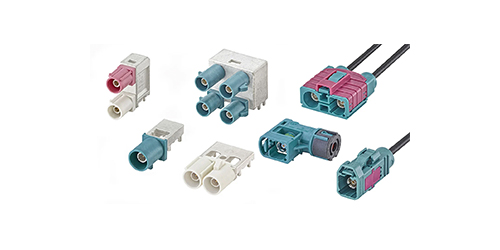
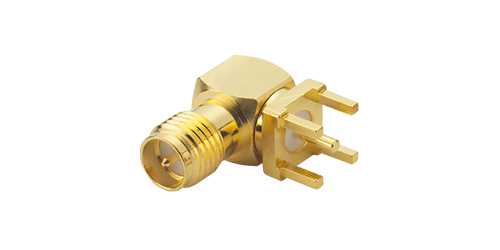
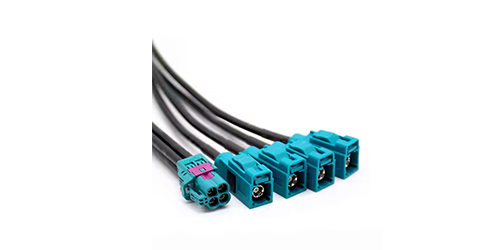
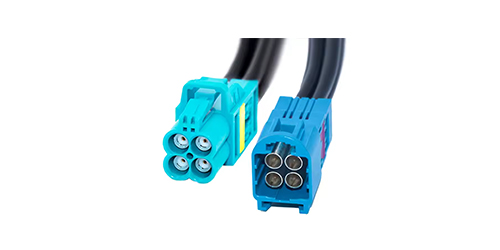
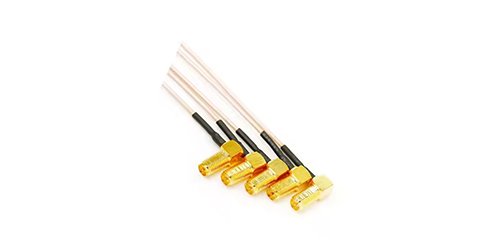
Cable Routing and Connectors: Cable selection is critical. Low-loss coaxial cables such as TGC-200 or RG174/U with 100% shielding are recommended to minimize signal attenuation between the antenna and the telematics unit. FAKRA connectors, which are color-coded and keyed to prevent mismating, have become the automotive industry standard for RF connections. SMA connectors remain common in aftermarket and industrial applications.
Sealing and Weatherproofing: Any roof penetration must be properly sealed to prevent water ingress. High-quality combo antennas include integrated gaskets and threaded mounting studs that create a watertight seal when properly tightened. For adhesive-mounted designs, surface preparation—cleaning and degreasing—is essential for long-term bond integrity.
Ground Plane Considerations: While many modern combo antennas are designed to be ground-plane independent, performance can still be optimized by mounting on a metallic surface of at least 300 mm × 300 mm. This is particularly important for GNSS accuracy, as an inadequate ground plane can distort the antenna's radiation pattern and degrade axial ratio.
Applications Across Industries
The versatility of GNSS 4G LTE combo antennas has driven adoption across a remarkably diverse range of applications:
Fleet Management and Telematics: Fleet operators rely on combo antennas to provide continuous vehicle location tracking and real-time data transmission. A single combo antenna supports both the GPS positioning that enables route optimization and the LTE connectivity that delivers vehicle diagnostics, driver behavior data, and fuel consumption metrics to cloud platforms.
Public Safety and Emergency Services: Police, fire, and ambulance fleets require robust connectivity for dispatch, GPS navigation, and HD video streaming from vehicle-mounted cameras. Combo antennas with high-gain GNSS LNAs ensure reliable positioning even in dense urban environments where multipath interference is severe.
Construction and Mining Machinery: Heavy equipment operating in remote locations depends on combo antennas for both machine positioning and telemetry data transmission. Ruggedized designs with IP67 or IP6K9K ratings are essential for surviving the dust, vibration, and temperature extremes encountered on job sites.
Autonomous and Connected Vehicles: V2X communication, high-definition mapping, and over-the-air software updates all require simultaneous GNSS and LTE connectivity. Advanced combo antennas that also integrate V2X elements at 5.9 GHz are increasingly specified for autonomous driving platforms.
IoT and Smart City Infrastructure: Beyond vehicles, GNSS LTE combo antennas are used in asset tracking devices, smart city infrastructure, and utility monitoring systems where both location awareness and cellular backhaul are required.
Market Trends and Growth Outlook
The global market for automotive integrated antenna systems is experiencing robust growth, driven by the proliferation of connected vehicle features, increasing adoption of electric vehicles, and the rollout of 5G networks.
According to market research, the global automotive integrated antenna system market was valued at approximately USD 3.24 billion in 2025 and is projected to grow to USD 3.58 billion in 2026, reaching USD 6.83 billion by 2032, representing a compound annual growth rate (CAGR) of 11.21%. The Chinese composite shark-fin antenna market alone is expected to reach USD 1,088 million by 2032, growing at a CAGR of 6.9% during the forecast period 2026–2032.
Several factors are accelerating this growth:
Rising telematics penetration: The demand for three-in-one combo antennas (GNSS + 4G/5G + V2X) for smart cockpit and T-Box applications is growing at an annual rate of 26.5%.
Autonomous driving advancement: L3 and higher autonomous driving levels require multi-band antenna systems with precise positioning and low-latency communication capabilities.
5G NR deployment: As 5G networks expand, combo antennas are evolving to cover new frequency bands such as n78 (3.3–3.8 GHz) and n79 (4.4–5.0 GHz) while maintaining backward compatibility with 4G LTE.
Electric vehicle platforms: EV architectures introduce new electromagnetic compatibility challenges, particularly from high-power motor drive systems, driving demand for antennas with superior filtering and isolation characteristics.
Regulatory Compliance: Navigating Global Requirements
Compliance with regional regulations is non-negotiable for any antenna deployed in automotive applications. Failure to meet these standards can result in vehicle recalls, market access restrictions, and significant financial penalties.
Europe (ECE R10): The UNECE R10 regulation governs electromagnetic compatibility for vehicles sold in European markets. Combo antennas must be tested for both emissions and immunity across the full frequency range of operation. E-mark certification is mandatory for OEM installations. GNSS frequency allocations in Europe include 1559–1610 MHz (L1) and 1164–1300 MHz (L5).
United States (FCC): The Federal Communications Commission regulates RF devices under Title 47 CFR Part 15 and Part 90. Automotive antennas must comply with spurious emission limits and, for certain applications, specific absorption rate (SAR) requirements. GPS L1 (1575.42 MHz) and L2C (1227.6 MHz) bands are standardized, along with CBRS (3.55–3.7 GHz) and C-V2X (5.895–5.925 GHz) allocations.
China (MIIT): The Ministry of Industry and Information Technology mandates support for the BeiDou navigation system with B1 (1561 MHz) and B2 (1207 MHz) band coverage. 5G frequency allocations include n41 (2.5–2.7 GHz) and n79 (4.4–5.0 GHz). Antennas certified for the Chinese market must demonstrate compliance with these domestic standards in addition to international requirements.
Environmental and Durability Standards: Beyond RF compliance, automotive antennas must survive rigorous environmental testing. Common validation protocols include ISO 16750-3 for vibration (50 Hz–2,000 Hz sweep at 30 G), ASTM B117 for salt spray corrosion resistance (96 hours at 5% NaCl), and ISO 16474 for solar simulation (1,200 hours at 1,120 W/m²).
The ROI of Choosing the Right Combo Antenna
The true cost of a vehicle antenna extends far beyond its unit price. For fleet operators and OEM procurement teams, the total cost of ownership encompasses installation labor, maintenance, downtime, and system reliability.
Installation Savings: A single combo antenna replaces two or more discrete antennas, reducing installation time by 40–60% and eliminating multiple roof penetrations. Taoglas has noted that for upfitters, this translates into lower labor costs and reduced antenna hardware expenses, plus the elimination of additional work such as sealing roof holes before vehicle resale.
Reliability and Downtime Reduction: Research indicates that 62% of telematics system failures can be traced to antenna degradation or installation issues. A properly specified and installed combo antenna with IP67 or IP6K9K protection significantly reduces the likelihood of water ingress, corrosion, or cable damage—the three most common antenna failure modes in field operations.
Future-Proofing: Selecting a combo antenna that supports 5G NR frequencies alongside 4G LTE ensures that the antenna investment remains viable as cellular networks evolve. Fleet operators that deploy 5G-ready antennas today avoid the cost and disruption of retrofitting antennas when 5G coverage becomes ubiquitous.
Performance ROI: The difference between a low-cost antenna and a premium combo antenna often comes down to GNSS accuracy. A 28 dB LNA with a 1.5 dB noise figure can maintain positioning accuracy in urban canyons and under tree canopy where lesser antennas fail—directly impacting the reliability of fleet tracking, route optimization, and ETA predictions.
Emerging Technologies: What's Next for Vehicle Combo Antennas
The trajectory of combo antenna development is clear: more bands, higher integration, and smarter functionality. Several emerging trends are shaping the next generation of products:
5G mmWave Integration: While current combo antennas focus on sub-6 GHz frequencies, future designs will incorporate millimeter-wave (24–40 GHz) elements for high-bandwidth V2X and sensor data backhaul. This introduces significant challenges in antenna miniaturization and thermal management.
V2X and C-V2X Coexistence: As vehicle-to-everything communication moves from pilot programs to production deployment, combo antennas will need to support both DSRC (5.9 GHz ITS-G5) and C-V2X (5.895–5.925 GHz) standards, potentially within the same antenna housing.
Software-Defined Antennas: Reconfigurable antenna elements that can be tuned electronically to optimize performance across different frequency bands and environmental conditions represent the next frontier in automotive antenna design.
AI-Enhanced Positioning: Combining GNSS data with vehicle sensor fusion (IMU, wheel speed, camera) and AI algorithms is enabling positioning accuracy that exceeds what GNSS alone can achieve. The antenna becomes one component in a larger intelligent positioning ecosystem.
Making the Right Choice for Your Vehicle Connectivity Needs
The vehicle GNSS 4G LTE combo antenna is far more than a passive component—it is the critical link between your vehicle and the digital infrastructure that enables navigation, communication, telematics, and autonomous driving. Choosing the right combo antenna requires a careful balance of technical performance, regulatory compliance, environmental durability, and total cost of ownership.
For fleet managers, telematic integrators, and automotive OEMs, the key takeaway is clear: investing in a high-quality, well-specified combo antenna today will pay dividends in reduced installation costs, improved system reliability, and future-ready connectivity that scales with evolving network standards.
When evaluating suppliers, prioritize those with IATF 16949 certification, comprehensive environmental testing capabilities, and a proven track record in automotive-grade antenna manufacturing. The antenna may be one of the smallest components on the vehicle, but its impact on connectivity performance—and ultimately on operational success—is outsized.
Lucy Yang | lucy.y@toxutech.com
Dotty Zhao | sales04@toxutech.com
Global Business Director / Sales Team / Global Operations


 En
 Cn
 Korean
 Home >
