

-
Products -PCBA Manufacturing RF Connectors RF Cable Assemblys Embedded Antennas External Antennas GNSS Positioning Solutions
RF Connectors

RF Cable Assemblys
Embedded Antennas
External Antennas
GNSS Positioning Solutions










 Language


Language


Time:2026-10-17 Views:0
Why the Mini GNSS WiFi Antenna Is the Backbone of Modern IoT
The Internet of Things (IoT) has fundamentally reshaped how industries track assets, monitor environments, and deliver location-based services. At the heart of nearly every connected IoT device lies a component that is often overlooked yet absolutely critical to performance: the antenna. Specifically, the mini GNSS WiFi antenna has emerged as the go-to solution for IoT devices that demand both precise positioning and reliable wireless connectivity within an extremely compact form factor.
Whether you are designing an asset tracker, a smart agriculture sensor, a wearable health monitor, or a fleet telematics unit, the antenna you choose will directly determine how well your device performs in the real world. A poorly selected or improperly integrated antenna can degrade GPS accuracy, reduce WiFi throughput, and ultimately undermine the entire value proposition of your IoT product.
This comprehensive guide explores everything you need to know about mini GNSS WiFi antennas for IoT applications — from technical specifications and selection criteria to design challenges, market trends, and real-world use cases. By the end, you will have a clear roadmap for choosing and integrating the right antenna solution for your next IoT project.
What Is a Mini GNSS WiFi Antenna?
A mini GNSS WiFi antenna is a compact, multi-band antenna that supports both Global Navigation Satellite System (GNSS) signals — such as GPS, GLONASS, Galileo, and BeiDou — and WiFi connectivity, typically operating in the 2.4 GHz and 5 GHz bands. These antennas are engineered to deliver dual-functionality within a single, space-efficient package, making them ideal for IoT devices where board real estate is at a premium.
The term "mini" refers to the antenna's physical dimensions, which can range from as small as 3.2 × 1.6 × 0.5 mm for surface-mount chip antennas to flexible PCB antennas measuring approximately 130 × 20 × 0.24 mm. Despite their diminutive size, modern mini GNSS WiFi antennas leverage advanced materials and design techniques — including ceramic dielectrics, LTCC (Low-Temperature Co-Fired Ceramic) substrates, and virtual antenna technology — to achieve performance levels that rival much larger traditional antennas.
The Dual-Band Advantage
The integration of GNSS and WiFi into a single antenna delivers several compelling advantages for IoT designers:
Space savings: One antenna instead of two frees up critical PCB area for sensors, processors, and batteries.
Reduced bill of materials (BOM): Fewer components mean lower costs and simpler assembly.
Simplified integration: A single antenna simplifies RF routing and matching network design.
Faster time-to-market: Pre-tuned combo antennas reduce design iteration cycles.
As Quectel notes, by combining multiple technologies into a single product, these antennas help reduce design complexity, meet diverse regional requirements, and ensure durability for long-term use.
Technical Specifications: What to Look For
When evaluating mini GNSS WiFi antennas for your IoT application, understanding the key technical parameters is essential. Below is a detailed breakdown of the specifications that matter most.
Frequency Bands
A typical mini GNSS WiFi antenna covers the following frequency ranges:
| Function | Frequency Range |
|---|---|
| GPS L1 | 1575.42 MHz |
| Galileo E1 | 1575.42 MHz |
| GLONASS L1 | 1602 MHz |
| BeiDou B1I | 1561.098 MHz |
| WiFi 2.4 GHz | 2400–2483.5 MHz |
| WiFi 5 GHz | 5150–5850 MHz |
| WiFi 6E/7 | Up to 7125 MHz |
Some advanced models also cover L-band frequencies (1525–1559 MHz) for enhanced GNSS performance and correction services. The Taoglas GWLA.01, for example, is a dual-band GPS L1/Galileo and Bluetooth/WiFi embedded antenna that operates in the 1.5/2.4 GHz bands, delivering a gain of more than 1.43 dBi with an efficiency of over 58.94%.
Gain and Efficiency
Gain measures how much power an antenna transmits or receives in a given direction, typically expressed in dBi (decibels relative to an isotropic radiator). For mini GNSS WiFi antennas, gains typically range from approximately -1.1 dBi to 4.1 dBi, depending on the specific band and antenna design.
Efficiency, expressed as a percentage, represents the ratio of radiated power to input power. Mini antennas generally achieve efficiencies between 40% and 67%, with WiFi bands typically outperforming GNSS bands due to the narrower bandwidth requirements of satellite positioning.
Polarization
GNSS satellites transmit signals using right-hand circular polarization (RHCP) . This is a critical consideration because mismatched polarization between the antenna and the satellite signal can result in up to 3 dB of signal loss — a significant penalty given that GNSS signals are already relatively weak.
Most mini GNSS WiFi antennas use linear polarization for the WiFi element and either linear or circular polarization for the GNSS element. For applications requiring high GNSS accuracy, multi-feed antennas with hybrid couplers that convert linear to circular polarization are recommended, as they provide the necessary RHCP gain to overcome mismatch attenuation.
Voltage Standing Wave Ratio (VSWR)
VSWR indicates how well the antenna is impedance-matched to the transmission line. A VSWR below 2 is generally acceptable for IoT products, while values approaching 1 indicate near-perfect matching. Mini GNSS WiFi antennas typically specify VSWR values of 2.5:1 or 3.0:1 across their operating bands.
Impedance
The standard impedance for IoT antennas is 50 Ohms. Ensuring that the antenna, transmission line, and receiver all share this impedance is essential for maximum power transfer and minimal signal reflection.
Operating Temperature
IoT devices are deployed in environments ranging from arctic cold to desert heat. Mini GNSS WiFi antennas typically operate across a temperature range of -40°C to +85°C, with some models extending to +125°C for automotive and industrial applications.
Physical Dimensions and Mounting
Mini GNSS WiFi antennas are available in several form factors:
Surface-mount chip antennas: As small as 3.2 × 1.6 × 0.5 mm, these are ideal for ultra-compact wearables and sensors.
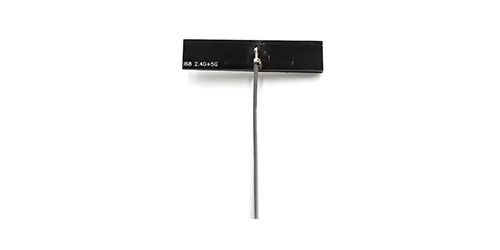
Flexible PCB antennas: Typically measuring around 130 × 20 × 0.24 mm, these offer ground-plane independence and easy integration via adhesive mounting.
Ceramic loop antennas: Combining small size with robust performance, these are suited for navigation and tracking devices.
How to Choose the Right Mini GNSS WiFi Antenna for Your IoT Device
Selecting the optimal antenna requires a systematic evaluation of your device's requirements, operating environment, and performance targets. Here is a step-by-step framework.
Step 1: Define Your Performance Requirements
Start by determining the level of GNSS accuracy your application demands. For basic asset tracking, a standard single-feed GNSS antenna may suffice. For applications requiring sub-meter accuracy — such as precision agriculture or autonomous vehicles — a multi-feed antenna with dual-band L1/L5 support is necessary. Research indicates that GPS typically provides accuracy in the range of 3.5–7.8 meters, while GLONASS achieves 5–10 meters under standard conditions. Dual-band GNSS antennas that also receive L5 signals can significantly improve accuracy by mitigating ionospheric delays.
On the WiFi side, consider whether your device needs to support the latest standards. Wi-Fi 6E and Wi-Fi 7 introduce the 6 GHz band, which requires antennas capable of operating up to 7.125 GHz. If your product roadmap includes future WiFi upgrades, choosing an antenna with wideband coverage is a wise investment.
Step 2: Assess Your Form Factor Constraints
The physical size of your IoT device will heavily influence your antenna choice. For wearable devices and pet trackers, chip antennas with dimensions measured in millimeters are often the only viable option. Taoglas notes that chip antennas are an ideal fit for fitness wearables, pet collars, asset trackers, and IoT sensors, and they are more cost-effective for high-volume production.
For devices with slightly more space — such as smart meters, industrial sensors, or connected healthcare devices — flexible PCB antennas offer a compelling balance of performance and size.
Step 3: Evaluate Your Ground Plane
One of the most overlooked factors in antenna selection is the ground plane. Small and irregularly shaped PCBs — common in IoT devices like asset trackers and wearables — can disrupt current flow and negatively impact key parameters like axial ratio, leading to unreliable signal reception.
Chip antennas rely heavily on the PCB's ground plane to function as a resonant structure. A ground plane that is too small will severely degrade efficiency and bandwidth. Always design for the ground plane size and shape specified in the antenna's integration guide. For example, Taoglas recommends placing the WLA.04 antenna mid-point on the long side of the PCB with a minimum ground plane of 90 × 50 mm.
Step 4: Consider the Operating Environment
IoT devices are deployed in diverse and often harsh environments. Factors such as temperature extremes, humidity, vibration, and exposure to metal surfaces can all affect antenna performance. For outdoor applications, look for antennas with IP67 or higher ratings. For devices that will be mounted near metal surfaces, consider antennas with ground-plane independence, such as flexible PCB designs.
Step 5: Plan for Keep-Out Areas
Placing the antenna too close to other components, metal shields, or batteries can detune it and block signals. This lack of a proper "keep-out" area is a frequent cause of antenna performance failure. Taoglas recommends keeping the antenna a minimum of 20 mm from the battery, and designers should also account for proximity to screws, cables, and copper traces.
Step 6: Balance Cost and Performance
Mini GNSS WiFi antennas are available at a wide range of price points. Chip antennas are generally the most cost-effective option for high-volume production, while flexible PCB and multi-feed patch antennas command higher prices but deliver superior performance. The choice comes down to the specific requirements of your application and your target price point.
Design Challenges and Solutions for Mini GNSS WiFi Antenna Integration
Integrating a mini GNSS WiFi antenna into an IoT device presents several unique challenges. Understanding these pitfalls — and their solutions — can save months of redesign and testing.
Challenge 1: Insufficient Ground Plane
The Problem: Small and irregularly shaped PCBs disrupt current flow and degrade antenna performance, particularly for chip and patch antennas.
The Solution: Always follow the antenna manufacturer's integration guide for ground plane dimensions. If your PCB is too small, consider using a flexible PCB antenna that is less dependent on the ground plane, or design a custom antenna optimized for your specific form factor.
Challenge 2: Metal Proximity and Keep-Out Violations
The Problem: Nearby metal components, batteries, and shields detune the antenna and block signals.
The Solution: Maintain adequate keep-out areas as specified by the manufacturer. If space is constrained, choose the smallest antenna that meets your performance requirements. Taoglas' PCS.62.A, for instance, measures just 38 × 10.3 × 3 mm and is designed to increase design flexibility by taking up less board space.
Challenge 3: Enclosure Interference
The Problem: When a device enclosure is placed flush against the top of a patch antenna, it creates a dielectric gap that detunes the antenna, shifting its frequency and reducing gain.
The Solution: Follow the integration guide for the required air gap between the antenna radiator and the enclosure. In general, allow more than 2 mm of gap. In some cases, a custom antenna may be the only option when the form factor design is already locked down.
Challenge 4: Transmission Line Mismatch
The Problem: Poor impedance matching between the antenna and the transmission line increases return loss and reduces power transfer.
The Solution: Ensure that the transmission line impedance matches the antenna's 50-Ohm impedance. Use a VSWR meter or network analyzer to verify matching during prototyping. A VSWR below 2 is generally acceptable for IoT products.
Challenge 5: GNSS Signal Attenuation in Urban Environments
The Problem: Urban canyons and heavy foliage can severely attenuate satellite signals, degrading positioning accuracy.
The Solution: Consider a multi-feed GNSS antenna with a hybrid coupler that converts linear polarization to circular polarization. This significantly improves RHCP gain and rejects unwanted multipath signals that undermine accuracy.

Key Applications of Mini GNSS WiFi Antennas in IoT
The versatility of mini GNSS WiFi antennas makes them suitable for a broad spectrum of IoT applications. Below are some of the most prominent use cases.
Asset Tracking and Logistics
Asset tracking is perhaps the most widespread application for mini GNSS WiFi antennas. These antennas enable real-time location tracking of goods, vehicles, and equipment across global supply chains. Combined with WiFi connectivity, they allow devices to report position data through local networks or cloud gateways.
Typical applications include asset location, asset recovery, traceability, supply chain management, logistics, and cold chain monitoring. The Taoglas FXP303, for example, is specifically designed for asset tracking, telematics, e-mobility, smart agriculture, and connected healthcare devices.
Smart Agriculture
Precision agriculture relies on accurate positioning to guide autonomous tractors, monitor crop health, and optimize irrigation. Mini GNSS WiFi antennas enable these applications by providing both the positioning accuracy and the wireless connectivity needed to transmit sensor data from the field to the farm management system.
Wearables and Connected Healthcare
From fitness trackers to medical monitoring devices, wearables demand antennas that are small, lightweight, and energy-efficient. The YIC51513PGMGGB from YIC is a compact, low-power GNSS antenna module optimized for wearable devices and IoT tracking applications, measuring just 15.2 × 13 mm. This module integrates a GNSS engine board and antenna into a single package, simplifying design and reducing space requirements.
Industrial IoT and Smart Cities
Industrial IoT deployments — including remote monitoring, predictive maintenance, and smart city infrastructure — benefit from the dual functionality of mini GNSS WiFi antennas. The Mobile Mark SMHG-W5, which supports 4× WiFi 6E/7 and 1× GNSS, is ideal for medical IoT, industrial IoT, WiFi hotspots, remote monitoring, and smart cities.
Fleet Management and Telematics
Fleet management systems require reliable GNSS positioning for route optimization, driver behavior monitoring, and compliance reporting. Combined with WiFi connectivity for data offloading at depots, mini GNSS WiFi antennas provide a complete connectivity solution for telematics units.
E-Mobility and Micromobility
Electric scooters, bikes, and other micromobility vehicles increasingly rely on IoT connectivity for location tracking, fleet management, and user authentication. Mini GNSS WiFi antennas enable these functions while meeting the strict size and weight constraints of e-mobility designs.
Market Trends: The Growing Demand for Mini GNSS WiFi Antennas
The market for IoT antennas is experiencing robust growth, driven by the proliferation of connected devices across industries. According to market research, the global chip antenna market was valued at USD 2.10 billion in 2025 and is estimated to grow from USD 2.49 billion in 2026 to reach USD 5.88 billion by 2031, at a compound annual growth rate (CAGR) of 18.72% during the forecast period.
The broader IoT antenna market is projected to grow from USD 6,936 million in 2025 to USD 19,134 million by 2032, at a CAGR of 15.6%. Several key trends are shaping this growth.
Trend 1: Convergence of GNSS and WiFi in Single Packages
Device designers are increasingly demanding combo antennas that integrate multiple functions — GNSS, WiFi, cellular, and even Bluetooth — into a single compact package. This trend is driven by the need to reduce size, cost, and complexity while maintaining performance. As noted by Quectel, these robust, versatile combo antennas offer compelling 4G, WiFi, and GNSS capabilities all in a durable enclosure.
Trend 2: Adoption of Wi-Fi 6E and Wi-Fi 7
The introduction of Wi-Fi 6E and Wi-Fi 7 extends WiFi operation into the 6 GHz band, requiring antennas that can support frequencies up to 7.125 GHz. Antenna manufacturers are responding with wideband designs that cover the full range from 600 MHz to 8000 MHz, ensuring compatibility with current and future wireless standards.
Trend 3: Integration of GNSS with LPWAN Technologies
Low-Power Wide-Area Network (LPWAN) technologies such as NB-IoT and LoRa are increasingly being combined with GNSS for asset tracking and remote monitoring. Mini GNSS WiFi antennas that also support LPWAN frequencies are enabling new classes of ultra-low-power tracking devices with extended battery life.
Trend 4: Growth of Virtual Antenna Technology
Virtual antenna technology, pioneered by companies like Ignion, uses tiny booster antennas that can be tuned to operate across multiple frequency bands. The DUO mXTEND (NN03-320), for example, measures just 7.0 × 3.0 × 2.0 mm and supports GNSS (1561–1606 MHz) and Bluetooth (2.4 GHz) connectivity simultaneously, without requiring any additional clearance beyond its footprint. This technology is particularly valuable for wearables and ultra-compact IoT devices.
Trend 5: Emphasis on Energy Efficiency
As IoT devices increasingly rely on battery power, antenna efficiency has become a critical design consideration. Low-power GNSS antenna modules, such as the YIC51513PGMGGB, are optimized for battery-powered tracking applications, delivering multi-constellation GNSS performance within a 15.2 × 13 mm package.
Technical Authority
Demonstrating technical expertise builds trust with both search engines and potential customers. Include specific technical specifications, comparisons, and real-world application examples. Cite authoritative sources such as antenna manufacturers, industry reports, and standards organizations.
Mobile Optimization
Given that a significant portion of B2B research happens on mobile devices, ensure that your content is fully responsive and loads quickly. Optimize images and use descriptive alt text that includes relevant keywords.
Internal and External Linking
Link to related product pages, application notes, and technical resources within your site. External links to authoritative sources — such as manufacturer datasheets and industry reports — can also boost SEO credibility.
Frequently Asked Questions (FAQ)
What is the difference between a GNSS antenna and a WiFi antenna?
A GNSS antenna is designed to receive signals from satellite navigation systems (GPS, GLONASS, Galileo, BeiDou) operating in the 1.1–1.6 GHz range, while a WiFi antenna is designed for two-way communication in the 2.4 GHz, 5 GHz, and 6 GHz bands. A mini GNSS WiFi antenna combines both functions into a single compact package.
Can a mini GNSS WiFi antenna work without a ground plane?
Chip and patch antennas rely on the PCB ground plane to function properly. Without an adequate ground plane, efficiency and bandwidth will be severely degraded. Flexible PCB antennas, however, are less dependent on the ground plane and can often function with minimal ground plane requirements.
What is the typical accuracy of GNSS positioning in IoT devices?
GPS typically provides accuracy in the range of 3.5–7.8 meters, while GLONASS achieves 5–10 meters under standard conditions. Dual-band GNSS antennas that receive L1 and L5 signals can significantly improve accuracy by mitigating ionospheric delays.
How do I know if my antenna is properly matched?
Use a VSWR meter or network analyzer to measure the voltage standing wave ratio. A VSWR below 2 is generally acceptable for IoT products, indicating good impedance matching between the transmission line and the antenna.
What is the best mounting option for a mini GNSS WiFi antenna in a wearable device?
For wearables, surface-mount chip antennas are often the best choice due to their extremely small size. Flexible PCB antennas with adhesive backing are also popular for their ease of integration and ground-plane independence.
Do mini GNSS WiFi antennas support Wi-Fi 6E and Wi-Fi 7?
Many modern mini GNSS WiFi antennas support the extended 6 GHz band required for Wi-Fi 6E and Wi-Fi 7. Look for antennas with frequency coverage up to 7.125 GHz if future-proofing is a priority.
Choosing the Right Mini GNSS WiFi Antenna for Your IoT Project
The mini GNSS WiFi antenna has become an indispensable component in the modern IoT designer's toolkit. By combining satellite positioning and wireless connectivity into a single compact package, these antennas enable a new generation of devices that are smaller, smarter, and more capable than ever before.
As the IoT market continues to expand — with the chip antenna segment alone projected to reach nearly USD 5.88 billion by 2031 — the demand for high-performance, space-efficient antenna solutions will only grow. Whether you are developing an asset tracker, a smart agriculture sensor, a wearable health monitor, or a fleet telematics unit, selecting the right mini GNSS WiFi antenna is one of the most important decisions you will make.
By following the selection criteria and design guidelines outlined in this guide, you can ensure that your IoT device delivers the reliable positioning and connectivity that your customers expect. Remember to prioritize ground plane design, maintain adequate keep-out areas, and choose an antenna that is matched to your specific performance requirements and operating environment.
For designers seeking expert guidance, working closely with antenna manufacturers and RF consultants during the early stages of product development can save significant time and cost. The investment in proper antenna selection and integration will pay dividends in the form of superior product performance, reduced redesign cycles, and faster time-to-market.
Lucy Yang | lucy.y@toxutech.com
Dotty Zhao | sales04@toxutech.com
Global Business Director / Sales Team / Global Operations


 En
 Cn
 Korean
 Home >
