

-
Products -PCBA Manufacturing RF Connectors RF Cable Assemblys Embedded Antennas External Antennas GNSS Positioning Solutions
RF Connectors

RF Cable Assemblys
Embedded Antennas
External Antennas
GNSS Positioning Solutions






 Language


Language


Time:2026-10-17 Views:0
Why One Antenna Is Replacing Two
For years, engineers designing connected devices faced an inconvenient truth: positioning and communication required separate antennas. A GPS antenna handled satellite tracking while a cellular antenna managed data transmission. Two antennas meant two mounting points, two cable runs, two potential failure sites, and twice the space consumed inside increasingly compact enclosures.
The compact GNSS 4G combo antenna eliminates this compromise. By integrating satellite navigation and cellular connectivity into a single housing, these antennas have become the default choice for fleet telematics, asset trackers, industrial gateways, and autonomous systems. The global IoT antenna market reflects this shift: with over 18.8 billion connected devices worldwide, multi-band combo antennas integrating multiple frequencies in one high-isolation housing are now mainstream in 2026.
This guide covers everything buyers and engineers need to evaluate, select, and deploy compact GNSS 4G combo antennas—from frequency band matching and active LNA specifications to real-world application performance and procurement criteria.
What Is a Compact GNSS 4G Combo Antenna?
A compact GNSS 4G combo antenna is a single-unit antenna assembly that combines a Global Navigation Satellite System (GNSS) antenna element with a 4G LTE cellular antenna element in one low-profile enclosure. The GNSS portion receives signals from GPS, GLONASS, Galileo, and BeiDou constellations for positioning, while the 4G element handles data transmission over LTE networks, with backward compatibility to 3G, 2G, LTE Cat-M, and NB-IoT.
Typical compact combo antennas measure between 46mm and 81mm in diameter and stand only 15–16mm tall. The Quectel YEMN205J1BM, for example, packs both functions into a Φ46mm × 16mm screw-mount housing that achieves up to 54% efficiency while maintaining IP67 protection. This level of integration represents a fundamental shift from traditional dual-antenna setups.
The key engineering challenge in combo antenna design is isolation—keeping the GNSS signal path clean from the high-power cellular transmission happening inches away. Modern designs achieve sufficient isolation through careful element spacing, shielding, and filtering to avoid self-interference that would degrade positioning accuracy or data throughput.
The Technical Case for Integration
Space Constraints in Modern IoT Hardware
Trackers, sensors, drones, and smart locks offer limited internal space for RF components. Traditional large antennas fail to meet modern design needs, driving demand for small, high-efficiency alternatives. Innovations in 2026—including high-dielectric ceramic substrates that cut antenna size by 40% without performance loss and stacked patch GNSS antennas measuring just 20×20×8mm—have made compact combo antennas viable for even the tightest enclosures.
For manufacturers, mini combo antennas simplify design, reduce costs, save space for additional sensors or batteries, and lower electromagnetic interference. They are particularly well-suited for mini vehicle trackers, portable sensors, FPV drones, and smart home devices.
Cost and Reliability Advantages
Separate single-band antennas raise Bill of Materials (BOM) costs, create messy wiring, and introduce cross-frequency interference. Multi-band combo antennas address all three problems simultaneously. One mounting hole replaces multiple holes, unified cables simplify quality control, and assembly time drops dramatically. A European fleet client reported 32% lower BOM costs, 70% less assembly time, and failure rates dropping from 18% to below 3% after switching to integrated combo antennas in 12-month tests.
Performance Isolation
A common concern among RF engineers is whether cellular transmission will desensitize the GNSS receiver. Well-designed combo antennas maintain high isolation between elements—typically through physical separation, ground plane design, and pre-filtering at the LNA stage. The GNSS LNA gain of 28 ±3 dB, standard in many compact combo units, ensures weak satellite signals are amplified before they reach the receiver's noise floor.

Key Specifications: What Actually Matters
Frequency Bands: Global Coverage Requirements
The 4G/LTE element of a compact combo antenna typically covers 698–960 MHz and 1710–2690 MHz, which encompasses all major LTE bands used across North America, Europe, and Asia-Pacific. This ultra-wide-band coverage also provides backward-compatibility with 3G and 2G networks as well as LTE Cat-M and NB-IoT for low-power wide-area applications.
The GNSS element covers 1559–1606 MHz, which includes the full L1 band for GPS (1575.42 MHz), GLONASS (1602 MHz), Galileo (1575.42 MHz), and BeiDou (1561.098 MHz). Some higher-end combo antennas also support L2/L5 bands for dual-frequency positioning, though this typically comes at a cost and size premium.
Multi-constellation support is not optional—it is essential. Single-constellation GPS antennas struggle in urban canyons and dense environments where the visible sky is limited. A multi-constellation GNSS antenna tracking GPS, GLONASS, Galileo, and BeiDou simultaneously can maintain a position fix with four visible satellites across multiple systems rather than requiring six or more from a single constellation.
VSWR: The Signal Loss Indicator
Voltage Standing Wave Ratio (VSWR) measures how efficiently the antenna transfers received power to the receiver. For combo antennas, VSWR ≤1.5 is the target for optimal performance, with values ≤2.0:1 considered acceptable for most applications. Higher VSWR indicates signal reflection, which translates directly to reduced range and degraded throughput.
For fleet tracking applications specifically, VSWR ≤1.5 is recommended to minimize signal attenuation across both cellular and GNSS bands. The GNSS element typically achieves tighter VSWR control—often ≤2.0:1 or better—because positioning accuracy depends on consistent signal reception across all elevation angles.
Active GNSS LNA: Gain and Noise Figure
An active GNSS antenna includes a Low Noise Amplifier (LNA) that boosts the weak satellite signal before it travels down the coaxial cable to the receiver. This is not a luxury—it is a necessity for any installation where cable loss would otherwise compromise the signal-to-noise ratio.
The two critical LNA specifications are gain and noise figure. Gain ranges from 17 dB to 40 dB depending on the product tier, with 28 ±3 dB being typical for compact combo antennas. The Quectel YEMN205J1BM provides 28 ±3 dB GNSS LNA gain, while higher-end active antennas can deliver 37 ±4 dB or even 40 ±4 dB for demanding applications.
Noise figure represents the additional noise the LNA introduces. Lower is always better. Standard combo antennas achieve ≤2.5 dB noise figure, while premium designs can reach ≤1.5 dB. The difference matters in urban canyons and remote areas where satellite signals are already marginal—a 1 dB improvement in noise figure effectively doubles the antenna's sensitivity for weak-signal acquisition.
Pre-filtering before the LNA stage is equally important. A pre-filter rejects out-of-band interference from nearby cellular transmissions before amplification, preventing the LNA from amplifying noise along with the desired GNSS signal.
Environmental Durability: IP67 as the Baseline
Over 60% of IoT equipment is deployed outdoors—on trucks, marine vessels, agricultural machinery, and smart meters. Ordinary IP65 antennas fail against heavy rain, salt spray, UV radiation, and extreme temperatures after one to two years, causing signal failure and high maintenance costs.
In 2026, IP67 has become the minimum standard for outdoor combo antennas. IP67 protects against dust ingress and temporary water immersion, covering standard outdoor use cases. For applications requiring deeper water protection or high-pressure washing, IP68 and IP69K ratings are available.
Beyond waterproofing, wide temperature range (-40°C to +85°C) ensures reliable operation from arctic winters to desert summers. UV-stabilized shells and anti-salt-spray bases extend service life in coastal and maritime deployments. Anti-vibration internal structures are essential for truck and construction machinery applications where constant vibration would otherwise damage internal connections.
Selection Guide: How to Choose the Right Compact Combo Antenna
Step 1: Match Regional Frequency Bands
GNSS coverage should include all four major constellations for reliable positioning across different geographic regions. For 4G LTE, verify that the antenna supports the specific bands used by carriers in your deployment region. European carriers rely heavily on 800 MHz, 1800 MHz, and 2600 MHz bands, while North American networks use 700 MHz, 1700/2100 MHz (AWS), and 1900 MHz. Asia-Pacific deployments often require 900 MHz and 1800 MHz coverage.
Step 2: Evaluate RF Performance Specifications
Prioritize VSWR ≤1.5 for minimal signal attenuation. Check isolation between GNSS and cellular elements—higher isolation prevents the cellular transmitter from desensitizing the GNSS receiver. Confirm that the active GNSS module includes a low-noise figure LNA with pre-filtering, ideally ≤2.5 dB noise figure. For cable runs exceeding three meters, higher LNA gain compensates for cable loss.
Step 3: Confirm Environmental Ratings
Set IP67 as the minimum waterproof standard for outdoor projects. For heavy-duty applications—construction machinery, agricultural equipment, maritime installations—consider IP68 or IP69K rated options. Verify the operating temperature range covers your deployment climate. Check that connectors are gold-plated and cables are shielded low-loss types for long-term reliability.
Step 4: Choose the Right Mounting Configuration
Compact combo antennas are available in several mounting styles:
Screw mount: The most common configuration for permanent installations on vehicles and equipment. Provides secure attachment and excellent ground plane coupling. The Quectel YEMN205J1BM and similar models use this approach.
Adhesive mount: No drilling required, ideal for light delivery vans and temporary deployments. 3M adhesive backing provides strong attachment on smooth surfaces.
Magnetic mount: Best for rental fleets and temporary installations where the antenna may need to be moved between vehicles.
Shark fin: Integrated design that simplifies wiring and reduces assembly labor on vehicle roofs. Popular for automotive telematics and fleet management.
Step 5: Verify Connector and Cable Compatibility
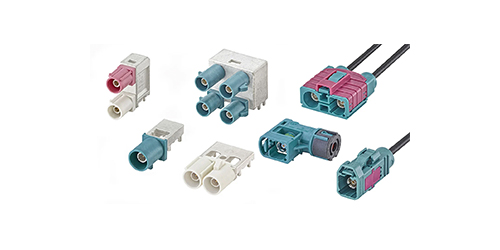
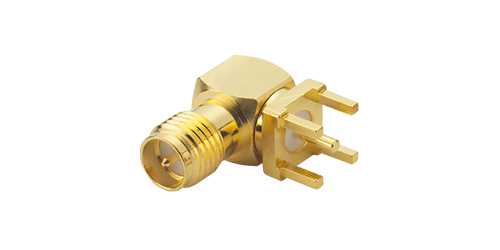
SMA male connectors remain the most common interface for GNSS and cellular antennas. For automotive applications, FAKRA connectors provide a standardized, keyed interface that prevents mismating. Some combo antennas use separate cables for GNSS and cellular—confirm that your device has matching ports. Cable length should be specified based on the distance from antenna to radio module, with low-loss cable types preferred for runs over two meters.
Applications: Where Compact GNSS 4G Combo Antennas Deliver Value
Fleet Telematics and Vehicle Tracking
Fleet management represents the largest application segment for compact GNSS 4G combo antennas. Commercial fleets require continuous position reporting and real-time data upload for routing, dispatching, and compliance monitoring. A combo antenna mounted on the vehicle roof provides both functions through a single installation point, reducing installation labor and eliminating the risk of one antenna failing while the other continues to operate—a scenario that creates confusing diagnostic symptoms.
Modern fleet telematics units typically combine GNSS positioning with LTE connectivity for data backhaul. The antenna must maintain reliable performance across diverse environments: urban canyons with multipath interference, rural highways with weak cellular coverage, and extreme temperatures. IP67 sealing and wide temperature ratings ensure the antenna survives years of daily operation.
Asset Tracking and Supply Chain Visibility
Asset trackers demand the smallest possible form factor with the longest possible battery life. A compact combo antenna measuring under 50mm in diameter fits inside portable tracker enclosures without consuming space needed for batteries or sensors. The integration of GNSS and cellular functions into one antenna reduces the number of RF chains, which directly translates to lower power consumption—critical for battery-operated trackers expected to operate for months or years without maintenance.
Public safety, HD video streaming, utilities, smart cities, and automotive vehicle tracking all represent typical applications for compact combo antennas, where the requirement is stable, high-speed data connection alongside continuous positioning.
Industrial IoT Gateways and Remote Monitoring
Industrial gateways deployed in remote locations—oil and gas fields, water treatment plants, agricultural operations—need reliable connectivity and positioning in harsh environments. Compact combo antennas with IP67 or higher ratings survive exposure to dust, rain, and temperature extremes while maintaining consistent RF performance.
Utility monitoring and smart city infrastructure represent growing application areas. Smart meters, traffic management systems, and environmental sensors increasingly incorporate combo antennas to enable both location awareness and cellular backhaul through a single antenna port.
Autonomous Systems and Robotics
Precision agriculture equipment, UAVs, and autonomous mobile robots require high-precision positioning combined with reliable command-and-control connectivity. While these applications often use higher-end RTK-capable GNSS antennas, the combo principle applies: integrating cellular and GNSS functions reduces weight, simplifies wiring, and improves reliability. The Harxon HX-ME407A exemplifies this approach, combining a multi-constellation GNSS antenna, RTK module, 4G antenna, 4G module, LoRa antenna, LoRa module, and MCU in a single Φ150mm × 27.25mm enclosure weighing under 160g.
Installation Best Practices
Ground Plane Requirements
Most compact combo antennas are designed to work with a ground plane, typically the metal surface of a vehicle roof or equipment enclosure. The ground plane serves as the counterpoise for the antenna, and its size affects radiation pattern and efficiency. For screw-mount antennas, the mounting surface itself becomes part of the ground plane. Ensure a minimum ground plane radius of 50mm around the antenna base for optimal performance.
Cable Routing and Strain Relief
Route cables away from noise sources—motors, inverters, and power cables. Maintain a minimum bend radius of 20mm to avoid damage to the coaxial cable's inner conductor. Provide strain relief at the antenna connection point to prevent vibration from fatiguing the connector joint over time.
Isolation from Interference Sources
Maintain physical separation between the combo antenna and high-power transmitters such as radios, radar, or other cellular modems. Even with built-in filtering, extremely close proximity to a high-power transmitter can overwhelm the GNSS LNA. A minimum separation of 30cm is recommended where practical.
Testing and Validation
After installation, verify GNSS signal acquisition time (Time to First Fix should be under 30 seconds cold start) and cellular signal strength (RSRP and RSRQ readings). Compare against the antenna's datasheet specifications to confirm the installation is performing as designed.
Market Trends Shaping Compact Combo Antenna Design
Three trends are converging in 2026 to redefine what buyers expect from compact combo antennas: ultra-miniaturization, multi-band integration, and high waterproof ruggedization.
Miniaturization continues to advance through new materials and design techniques. High-dielectric ceramic substrates and stacked patch configurations allow GNSS antennas to shrink without sacrificing performance. Flexible FPC antennas fit curved shells and narrow PCB gaps, opening combo antenna integration to form factors previously impossible.
Multi-band integration is expanding beyond GNSS+4G to include Wi-Fi, Bluetooth, and even LoRa in the same housing. The Quectel YEMD302L1A integrates 4G, Wi-Fi 7, and GNSS into a single IP67-rated enclosure, supporting applications that need positioning, wide-area cellular, and local wireless connectivity simultaneously.
Ruggedization standards are rising as outdoor IoT deployments grow. IP67 is now the minimum, with IP68 and IP69K becoming common requirements for equipment exposed to high-pressure washing or saltwater immersion.
Common Pitfalls to Avoid
Ignoring regional band requirements. A combo antenna optimized for European LTE bands may underperform in North America. Always verify band coverage against your deployment region's carrier frequencies.
Underspecifying LNA gain for long cable runs. A 28 dB LNA gain is adequate for 3-meter cable runs but insufficient for 5-meter installations. Calculate cable loss at your frequency of interest and select LNA gain accordingly.
Skipping VSWR verification after installation. A damaged cable or poor connector mating can raise VSWR significantly, degrading both GNSS and cellular performance. Measure VSWR after installation as part of commissioning.
Choosing based on price alone. The lowest-cost combo antenna may use inferior LNA components with higher noise figures, thinner cable with higher loss, or insufficient isolation between elements. These compromises manifest as positioning inaccuracy, dropped connections, and higher maintenance costs over the product lifetime.
The compact GNSS 4G combo antenna has moved from niche accessory to essential component for connected devices. By integrating positioning and communication into a single housing, these antennas reduce BOM costs, simplify assembly, and improve system reliability. For IoT engineers, the selection criteria are straightforward: match regional frequency bands, verify VSWR ≤1.5 and adequate LNA gain, confirm IP67 or better environmental protection, and choose the mounting style that fits your installation requirements.
As IoT deployments continue to scale—driven by fleet telematics, industrial monitoring, and autonomous systems—the combo antenna will remain the default choice for any device that needs to know where it is and communicate what it finds. The engineering is mature, the product ecosystem is broad, and the cost and reliability advantages are proven in real-world deployments.
For procurement teams evaluating options, prioritize products with documented RF performance data, verified environmental certifications, and compatibility with your existing radio modules. The right combo antenna is not the cheapest one—it is the one that keeps your device connected and positioned reliably for years of service.
Lucy Yang | lucy.y@toxutech.com
Dotty Zhao | sales04@toxutech.com
Global Business Director / Sales Team / Global Operations


 En
 Cn
 Korean
 Home >
