

-
Products -PCBA Manufacturing RF Connectors RF Cable Assemblys Embedded Antennas External Antennas GNSS Positioning Solutions
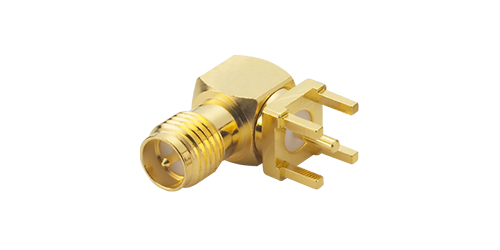
RF Connectors

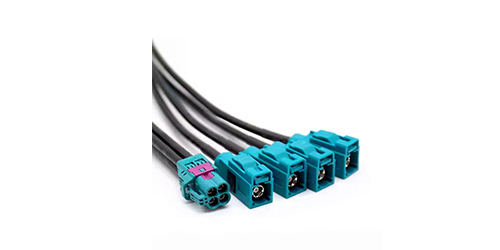
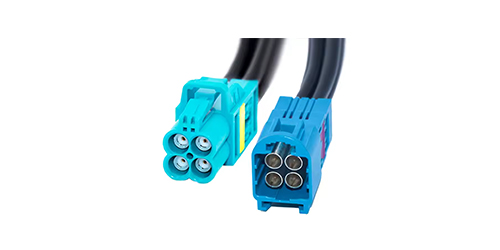
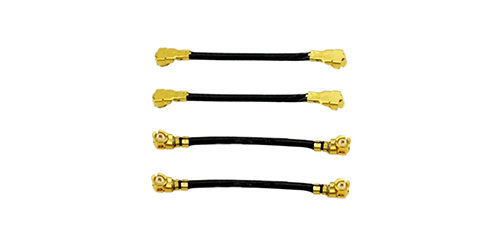
RF Cable Assemblys
Embedded Antennas
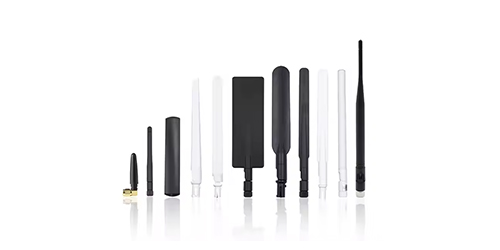
External Antennas
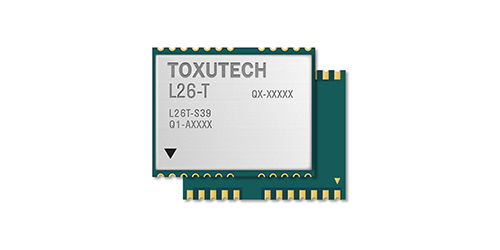
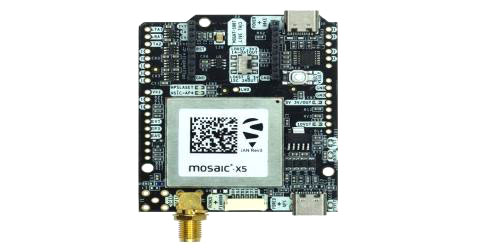
GNSS Positioning Solutions






 Language


Language



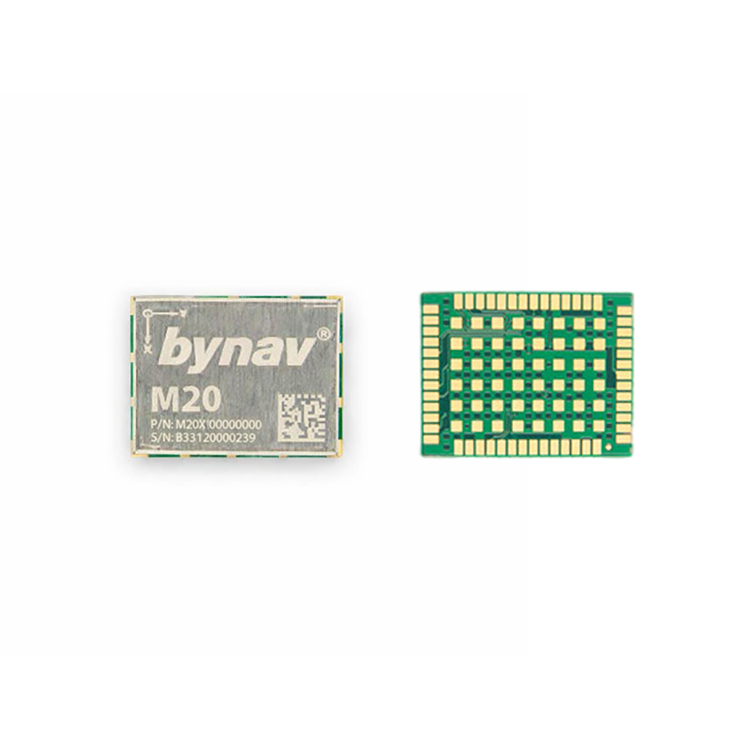
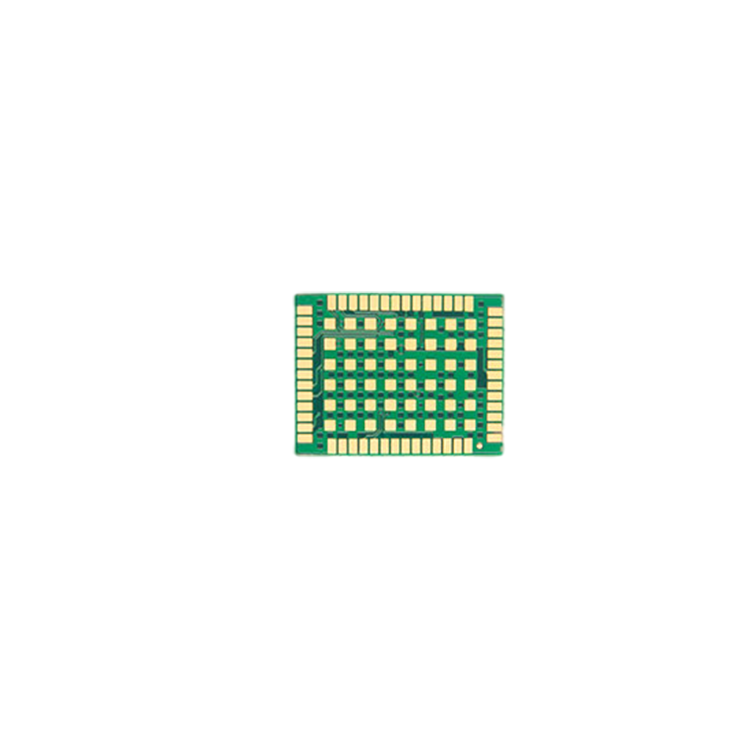
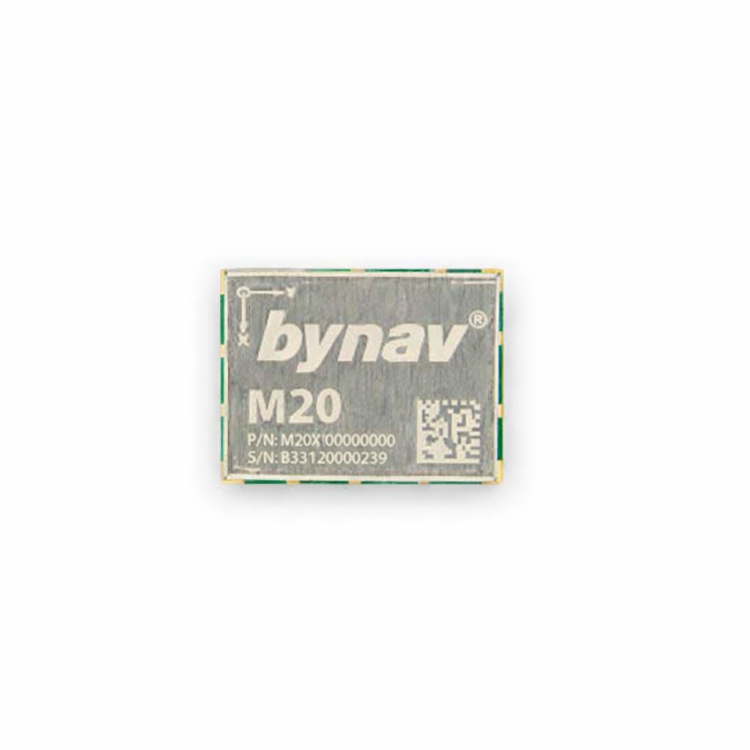
Model: TX-GNSS-M20-RTK
The TOXU TX-GNSS-M20-RTK is a high-precision OEM GNSS module based on the Bynav M20 platform. It supports full-constellation, multi-frequency signal tracking and centimeter-level RTK positioning for autonomous driving, UAVs, precision agriculture and industrial navigation systems.
● Bynav M20 Platform: Uses the 22 nm Bynav Alice GNSS SoC with integrated high-precision measurement and navigation engines.
● Full-Constellation GNSS: Supports BDS, GPS, GLONASS, Galileo and QZSS multi-frequency signals with 1,507 channels.
● Centimeter-Level RTK: Provides horizontal accuracy of 1.0 cm + 1 ppm and vertical accuracy of 1.5 cm + 1 ppm under suitable RTK conditions.
● Fast RTK Initialization: Supports a typical RTK initialization time of 5 seconds.
● Multiple OEM Interfaces: Supports configurable UART, CAN/CAN FD, SPI and RMII interfaces for embedded system integration.
● Compact OEM Module: Measures only 17 × 22 × 2.75 mm and weighs approximately 1.95 g for space-constrained hardware designs.
The TOXU TX-GNSS-M20-RTK is a compact high-precision OEM positioning module based on the Bynav M20 GNSS platform. It is designed for integration into customized receiver boards, autonomous navigation controllers, UAV systems, precision agriculture equipment and industrial positioning devices.
The M20 is built around the Bynav Alice automotive-oriented GNSS SoC manufactured using a 22 nm process. It integrates high-precision measurement, navigation and integrity-monitoring capabilities to provide reliable positioning in environments affected by satellite obstruction, multipath and radio-frequency interference.
With 1,507 hardware channels, the module supports full-constellation and multi-frequency reception from BDS, GPS, GLONASS, Galileo and QZSS. It provides single-point positioning, RTK positioning, GNSS observation data and precise timing and velocity outputs.
Under suitable satellite visibility, antenna, correction-data and operating conditions, the module provides horizontal RTK accuracy of 1.0 cm + 1 ppm and vertical RTK accuracy of 1.5 cm + 1 ppm.
The standard M20 supports RTK positioning and an operating temperature range up to +85°C. Automotive, ASIL B and L-Band configurations are separate ordering variants and must be confirmed when ordering.
The TX-GNSS-M20-RTK is an OEM integration module rather than a finished receiver or development board. A regulated power supply, RF antenna circuit, host processor interface, PCB and external protection circuitry are required for complete system operation.
Bynav Alice GNSS SoC
Uses Bynav's 22 nm Alice GNSS SoC with integrated measurement and navigation engines for high-precision positioning.
1,507 GNSS Channels
Provides 1,507 channels for simultaneous tracking of supported full-constellation and multi-frequency GNSS signals.
Full-Constellation Signal Tracking
Supports BDS, GPS, GLONASS, Galileo and QZSS satellite systems for improved positioning availability.
Multi-Frequency GNSS Reception
Tracks multiple signals across BDS B1/B2/B3, GPS L1/L2/L5, GLONASS G1/G2, Galileo E1/E5/E6 and QZSS L1/L2/L5/L6 frequency ranges.
Centimeter-Level RTK Positioning
Supports horizontal RTK accuracy of 1.0 cm + 1 ppm and vertical RTK accuracy of 1.5 cm + 1 ppm under suitable operating conditions.
Fast RTK Initialization
Provides a typical RTK initialization time of 5 seconds when suitable correction data and satellite conditions are available.
High-Precision GNSS Observations
Provides carrier-phase observation accuracy of 1 mm RMS or better and pseudorange observation accuracy of 0.1 m RMS or better.
Built-In Integrity Monitoring
The Bynav positioning engine includes integrity-monitoring functions to improve positioning robustness and fault tolerance in challenging environments.
Configurable UART Interfaces
Supports up to four configurable UART interfaces with baud rates from 9,600 to 921,600 bit/s.
CAN and CAN FD Support
Supports two configurable CAN/CAN FD interfaces with communication speeds from 500 kbit/s to 2 Mbit/s.
SPI and RMII Interfaces
Supports a configurable SPI slave interface with a maximum clock frequency of 10 MHz and one RMII interface with a maximum rate of 100 Mbit/s.
Compact LGA Package
The 17 × 22 × 2.75 mm module weighs approximately 1.95 g and is suitable for compact OEM receiver designs.
Low Power Consumption
Typical module power consumption is 495 mW at room temperature, excluding antenna power and external devices.
Optional Enhanced Functions
Special firmware and ordering variants can provide additional signal support, anti-jamming functions, higher output rates, L-Band services, automotive temperature capability and ASIL B functional-safety support.
| Attribute | Value |
| TOXU Model | TX-GNSS-M20-RTK |
| Product Type | Multi-Frequency RTK GNSS OEM Module |
| GNSS Platform | Bynav M20 |
| GNSS SoC | Bynav Alice, 22 nm process |
| Number of Channels | 1,507 |
| BDS-2 Signals | B1I, B2I and B3I |
| BDS-3 Signals | B1I, B2a and B3I |
| Optional BDS-3 Signals | B1C and B2b PPP with special firmware |
| GPS Signals | L1 C/A, L2 and L5 |
| Optional GPS Signal | L1C with special firmware |
| GLONASS Signals | G1 and G2 |
| Galileo Signals | E1, E5a and E5b |
| Optional Galileo Signal | E6 HAS with special firmware |
| QZSS Signals | L1 C/A, L1C, L2 and L5 |
| Optional QZSS Signal | L6 CLAS with special firmware |
| Optional NavIC Signal | L5 with special firmware |
| Optional SBAS Signal | L1 C/A with special firmware |
| Carrier-Phase Observation Accuracy | ≤1 mm RMS |
| Pseudorange Observation Accuracy | ≤0.1 m RMS |
| GNSS Observation Data Rate | 10 Hz |
| Position Result Output Rate | 10 Hz standard; up to 20 Hz with special firmware |
| Single-Point Horizontal Accuracy | 1.5 m RMS |
| Single-Point Vertical Accuracy | 2.5 m RMS |
| RTK Horizontal Accuracy | 1.0 cm + 1 ppm RMS |
| RTK Vertical Accuracy | 1.5 cm + 1 ppm RMS |
| Velocity Accuracy | 0.03 m/s RMS |
| Timing Accuracy | ≤20 ns RMS |
| Re-Acquisition Time | ≤1 second |
| Cold Start Time | 30 seconds |
| Hot Start Time | 5 seconds |
| Optional Hot Start Time | 2 seconds with applicable special firmware |
| RTK Initialization Time | 5 seconds typical |
| RTK Latency | 50 ms typical |
| Supported Protocols | RTCM 3.3, NMEA and BYNAV |
| RTCM Protocol | RTCM 3.3 input and output, binary |
| NMEA Protocol | NMEA 4.11, 4.10, 4.0, 2.3 and 2.1 input and output |
| BYNAV Protocol | ASCII and binary input and output |
| UART | Up to 4 configurable UART interfaces |
| UART Baud Rate | 9,600–921,600 bit/s |
| UART Hardware Flow Control | Not supported |
| CAN/CAN FD | Up to 2 configurable interfaces |
| CAN/CAN FD Data Rate | 500 kbit/s to 2 Mbit/s |
| SPI | Configurable SPI slave interface, up to 10 MHz |
| RMII | 1 configurable interface, up to 100 Mbit/s |
| Main Supply Voltage | 3.0–3.6 V DC, 3.3 V typical |
| Functional-Safety Supply Voltage | 3.0–3.6 V DC, 3.3 V typical |
| VCC_RF Output Current | Up to 100 mA |
| Recommended External RF Gain | 17–30 dB |
| Maximum RF Noise Figure | 4 dB |
| Typical Power Consumption | 495 mW |
| Standard Operating Temperature | −40°C to +85°C |
| Optional Maximum Operating Temperature | +105°C, depending on ordering variant |
| Storage Temperature | −40°C to +105°C |
| Module Dimensions | 17 × 22 × 2.75 mm typical |
| Module Weight | 1.95 g typical |
| Standard Ordering Variant | M20: Full-frequency RTK, up to +85°C |
| Automotive Ordering Variant | M20A: Full-frequency RTK, up to +105°C |
| Automotive Functional-Safety Variant | M20AB: Full-frequency RTK, up to +105°C, automotive, ASIL B |
| L-Band Functional-Safety Variant | M20L: Full-frequency RTK, L-Band, up to +105°C, automotive, ASIL B |
• Autonomous driving and intelligent vehicles
• UAV navigation and flight control systems
• Precision agriculture equipment
• Digital construction machinery
• Autonomous robots and unmanned vehicles
• High-precision industrial positioning
• Customized RTK receiver boards
• Network RTK and PPP-RTK terminals
• Automotive positioning systems using the applicable M20 variant
The TX-GNSS-M20-RTK is an LGA OEM module intended for surface mounting on a customized host PCB. It requires a regulated 3.3 V power supply, antenna input circuit, host communication interface and appropriate RF and ESD protection.
The main VCC_3V3 supply must be equal to or higher than the VCC_FuSa supply. VCC_3V3 must be powered on at the same time as or before VCC_FuSa and powered off at the same time as or after VCC_FuSa.
The module supports up to four UART interfaces, two CAN/CAN FD interfaces, one SPI interface and one RMII interface through software configuration and pin multiplexing. Not all multiplexed interfaces can be used simultaneously, so the final interface combination must be selected during hardware and firmware design.
The RF input should be connected to a suitable full-frequency GNSS antenna through a 50-ohm controlled-impedance transmission line. The recommended external antenna gain is 17–30 dB with a noise figure of 4 dB or less.
Centimeter-level RTK positioning requires compatible RTCM correction data from a base station, CORS network or NTRIP service. Actual accuracy and initialization performance depend on antenna quality, correction-data quality, satellite geometry, atmospheric conditions, multipath and RF interference.
Optional B1C, B2b, GPS L1C, Galileo E6 HAS, QZSS L6 CLAS, NavIC, SBAS, anti-jamming and higher update-rate functions require the corresponding firmware or ordering variant and must be confirmed before production.
The standard M20, M20A, M20AB and M20L variants have different temperature, automotive, functional-safety and L-Band capabilities. The exact ordering number must be selected according to the target application.
The M20 is a GNSS positioning module and does not include a specified IMU, gyroscope or accelerometer. It must not be described as a GNSS/INS module.
GNSS Antenna Matching
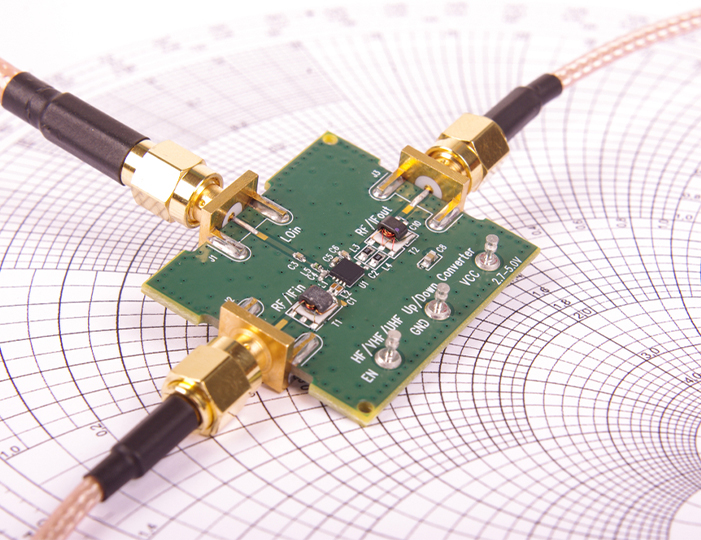
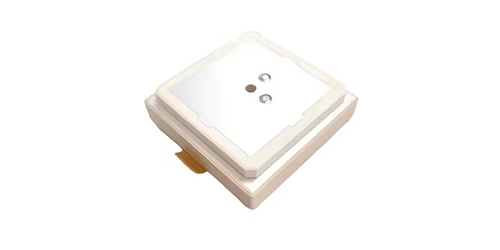
TOXU provides matched GNSS antennas including ceramic antennas, patch antennas and multi-frequency RTK antennas for different positioning requirements.
RF Cable Assembly
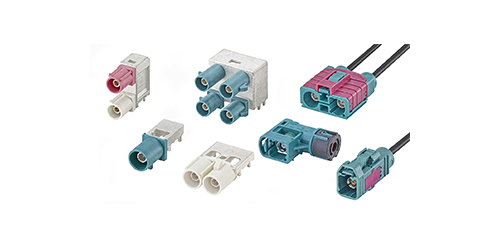
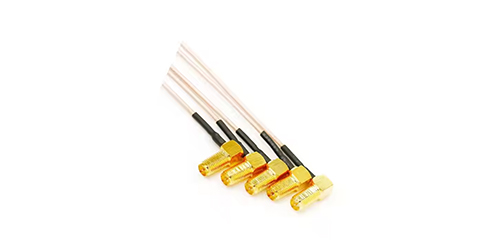
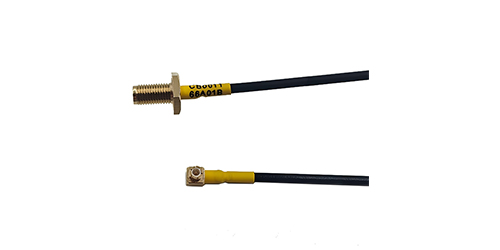
TOXU provides customized RF cable assemblies with SMA, MMCX, MCX, TNC, FAKRA and other connector options.
Connector Solution
TOXU supports RF connector selection and customized interconnection solutions.
GNSS Board Development
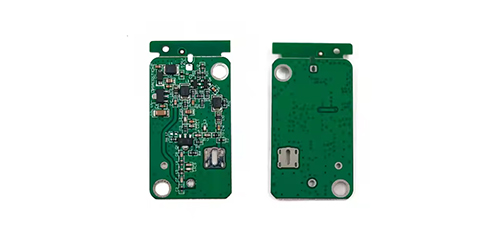
TOXU can integrate the Bynav M20 module into customized receiver boards according to customer interface, power-supply and mechanical requirements.
RTK Correction Integration
TOXU supports hardware integration for base stations, CORS receivers, NTRIP communication terminals and RTCM correction-data links.
Hardware Customization
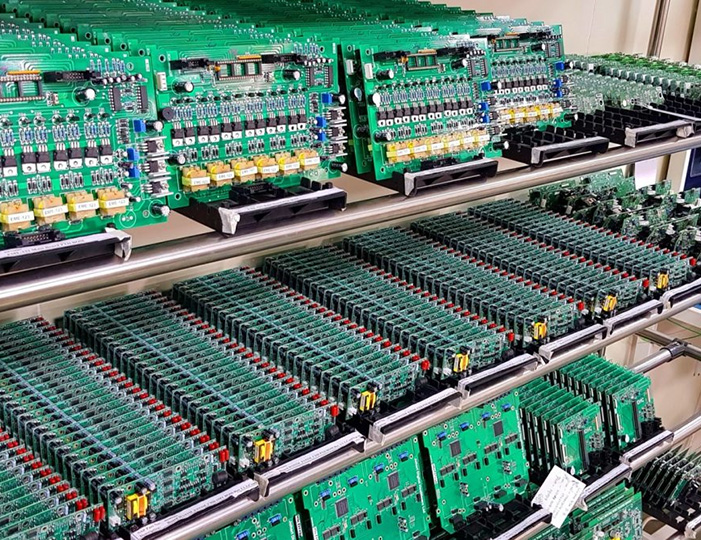
TOXU supports PCB design, prototype development, firmware integration and mass production for customized GNSS positioning products.
Official Bynav Platform Integration
TOXU provides system integration support around the Bynav M20 platform for professional multi-frequency RTK applications.
Complete OEM Hardware Support
TOXU supports module selection, schematic design, PCB layout, power-supply design, antenna matching and communication-interface integration.
Application-Specific Variant Selection
TOXU can help customers select the standard, automotive, ASIL B or L-Band M20 ordering variant according to project requirements.
Prototype and Mass Production
TOXU supports prototype receiver boards, engineering validation, customized assembly and volume production.
Q: What is the TX-GNSS-M20-RTK?
It is a high-precision OEM GNSS module based on the Bynav M20 platform for integration into customized RTK receiver boards and positioning systems.
Q: Is the Bynav M20 a module or a receiver board?
It is an LGA OEM module. It requires a customized PCB, regulated power supply, antenna circuit and host interface to operate as a complete receiver.
Q: Does the M20 support centimeter-level RTK positioning?
Yes. With suitable correction data and operating conditions, it supports horizontal RTK accuracy of 1.0 cm + 1 ppm and vertical accuracy of 1.5 cm + 1 ppm.
Q: What GNSS constellations does the M20 support?
It supports multi-frequency signals from BDS, GPS, GLONASS, Galileo and QZSS. Additional signals are available with applicable special firmware.
Q: Does the standard M20 support ASIL B?
The standard M20 ordering variant is a full-frequency RTK module rated up to +85°C. ASIL B applies to specific variants such as M20AB and M20L and must be confirmed when ordering.
Q: Does every M20 support L-Band positioning?
No. L-Band support is associated with the M20L ordering variant and applicable firmware. It should not be claimed for the standard M20 unless specifically confirmed.
Q: Does the M20 include anti-jamming functionality?
Anti-jamming functionality is identified as a special-firmware capability in the datasheet. The required firmware and performance must be confirmed before ordering.
Q: Is the M20 a GNSS/INS module?
No. The supplied specification does not identify an integrated IMU, gyroscope or accelerometer, so the product must be classified as a GNSS RTK module rather than an INS module.
Q: Can TOXU integrate the M20 into a customized board?
Yes. TOXU can design customized M20 receiver boards including power supplies, antenna circuits, UART, CAN, SPI, RMII and external connector interfaces.
Q: Can TOXU provide customized GNSS solutions?
Yes. TOXU provides complete GNSS hardware integration services including customized receiver boards, GNSS antennas, RF cable assemblies, connectors and PCB hardware development.
Q: Can TOXU provide antenna and cable solutions?
Yes. TOXU provides matched multi-frequency GNSS antennas, RF cables and connectors to complete the positioning system solution.
Q: Does TOXU support prototype and mass production?
Yes. TOXU supports schematic design, PCB development, prototype assembly, engineering validation and mass production for customized Bynav M20 positioning products.
Lucy Yang | lucy.y@toxutech.com
Dotty Zhao | sales04@toxutech.com
Global Business Director / Sales Team / Global Operations


 En
En Cn
Cn Korean
 Home >

