

-
Products -PCBA Manufacturing RF Connectors RF Cable Assemblys Embedded Antennas External Antennas GNSS Positioning Solutions
RF Connectors

RF Cable Assemblys
Embedded Antennas
External Antennas
GNSS Positioning Solutions




 Language


Language


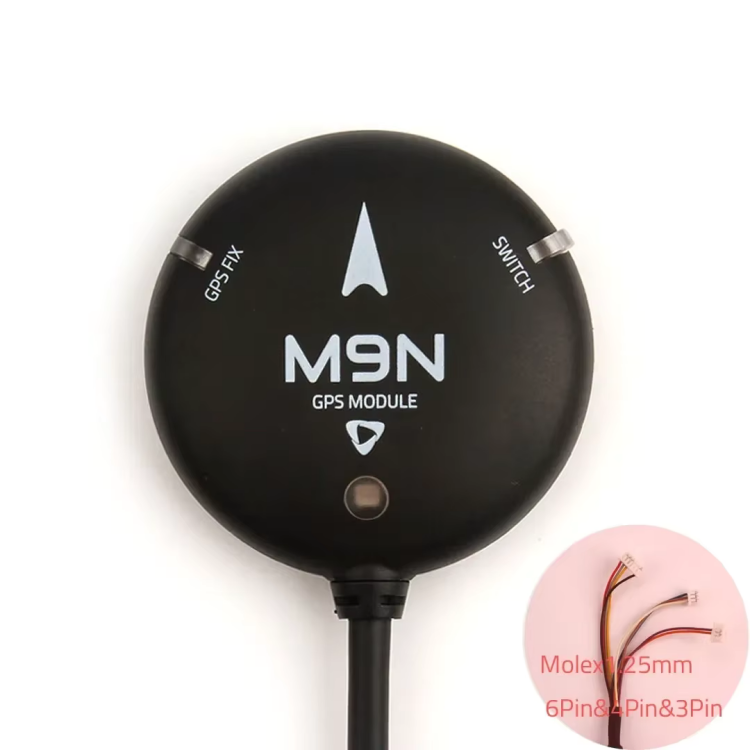
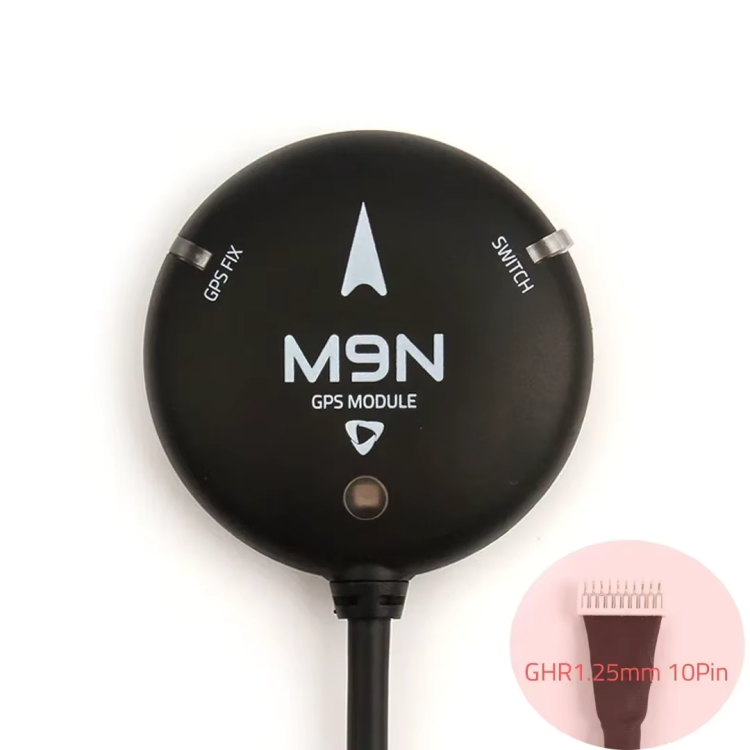
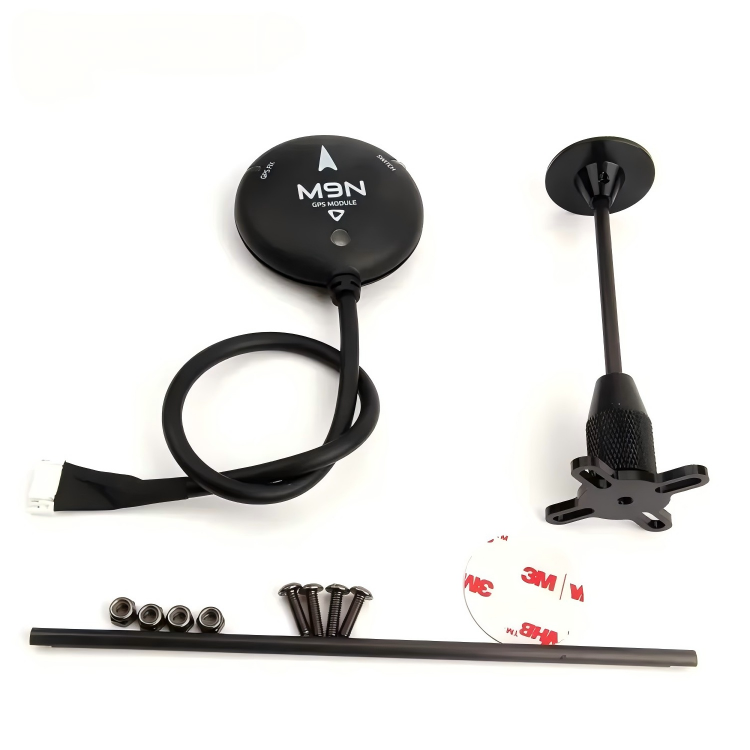
Model: TX-M9N
The TOXU TX-M9N is a DroneCAN GNSS module based on the u-blox NEO-M9N receiver, integrating an STM32G4 processor, electronic compass and ceramic patch antenna for UAV positioning and navigation.
● u-blox NEO-M9N Receiver: Supports concurrent reception of GPS, GLONASS, Galileo and BeiDou satellite systems.
● DroneCAN Communication: Uses 1 Mbit/s CAN bus communication for reliable data transmission without occupying a flight controller UART port.
● STM32G4 Processor: Integrates a 170 MHz STM32G4 processor with 512 KB Flash for GNSS and DroneCAN data processing.
● Integrated Electronic Compass: Available with a BMM150 or IST8310 compass for heading information and flight controller integration.
● Integrated GNSS Antenna: Features a 25 × 25 × 4 mm ceramic patch antenna with 22 dB LNA gain.
● Pixhawk UAV Compatibility: Designed as a cost-effective GNSS hardware option for DroneCAN-enabled PX4 and ArduPilot flight control systems, with integration compatibility comparable to the Holybro DroneCAN M9N architecture.
The TOXU TX-M9N is an integrated DroneCAN GNSS module developed for UAV flight controllers and autonomous navigation systems. It combines a u-blox NEO-M9N GNSS receiver, STM32G4 processor, electronic compass, ceramic patch antenna and CAN communication interface in a compact housing.
The u-blox NEO-M9N receiver can concurrently receive GPS, GLONASS, Galileo and BeiDou signals. This multi-constellation capability improves satellite availability and positioning stability in demanding UAV operating environments.
Unlike a conventional UART GPS module, the TX-M9N communicates with the flight controller through the DroneCAN protocol at 1 Mbit/s. CAN bus communication provides reliable differential data transmission, improves resistance to electromagnetic interference and does not occupy a flight controller serial port.
Multiple CAN peripherals can also share the same CAN bus through a suitable CAN splitter or hub. This makes the TX-M9N suitable for UAV systems that require scalable peripheral integration.
The TX-M9N follows the principal hardware and communication configuration of the Holybro DroneCAN M9N GPS, providing system integrators with a cost-effective compatible option for supported Pixhawk, PX4 and ArduPilot platforms. Compatibility should be verified according to the flight controller connector, cable pinout and firmware configuration.
u-blox NEO-M9N GNSS Receiver
Integrates the u-blox NEO-M9N receiver for concurrent tracking of up to four major GNSS constellations.
Multi-Constellation GNSS Support
Supports GPS, GLONASS, Galileo and BeiDou signals for improved satellite availability and reliable positioning.
DroneCAN Communication
Communicates with supported flight controllers through the DroneCAN protocol at a default CAN bus data rate of 1 Mbit/s.
STM32G4 Processing Platform
Uses a 170 MHz STM32G4 processor with 512 KB Flash to manage GNSS information, compass data and DroneCAN communication.
Integrated Electronic Compass
Available with a BMM150 or IST8310 electronic compass to provide magnetic heading information to the flight control system.
Improved Communication Reliability
CAN differential communication provides better resistance to electromagnetic interference than a conventional single-ended serial connection.
No UART Port Occupation
The DroneCAN interface allows the GNSS module to operate without occupying a flight controller UART or conventional GPS serial port.
CAN Bus Expansion
Multiple compatible CAN devices can share the same CAN bus through an appropriate CAN splitter board or hub.
Integrated Ceramic Patch Antenna
Includes a 25 × 25 × 4 mm ceramic patch antenna with 1.5 dBi antenna gain and 22 dB LNA gain.
PX4 and ArduPilot Support
Designed for DroneCAN-enabled UAV flight controllers running supported PX4 or ArduPilot firmware.
Software-Controlled CAN Termination
Supports software switching of the CAN termination resistance for flexible CAN bus system integration.
| Attribute | Value |
| Model | TX-M9N |
| Product Type | DroneCAN GNSS Module |
| GNSS Receiver | u-blox NEO-M9N |
| Concurrent GNSS | Up to 4 GNSS constellations |
| Supported Constellations | GPS, GLONASS, BeiDou and Galileo |
| GPS Frequency | L1 C/A |
| GLONASS Frequency | L1 OF |
| BeiDou Frequency | B1I |
| Galileo Frequency | E1B/C |
| GNSS Augmentation | WAAS, EGNOS, MSAS and QZSS |
| Processor | STM32G4 |
| Processor Frequency | 170 MHz |
| Processor Flash | 512 KB |
| Electronic Compass | BMM150 or IST8310 |
| Communication Protocol | DroneCAN |
| Default CAN Bus Data Rate | 1 Mbit/s |
| Supported Flight Controller Firmware | PX4 and ArduPilot |
| Navigation Update Rate | 5 Hz default, 10 Hz maximum |
| Positioning Accuracy | 2.5 m |
| Speed Accuracy | 0.05 m/s |
| Maximum Number of Satellites | 22+ |
| Antenna Type | Integrated ceramic patch antenna |
| Antenna Dimensions | 25 × 25 × 4 mm |
| Antenna Gain | 1.5 dBi |
| Antenna LNA Gain | 22 dB |
| RF Amplifier | MAX2659ELT+ |
| Connector Type | GHR-04V-S |
| Input Voltage | 4.7–5.2 V DC |
| Power Consumption | Less than 200 mA at 5 V |
| Operating Temperature | -40°C to +80°C |
| Module Dimensions | Ø54 × 14.5 mm |
| Weight | 36 g |
| Cable Length | Approximately 27 cm |
| Additional Hardware | Rechargeable backup capacitor and low-noise 3.3 V regulator |
| CAN Termination |
Lucy Yang | lucy.y@toxutech.com
Dotty Zhao | sales04@toxutech.com
Global Business Director / Sales Team / Global Operations


 En
En Cn
Cn Korean
 Home >

